
BUSINESS
Warsh Cut Fed Guidance and the Dollar Cleared 100
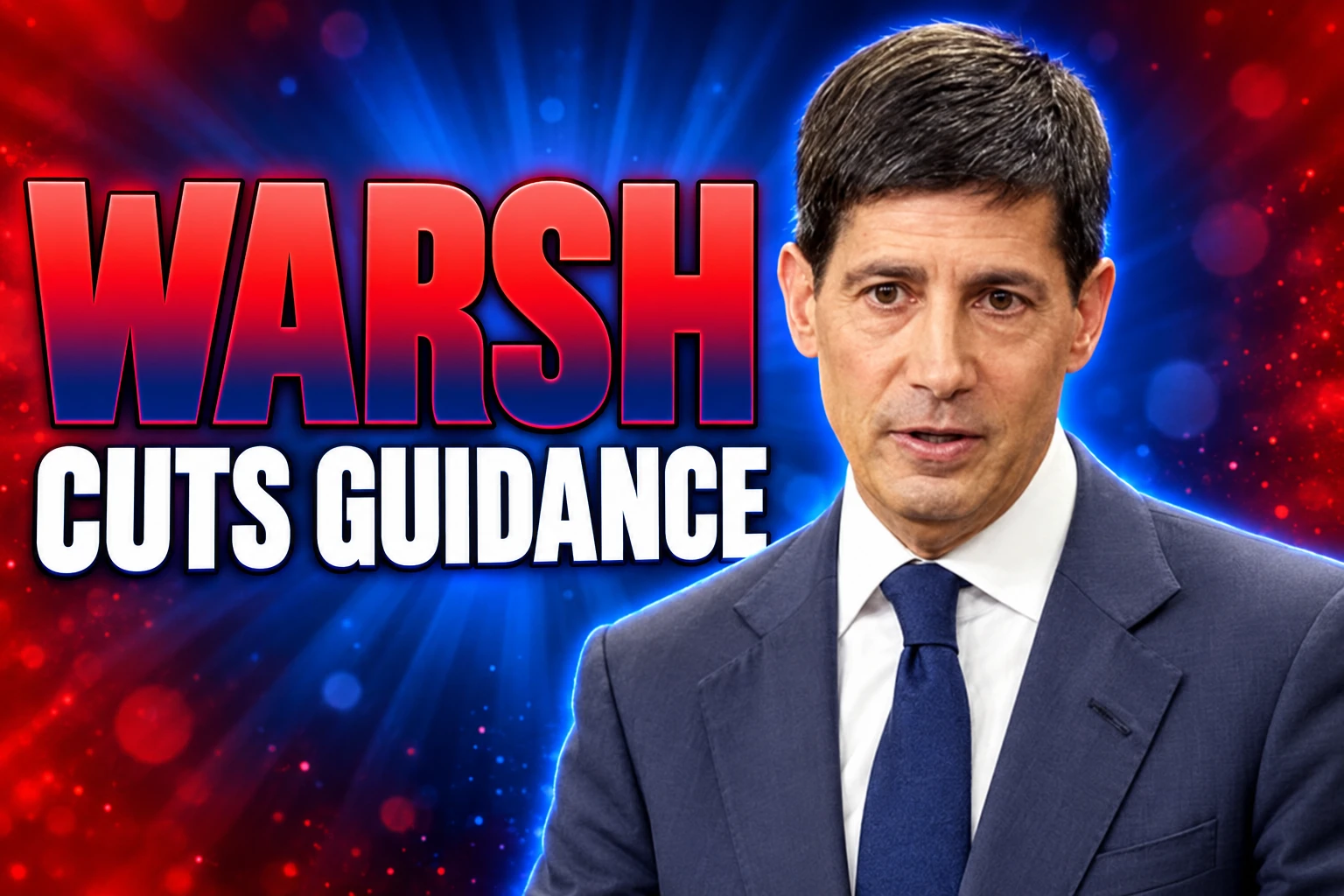
Kevin Warsh’s first FOMC meeting held rates at 3.5% to 3.75% but dropped forward guidance, sending the dollar through 100 and leading to a September hike.

The Federal Reserve kept the federal funds rate at 3.5% to 3.75% on June 17, 2026, in Kevin Warsh’s first meeting as chair, a 12-0 vote markets had already priced. The shock was the script. The new chair stripped forward guidance from the statement, filed no rate forecast of his own, and told reporters the committee would no longer hint at the next move.
The dollar index broke 100 that afternoon. Three months later the same committee raised rates for the first time since July 2023.
Warsh’s First Statement Barely Topped 100 Words
The June 16-17 gathering was the first Warsh ran after he was confirmed by the Senate 54 to 45 on May 13 and sworn in on May 22. He is 56, the 17th person to hold the job, and a former Fed governor (2006-2011). Jerome Powell’s term as chair ended May 15; Powell stayed on the Board and voted at the table.
In the June 17 policy statement, the Federal Open Market Committee said it would hold the target range at 3-1/2 to 3-3/4 percent and keep ample reserves in the banking system. The policy paragraphs ran 114 words. Economic activity was “expanding at a solid pace despite elevated uncertainty that owes, in part, to the conflict in the Middle East.” Job gains had “kept pace with the workforce.” Inflation remained “elevated relative to the Committee’s 2 percent goal, in part reflecting supply shocks that have driven price increases in certain sectors, including energy.” The last line was a pledge, not a path: “The Committee will deliver price stability.”
The interest rate paid on reserve balances stayed at 3.65 percent, effective June 18. There was no sentence on the timing of future moves, and no leftover easing bias from Powell’s final meetings. Warsh said at his first press conference as chair that the note was “a bit shorter, a bit simpler” and that forward guidance “was not well suited to the current policy conjuncture.”
He also refused to box himself in with a personal forecast. “I, however, have refrained from offering any projections of my own, consistent with my long-held views on the SEP, at least as currently structured,” he said. Asked whether he would raise rates, he declined to answer in policy language. “I can’t give any forward guidance about what we’re going to do next. The good news is, we’ll be meeting in six weeks.”
I’ve said for years inflation is a choice. You bet it is. And today I’m announcing that this Committee, unambiguously and unanimously, have decided we are going to deliver on that.
Kevin Warsh, Federal Reserve chair, June 17, 2026 press conference
He called the stance of policy “uneven.” Housing, he said, looked “somewhat restrictive.” He said he would have a hard time using that word for financial markets. That split, rate tool tight where mortgages are made and loose where assets trade, is the channel the dollar later used.
WARSH’S FIRST FOUR MONTHS
- May 13, 2026: Senate confirms Warsh as chair, 54-45, with Sen. John Fetterman the only Democrat in favor.
- May 22, 2026: Warsh is sworn in; Powell remains a governor.
- June 17, 2026: FOMC holds at 3.5% to 3.75% on a 12-0 vote and drops forward guidance.
- July 29, 2026: Same rate on a 9-3 vote; three regional presidents want a quarter-point increase.
- September 16, 2026: FOMC raises the range to 3.75% to 4% on a 12-0 vote, the first hike since July 2023.
Rates had sat in the 3.5% to 3.75% band since December 2025, after three quarter-point cuts in September, October, and December of that year. Holds in January, March, and April had already taken the easing language out of the market. What June removed was the habit of telling traders what came next.
Nine Officials Saw Hikes, and the Chair Left No Dot
Eighteen of 19 participants filed a Summary of Economic Projections. Warsh was the missing dot, as he would be again in September. The median forecast put 2026 PCE inflation at 3.6 percent, up from 2.7 percent in March, a 0.9 point mark-up, and 2.3 percent in 2027. Core PCE for 2026 sat at 3.3 percent. Real GDP was 2.2 percent this year and 2.3 percent next. Unemployment was about 4.3 percent. The median funds rate at year-end was 3.8 percent, then 3.6 percent at the end of 2027.
Nine of the 18 who submitted dots expected at least one increase before the end of 2026, and six of those saw two 25-basis-point moves. The 3.8 percent median is roughly one quarter-point from the 3.625 percent midpoint of the June target range. Warsh tried to take the heat out of that picture. He said the submissions “were coming in with pencils, you know those kinds with the big erasers,” and that he “didn’t hear tons of conviction.” Modal forecasts, he said, were the most likely case among several, not a commitment six weeks out.
The market did not treat them as pencil. CME FedWatch put the chance of a hike by year-end at 70.1 percent after the announcement. Without a chair’s own dot or a sentence of guidance to lean against, the median became the map.
JUNE VS SEPTEMBER FORECASTS
| Median projection | June 2026 | September 2026 |
|---|---|---|
| 2026 real GDP | 2.2% | 2.3% |
| 2026 unemployment | 4.3% | 4.1% |
| 2026 PCE inflation | 3.6% | 3.7% |
| 2026 core PCE | 3.3% | 3.4% |
| Year-end federal funds rate | 3.8% | 4.1% |
By September the same exercise had moved again. Median 2026 PCE was 3.7 percent and core 3.4 percent. The year-end funds-rate median was 4.1 percent, which, after the September increase, still implied another quarter-point. Unemployment in the September round was 4.1 percent, and GDP 2.3 percent this year and 2.4 percent next. Warsh still did not file a dot.
Five Reviews and a Deadline at Year-End
The rate decision was the day’s smallest institutional change. Warsh appointed a task force in each of five areas he called “central to the broad conduct of monetary policy,” with outside experts, Fed staff, and a charge to start from first principles and propose next steps. He said they would begin within weeks, send early framing in the fall, and, he hoped, finish most or all of the work by year-end.
THE FIVE TASK FORCES
- Communications: Reviews statements, press conferences, minutes, transcripts, and the SEP, including the dot plot Warsh will not fill in.
- Balance sheet: Weighs the ample-reserves regime, the mix of assets, and whether policy is doing its work through the funds rate or through the balance sheet.
- Data sources: Looks for more timely, usable readings than the series policymakers already have.
- Productivity and jobs: Studies general-purpose technologies, including AI, and what they mean for the employment and inflation mandates.
- Inflation frameworks: Examines what drives prices and how the Fed delivers 2 percent in a changing economy.
He kept the 2 percent objective off the table. “For now, zero is to the right,” he said of the decimal. “I see no reason until we have reestablished our commitment and ability to deliver on the 2 percent inflation objective to revisit that.” Inflation, he noted, had run “well ahead of the Fed’s long-stated inflation goal of 2 percent” for more than five years. In July testimony to the House Financial Services Committee he added that monthly swings are inevitable, but “underlying inflation over longer time horizons is determined largely by monetary policy.”
The productivity group sits next to a boom he can already see in the accounts. In that same testimony he called business investment “the most striking feature of the economy right now,” driven by data centers and AI equipment. Housing, he said, “continues to lag.” The June press conference had already split those two worlds: tight where families borrow, loose where financial prices clear. A chair who will not give a rate path is asking those prices to do more of the work.
Why the Dollar Cleared 100 After a Hold
The funds rate did not move on June 17, and a hold had been the base case. The dollar still ripped through 100 because the Fed stopped promising ease and stopped describing the next step. Relative yields, not the 25-basis-point arithmetic of a meeting that did not hike, did the rest.
JUNE 17 MARKET REACTION
- S&P 500: Fell about 1.3 percent after the statement and press conference.
- Nasdaq: Dropped about 1.5 percent as hike odds replaced cut talk.
- Treasury yields: The 2-year rose to 4.21 percent and the 10-year to 4.49 percent, per Truist’s fixed-income desk.
- Hike odds: CME FedWatch put a year-end increase at 70.1 percent.
A hold with an easing sentence is still a cut in slow motion. A hold with no sentence is a blank page, and blank pages get filled with the hawkish median. The dollar index, which had been hanging in the high 99s into the decision, pushed through the 100 handle on the release. Later in the week it was at a 13-month high. Warsh’s own reading of transmission, tight in housing and not in markets, was the tell: if financial conditions were not doing enough, the currency and the long end would tighten until they were.
That is also why a 114-word statement moved more than a longer one would have. Traders who used to parse adjectives had nothing left but the dots, the inflation mark-up, and a chair who said price stability was a choice. They bought dollars.
Three Regional Presidents Wanted a July Increase
On July 29 the committee held again at 3.5% to 3.75%. The vote was 9-3. Cleveland’s Beth M. Hammack, Minneapolis’s Neel Kashkari, and Dallas’s Lorie K. Logan preferred a quarter-point increase, the first split of the Warsh chairmanship and the first time since September 2016 that three voters dissented in the same direction. There was no SEP at a July meeting, so the statement and the press conference had to carry the signal. The statement was almost the June text again, still without a path.
Warsh would not call it a pause. He said the group had done a “rigorous review of the economic situation” and of its own homework. He also said that if inflation stayed elevated through the forecast period, “interest rates could well be part of that solution, but I wouldn’t say it’s in isolation.” He told reporters that “five-plus years of inflation above target cannot be cured in nine weeks.” The three dissents put a September hike on the record as someone’s preferred policy, even as the chair still refused to write the next line.
Markets trimmed September odds after that press conference and still lifted long yields, a messy mix that is what a no-guidance Fed produces. The July hold did not restore the old script. It showed that Warsh would let a “good family fight” sit in public and let prices argue in the meantime.
September Delivers the First Hike Since 2023
On September 16 the FOMC raised the target range by a quarter point to 3.75% to 4%, 12-0. It was the first increase since July 2023. The statement dropped the Middle East clause into a vaguer line on “geopolitical developments,” said domestic spending had been resilient, and stated that “Today’s policy action will support a timelier return to the Committee’s 2 percent goal.” The Board lifted the rate paid on reserve balances to 3.90 percent, effective September 17.
The September SEP is the June meeting’s second-order result in numbers. Of 18 dots, 12 sat at 4.125 percent for year-end 2026, 4 at 4.375 percent, and 2 at 3.875 percent. Sixteen officials wanted at least one more increase after the hike just delivered. Median 2027 funds were also 4.1 percent. Longer-run median was 3.2 percent. Inflation was marked a tenth higher than in June, not lower. The committee that had been split 50/50 on a 2026 hike in June was, by September, a hiking committee with two holdouts in the dots.
President Donald Trump had spent the year pressing for lower rates and had picked Warsh in that climate. The first two Warsh decisions were a hawkish hold and then a hike. Independence here is not a speech. It is a 25-basis-point move the White House did not want, taken on a unanimous vote that included Powell.
Minneapolis Fed President Kashkari, who had dissented for a hike in July and then voted for one in September, said in early October that markets now see Warsh will act to cool inflation. That sentence is the communications regime working as designed: the chair will not pre-announce, so officials and prices do the announcing.
The Guidance Vacuum Still Runs the Tape
Dropping forward guidance did not make the Fed quieter in the only way traders care about. It made every public word a possible rate signal, because there is no longer an official sentence that tells them to wait. At Jackson Hole, even a passage about hiking trails was read as policy by machines and humans who have been trained on a decade of coded adjectives. Markets invented the guidance Warsh refused to give. That is not a side effect. It is the new transmission.
The dollar did the tightening the funds rate only later matched. GuruFocus puts the dollar index at 101.89 on October 2, after 102.10 on October 1. That is a full figure above the 100 break of June 17, and about 4.2 percent higher than a year earlier. A September jobs report that looked soft cut the odds of another move at the October 27-28 meeting, and the index still held the high ground. When hike probabilities fade and the dollar does not, the vacuum is doing work the dots no longer have to.
The committee meets again on October 27 and 28. Warsh still has not submitted a projection. The five task forces are due to land by year-end. Until they do, the June choice stands: a short statement, no path, and a currency that has been writing the missing paragraph since the afternoon the index cleared 100.
Disclaimer: This article is news reporting and analysis of Federal Reserve decisions and related market moves. It is informational only and is not investment advice, a recommendation to buy or sell any security, bond, or currency, or a forecast you should trade on. Readers should consult a qualified financial adviser or licensed investment professional before making decisions tied to interest rates, the dollar, Treasuries, or other assets. Policy settings, forecasts, and market figures reflect the official releases and data sources named in the piece as of those dates and can change at the next FOMC meeting or data print.

Edinburgh Opens a 2027 Tour Built for Time Trials

Korda Maps Auður From Meðalland to Irvine Bay

Apple Music Films Its New Logo in Mineral Oil

Oppo Prices the Pad Mini Above India’s iPad Mini

Austen Soaks Scotland Before Boelo Brings Weekend Gales

Volkswagen Sells the Osnabruck Plant to Clear a Board Fight

Apple’s Foldable iPhone Hinges on Samsung Display Supply

Tata Motors’ Iveco Tender Opens as Holders Still Decide

Saksham Gaur Finds He Is His Own Company’s Client

Onimusha Way of the Sword Preload Hits a Windows 11 Wall
-
 AUTO2 months ago
Volkswagen Sells the Osnabruck Plant to Clear a Board Fight
-
 NEWS2 months ago
Apple’s Foldable iPhone Hinges on Samsung Display Supply
-
 AUTO2 months ago
Tata Motors’ Iveco Tender Opens as Holders Still Decide
-
 BUSINESS2 months ago
Saksham Gaur Finds He Is His Own Company’s Client
-
 GAMING2 months ago
Onimusha Way of the Sword Preload Hits a Windows 11 Wall
-

 ENTERTAINMENT3 years ago
What is SD on Amazon Prime? – All You Need to Know
-

 BUSINESS2 months ago
Hyderabad 22-Carat Gold Jumps After a False Bargain
-

 NEWS2 months ago
The Frame Pro’s $1,200 Labor Day Cut Needs a Soundbar