
BUSINESS
RBS Puts £50 Million Into the Branches It Kept
NatWest is spending £50 million on the 62 RBS branches that remain, after six Scottish towns lost their counters in September and older customers were told to.

The Royal Bank of Scotland spent £520,000 this year turning its Princes Street branch in Edinburgh into an open hall of seats, screens and interview rooms. The fit-out is one slice of a £50 million NatWest Group programme for the 336 branches it still runs, after six more RBS sites in Scotland shut in September.
Diana Hendry, 85, typed the wrong PIN three times in mid-November, blocked a card, and found no counter to lean on. A staffer tapped a computer more than she talked.
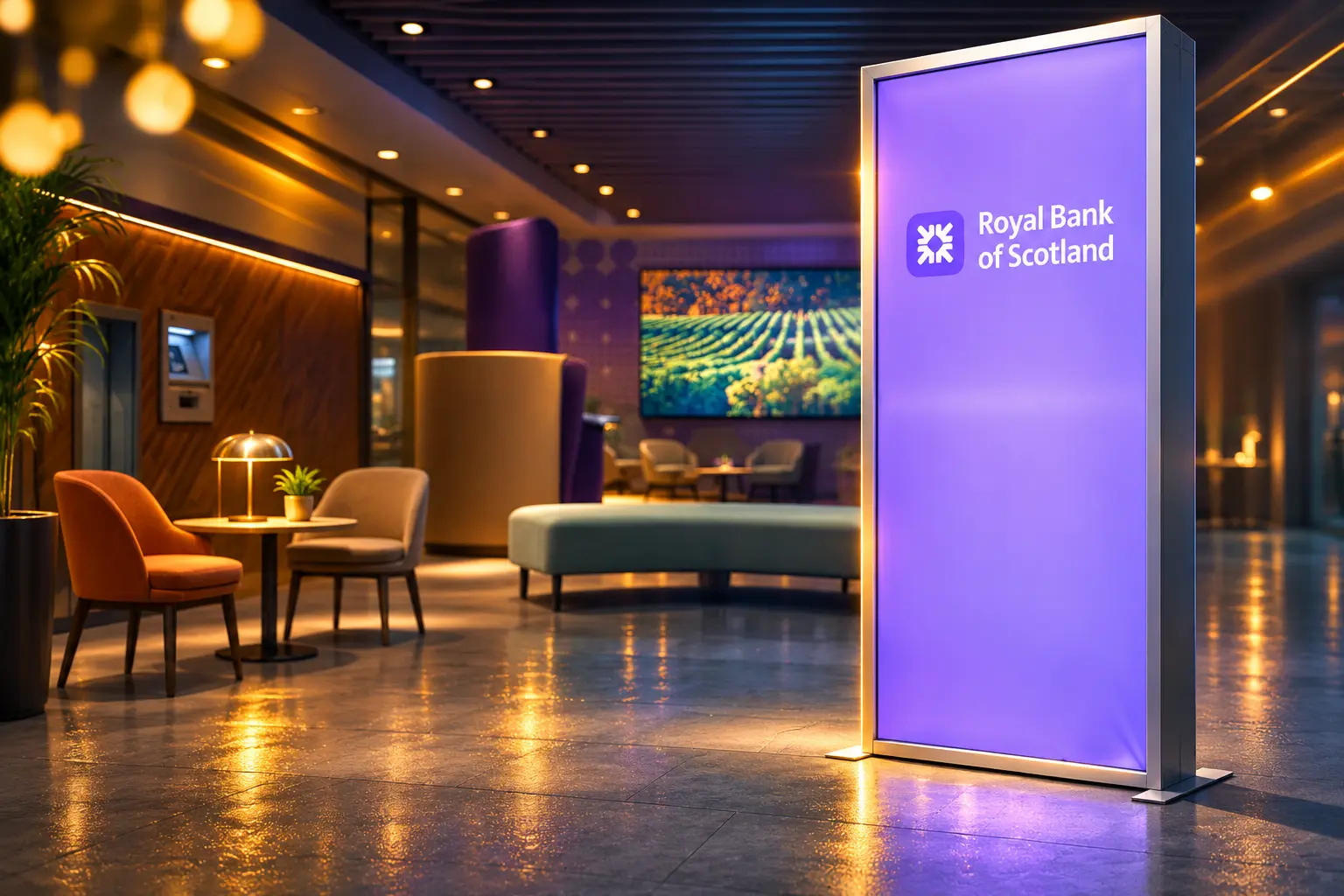
Princes Street Now Looks Like a Hotel Foyer
Hendry had used the phone since her local branch shut and had not been inside a bank of any sort until the blocked card forced the trip. In the rain she walked the length of Princes Street to the West End site and stepped into wing-backed chairs, little nooks and a large screen showing a country scene. A few men her age came in looking as out of place as she felt, then vanished into the nooks.
Royal Bank of Scotland said on 14 October that a £520,000 investment in this branch had turned the Edinburgh West End site into a “modern, customer-focused banking space.” Lynne Mantle, the branch manager, said the bank has been on the same site since the 19th century. An open evening on 8 October had live music and a fireside chat with the Olympic curling silver medallist Bruce Mouat.
Upstairs, an Accelerator Hub offers free events and meeting space to small firms. Downstairs, the banking hall now has new cash machines, comfortable seating, and music and white-noise kit that the bank says will help with privacy. Colleague toilets, a dining area and a staff lounge were upgraded too. The public room is built for a conversation at a table, not a queue at a counter.
WHAT THE £520,000 PAID FOR
- Cash machines: New dispensing and deposit units, sold as faster and less prone to downtime.
- Seating: Fresh chairs and nooks in the banking hall, closer to a hotel lobby than a teller line.
- Privacy kit: Music and white-noise technology around the interview spots.
- Staff rooms: Upgraded bathrooms, dining space and a lounge for colleagues.
Mantle put the spend as a pledge to people who still want a human being in the room.
It is a real privilege to be able to showcase our refurbished Royal Bank of Scotland branch on Princes Street to our customers. Our £520,000 investment in this branch, that has been located on the same site since the 19th century, is a real commitment to providing our customers with a modern, welcoming space where they can access face-to-face services when they need them.
Lynne Mantle, Branch Manager, Edinburgh West End, Royal Bank of Scotland
Mark Scanlon, local director for Edinburgh and south-east Scotland, tied the work to the bank’s coming 300th anniversary and to a freeze on further closure announcements until at least 2029. The freeze is real. So is the map of rooms that no longer exist.
£50 Million Goes to the Branches That Survived
On 5 June, NatWest Group said it would invest a further £50 million in its UK network over 18 months in 2026 and 2027, modernising sites it already holds. It also said it would make no further branch closure announcements across NatWest, Royal Bank of Scotland and Ulster Bank until at least 2029. That pledge came with nine last closures, six of them RBS branches in Scotland, due later that year.
When those doors shut, the group said it would still have 336 high-street branches. 62 of them are Royal Bank of Scotland. The rest of the money, the vans and the “community bankers” are how the group now describes face-to-face service for everyone else.
THE NETWORK NATWEST SAYS IT WILL KEEP
| Measure | Figure |
|---|---|
| UK branches after the last wave | 336 |
| RBS branches remaining in Scotland | 62 |
| Final closure announcements, June 2026 | 9 (6 of them RBS) |
| Spend on sites that remain | £50 million over 18 months |
| Customers who bank digitally day to day | 95% |
| New closure announcements paused until | at least 2029 |
Solange Chamberlain, chief executive of retail banking at NatWest Group, called it a mix of phone, app, free cash machines, branches and hubs. She said the bank would not announce any further branch closures until at least 2029. She also said 95% of customers now choose to bank digitally for day-to-day needs, and that in-person help still matters “in those important life moments.”
Beside the 336 branches, the group lists the UK’s only mobile branch service, including a flying banker, reaching 577 communities each week and supporting 144,000 customers in 2025, with teams covering 14,000 miles. It claims a presence in 235 community banking hubs, a tie-up with 11,500 post offices, and almost 5,000 free cash machines. Those figures are the substitute offered to towns that no longer have an RBS door.
Arbroath, Biggar and the September Closures
The six Scottish closures ran from 8 to 17 September 2026. They were the last RBS counters the group said it would announce before the 2029 pause. An earlier 2024 round had already left the Scottish network at 69. After September, 62 remain.
THE SIX RBS COUNTERS THAT SHUT IN SEPTEMBER
- Milngavie: The Douglas Street branch went in the first days of the window.
- Arbroath: Brothock Bridge lost its RBS counter the same fortnight.
- Castle Douglas: King Street closed in the mid-September run.
- Motherwell: Hamilton Road shut in the same cluster.
- Biggar: High Street was in the later days of the window.
- Giffnock: The Fenwick Road site was among the last to go.
The £50 million does not reopen those rooms. It refits the 62 that survived. For a grocer in Biggar or a cafe in Arbroath, the live problem is still where the day’s notes go, not whether Princes Street has nicer chairs. Mobile stops and post-office counters can take cash. They do not replace a manager who knows the till and the overdraft.
Even in Edinburgh the smaller city branches have already gone, which is why Hendry’s blocked card sent her to the West End flagship rather than a walk-up counter near home. The remaining Scottish network is a set of kept rooms, not a return of the high street.
The Same Rooms Once Barred Men at the Door
The West End site is the same ground on which National Commercial Bank of Scotland opened Britain’s first Ladies’ branch in 1964, above an ordinary high-street office, staffed entirely by women. The group’s own heritage notes say it was meant for women handling money for the first time, or who simply preferred to talk to another woman. Some called it patronising. Others said women would rather see a man behind the counter. The branch stayed open after the 1969 merger into the Royal Bank of Scotland, and men were no longer officially barred in later years. It closed in 1997.
British Pathé filmed the experiment the year it opened. Margaret Reid, the manager, was the first woman to hold that post in Scotland. The newsreel showed a Ladies Branch sign, a counter, coffee on a tray, a powder room and a couch. The commentary did not bother to hide the sales pitch.
The sign ‘Ladies Branch’ means no men allowed here. The staff and even the manager are women, so are all the customers.
Commentary, British Pathé newsreel, 1964
A Movietone reel from the same winter added soft music, golden wallpaper and deep pile carpets, and joked that a refused overdraft came easier with a smile and a cigarette. Women who opened a first account in that upstairs room in the 1970s are now the age Hendry is. The bank has restyled the same West End rooms for 60 years, from a women-only club to a digital consultation hall, while the service of sliding notes across wood has thinned out of the building.
FROM LADIES’ BRANCH TO KEPT FLAGSHIP
- 1964: National Commercial opens Britain’s first Ladies’ branch above its West End office, with Margaret Reid as manager.
- 1969: The bank merges into the Royal Bank of Scotland; the ladies’ rooms stay.
- 1997: The Ladies’ branch closes, having already dropped the formal bar on men.
- 5 June 2026: NatWest pledges £50 million for remaining branches and a freeze on new closure announcements until at least 2029, with nine last shutters still to come.
- 8 to 17 September 2026: Six RBS branches in Scotland close, leaving 62.
- 8 October 2026: The Princes Street branch holds its open evening after the £520,000 fit-out.
- 16 November 2026: The Treasury accepts a review calling for a law to protect face-to-face banking.
Before the Married Women’s Property Act of 1882, a married woman’s property passed to her husband, and many banks wanted his signature before she could open an account. The 1964 rooms were a late, velvet version of that history: a separate door, then a merger, then a shutdown when the bank decided the special case had expired. The 2026 seating is another special case, this time for the customers who still walk in.
What Older Customers Still Need From a Branch
On 16 November the Treasury said it would legislate to protect face-to-face banking, after an independent review chaired by Richard Lloyd found that declining in-person access had caused “widespread, material and recurring harm.” Evidence put to the review said more than three million people still bank in person as a matter of routine, rising to more than four million when less frequent users are counted. More than 18,000 public responses came in.
Lucy Rigby, Economic Secretary to the Treasury, said millions now bank on a screen, “but for people and businesses who rely on face-to-face services, being able to speak to someone in person really matters.” The new statutory framework is still to be designed with the Financial Conduct Authority, the banks and consumer groups. It is not a promise to reopen Arbroath.
WHO STILL NEEDS A PERSON
- Regular users: More than three million adults still bank in person as a matter of routine, and more than four million if less frequent users are included.
- Older customers: 57.9% of public responses named older people as the group that still needs a desk, with 33.7% pointing to disabled and vulnerable customers.
- Distance: In 2025, 79.6% of people in the UK lived within three miles of a large bank or building-society branch, down from 87% in 2022, and 17% said getting there was hard on their usual transport.
- The phone maze: A quarter of consumers, 26%, find it difficult or not possible to reach the right person to fix a query across all channels.
The review’s own call for evidence also heard that 75% of day-to-day account holders used a mobile app in the 12 months to 2024. That majority is the one NatWest is building for. The minority is the one Hendry belongs to, locked out by a PIN and sent across a city for a staffer with a keyboard. For customers already paying the cost of being pushed online, a nicer flagship in Edinburgh is not a local branch.
Rural coverage is thinner than the UK average, which is why a freeze on announcements until 2029 matters more in towns that have already lost the last counter than it does on Princes Street. The law the Treasury now wants would set “reasonable access” for day-to-day banking and for messier life events. Until that is written, the 62 Scottish rooms and the 235 hubs are the access NatWest is prepared to fund.
Cora Handles the Queries a Counter Used To
If you search for a human at RBS, the group’s websites offer a phone queue and Cora, the 24/7 AI assistant. Cora is trained for more than 150 everyday queries. Logged-in customers can ask her to update an address, send a PIN reminder, or report a card lost or stolen. Hendry wanted a person to unblock a card that no cash machine would touch. Cora can post a PIN reminder. She cannot lean on a counter with you while the machine thinks.
The 95% who already live in the app will barely notice the West End chairs. The people who still walk in are older, less sure on a phone, or carrying a bag of notes from a till. NatWest’s answer is a smaller set of better rooms, a van, a hub, a post office and a chatbot with a first name. That is a genuine offer for some journeys. It is also how a blocked PIN at 85 becomes a trek down Princes Street.
Telephone banking, which Hendry still uses, is slow and keeps offering to replace the hold music. She is glad of the voice. The new hall on Princes Street has voices too, floating in a space that no longer gives you anywhere to put your elbows.
Dundas House Still Opens on St Andrew Square
Two RBS doors still face central Edinburgh. The other is Dundas House at 36 St Andrew Square, the Palladian villa Sir William Chambers completed in 1774 for Sir Lawrence Dundas. The Royal Bank moved in in 1825. In 1857 a banking hall went up under a blue dome pierced with glazed stars, the work of J. Dick Peddie. It is still a working branch, Category A listed, and on a good day you can still stand in the telling room and look up.
Hendry asked, in so many words, what the bank will do with that dome while it spends £50 million on lounge seating. For now the answer is: keep it open, take deposits, and put the new money into the rooms it has already chosen to keep. She is unlikely to move her account. The 62 Scottish branches, the 2029 freeze and the chatbot with a woman’s name are the service as it stands, and the six towns that lost their counters in September are not getting a share of the chairs.

New Audi Q3 Skips Cameras a Mahindra XUV 3XO Includes

Scotland’s £65m Universities Fund Bets on Later Rounds

Suzuki Access 125 Adds Paint as Jupiter Takes Share

Scotland Face Argentina at Twickenham With Rankings at Stake

Motorola’s Android 17 List Trails the Real Rollout

Volkswagen Sells the Osnabruck Plant to Clear a Board Fight

Apple’s Foldable iPhone Hinges on Samsung Display Supply

Saksham Gaur Finds He Is His Own Company’s Client

Tata Motors’ Iveco Tender Opens as Holders Still Decide

What Is SD on Amazon Prime?
-
 AUTO3 months ago
Volkswagen Sells the Osnabruck Plant to Clear a Board Fight
-
 NEWS3 months ago
Apple’s Foldable iPhone Hinges on Samsung Display Supply
-
 BUSINESS3 months ago
Saksham Gaur Finds He Is His Own Company’s Client
-
 AUTO3 months ago
Tata Motors’ Iveco Tender Opens as Holders Still Decide
-
 TECHNOLOGY3 years ago
What Is SD on Amazon Prime?
-

 BUSINESS3 months ago
Hyderabad 22-Carat Gold Jumps After a False Bargain
-

 GAMING3 months ago
Onimusha Way of the Sword Preload Hits a Windows 11 Wall
-

 ENTERTAINMENT2 years ago
Andy Scott’s Steel Loon Repeats the Kelpies Regeneration Bet