
NEWS
n0n Leaked the Vendor Lists Behind Chase, Visa and Mastercard
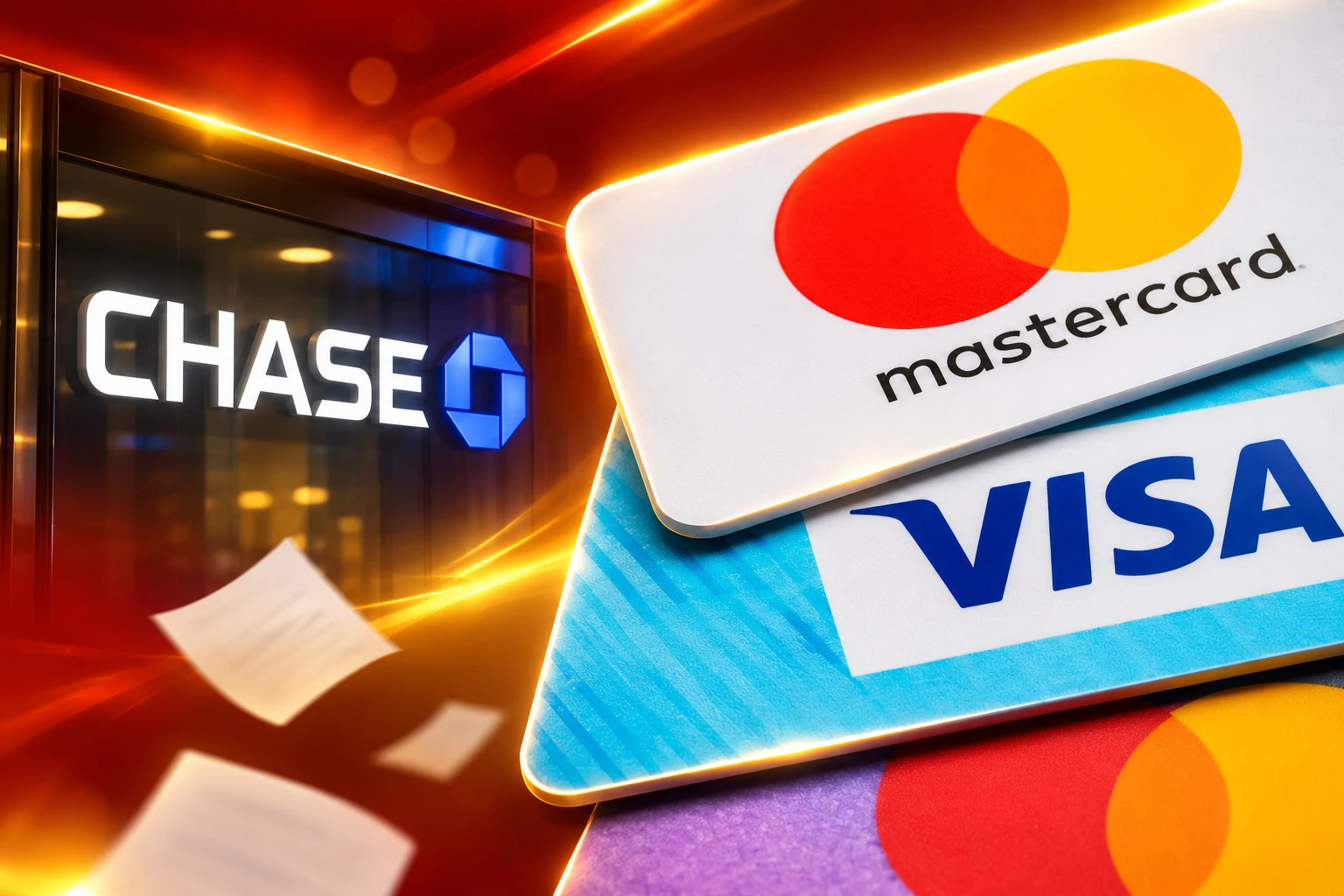
n0n published marketing files on about 16,000 Chase Reserve clients after hitting a vendor that also held Visa and Mastercard lists.

The extortion group n0n published marketing files on JPMorgan Chase, Visa and Mastercard customers on 19 November, after a 48-hour deadline ran out. All three firms said outside vendors were hit and that payment networks and card numbers were not touched.
The dumps researchers opened are premium-card marketing lists. The layouts match closely enough that one researcher says they probably came from the same unnamed supplier, a firm none of the three has identified.
The Leak Names Chase Reserve Cardholders
Researchers who opened the Chase file counted about 16,000 customer email addresses, some of them with phone numbers, postal codes and Chase account IDs, plus 124 bank staff inboxes. The packet is 502 KB. They say every customer record they could classify belongs to the J.P. Morgan Reserve card, an invitation-only Visa product for private-bank clients, commonly described as needing about $10 million in assets at the firm, a cutoff the bank has not published.
Chase has not confirmed those counts and declined to comment on the posted files. In a statement on 19 November it said attackers reached marketing data held by vendors that work for the bank, which may include some customer names and email addresses, and that its own services were not disrupted.
We have learned that third parties who provide services to the firm were the target of a cyber attack.
Based on our investigation so far, we believe the attackers accessed certain marketing data held by those vendors, which may include some customer names and email addresses.…
— Chase (@Chase) November 19, 2026
n0n had claimed more. On 16 November it described engagement data covering hundreds of thousands of campaign interactions across tens of thousands of cardmember email addresses, a member directory with categories and postal codes, and marketing messages that used the bank’s branding in subject lines and sender fields. Whether the 502 KB file is a sample or the whole haul is still open.
This association alone makes the leak a lot more sensitive as essentially all affected individuals can be a lucrative target to cyber criminals
Aras Nazarovas, senior information security researcher
The 124 staff addresses give a second path. A help-desk impersonation or a fake vendor email that already knows a banker by name does not need a card number to get started. Chase said it will contact affected customers where appropriate and offer free credit monitoring. It also said the vendor attack has no link to the 16 November outage, which it blamed on a software bug.
Visa Dining Files Came From an Asia-Pacific Vendor
Visa said on 17 November that the claims sit with an incident at a third-party service provider in Asia-Pacific. “Visa’s systems were not involved and were not impacted. No payments data such as card numbers were affected,” a spokesperson said.
Researchers who reviewed the Visa packet counted more than 6,000 premium cardholders, apparently from a marketing platform that tracks dining and loyalty programmes. Separate file reviews described spreadsheets of emails, phone numbers and campaign data from Hong Kong, Taiwan, Korea, Japan, the Philippines, Singapore, Malaysia, Australia and Macau. Some records also carried messaging-app details and booking dates.
Mastercard said it had been told of an incident at a third-party provider that exposed a limited amount of email addresses, non-payments information, from a small subset of cardholders in a specific benefit programme. “There is no impact to the Mastercard payment network or the ability for people to use their cards,” a spokesperson said. The firm added that the exposure had been contained and that it was working with the provider to support those cardholders.
Researchers counted about 2,000 Mastercard entries and said the formatting was poor enough that some rows may be test data. File reviews placed that marketing material in North America, the Middle East and Africa, with a small number of Mastercard staff emails. Mastercard has not published its own headcount.
THE THREE PUBLISHED FILES
| Brand | What file reviewers counted | What the company said |
|---|---|---|
| JPMorgan Chase | About 16,000 Reserve emails, some phones and account IDs, 124 staff emails, 502 KB | Marketing data at vendors; services up; customers to be contacted; free credit monitoring |
| Visa | More than 6,000 premium dining and loyalty records in Asia-Pacific | Asia-Pacific third-party; own systems not involved; no card numbers |
| Mastercard | About 2,000 entries, some possibly test rows; emails in a benefits programme | Limited non-payment emails; network unaffected; exposure contained |
None of the three companies has named a vendor or said how many people it will write to. Chase, the largest US lender by several common rankings, did not put its own figure on the leak.
Did One Supplier Hold All Three Lists?
Nazarovas said this batch looks as if it was taken from the same third party, not from JPMorgan directly, and that the file layouts match. A Check Point Exposure Management assessment described shared file layouts across three brands in campaign directories, engagement events, member profiles, bookings and programme counts, and treated that as a sign of a shared source system or vendor export.
Visa points to a single Asia-Pacific provider. Chase refers to third parties in the plural. Mastercard describes one provider tied to one benefit programme. No company has confirmed that a single supplier sat behind all three logos.
Check Point also flagged Qubole, a cloud data platform, as a possible source, citing reporting that attackers abused Qubole’s cross-account AWS access between 14 and 26 October. It rated that theory as moderate confidence and said the released files carry no Qubole markers, so the link cannot be confirmed or ruled out.
The listing pattern fits how n0n has worked elsewhere. On 16 November it named 59 organisations, after swapping numbered placeholders for brands and marking the batch unpaid. The Chase entry had sat on the leak site since 9 November as “Company #150”. Expedia, listed the same week, later said attackers had reached it through a compromised third-party data platform. Bitdefender, working from data on the group’s file server, has said n0n targeted just over 20 victims in October while listing about 150 names, which is what a vendor break-in looks like when each client is posted as its own victim.
WHAT WE KNOW
- The targets: Chase, Visa and Mastercard have each confirmed an incident at an outside provider, not a break-in of their payment networks.
- The payload: Reviews of the posted files describe emails, phones, postal codes, account IDs and campaign records, not card numbers, passwords or balances.
- The clock: n0n listed the three at 16:27 UTC on 16 November, gave 48 hours, then published on 19 November and marked the entries unpaid.
WHAT IS UNCONFIRMED
- The supplier: Matching layouts suggest one marketing platform, but Chase’s plural wording and the lack of a named firm leave that open.
- The full haul: n0n claimed tens of thousands of unique emails and hundreds of thousands of campaign events; the Chase file on the leak site is 502 KB.
- Qubole: Timing and data type are consistent with a shared data-platform job, and no public file marker has proved it.
JPMorgan was already in the vendor-risk file. Last year a hit on SitusAMC, a firm used by Wall Street banks, exposed customer details at several institutions, Chase among them. That episode and this one share a shape: the brand on the card is not the system that got opened.
n0n Hits a Vendor, Then Names the Clients
n0n first listed victims on 18 September 2026. A leak-site tracker had logged 393 n0n entries by 19 November, 193 of them still numbered placeholders with no company name. Observed ransom notes reviewed by Cyberint ran from $2.4 million to $25 million, and the group does not open a private channel; it posts the demand and a countdown on its leak site.
SOCRadar’s review of an exposed operator server found stolen credentials, not software flaws in every intrusion it documented. Entry points included stuffed FortiGate VPN logins, weak remote-desktop passwords and exposed cloud keys. That path maps onto valid accounts as initial access, logging in with a password or key someone else already held. The same workspace showed an AI coding agent that had run up more than $7,216 in model charges by 22 October, used to write and debug attack scripts under human direction.
HOW THE LEAK UNFOLDED
- 9 November 2026: n0n posts a numbered placeholder, Company #150, on its leak site.
- 16 November 2026: The group names 59 organisations, including JPMorgan Chase, Visa and Mastercard, and starts a 48-hour clock. Chase separately fights a software-bug outage the same day.
- 17 November 2026: Visa confirms an incident at a third-party provider in Asia-Pacific and says card numbers were not affected.
- 19 November 2026: n0n publishes the three marketing dumps. Chase and Mastercard confirm vendor incidents. Chase offers free credit monitoring where it will contact customers.
The 16 November outage pulled questions from US banking supervisors who wanted to know whether that disruption was cyber-related. Chase has kept the two events apart. The leak-site listing for the bank was already a week old when the bug hit.
Chase Lets Customers Limit Some Vendor Sharing
Carissa Robb of consulting firm SolomonEdwards said customers do not distinguish between a bank and a vendor when a cyberattack lands, so reputational risk sits with the brand on the statement. She said firms should face more scrutiny over how often they review data sent to vendors and whether all of it needs to leave the building.
That is the part of this leak that was already true before n0n showed up. Premium cards earn their keep through dining programmes, concierge bookings and campaign mail. Those products require names, emails, phone numbers and sometimes a booking history, and that work is routinely farmed out. Payment data stays on certified rails. Marketing files go to whoever runs the programme.
A list of Reserve clients, tied to the dining and travel benefits they actually use, is a targeting file. A message that names the card and quotes a real mobile number does not have to guess who is worth calling. The same is true of Visa’s Asia-Pacific dining records, which pair contact details with booking dates and addresses.
Customers can limit some of that sharing through Chase’s privacy-preferences page for data sharing. Turning a toggle off after the fact does not pull a file off a vendor that already has it. It does cut the next copy.
WHAT THE POSTED FILES HOLD
- Chase Reserve: Customer emails, some phones, postal codes and account IDs, plus 124 staff addresses, in a 502 KB dump researchers tied to the invitation-only card.
- Visa dining: More than 6,000 premium cardholder records from Asia-Pacific loyalty and dining campaigns, including emails, phones and booking fields.
- Mastercard benefits: About 2,000 rows of marketing data tied to a specific programme, which the network says are non-payment emails from a small subset of enrolled cardholders.
- n0n’s larger claim: Hundreds of thousands of campaign interactions, a member directory with tiers and postal codes, and branded marketing mail, which may exceed what was published.
Names and emails get treated as low-grade data in vendor contracts because they do not, on their own, move money. They are still enough to write a letter that looks as if it came from the concierge desk.
Affected Customers Will Hear From the Bank Directly
Chase said it will write to people it believes were affected and offer support, including free credit monitoring. Mastercard said it is working with its provider to support impacted cardholders. Visa has not described a customer-notice plan in its public comments. Anyone who holds one of these cards and gets a sudden booking or security email is safer calling the number on the back of the card, or opening the official app, than tapping a link in the message.
The three brands still have not named the firm that held the lists. Until they do, the only party the public can see is the logo on the card, while the 502 KB Chase file and the Asia-Pacific dining sheets remain in circulation for anyone who mirrored the leak.

New Audi Q3 Skips Cameras a Mahindra XUV 3XO Includes

Scotland’s £65m Universities Fund Bets on Later Rounds

Suzuki Access 125 Adds Paint as Jupiter Takes Share

Scotland Face Argentina at Twickenham With Rankings at Stake

Motorola’s Android 17 List Trails the Real Rollout

Volkswagen Sells the Osnabruck Plant to Clear a Board Fight

Apple’s Foldable iPhone Hinges on Samsung Display Supply

Saksham Gaur Finds He Is His Own Company’s Client

Tata Motors’ Iveco Tender Opens as Holders Still Decide

What Is SD on Amazon Prime?
-
 AUTO3 months ago
Volkswagen Sells the Osnabruck Plant to Clear a Board Fight
-
 NEWS3 months ago
Apple’s Foldable iPhone Hinges on Samsung Display Supply
-
 BUSINESS3 months ago
Saksham Gaur Finds He Is His Own Company’s Client
-
 AUTO3 months ago
Tata Motors’ Iveco Tender Opens as Holders Still Decide
-
 TECHNOLOGY3 years ago
What Is SD on Amazon Prime?
-

 BUSINESS3 months ago
Hyderabad 22-Carat Gold Jumps After a False Bargain
-

 GAMING3 months ago
Onimusha Way of the Sword Preload Hits a Windows 11 Wall
-

 ENTERTAINMENT2 years ago
Andy Scott’s Steel Loon Repeats the Kelpies Regeneration Bet