
BUSINESS
Muir Mhor Gets 1 GW Consent Without a Grid Date
Scotland consented the 1 GW Muir Mhor floating farm off Peterhead, while grid costs, port funds and fishing grounds remain unresolved.

Muir Mhòr was granted consent by the Scottish Government on 19 November 2026, a floating farm of up to 1 GW some 63 km off Peterhead. Public Service Reform Secretary Ivan McKee said the scheme could strengthen energy security, cut floating-wind costs and bring jobs. Generation is still aimed at the early 2030s.
That paper is real, and it is not a switch-on. The farm still needs a firm grid date, an auction contract, finished fishing rules and yards that can build floating platforms at this scale.
Muir Mhor Wins 1 GW Consent off Peterhead
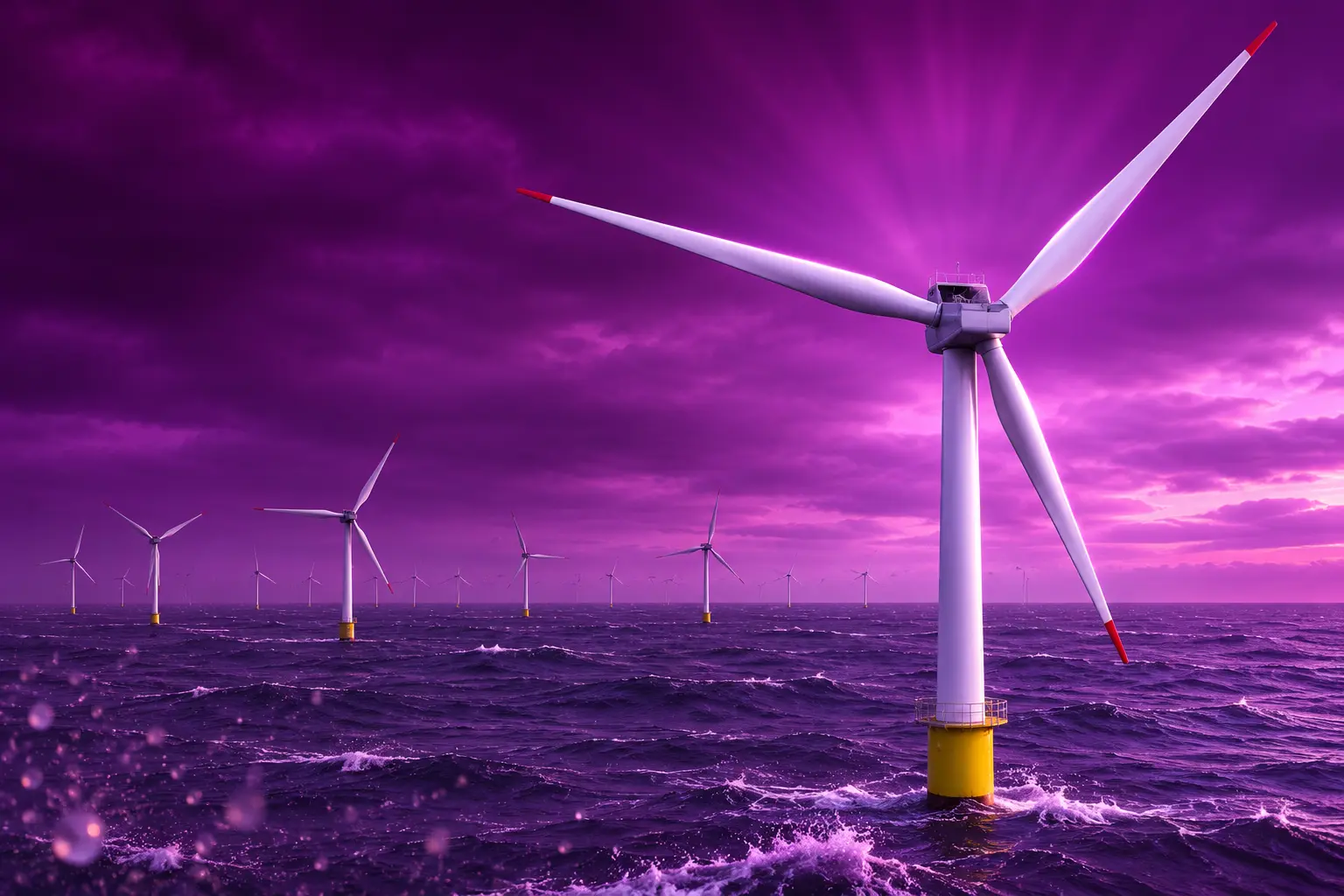
The array sits about 63 km (39 miles) off the Aberdeenshire coast, east of Peterhead, in water deep enough that the turbines will float rather than stand on the seabed. Ministers consented a generating station of up to 1 GW from up to 67 turbines, plus the offshore kit that will carry the power to shore. The government said the farm could make enough electricity each year for over a million homes.
The Gaelic name means Great Sea in Gaelic, pronounced moor-vor. Fred. Olsen Seawind is the developer. McKee put the decision beside Scotland’s 11 working offshore wind farms, which already total 4.3 GW, and said consented capacity is now more than 11 GW, this project included.
Aberdeenshire Council had already backed the onshore cables and substation in June 2025. The project said that made it the first fully floating ScotWind farm to clear that hurdle. The new offshore decision adds a Section 36 consent and marine licences for the generating station and the transmission works. Design papers for the application described blades up to 300 m across and a tip height up to 340 m above mean sea level, with each floater held by several mooring lines and seabed anchors.
MUIR MHOR AT CONSENT
- Power: Up to 1 GW of floating offshore wind, enough for over a million homes a year on the government’s figures.
- Machines: Up to 67 turbines on floating foundations, moored rather than fixed to the seabed.
- Place: About 63 km east of Peterhead, in a development area of about 200 km².
- Shore kit: Onshore cables and a substation already approved by Aberdeenshire Council in June 2025.
The project says it has placed £18.4 million of development contracts so far, with £7.96 million of that going to Scottish suppliers, and that it will set up a community fund with local people. Those sums are pre-construction money. They do not pay for 67 hulls, moorings or export cables.
What the Scottish Government Granted
The decision is a planning consent, not a build warrant. Fred. Olsen Seawind must still secure mitigation for commercial fisheries and environmental compensation for possible harm to seabirds as the scheme goes on. McKee said the call followed a thorough assessment with environmental safeguards. The conditions put the hardest marine fights after the stamp, not before it.
Up to three export cables, each running as far as about 90 km, are expected to bring the power toward the Aberdeenshire shore. Landfall is planned with horizontal directional drilling under the intertidal zone rather than an open trench through that stretch. On land, the cables are meant to meet SSEN Transmission’s Netherton Hub, west of Peterhead.
McKee called it an important milestone for Scotland’s offshore wind ambitions. Martha Lovatt, senior development and consents manager for Muir Mhòr, said the decision closed years of environmental work, technical study and talks with communities and marine users. David Hinshelwood, the project director, said political leaders had talked for years about leading in floating wind and that the team was ready to turn that talk into steel in the water. The next steel is the part the consent cannot order.
Buchan Herring Grounds Under 67 Sets of Anchors
The Scottish Fishermen’s Federation did not treat the conditions as comfort. Elspeth Macdonald, its chief executive, said ministers had signed off a 200-square-kilometre floating farm on fishing grounds off Peterhead, including part of the Buchan herring spawning grounds and a valuable haddock fishery. She called it a serious blow and an abject failure of government, and said skippers were being asked to trust post-consent fixes that had done little at other sites.
Up to 67 floating turbines will be held in place by massive anchors and a spider’s web of mooring lines. What will look like open water from the wheelhouse will in fact be criss-crossed by lines and cables below the surface, making fishing impossible.
Elspeth Macdonald, chief executive, Scottish Fishermen’s Federation
Macdonald said the environmental impact assessment with the application had already flagged a significant negative effect on fishing. The developer had floated an obstacle-free zone, she said, without publishing its size or location. Even then, she said, the assessment assumed key fleets would be kept out of much of the site for at least 35 years. She wanted a clear map of where boats can still work at a profit, where displaced boats would go, and what that would do to boats already on those grounds.
The federation has again asked for a pause on further offshore wind consents until ministers face the combined effect on the fleet and set full compensation for losses that cannot be avoided. The consent text does not settle that demand. It tells the developer to secure mitigation as the project proceeds, which is the sequence Macdonald said had already failed crews elsewhere.
Fred. Olsen Bought Vattenfall’s Half in April
The company now carrying those conditions is not the joint venture that won the seabed. On 22 April 2026, Fred. Olsen Seawind and Vattenfall said Fred. Olsen would take Vattenfall’s 50 percent stake and 100 percent of Muir Mhòr, subject to approvals including Crown Estate Scotland, which holds the lease. Vattenfall said it was concentrating on Nordlicht I and II in Germany and Zeevonk in the Netherlands. Both sides called the sale the cleaner path through the rest of development and into an early allocation round.
Maren S. Lundby, chief executive of Fred. Olsen Seawind, said the firm had built the team and was working with NESO for an accelerated grid date as well as the offshore consent. The consent has now arrived. The accelerated date has not been published. That is the wager inside the buyout: one sponsor, moving faster through paper, still has to buy a route to market from the system operator and from a Contracts for Difference round that Scottish floating projects have found hard to win.
FROM LEASE TO CONSENT
- 17 January 2022: Crown Estate Scotland awards a ScotWind option over the east-coast site, then listed at 798 MW.
- December 2024: Muir Mhòr files its Section 36 and marine licence applications, the first fully floating ScotWind project to put both onshore and offshore files in together.
- June 2025: Aberdeenshire Council grants onshore consent for underground cables and the substation.
- 22 April 2026: Fred. Olsen Seawind agrees to buy Vattenfall’s half and take full ownership, subject to lease and regulatory approvals.
- 19 November 2026: Scottish ministers grant offshore consent, with fisheries mitigation and seabird compensation still to be secured.
Fred. Olsen-related firms have worked in Scotland since 1902, Lundby noted, in shipping, factories, forestry, oil and gas, hydro and, for the last 30 years, wind. The company now owns a 1,005 MW ScotWind lease, after the site was lifted from 798 MW, a 207 MW increase logged by Offshore Wind Scotland. Ownership concentrates the risk. It does not shrink the bill for floating hulls.
£141 Million of the £500 Million Port Fund Is Committed
Floating turbines of this size are meant to be assembled in port, towed out and hooked to pre-laid moorings. That is the industrial prize ministers keep citing, and it is the step Scotland has funded slowly. The five-year Offshore Wind Investment Programme, launched in 2023, was supposed to put up to £500 million of public money into ports and factories through 2028/29.
Audit Scotland reported in October 2026 that only £141 million has been committed across 17 projects by the end of July 2026, 28 percent of the pot. Auditor General Stephen Boyle said the programme had made some progress, but it was slow going, with clear risks. The watchdog pointed to weaker investor confidence, wider regulatory problems, a data breach that undercut the collaborative model, and no clear plan after 2028/29.
THE PORT AND FACTORY FUND
| Measure | Figure |
|---|---|
| Public pot, 2023 to 2028/29 | £500 million |
| Contracted by end of July 2026 | £141 million |
| Share of the pot | 28 percent |
| Private money beside those 17 deals | £413 million |
| Target leverage | £3 private per £1 public |
The 3-for-1 private target is, on those figures, broadly in reach. A parliamentary briefing on the same audit said five of the 17 contracted projects were finished, 12 were still in development, and another eight had approval without a signed contract. Ports that poured money into quays for blades, chains and anchors have been waiting for orders. Industry voices said as much in October, when bosses talked of over-promising on floating wind and of a supply chain stuck without order books.
Muir Mhòr’s £7.96 million of Scottish development spend is not that order book. Until someone buys foundations, moorings and a float-out berth, the consent is a map of work that yards cannot yet price with certainty.
Netherton Hub Must Take the Power When It Arrives
The farm’s planned plug is SSEN Transmission’s Netherton Hub, west of Peterhead. Aberdeenshire Council granted planning consent for the Netherton Hub in August 2025. The site is designed around a 400 kV substation for offshore and onshore generation, a 132 kV substation for later connections, the Spittal to Peterhead HVDC converter, and the Eastern Green Link 3 converter aimed at carrying northern power toward Norfolk. SSEN and Balfour Beatty marked the start of main construction there in June 2026.
A hub going up is not the same as a connection date for Muir Mhòr. Lundby’s April comment was that the company was still chasing an accelerated date from NESO. No such date was attached to the 19 November decision. Colin Palmer, director of policy for onshore and offshore delivery at Scottish Renewables, said expanding the grid, giving projects firm connection dates and tackling volatile transmission charges is what turns permission into construction.
That warning sits on a bill households already pay. The Nuclear Industry Association, using NESO figures, put the cost of bottlenecks on Scotland’s grid at a possible £2.23 billion in 2026, almost nine times the level of five years earlier. Scottish constraint costs hit £470 million in October 2026, after £342 million in September, a rise of more than a third. The first ten months of 2026 came to £1.86 billion, already above the £1.21 billion recorded for the whole of 2025. Limited wires mean Scottish wind already paid to switch off while gas plant elsewhere is turned up.
Peterhead is used to this squeeze. The same coast is where Peterhead’s 910 MW station consent arrived while the wider Acorn cluster stalled. Adding up to 1 GW of floating output to that neighbourhood, years before the HVDC links are working at full stretch, is how a planning win becomes a constraint problem if the dates slip.
WHAT WE KNOW
- Landing point: Muir Mhòr is planned to connect at SSEN’s Netherton Hub west of Peterhead, which has planning consent and has started main construction.
- Onshore path: Aberdeenshire Council has already approved the underground cables and substation that would meet that hub.
- Constraint bill: NESO figures used by the Nuclear Industry Association show Scottish grid bottleneck costs at £470 million in October 2026 and £1.86 billion for the first ten months of the year.
WHAT IS UNCONFIRMED
- NESO date: Fred. Olsen Seawind has said it is seeking an accelerated grid date; ministers did not publish one with the consent.
- Auction round: The project is targeting an early Contracts for Difference allocation, with no award in hand.
- Fishing map: An obstacle-free zone has been discussed, without a public size or location, and seabird compensation is still to be settled.
A farm can be legal in Scottish waters and still be unpaid and unplugged. That is the gap the early-2030s target has to cross.
Leases Already Handed Back Across ScotWind
Muir Mhòr is one survivor in a round that grew too large, then shrank. Crown Estate Scotland announced ScotWind on 17 January 2022. Developers had expected about 10 GW. The first awards came in just under 25 GW, because turbines had grown inside a seabed-area cap of 8,600 km². A clearing round and later capacity uplifts, including Muir Mhòr’s rise to 1,005 MW, pushed the headline toward 32.3 GW. It did not stay there.
Shell handed the 3 GW CampionWind lease back to Crown Estate Scotland. In March 2026 Ocean Winds relinquished the 500 MW Arven South slice of its Shetland project. Offshore Wind Scotland now puts the round at just under 30 GW. Industry briefings in October said some floating contracts would follow those leases back, and that bosses were trying to rally behind a shorter list of viable schemes, including Buchan and Caledonia. Muir Mhòr was not named in that shortlist talk. It now has something those projects were still chasing: offshore consent.
The same October round-up said that among dozens of floating proposals, a single 3 MW turbine at Culzean was under construction, with three projects then holding planning consent. Muir Mhòr’s decision adds a fourth name to that thin consented column. It does not, by itself, cut steel.
PAPERS THE CONSENT DOES NOT INCLUDE
- A CfD: There is no published Contracts for Difference award, which is how UK offshore farms usually lock in a price.
- A grid date: NESO has not issued a public connection date, accelerated or otherwise, alongside the 19 November decision.
- A fishing plan: Mitigation is a condition, not a chart skippers can use, and the obstacle-free zone still lacks size and place.
- Seabird compensation: Environmental compensation is required as the project proceeds, not as a finished package in the consent notice.
- Yard orders: Development contracts of £18.4 million are not foundation, mooring or float-out packages for 67 machines.
McKee said the farm could drive down floating offshore wind costs. That only happens if the machines are built, wired and paid for. Fred. Olsen Seawind now holds the lease, both planning papers and a target in the early 2030s. The grid date, the auction and the fishing map are the documents that turn a consented gigawatt into power.

New Audi Q3 Skips Cameras a Mahindra XUV 3XO Includes

Scotland’s £65m Universities Fund Bets on Later Rounds

Suzuki Access 125 Adds Paint as Jupiter Takes Share

Scotland Face Argentina at Twickenham With Rankings at Stake

Motorola’s Android 17 List Trails the Real Rollout

Volkswagen Sells the Osnabruck Plant to Clear a Board Fight

Apple’s Foldable iPhone Hinges on Samsung Display Supply

Saksham Gaur Finds He Is His Own Company’s Client

Tata Motors’ Iveco Tender Opens as Holders Still Decide

What Is SD on Amazon Prime?
-
 AUTO3 months ago
Volkswagen Sells the Osnabruck Plant to Clear a Board Fight
-
 NEWS3 months ago
Apple’s Foldable iPhone Hinges on Samsung Display Supply
-
 BUSINESS3 months ago
Saksham Gaur Finds He Is His Own Company’s Client
-
 AUTO3 months ago
Tata Motors’ Iveco Tender Opens as Holders Still Decide
-
 TECHNOLOGY3 years ago
What Is SD on Amazon Prime?
-

 BUSINESS3 months ago
Hyderabad 22-Carat Gold Jumps After a False Bargain
-

 GAMING3 months ago
Onimusha Way of the Sword Preload Hits a Windows 11 Wall
-

 ENTERTAINMENT2 years ago
Andy Scott’s Steel Loon Repeats the Kelpies Regeneration Bet