
BUSINESS
Coal India Sells Mahanadi Coalfields After Auction Premiums Fall
Mahanadi Coalfields IPO is a ₹8,981.12 crore Coal India offer for sale, pricing a cash-rich miner after auction premiums fell and revenue shrank.

Coal India opened an ₹8,981.12 crore sale of Mahanadi Coalfields on 19 November 2026, and the miner will not keep a rupee of it. The Mahanadi Coalfields IPO is a 10% stake sale by the parent, priced at a price band of ₹129 to ₹136, with listing due on the BSE and NSE on 27 November.
The company still prints cash. It also ships more coal for less money than it did two years ago, because the auction premium that padded fiscal 2024 has already faded. Buyers are being asked to pay about 8.43 times last year’s earnings for a business whose prices are still set in Kolkata.
Coal India Keeps 90% and Takes the Cheque
Coal India told the exchanges on 14 November 2026 that it had filed a red herring prospectus dated 13 November for an offer for sale of 661,836,300 shares. There is no fresh issue. Mahanadi Coalfields Limited, a Miniratna subsidiary based in Sambalpur, Odisha, receives none of the proceeds.
At ₹136 the slice is worth ₹8,981.12 crore after the ₹6 employee discount, and the whole company is valued at about ₹90,010 crore ($9.55 billion). Face value is ₹2. The retail lot is 110 shares, or ₹14,960 at the cap. Coal India keeps the other 90% and still names the notified prices that govern most of what the mines sell.
THE OFFER IN FOUR LINES
- The cheque: ₹8,981.12 crore, 100% offer for sale, paid to Coal India.
- The stake: 10% of 6,618,363,000 equity shares, or 661,836,300 shares.
- The ticket: ₹129 to ₹136 a share, 110-share lot, ₹14,960 at the cap.
- The calendar: Bids close 23 November 2026, allotment due 25 November, listing due 27 November.
People who held Coal India shares in demat on 13 November 2026 can use a shareholder quota of up to ₹2 lakh. That only changes allotment odds. It does not change the price, and it does not put a single rupee into a new dragline or a new siding.
Record Tonnes, a Smaller Top Line
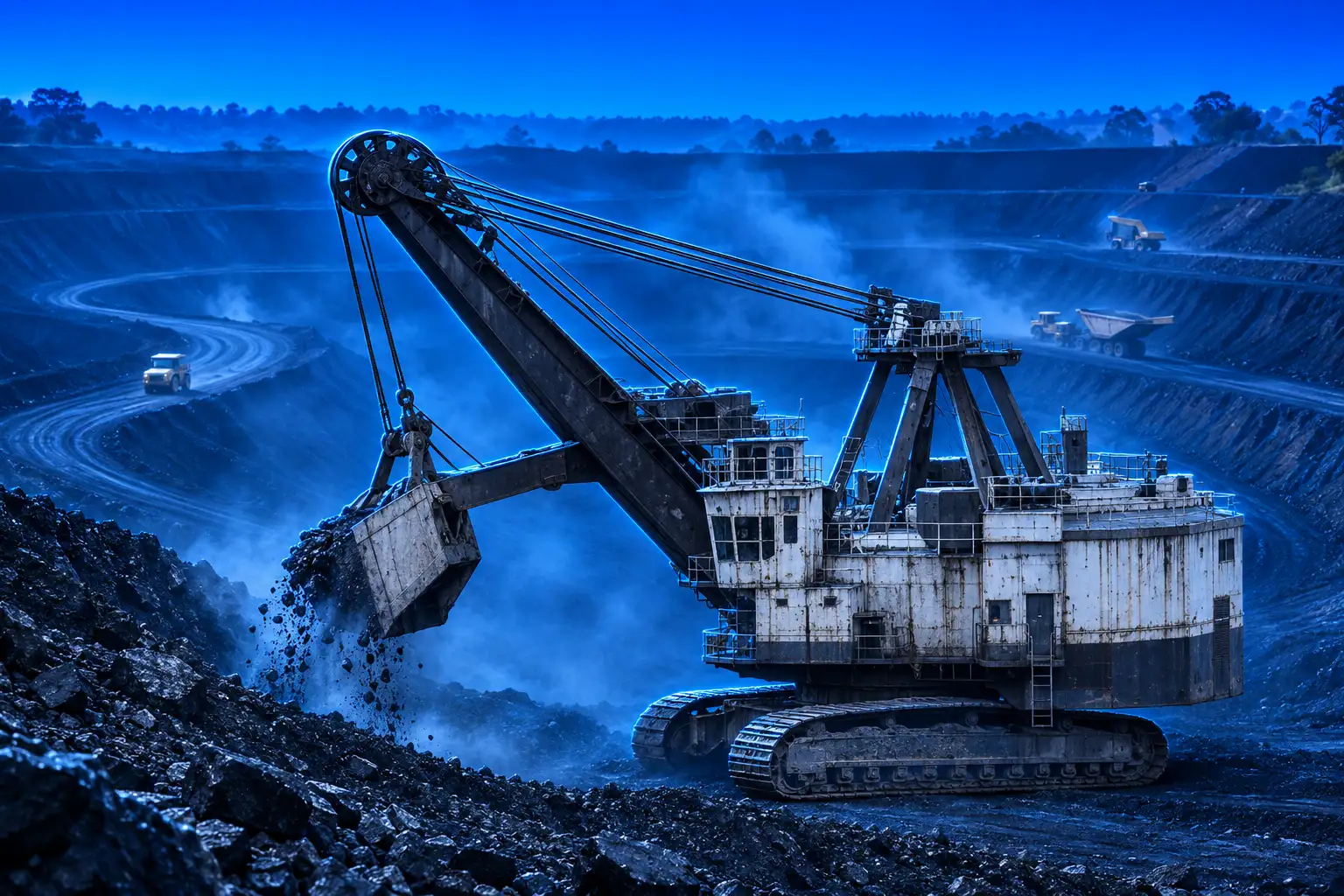
Mahanadi dug 218.31 million tonnes in FY26, about 21.0% of India’s domestic coal and 28.4% of Coal India’s output. Dispatches hit a record 210.74 million tonnes. Revenue from operations still fell to ₹30,549.59 crore from ₹31,634.35 crore in FY24, and profit after tax slipped to ₹10,698.12 crore from ₹11,841.55 crore.
FY25 was the peak production year at 225.17 million tonnes. FY26 gave that back, which the independent technical report ties to monsoon disruption, land and working-face constraints, and operator shortages, not a lack of coal in the ground. The top line was already shrinking before that dip.
FY24 TO FY26 AT THE MINES
| Metric | FY24 | FY25 | FY26 |
|---|---|---|---|
| Production (million tonnes) | 206.10 | 225.17 | 218.31 |
| Dispatch (million tonnes) | 199.02 | 210.46 | 210.74 |
| Revenue from operations (₹ crore) | 31,634.35 | 31,353.02 | 30,549.59 |
| Profit after tax (₹ crore) | 11,841.55 | 10,825.12 | 10,698.12 |
| E-auction premium (₹ per tonne) | 802 | n.a. | 274 |
| Rail share of dispatch | 58.70% | n.a. | 65.28% |
Even after that fade, FY26 EBITDA was ₹16,084.93 crore, a 47.45% margin, with a 31.56% profit margin and a 53.77% return on net worth. Borrowings were ₹3.16 crore on 31 March 2026 and ₹2.76 crore on 30 September 2026. Cash and bank deposits were about ₹20,292 crore at the half year, when net worth stood at ₹22,399.80 crore. Diluted FY26 earnings were ₹16.13 a share, so the cap price is 8.43 times that year.
How the Auction Premium Collapsed
Most of the coal never sees a free price. In FY26, 82.12% of product sales went through Fuel Supply Agreements and other linkages at an average ₹1,354 a tonne. The other 17.88% went through electronic auctions at ₹1,797 a tonne. Uday Anantrao Kaole, chairman and managing director, said that mix is the business model and will only wobble at the edges from year to year.
The gap still matters, because auctions are where extra money used to show up. The notified-price premium on those tonnes fell from ₹802 in FY24 to ₹274 in FY26, about 66%. Incremental premium revenue dropped from ₹1,833 crore to ₹728 crore, about 60%, even as the company put far more coal on the block.
WHAT THE AUCTION BOOK DID
- Tonnes offered: 28.65 million tonnes in FY24, 72.26 million tonnes in FY26.
- Tonnes booked: 22.86 million tonnes, then 26.49 million tonnes.
- Booking rate: about 80% of what was offered, then about 37%.
- Dispatch split: 184.25 million tonnes on FSAs and 26.49 million tonnes on e-auction, matching the 210.74 million tonne dispatch record.
Coal India’s wider auction book has been heading the same way, with group premiums down from 252% in FY23 to 38% across FY26. In May 2026 Mahanadi offered 10.986 million tonnes and allocated only 19% of it, at a 33% premium. Private commercial mines and captive blocks are one reason buyers no longer chase every rake. Kaole still argues India will need another 600 million tonnes as output heads toward 1.6 billion tonnes over eight to 10 years, and that Mahanadi’s share of the country, now 21%, will rise. That is a volume claim. It is not a claim about auction premia coming back.
The ₹2,295 Crore Anchor Book
The day before public bidding, the company allotted 16,87,68,255 shares at ₹136 to 53 funds and raised ₹2,295 crore. Life Insurance Corporation of India took 4,17,64,690 shares, about ₹568 crore, the largest single line. Nippon Life India Trustee took about ₹500 crore across two schemes. Abu Dhabi Investment Authority, Morgan Stanley, Goldman Sachs, Citigroup and several Indian insurers sat in the same book.
Eleven domestic mutual funds, through 29 schemes, received 8.95 crore shares, 53% of the anchor portion. That is a serious long-only bid at the cap. It is also a bid that leaves very little on the table if FY26 earnings are the run rate, because the grey market has already stopped treating this as a listing-day lottery.
Unofficial grey-market quotes sat near ₹20 a share on 13 November 2026, when the prospectus landed. By the morning of 19 November they clustered around ₹3 over the ₹136 cap, implying a couple of percentage points if the issue prices at the top. That slide is the tell. Institutions will own the stock for the dividend and the cost position. They are not paying extra for a pop.
THE BIDDING CALENDAR
- 13 November 2026: Red herring prospectus filed with the RoC in Cuttack, SEBI, BSE and NSE.
- 14 November 2026: Coal India discloses the filing; B. P. Dubey, executive director and company secretary, signs the note.
- 16 November 2026: Price band fixed at ₹129 to ₹136.
- 18 November 2026: Anchor book allots 16.88 crore shares at ₹136.
- 19 November 2026: Public issue opens.
- 23 November 2026: Public issue closes.
- 25 November 2026: Basis of allotment expected.
- 27 November 2026: Listing expected on BSE and NSE.
Book-running lead managers are SBI Capital Markets, Axis Capital, BOB Capital Markets, IDBI Capital Markets and IIFL Capital Services. KFin Technologies is the registrar.
BCCL’s Bumper Listing Was Not a Template
This is Coal India’s third subsidiary float of 2026, and the first two already disagree with each other. Bharat Coking Coal listed on 19 January 2026 at ₹45 on the NSE against a ₹23 issue price, a 95.65% premium, after a 146.81 times subscription of a ₹1,071 crore, 10% offer for sale. Central Mine Planning and Design Institute listed on 30 March 2026 at ₹162.80 against ₹172, a 5.35% discount, after a 1.05 times subscription of a ₹1,842 crore sale that cut Coal India’s stake by 15%.
BCCL later lost the listing shine as quarterly numbers wobbled. CMPDI, which listed cheap, then ran up and at last look around 17 November 2026 was near ₹187, a thin premium to the issue price after giving back most of a 77% rally from the open. Mahanadi is several times larger than either, and the unofficial premium heading into the bid looks closer to CMPDI’s shrug than to BCCL’s stampede.
THREE COAL INDIA SALES IN 2026
| BCCL | CMPDI | Mahanadi | |
|---|---|---|---|
| Issue window | 9-13 January 2026 | 20-24 March 2026 | 19-23 November 2026 |
| Issue price / band (₹) | 23 | 172 | 129-136 |
| Issue size (₹ crore) | 1,071 | 1,842 | 8,981.12 |
| Stake sold | 10% | 15% | 10% |
| Structure | OFS | OFS | OFS |
| Subscription | 146.81 times | 1.05 times | Open |
| Listing price | ₹45 (NSE) | ₹162.80 | Due 27 November |
| Listing vs issue | +95.65% | -5.35% | Not listed |
Coal India’s board has already given in-principle approval for South Eastern Coalfields as well, and SECL’s draft prospectus was on the exchange list in early November 2026. SECL dug 176.29 million tonnes in FY26, second to Mahanadi. Northern Coalfields, at 140.50 million tonnes, almost matched Mahanadi’s profit, at ₹10,657 crore. The parent is turning its best mines into listed multiples and keeping control. Mahanadi is the biggest cheque in that sequence, not a one-off.
A One-to-One Strip Ratio in Odisha
The reason the margins survive a weaker auction is in the pit. Almost all of the coal is opencast: Kaole put that share at 99.87%, with 99.37% of it cut by surface miners that skip drilling, blasting and explosive stoppages. Mukesh Agrawal, director (finance) at Coal India, said the geology does the rest.
This company is blessed by Mother Earth because its stripping ratio is very low, 1:1, whereas the normal stripping ratio is 4:1. Coal India has a basket of mines where the stripping ratio in some mines is 6:1. Here, it is 1:1.
Mukesh Agrawal, Director (Finance), Coal India
FY26 cash cost was ₹816.01 a tonne. South Eastern Coalfields spent ₹1,448.34 on a tonne. Bharat Coking Coal spent ₹3,980.54. That gap is why Mahanadi can miss the FY24 auction windfall and still clear a 47.45% EBITDA margin. The top 10 customers still took 55.94% of FY26 revenue, so a few power stations changing their fuel mix would show up quickly, but the cost line is the cushion.
There is an incremental opportunity of 600 million tonne for every player in the market. The readiness of Mahanadi Coalfields Limited is much better in terms of resource allocation, evacuation infrastructure, operational excellence and support from Coal India and the Ministry of Coal.
Uday Anantrao Kaole, Chairman and Managing Director, Mahanadi Coalfields
Washery capacity is 10 million tonnes now, the largest non-coking unit at Lakhanpur. Two more plants, 27 million tonnes together, are meant to take the total to 37 million tonnes in three to four years. Kaole put the extra EBITDA on washed coal at about ₹400 a tonne. Annual capex is about ₹3,000 crore, funded from inside. Agrawal put yearly cash accruals near ₹12,000 crore and said the surplus after capex goes to shareholders. Nirmal Kumar Singh, director (finance) and CFO, said the same: internal accruals, not IPO cash, pay for the kit. A non-executive wage revision due from July 2026 is already being provided for, Agrawal said, so he does not expect a one-time hit.
What the Listing Does Not Fund
Moving 210 million tonnes is the other half of the job. Rail took 65.28% of FY26 dispatches, up from 58.70% in FY24, while road fell to 30.74%. First-mile silos and rapid-loading systems now put more than 96% of that flow straight onto trains. Five seaports handle about 21.5% of dispatches, which is how coastal plants can take Odisha coal instead of imports. Those rakes still have to meet rail-fed plants running on three-day stocks when the grid is tight, so a missed siding shows up as a stock-out, not as a line in the prospectus.
HOW THE COAL LEAVES ODISHA
- Rail: 65.28% of FY26 dispatches, up from 58.70% in FY24.
- Road: 30.74% of FY26 dispatches, the slower, costlier residual.
- Ports: about 21.5% of dispatches, aimed at coastal power stations.
- First mile: silos and rapid loaders, with more than 96% of that flow on rail.
DMT Consulting’s JORC-style report, prepared for the offer, puts 9,840.31 million tonnes of audited reserves against FY26 production of 218.31 million tonnes, about 45 years at that rate. Audited resources are 10,517.01 million tonnes. The wider Talcher and Ib Valley inventory allocated to Mahanadi is much larger, about 40,336 million tonnes of geological resource. Having coal in the ground is not the same as selling it at FY24 prices, and it is not the same as India burning the same mix in 2040.
India still leans on coal for firm power even as solar and wind capacity grow, which is why a miner this cheap to run can list at all. The offer does not change notified prices, FSA shares, or the fact that private and captive blocks are already eating the auction tail. It does give Coal India a public multiple on its largest producer and a cheque of up to ₹8,981.12 crore for doing so.
Shares are due to start trading on 27 November 2026. Coal India will still own 90%, and G11 to G14 coal will still move at the price the parent posts.
Disclaimer: This article is news reporting and analysis of a public share sale. It is for information only and is not a recommendation to apply for, buy, or sell Mahanadi Coalfields, Coal India, or any other security. It is not investment, tax, or legal advice, and it does not consider any reader’s objectives, risk limit, or holding period. Speak to a SEBI-registered investment adviser or other qualified financial professional before you apply for an IPO or change a portfolio. Issue terms, unofficial grey-market quotes, allotment, listing, and the company’s results can all change from the figures and dates cited here.

New Audi Q3 Skips Cameras a Mahindra XUV 3XO Includes

Scotland’s £65m Universities Fund Bets on Later Rounds

Suzuki Access 125 Adds Paint as Jupiter Takes Share

Scotland Face Argentina at Twickenham With Rankings at Stake

Motorola’s Android 17 List Trails the Real Rollout

Volkswagen Sells the Osnabruck Plant to Clear a Board Fight

Apple’s Foldable iPhone Hinges on Samsung Display Supply

Saksham Gaur Finds He Is His Own Company’s Client

Tata Motors’ Iveco Tender Opens as Holders Still Decide

What Is SD on Amazon Prime?
-
 AUTO3 months ago
Volkswagen Sells the Osnabruck Plant to Clear a Board Fight
-
 NEWS3 months ago
Apple’s Foldable iPhone Hinges on Samsung Display Supply
-
 BUSINESS3 months ago
Saksham Gaur Finds He Is His Own Company’s Client
-
 AUTO3 months ago
Tata Motors’ Iveco Tender Opens as Holders Still Decide
-
 TECHNOLOGY3 years ago
What Is SD on Amazon Prime?
-

 BUSINESS3 months ago
Hyderabad 22-Carat Gold Jumps After a False Bargain
-

 GAMING3 months ago
Onimusha Way of the Sword Preload Hits a Windows 11 Wall
-

 ENTERTAINMENT2 years ago
Andy Scott’s Steel Loon Repeats the Kelpies Regeneration Bet