
BUSINESS
Scotland’s £65m Universities Fund Bets on Later Rounds
Scotland’s new £65 million universities fund is mostly later-stage money, arriving after a £138 million SNIB loss and a worsening conversion scorecard.

The Scottish National Investment Bank has put up to £65 million behind a new universities fund, and set aside £50 million of that money for companies already raising Series A rounds. Investing starts in spring 2027, more than three years after Scotland’s innovation strategy asked for a co-invested vehicle to turn research into firms that stay.
Sir Jim McDonald, who co-wrote that strategy and is emeritus principal of the University of Strathclyde, calls the Scottish Universities Fund tangible progress. The conversion numbers he cites, and the Bank’s own last set of accounts, sit less comfortably beside the applause.
Most of the £65m Goes to Later Rounds
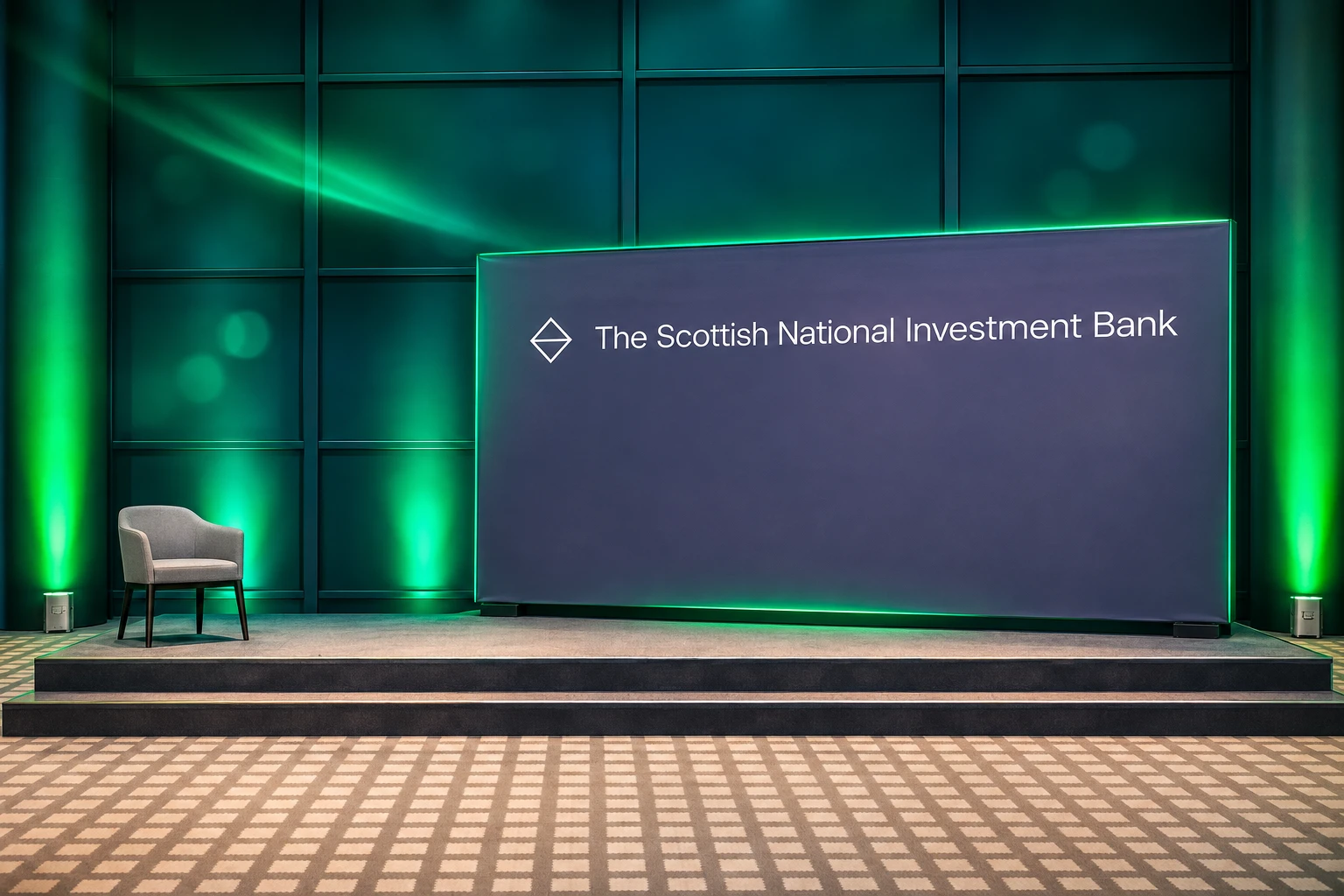
The Bank announced the fund on 10 November 2026 and marked it the next day at its Edinburgh office with university principals, ministers and investors. It will provide up to £65 million of cornerstone capital over five years and says the platform is there to pull in private money beside it.
Two sleeves sit under the one name. Ignition is the early cheque. Accelerator is the larger one, and it takes the bulk of the public cash.
HOW THE £65 MILLION IS SPLIT
| Sleeve | Bank capital | Cheque size | Stage |
|---|---|---|---|
| Ignition Strategy | £15 million | £250,000 to £1.5 million | Pre-seed to seed |
| Accelerator Strategy | £50 million | £2 million to £8 million | Series A and later |
David Ritchie, the Bank’s chief executive, said founders still struggle to get capital even though Scottish universities produce more research than the country’s population share would imply. The Bank’s own line is 12% of UK research output against 8% of the population. His test for the fund is whether companies start, scale and stay in Scotland.
Our ambition is not simply to provide capital. It is to help build a stronger innovation ecosystem, attract additional private investment and ensure more of the value created by Scottish innovation is captured here in Scotland.
David Ritchie, Chief Executive, Scottish National Investment Bank, at the fund launch
That is a retention brief. £50 million of the public cornerstone is aimed at rounds of £2 million to £8 million. The creation gap McDonald put on the table is earlier than that.
Universities Were Meant to Put Money In
Scotland’s National Innovation Strategy, published on 9 June 2023, set a ten-year aim that the country should rank alongside Denmark, Norway and Finland as one of the most innovative small countries. In the World Intellectual Property Organization’s Global Innovation Index for 2026, Finland sits 8th, Denmark 9th and Norway 21st. The United Kingdom is 6th. Scotland is not ranked on its own.
The 2023 text did not promise a Bank-only product. It said Scottish universities would consider a co-invested Scottish Innovation Fund, with patient capital for spin-outs in deep science and deep tech, and that government would help secure cornerstone investment. The vehicle that arrived in November 2026 lets universities join as strategic partners. They are not required to invest a pound.
Alyn Smith, Minister for Innovation, Technology and Tertiary Education, told the launch that the Programme for Government had committed to a Scottish Innovation Fund focused on university spinouts, and that the launch delivered on that. The original commercialisation chapter also wanted more scalable spin-outs and the infrastructure to keep the successful ones in Scotland. The money now on the table is weighted to the second of those jobs.
FROM STRATEGY TO FIRST CHEQUE
- 9 June 2023: The Scottish Government publishes the ten-year National Innovation Strategy and asks universities to consider a co-invested innovation fund.
- 1 July 2026: Frontier Economics, in a report for the Scottish Funding Council, puts Scottish university spinouts at 13 per £1 billion of research funding against a UK average of 19.
- 24 August 2026: The Scottish National Investment Bank publishes accounts showing a £138 million net loss for the year to 31 March 2026.
- 27 October 2026: The third innovation scorecard update records worsening performance on smaller risk-capital deals and on the share of innovation-active firms.
- 10 November 2026: The Bank launches the Scottish Universities Fund with up to £65 million of its own capital.
- Spring 2027: The fund is due to make its first investments.
That is more than three years from the strategy’s publication to the launch, and close to four years until a company can actually cash a cheque. McDonald attended the Edinburgh event and, in a column on 22 November 2026, urged investors and founders to get involved. The room was principals, the Bank and government. It was not a founder launch in the market the fund says it will serve.
A £138m Loss Sits Behind the Cheques
The institution writing those cheques has just had its hardest year on paper. For the twelve months to 31 March 2026 the Bank recorded a net loss of £138 million, its fifth full-year deficit since it opened in November 2020.
Realised losses of £65 million came from three early bets that failed. Unrealised losses of £85 million came from revaluations and from two further portfolio companies still in administration at year end. Strip those investment hits out and the Bank says it made an operating profit of £12 million, on income of £32 million and costs of £20 million.
THE FIVE NAMES INSIDE THE LOSS
- M Squared: The Glasgow photonics firm was the Bank’s first investment after launch and is one of the three realised failures.
- Trojan Energy: The Aberdeen electric-vehicle charging business is the second realised failure named in the accounts note.
- Krucial: The Glasgow satellite-technology company, also recorded as a realised loss, completes that trio.
- Orbex: The rocket manufacturer was still in administration at 31 March 2026, so its hit sits in unrealised losses.
- Pneumowave: The medical-technology firm is the other administration still open at year end, also in the unrealised column.
Willie Watt, the Bank’s chair, called the scale of the realised losses, taken with the provisions, challenging. He said many of them relate to the first three years of the Bank and predate tighter investment conditions introduced in 2023.
Investment losses will always be present in a development bank portfolio, with a mandate to take on higher risk. However, the scale of the realised losses taken together with the provisions made against the portfolio is challenging.
Willie Watt, Chair, Scottish National Investment Bank, annual report statement, August 2026
In the same year the Bank committed £374 million, its highest annual figure, and said other investors put in £445 million alongside. Since launch it has committed £1.2 billion across 53 businesses and projects and crowded in a further £1.9 billion. Ritchie pointed to a £3 million cheque that led healthtech firm Bioliberty’s Series A as the sort of innovation deal he wants more of. The new universities fund builds a dedicated sleeve for exactly that stage, after a year in which early technology bets were the ones that broke.
How Many Spinouts a Billion of Research Buys
Frontier Economics, in a 1 July 2026 paper for the Scottish Funding Council, is the source McDonald used for the conversion gap, and the full report is blunter than a single ratio. Over six years of data, Scottish universities produced 13 spinouts per £1 billion of research funding, against 19 across the UK. That is six fewer companies for the same public and private research pound. On startups the gap is wider: 218 per £1 billion in Scotland, 492 for the UK.
FRONTIER’S 2023-24 SNAPSHOT
- New spinouts: 14 companies were established from Scottish universities in 2023-24, with 237 still active that year.
- Startups beside them: 410 new startups were established, and 2,311 were active.
- The research base: 19 higher education institutions took in £1.23 billion of research income in 2023-24 and employed more than 17,500 research staff.
- Papers and patents: Scottish universities published about 26,000 papers in 2024, cited 61% more often than the global average, and produced 53.0 new patent families per £ million of research funding from 2018 to 2022, against 62.2 for the UK.
The report is not a demolition of the universities. Edinburgh and Glasgow sit in the global top 100. Scottish papers are produced at a higher rate per pound than in London, the South East and the East. Industry co-authorship is 4.6% of scholarly output, higher than any UK area outside London. Businesses that do innovate in Scotland are more likely to work with a university than firms elsewhere in the UK.
The leak is further down the pipe. Average turnover, jobs and outside investment at Scottish university spinouts were lower in 2023-24 than the UK average, a gap Frontier says opened after 2019-20, when the figures still looked similar. Business R&D in Scotland was 1.4% of GDP in 2023, against 2.0% for the UK. In 2020-22, 32.4% of Scottish businesses were innovation-active, against 36.3% across the UK.
McDonald wrote that successes exist but are outliers, and that companies created here attract far less equity. Frontier supports that on the averages. It also notes the UK mean is pulled up by the golden triangle, and that Scottish spinouts still beat English regions outside the south on several measures. The political comparison he chose is Denmark and Finland, not Yorkshire.
Scorecard Readings Since the Strategy Launched
The strategy built its own report card so this debate would not rest on speeches. The 2026 update, published on 27 October, is the third annual edition. On the convert and adopt measures that sit closest to a universities fund, several needles are still moving the wrong way.
SELECTED 2026 SCORECARD LINES
| Measure | Latest reading | Assessment |
|---|---|---|
| Risk capital, deals under £10 million (2025) | 333 deals, £357 million | Worsening (value down 3.25% in cash, 6.62% in real terms) |
| Of which university spinouts | 56 deals, £194 million | Included in the under-£10 million total |
| Later-stage equity, deals of £10 million and above (2025) | 14 deals, £789 million | Improving on value; deal count down from 22 |
| High-growth businesses (2024) | 855 firms, 4.12% of the relevant base | Improving, yet 11th among 12 UK nations and regions |
| Innovation-active businesses (2022-24) | 29.4% | Worsening; 11th among 12 UK nations and regions |
The under-£10 million line is the one the Ignition sleeve is built for. Scotland logged 333 risk-capital deals under £10 million in 2025, up 4.06% on 2024, while their combined value fell. Two hundred and eighty-one of those deals were below £2 million and totalled £126 million. Fifty-two sat between £2 million and £10 million and totalled £231 million.
The later-stage line, where the Accelerator sleeve will hunt, looks stronger until the footnote is read. Deal value hit £789 million, the highest in the series the scorecard shows, but the count fell from 22 to 14. A single Fidra Energy deal accounts for £445 million of that £789 million. Take that energy-storage cheque out, and the “improving” commercialise measure is a thinner book of university-linked rounds than the headline implies.
High-growth firms have risen for a third year, from a low of 3.0% in 2021 to 4.12% in 2024, which is 855 companies. Scotland still ranks 11th of 12 UK nations and regions on that share. The innovation-active reading of 29.4% for 2022-24 is a later survey wave than Frontier’s 32.4% for 2020-22, and it is lower again.
Four Priority Sectors and a Stay-in-Scotland Test
The fund is described as sector agnostic. In the same breath the Bank lists the four themes the 2023 strategy already chose: health and life sciences, energy transition, data and digital technologies, and advanced manufacturing. Smith’s launch remarks named the first three of those as places Scotland has real strength. The product is open, and the pipeline the Bank wants is not a mystery.
Universities will help spot companies. They will not have to put capital beside the Bank’s. That is a change from the 2023 idea of a co-invested fund, and it is also a practical way to get a vehicle up without a year of endowment politics. The trade is obvious. If a spinout’s parent university has no money in the round, its incentive to keep the headquarters, the lab jobs and the later tax in Scotland is moral and reputational, not financial.
Ritchie said the point is to capture more of the value in Scotland. McDonald said businesses with scalable promise either fail to reach it or struggle to keep core operations here. Neither man published a figure for how many Scottish spinouts have already moved their centre of gravity south or overseas. The fund is built as if that leakage is the live risk, which is why so much of the £65 million sits at Series A rather than at the lab door.
InnoScot Health, a healthcare innovation body, called the pot a possible turning point for health spinouts if it is aimed at clinical need and real-world evidence. That “if” is the whole implementation problem. A sector-agnostic fund with four favourite sectors, run by a bank that has just taken losses on lasers, rockets, satellite kit, kerbside chargers and medtech, now has to pick university companies in those same neighbourhoods and hold them through the stage where its last early book broke.
The First Cheques Wait Until Spring 2027
Nothing in the launch commits a private pound. The Bank says the £65 million is meant to draw other investors in, and that the fund will sit beside Scottish Enterprise, angel networks and other vehicles. Until those tickets are signed, the public cornerstone is the whole fund. Ignition’s £15 million, spread across five years of £250,000 to £1.5 million cheques, is a small number of companies even in a generous year. Accelerator can write larger tickets, and it will be judged on whether those companies still have their core in Scotland when the round closes.
McDonald’s column treats the launch as proof the strategy is moving. The strategy’s own scorecard, published three weeks before the Edinburgh event, still has smaller risk-capital value and innovation-active firms in the worsening column. Frontier’s July baseline of 13 spinouts per £1 billion against 19 will still be the conversion rate the first spring 2027 cheques are measured against, because the fund has not yet bought a share.
The Bank will start writing those cheques in spring 2027. Until then the Scottish Universities Fund is a structure, a split of £15 million and £50 million, and a bet that later-stage public capital can keep research-born companies here after a year in which several of the Bank’s own early technology holdings did not survive.
Disclaimer: This article is news reporting and analysis of a public investment vehicle and related official figures. It is for information only and is not investment advice, a solicitation to invest, or a recommendation to back any fund, company or security named here. Readers considering any financial decision linked to these institutions or to university spinouts should consult a qualified independent financial adviser. Figures and statuses are those published by the Scottish National Investment Bank, the Scottish Government, the Scottish Funding Council and Frontier Economics on the dates given, and they can change as later accounts, scorecards and deal data appear.

New Audi Q3 Skips Cameras a Mahindra XUV 3XO Includes

Scotland’s £65m Universities Fund Bets on Later Rounds

Suzuki Access 125 Adds Paint as Jupiter Takes Share

Scotland Face Argentina at Twickenham With Rankings at Stake

Motorola’s Android 17 List Trails the Real Rollout

Volkswagen Sells the Osnabruck Plant to Clear a Board Fight

Apple’s Foldable iPhone Hinges on Samsung Display Supply

Saksham Gaur Finds He Is His Own Company’s Client

Tata Motors’ Iveco Tender Opens as Holders Still Decide

What Is SD on Amazon Prime?
-
 AUTO3 months ago
Volkswagen Sells the Osnabruck Plant to Clear a Board Fight
-
 NEWS3 months ago
Apple’s Foldable iPhone Hinges on Samsung Display Supply
-
 BUSINESS3 months ago
Saksham Gaur Finds He Is His Own Company’s Client
-
 AUTO3 months ago
Tata Motors’ Iveco Tender Opens as Holders Still Decide
-
 TECHNOLOGY3 years ago
What Is SD on Amazon Prime?
-

 BUSINESS3 months ago
Hyderabad 22-Carat Gold Jumps After a False Bargain
-

 GAMING3 months ago
Onimusha Way of the Sword Preload Hits a Windows 11 Wall
-

 ENTERTAINMENT2 years ago
Andy Scott’s Steel Loon Repeats the Kelpies Regeneration Bet