
NEWS
iPhone 20 Pro Leaks Point to a Greatest-Hits Redesign
Leaks describe an iPhone 20 Pro with curved glass and titanium, while iPhone Duo 2 would keep the same screens and Touch ID.

Leakers on November 18 described an iPhone 20 Pro with curved glass and a titanium frame, a 2027 flagship made from parts Apple already used. Apple is expected to skip the iPhone 19 name and jump to iPhone 20, as it skipped 9 for the iPhone X in 2017. Apple has not confirmed the name, the metal, or the glass.
The same day, Digital Chat Station said iPhone Duo 2 would keep the first model’s 7.6-inch inner display, 5.4-inch outer screen, and side-button Touch ID. That first foldable has been on sale since October 23, 2026.
Apple Recycles Its Greatest Hits for Year 20
The original iPhone shipped in 2007. A 2027 model named iPhone 20 would mark 20 years the same way iPhone X marked 10, by dropping a number and selling the jump as a new chapter. The hardware now in the leaks does not look like a blank page.
Fixed Focus Digital, posting on Weibo, said the iPhone 20 Pro would use the same glass material as iPhone Air, tuned for more curve on all four sides. The leaker said early engineering units already wear a titanium frame, “somewhat reminiscent of the Air model, but much smoother and more rounded.”
Titanium is not a new Apple trick. iPhone 15 Pro in 2023 and iPhone 16 Pro in 2024 used it, then iPhone 17 Pro in 2025 and iPhone 18 Pro in 2026 moved the expensive slab to aluminum. The anniversary story, if the prototypes hold, is that the Pro line would put the old metal back on a rounded body Apple has been circling for years.
Four Prototypes Still Fighting Over the Same Phone
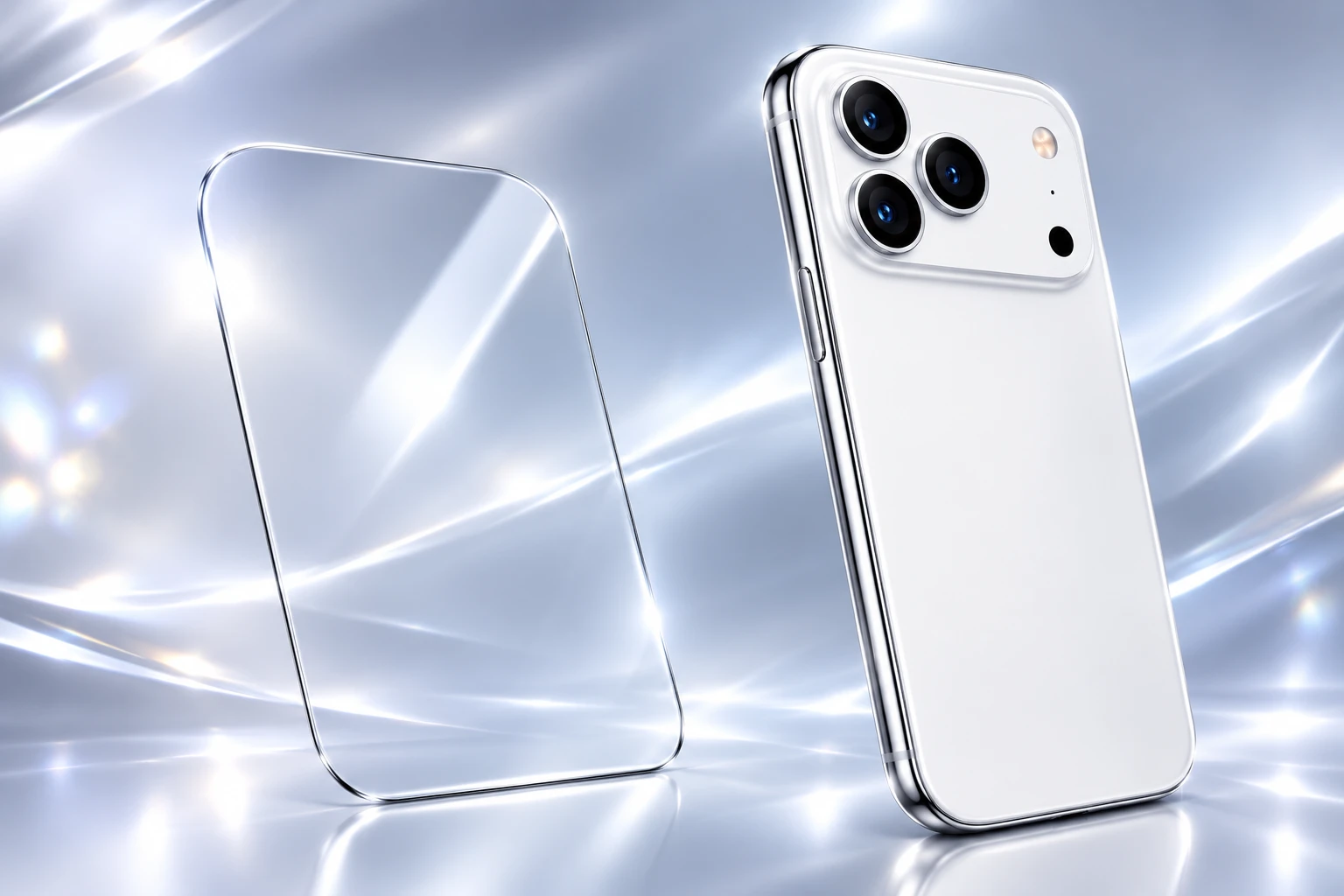
Ice Universe said Apple is developing four 20th-anniversary units: two with flat glass backs and two with glass that bends on all four edges. That is Pro and Pro Max under two looks, not four phones on a store shelf. The leaker said the quad-curved version has been in prototyping for three years, and that the first cuts were more aggressive before the curve was pulled back.
On November 14 he shared a handheld clip labelled as an approved 3D quad-curved cover glass sample. On November 16 he posted another video of a screen protector with shallow four-side curves, rounded corners, and a very thin border, and called the redesign a “milestone.” Accessory-maker tests have been circulating since early October, and those pieces are not proof of a final Apple part.
THE LEAK WEEK
- November 7, 2026: Ice Universe says next year’s iPhone 20 Pro is moving toward a curved, or curved-looking, display and that Android will follow.
- November 14, 2026: He shares a clip of a 3D quad-curved cover glass sample.
- November 16, 2026: A protector sample goes up on X; he calls the look a milestone design.
- November 18, 2026: Fixed Focus Digital says titanium is on early iPhone 20 Pro units; Digital Chat Station says Duo 2 still shows the same screens and side Touch ID.
Digital Chat Station had already put numbers on the Pro screens in September, citing a 6.41-inch panel for iPhone 20 Pro and a 6.96-inch panel for iPhone 20 Pro Max. Apple lists iPhone 18 Pro at 6.3 inches and iPhone 18 Pro Max at 6.9 inches. Ice Universe has also talked about bezels of about 1 millimeter that all but vanish when you look at the phone head-on. Glass samples in the November clips still show a Dynamic Island in the same class as iPhone 18 Pro, which would leave a cutout rather than a blank face.
Why the Pro Line Would Get Titanium Back
Apple has not said why the Pro line left titanium in 2025. iPhone 18 Pro still ships with an aluminum unibody, while iPhone Duo uses grade 5 titanium. Fixed Focus Digital said on November 18 that early iPhone 20 Pro engineering units are already on a titanium frame, closer to the Air in shape but more rounded.
Apple’s own spec sheet is blunt about the phone on sale now. It lists an aluminum unibody design on iPhone 18 Pro and iPhone 18 Pro Max, Ceramic Shield 2 on the front, and a weight of 211 grams for the smaller Pro. That aluminum year is the second in a row after iPhone 17 Pro.
THE PRO FRAME, 2023 TO 2027
| Model | Year | Frame |
|---|---|---|
| iPhone 15 Pro | 2023 | Titanium |
| iPhone 16 Pro | 2024 | Titanium |
| iPhone 17 Pro | 2025 | Aluminum unibody |
| iPhone 18 Pro | 2026 | Aluminum unibody (Apple specs) |
| iPhone 20 Pro (leak) | 2027 | Titanium on early prototypes |
If those engineering units become the shipping phone, 17 Pro and 18 Pro would be the only aluminum Pro years after titanium arrived. Instant Digital, another Weibo tipster, has said Apple is still studying a better titanium mix for heat and weight. That is a supply-chain claim, not a spec sheet, and it sits beside a simpler point: Duo already sells a mirror-polished grade 5 titanium frame, so the metal never left the building.
The Foldable Apple Called Transformational Stays Put
John Ternus, Apple’s CEO, introduced iPhone Duo on September 9, 2026, as the first foldable iPhone. Pre-orders opened October 16. The phone went on sale October 23 in star white and night sky, from $1,999 for 256GB.
iPhone Duo is the most transformational change to iPhone since the original. With an entirely new design and intuitive experiences, it shows what’s possible when hardware and software are engineered together and redefines what it means to use a foldable phone.
John Ternus, CEO, Apple newsroom, September 9, 2026
Apple’s release called the open 7.6-inch inner display the largest iPhone screen yet, 50 percent larger than iPhone 18 Pro Max, with a 5.4-inch outer panel that covers 90 percent of the screen area of iPhone 18 Pro. Both panels share the same aspect ratio, hit 3000 nits peak outdoor brightness, and run ProMotion. Touch ID sits in the side button so unlock works open or closed. The hinge uses more than 100 parts. Ternus called that package the most transformational change to iPhone since 2007.
Digital Chat Station’s November 18 note on Duo 2 is the cold shower. Engineering units, the leaker said, still show the 7.6-inch inner display, the 5.4-inch outer display, and a fingerprint sensor on the side, with no clear sign of Face ID.
WHAT DIGITAL CHAT STATION SAYS DUO 2 KEEPS
- Inner display: A 7.6-inch panel, matching the first iPhone Duo.
- Outer display: A 5.4-inch cover screen, also unchanged.
- Unlock: Touch ID in the side button, with Face ID still not showing up on the units the leaker has heard about.
The leaker also asked what Face ID would even do if it lived only on the outer display. When the phone is open, that screen faces away, so a user would still need Touch ID or would have to flip the device around. Mark Gurman, the Apple analyst, has described Duo 2 prototypes with Face ID under the outer display and said time to finish the feature is short, which could push it to a third model.
WHERE EXPERTS DISAGREE
- Digital Chat Station: Current Duo 2 engineering units still look like the first phone on screens and Touch ID, and Face ID on the outer panel would be awkward when the device is open.
- Mark Gurman: Face ID hardware is already in some Duo 2 prototypes, but it may miss the next fall window and land on a later foldable.
Apple has already shipped a software stopgap on the phone in stores. The iOS 27.3 developer beta adds a limited face unlock that uses the outer camera when the Duo is closed. It is not Face ID. It still needs a recent Touch ID or passcode, within 45 minutes, and it cannot approve Apple Pay. The first foldable’s hardware gap is being patched in software while the sequel’s hardware, in the Weibo account’s telling, stays put.
A Spring Window for the Volume iPhones
The anniversary Pro and the foldable sequel are being talked about as a fall 2027 pair. Gurman has also said Apple will move the cheaper phones to spring, a split he has described since 2025. In that map, iPhone 18, iPhone 18e, and iPhone Air 2 arrive around March 2027, with the first two getting an A20 chip and little else.
THE 2027 IPHONE WINDOWS
| Window | Models in the leaks | What the chatter emphasizes |
|---|---|---|
| Spring 2027 | iPhone 18e, iPhone 18, iPhone Air 2 | Volume phones; A20 on 18 and 18e |
| Fall 2027 | iPhone 20 Pro, iPhone 20 Pro Max, iPhone Duo 2 | Anniversary slab and foldable follow-up |
Apple has not announced any of those names or dates. The pattern would still change the year: prestige hardware in the fall, the phones most people buy in the spring. A Duo 2 that reuses both screens is a low-risk second year in a product that started at $1,999, not a second act with a new size. The curved, titanium Pro is the unit being asked to look new.
Ice Universe Calls the Curve Cycle Ridiculously Short
On November 7, Ice Universe put the design argument in one line, writing that design really is cyclical and that this loop already feels short. He expects Android phones to bring curved glass back if iPhone 20 Pro does. Replies under that post went straight to the old complaints: protectors that will not sit, edges that take the hit, a shape some owners were glad Samsung later flattened.
Those objections match the clip he posted on November 16. The sample is not a working phone. It is a piece of glass with four shallow curves and a tight border, the physical version of a rumor that has been around for three years.
The Apple iPhone 20 Pro is going to feature a milestone design – let's take a look first pic.twitter.com/n8uNrZgh0S
— Ice Universe (@UniverseIce) November 16, 2026
In a Weibo follow-up on November 17 he added, in translation, that “the era of easy screen protector application is coming to an end. The era of a comfortable grip is approaching.” Four-sided cover glass would make a flat sticker a poor fit, and it would put the most fragile part of the phone on the rim. That is the trade the leaks are selling as a 20th-birthday gift.
Apple still has two looks in play, a metal that has already come and gone on Pro, and a foldable sequel whose screens have not moved in the units Digital Chat Station describes. The company has not signed off on iPhone 20, on titanium, on quad-curved glass, or on Face ID for Duo 2. Those choices will be made in the factory long before they are made on a stage.

New Audi Q3 Skips Cameras a Mahindra XUV 3XO Includes

Scotland’s £65m Universities Fund Bets on Later Rounds

Suzuki Access 125 Adds Paint as Jupiter Takes Share

Scotland Face Argentina at Twickenham With Rankings at Stake

Motorola’s Android 17 List Trails the Real Rollout

Volkswagen Sells the Osnabruck Plant to Clear a Board Fight

Apple’s Foldable iPhone Hinges on Samsung Display Supply

Saksham Gaur Finds He Is His Own Company’s Client

Tata Motors’ Iveco Tender Opens as Holders Still Decide

What Is SD on Amazon Prime?
-
 AUTO3 months ago
Volkswagen Sells the Osnabruck Plant to Clear a Board Fight
-
 NEWS3 months ago
Apple’s Foldable iPhone Hinges on Samsung Display Supply
-
 BUSINESS3 months ago
Saksham Gaur Finds He Is His Own Company’s Client
-
 AUTO3 months ago
Tata Motors’ Iveco Tender Opens as Holders Still Decide
-
 TECHNOLOGY3 years ago
What Is SD on Amazon Prime?
-

 BUSINESS3 months ago
Hyderabad 22-Carat Gold Jumps After a False Bargain
-

 GAMING3 months ago
Onimusha Way of the Sword Preload Hits a Windows 11 Wall
-

 ENTERTAINMENT2 years ago
Andy Scott’s Steel Loon Repeats the Kelpies Regeneration Bet