
 Ishan Crawford
 Oracle’s credit default swaps hit an all-time high of 198.23 basis points on July 17, according to ICE Data Services figures reported by Bloomberg, after rising roughly 10 basis points in a single session. Two days earlier, S&P Global Ratings had cut Oracle’s credit score to BBB-, one notch above junk status, pointing to cash burn tied to a $250 billion data center expansion.
Ed Zitron, a technology critic and researcher, has already given a name to what happens if the company at the center of that expansion stumbles. He says OpenAI’s collapse could become “the Lehman Brothers of the AI bubble.” Most of the public debate over that scenario has focused on which Big Tech stock would fall hardest. Bond investors have been pricing in the damage for months.
Wall Street’s Bond Desks Are Already Nervous
A credit default swap works like insurance. A buyer pays a premium for protection in case a borrower cannot repay its debt, and rising premiums mean professional money sees default as more likely, not just less popular with day traders.
Oracle’s five year CDS spread hit its highest ever close on July 17, driven by concern over cash burn and a new Chinese model that could challenge OpenAI. It had already spent months trading at levels last seen during the 2008 financial crisis before that record fell.
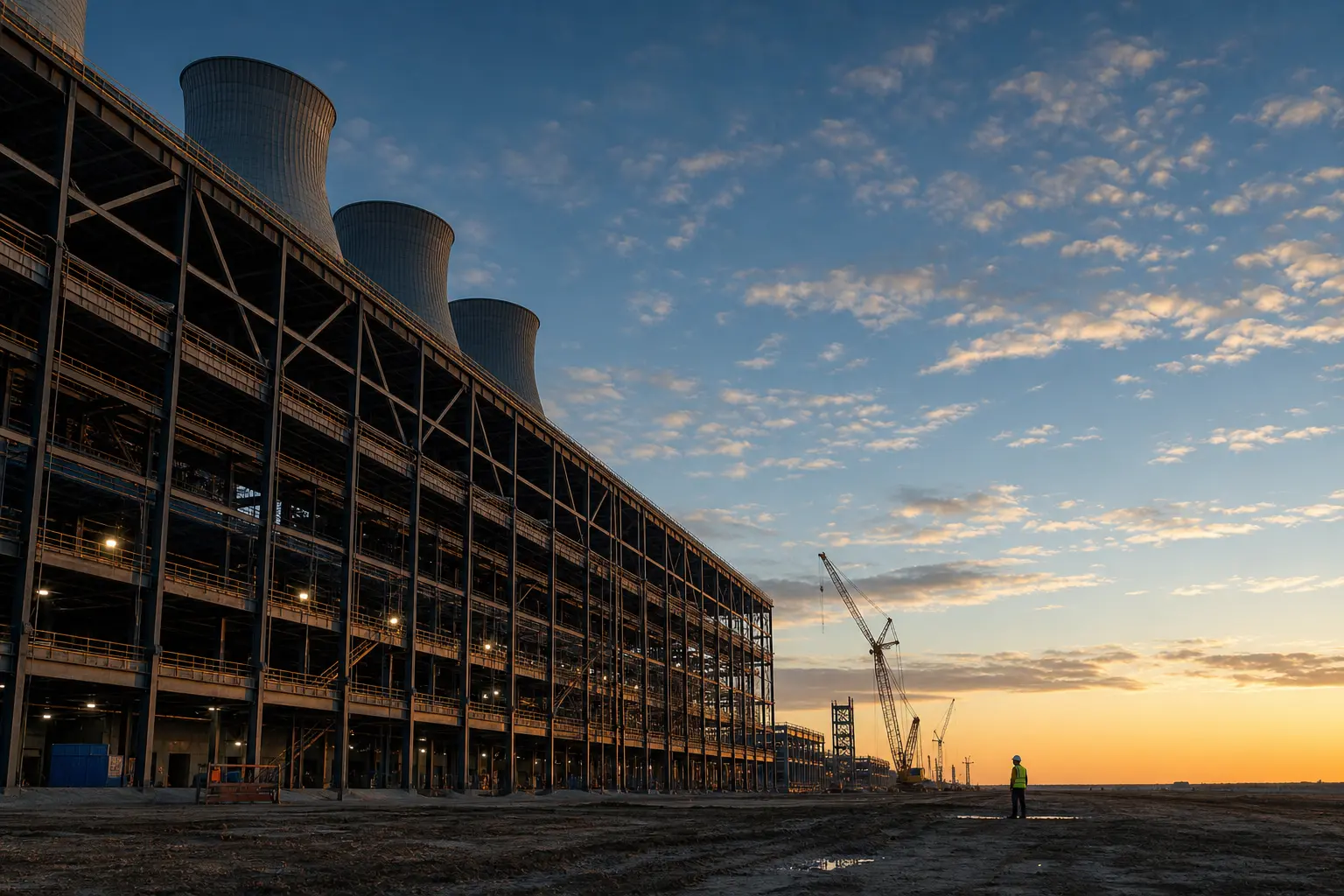
The scale of what Oracle is financing explains why. Moody’s has described Stargate, the joint venture between OpenAI, Oracle and SoftBank to build AI data centers across the US, as effectively one of the world’s largest project financings. A typical project of that size runs through a special purpose vehicle that borrows against its own future cash flow. Oracle is carrying the risk directly on its own corporate balance sheet instead, which is exactly why S&P pushed its rating to one step above junk this month.
A Pension Fund Sued over Oracle’s Bonds
The clearest sign this risk has spread beyond Silicon Valley showed up in a New York courtroom. On January 14, 2026, the Ohio Carpenters’ Pension Plan sued Oracle over bond disclosures, alleging the offering documents for an $18 billion note sale were materially misleading. The plaintiffs bought those notes on September 25, 2025, just two weeks after Oracle announced its $300 billion cloud deal with OpenAI.
A pension plan for construction union members is an unusual face for an AI story. It shows who actually stands on the other side of this trade when a bond, not a stock, is what breaks.
Several other players carry that same exposure:
- Banks such as Morgan Stanley have explored significant risk transfer deals, a mechanism that sells off credit risk on AI data center loans to institutional investors while keeping the loans on the bank’s books for regulatory purposes.
- Private credit firms Blue Owl Capital and JPMorgan put roughly $13 billion into the special purpose vehicle that owns Oracle’s OpenAI facility in Abilene, Texas.
- Credit funds such as Saba Capital are taking the opposite side of the CDS trade, collecting premiums on what they consider overpriced AI fear.
- Bondholders like the Ohio Carpenters’ Pension Plan, who now argue in court that the risk was not properly disclosed before they bought in.
These names rarely show up in the stock tickers investors watch every day, yet all of them would feel an OpenAI stumble before most equity holders did.
Who Really Owns OpenAI’s Risk?
Oracle carries the most direct exposure, with roughly half of its $638 billion contracted backlog tied to OpenAI and its credit rating already cut this month. Microsoft and NVIDIA have deep ties too, but much bigger and more varied businesses support them. Amazon carries real exposure of its own, just less of it, plus a hedge riding on OpenAI’s biggest rival.
| Company | Nature of OpenAI Exposure | Scale |
|---|---|---|
| Oracle | Primary cloud and data center supplier under the Stargate joint venture | $300 billion contract, about half of Oracle’s $638 billion total backlog; credit rating cut to BBB- |
| Microsoft | Early investor, equity holder and cloud provider | About 27% ownership stake worth roughly $230 billion; 45% of commercial backlog tied to OpenAI |
| NVIDIA | Chip supplier and prospective investor | Discussed investing up to $100 billion in OpenAI’s funding round alongside ongoing chip sales |
| Amazon | Cloud vendor with a rival bet | $38 billion AWS compute deal signed in March 2026, offset by a separate stake in Anthropic |
Viram Shah, founder and chief executive of Vested Finance, made this point when asked how a stumble at OpenAI would spread. “Don’t lump those four together,” he told LiveMint, adding that treating Microsoft, NVIDIA, Oracle and Amazon as equally exposed gets the picture wrong. Amazon, he said, is “the odd one out,” since it has “got its own chips and an enormous cloud business underneath” even after backing Anthropic.
Shah added that the bigger spenders can likely absorb a slowdown because they hold real cash flow, not because they are immune to it. The sharper financial risk, he said, belongs to “AI companies that depend on raising money and recycling it within the AI ecosystem to stay afloat.”
Central Banks Are Running Their Own Numbers Now
Regulators have stopped treating this as a Silicon Valley problem. The Bank of England’s July Financial Stability Report found that risks to stability rose again this year, driven largely by artificial intelligence.
The Bank’s Financial Policy Committee said valuations “have also become more stretched” amid concerns about a potential AI bubble, and modeled what a reversal would cost. Its estimate: a sharp correction in US equities could cut UK economic output by 2.2 percentage points.
Governor Andrew Bailey described a “triple whammy” behind that estimate. Market bets on AI companies have turned one-sided, nobody yet knows how fast adoption will actually happen, and it remains unclear which companies survive the eventual shakeout. AI firms now account for roughly 50% of the S&P 500’s total market value, up from 25% in 2022, a concentration the Bank flagged as a risk in its own right.
Where the Lehman Comparison Breaks Down
Zitron’s Lehman Brothers comparison is vivid, but the mechanics differ. Lehman itself was a heavily leveraged investment bank that defaulted on its own obligations. OpenAI is privately held and carries no public bonds of its own. Its risk shows up one level removed, on the balance sheets of the partners financing its compute, which is exactly why Oracle’s CDS, not any OpenAI security, has become Wall Street’s preferred way to bet against the boom.
I remember becoming a venture capitalist three months before Lehman fell, when mortgage securities topped the news of the global financial crisis.
Tomasz Tunguz, a venture capitalist who has tracked the AI credit market closely, wrote that line in a note about Oracle’s bonds. Analysts, investors and central bankers do not all agree on how far the comparison should go.
- Ed Zitron argues OpenAI’s collapse could become the Lehman Brothers of the AI bubble, pulling the wider market down with it.
- Viram Shah counters that the big spenders can afford the buildout because they carry real cash flow, unlike the private labs that depend on outside funding.
- Bank of America analysts argued in February that Oracle’s $50 billion financing plan had defused the biggest risk heading into 2026, yet Oracle’s credit default swaps hit a fresh record five months later anyway.
Oracle’s Next Earnings Call Is the Real Test
OpenAI has already scaled back its own ambitions once. In February, the company told investors it now plans around $600 billion in total compute spend by 2030, down from the $1.4 trillion in commitments Sam Altman had touted months earlier. It is targeting $280 billion in revenue by 2030, after closing out 2025 with $13.1 billion in revenue and an $8 billion cash burn.
That reset matters most for Oracle, whose backlog assumes OpenAI keeps paying on schedule once the contract starts delivering revenue in 2027. Oracle does not own the data centers it runs for OpenAI the way a landlord owns a building. It services debt on facilities that only pay for themselves if OpenAI’s spending holds up.
OpenAI’s pressures are not limited to compute costs either. Apple filed suit against the company this month over its hardware plans, adding legal uncertainty on top of the financial questions already facing Oracle and Microsoft investors.
Amazon has more room to absorb a shock. Beyond its own chips and cloud business, it backed Anthropic, whose valuation has climbed past OpenAI’s on paper in its latest funding round, giving Amazon a stake on both sides of the industry’s biggest rivalry.
Oracle’s next earnings report, together with progress on OpenAI’s pending funding round, will show whether the credit market’s fear is warranted or overdone. Bond investors are not waiting to find out. On July 17, they priced Oracle’s default risk higher than at any point in the company’s history.
Frequently Asked Questions
What Is a Credit Default Swap?
A credit default swap, or CDS, works like insurance on a bond: the buyer pays a premium to a seller who agrees to cover losses if the borrower defaults. Analysts who track Oracle’s spreads note that record CDS prices signal rising uncertainty over the life of the debt, not necessarily an imminent default.
Is OpenAI a Publicly Traded Company?
No. OpenAI remains privately held, so it has no public stock and no public corporate bonds of its own for markets to price directly. That is one reason its financial risk shows up instead in the credit ratings and CDS spreads of partners like Oracle, which do carry public debt investors can trade.
What Is Stargate?
Stargate is the joint venture between OpenAI, Oracle and SoftBank to build AI data centers across the US. It was originally announced with a $500 billion budget and a target of 10 gigawatts of capacity, since expanded across multiple sites in Texas, New Mexico and beyond.
How Exposed Is Amazon to OpenAI?
More than its role as the diversified outlier suggests. Amazon signed a $38 billion cloud computing deal with OpenAI through AWS Bedrock in March 2026, though its own Trainium chips give it a fallback that pure cloud vendors lack.
Has Oracle’s Credit Rating Been Cut Before This Month?
Analysts had been warning for months. Barclays flagged in November 2025 that Oracle’s debt could eventually fall to BBB-, the rating S&P actually assigned in July 2026, after Moody’s had already flagged rising counterparty risk tied to OpenAI in a January review.
Disclaimer: This article covers corporate credit and market risk for informational purposes only and is not investment advice. Credit default swaps, bonds and AI-linked equities carry real risk, so speak with a licensed financial adviser before making investment decisions. Figures are accurate as of publication on July 19, 2026.
 Billionaires Pay Record Sums for Dinosaur Bones Science Cannot Study
  How a New Jersey Homeowner’s Quick Thinking Preserved a Rare Meteorite
  Iceland’s Eclipse Boom Looks Like the Faroe Islands All Over Again
  NASA Confirms Near-Earth Object 1998 SH2 Is a Hidden Comet
  Bharatgas Lite ZIP Pushes India’s LPG Giants Into a Delivery Race
  Toyota’s Next Five SUVs Reveal a Quiet Role Reversal With Suzuki