
 Ishan Crawford
 A stone bridge on a Victorian estate near Dumbarton has watched dogs leap from the same parapet since the 1950s, and nobody has fully explained why. Conservative tallies put the jump count at more than 300 since records began, with at least 50 confirmed deaths; some press estimates run as high as 600 total jumps. A 2010 scent trial pointed to mink nesting in the stonework, but the theory has never closed the case.
The leading explanation involves an invasive predator, a canister experiment and a geographic puzzle nobody has solved. A leash cut the death toll anyway, years before anyone settled on a cause.
The Bridge Above Overtoun Burn
The Victorian industrialist John White built the bridge in 1895 to carry a driveway across a wooded gorge on his Overtoun estate, between Dumbarton and Loch Lomond in western Scotland. It is a three-arched span of grey sandstone in the Scottish baronial style, rising about fifteen metres above the rocks and water of Overtoun Burn. Wikipedia’s entry on the structure lists it as a category B-listed building within the wider estate grounds.
For nearly sixty years, people crossed it without incident. Then, sometime in the 1950s, dogs started jumping.
The pattern has held long enough to generate real numbers, even if they don’t all agree:
- 300+ jumps recorded since the 1950s, by conservative estate tallies; some tabloid and press estimates run as high as 600.
- 50+ confirmed deaths among those falls.
- 15 metres, roughly 50 feet, separate the parapet from the rocks below.
The gap between the low and high estimates reflects decades without formal record-keeping. What exists instead is estate staff, dog wardens and grieving owners retelling the same story to whoever asked, which is part of why the New York Times eventually picked it up and cited the 600 figure.
How David Sands Traced the Trigger
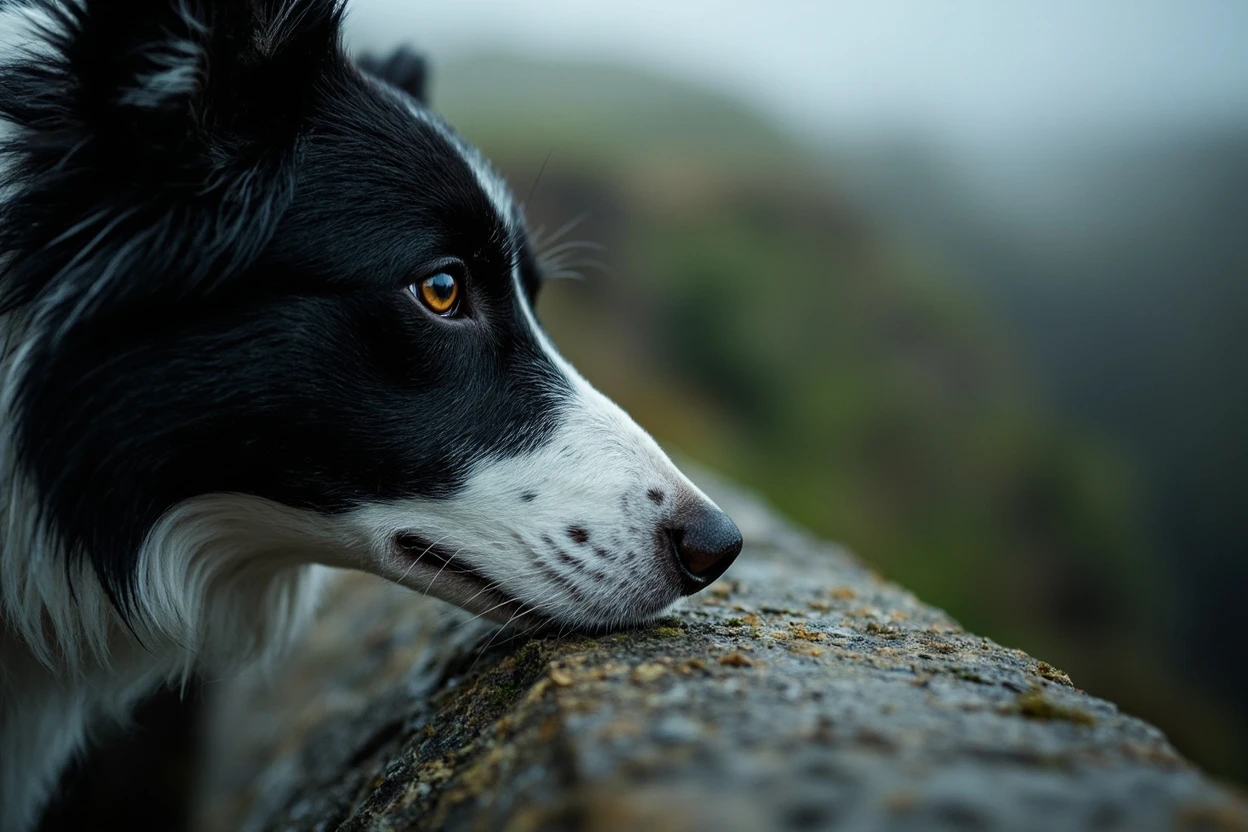
David Sands, a canine behaviourist, led the most rigorous investigation into the bridge in 2010, working with the Scottish SPCA and a team of animal behaviourists and owners who had lost dogs there. He started with the obvious clue: nearly every dog involved was a long-nosed breed, retrievers, collies, spaniels, terriers, the kind developed over centuries for tracking scent. That ruled out a purely visual trigger.
He and his team searched the stonework on the side of the bridge dogs favoured and found nests of mice and squirrels, plus a more pungent resident. American mink, an invasive species that spread across Scottish waterways after being introduced in the 1950s, were living in the crevices of the bridge itself. The timeline lines up: mink arrived in the 1950s, and so did the jumps.
Four details recur across the recorded incidents:
- Almost all happen on clear, dry days.
- Almost all happen from the same side, the right-hand parapet walking away from the house.
- Most cluster within the final two stones of that parapet.
- Nearly all involve long-nosed breeds bred for tracking scent.
Mink release one of the most pungent territorial scents of any British mammal, from a gland near the tail. Sands tested the theory directly, presenting ten long-nosed dogs with sealed canisters holding mouse, squirrel and mink scent. Seven of the ten went straight for the mink canister, several with an intensity his team described as close to frantic. The mouse and squirrel scents barely registered.
The parapet itself reinforces the effect. It’s solid stone, with vegetation crowding the far side densely enough to read as a continuation of the ground. A dog crossing on a still day catches a thread of mink musk rising off the stone, follows it upward, and reaches the top rail before realising what’s beneath it.
No Other Bridge in Scotland Does This
Mink live under a great many Scottish bridges. Waterways across the lowlands host viable populations in structures of similar height and shape to Overtoun’s. None of those bridges has produced anything close to its death toll.
That gap is the real hole in the mink theory, and Sands has never claimed otherwise. If scent alone explained the behaviour, similar patterns should turn up elsewhere. They haven’t.
- David Sands points to concentrated mink musk in the stonework as the most likely trigger, backed by his canister trial and the breed pattern.
- John Joyce, a local hunter, rejects the premise outright.
- Outlets including HowStuffWorks and the Glasgow Bell have both questioned the tidy mink narrative, noting the species lives under bridges nationwide without producing anything similar.
Joyce doesn’t buy the trigger at all.
There is no mink around here. I can tell you that with absolute certainty.
Joyce has hunted the Overtoun grounds for fifty years, and he told Vice the theory doesn’t match anything he’s seen on the estate. Sands’ team maintains the animals were there in 2010, in the specific crevices under the parapet’s favoured side, even if they’re not obvious to a passing hunter today.
Locals Blamed a Ghost Before They Blamed a Mink
The mink theory is relatively recent. Older explanations reached for the supernatural entirely, and some still circulate on social media today: the ghost of a White Lady tied to Overtoun House, dark spirits from the estate’s pre-Christian past, even naval sonar from submarines out on the Clyde. None of the folklore explanations offer a mechanism. All of them predate Sands’ fieldwork by decades.
| Theory | Origin | What the Evidence Shows |
|---|---|---|
| The White Lady’s ghost | Estate folklore tied to Overtoun House | No physical mechanism; rests on legend alone |
| Submarine or naval sonar | Speculation linked to Clyde military traffic | No sound measurements ever taken at the bridge |
| American mink scent | David Sands’ 2010 trial with the Scottish SPCA | Seven of ten dogs chose the mink canister over mouse or squirrel |
Social media has kept the folklore alive even as the science moved past it. Videos tagged to the bridge circulate widely on TikTok, many opening with a warning to keep dogs leashed before drifting into talk of darker, unexplained forces under the arches. Snapchat runs its own topic page on the story. That volume helps explain why the New York Times, and years earlier a television segment narrated by the actor William Shatner, both found their way to a bridge on a private Scottish estate that most of Scotland has never visited.
Why Do Survivors Go Back to the Same Spot?
Dogs that survive the fall sometimes return to the exact same spot and try again once they’re back on the bridge, according to owner and estate accounts. Behaviourists read the repeat attempts as ritual scent-tracking: the same trail pulling on the same instinct that caused the first fall.
Dogs don’t have the cognitive architecture to plan their own deaths. What looks like a return to the scene of an accident is a return to a familiar trail, one that happened to end badly the first time. These accounts come mostly from owners and estate staff rather than controlled observation, so behaviourists treat the pattern as credible but not rigorously documented.
That distinction shapes the response on the ground. Nobody at Overtoun has tried to exorcise the bridge or clear out the mink dens. They put up signs.
The Leash Rule That Outran the Mystery
After Sands published his findings, signs went up at both ends of the bridge instructing owners to keep dogs on leads. They’re still there, weathered but legible, in plain English.
Incident numbers have fallen substantially since. Dogs still jump occasionally, mostly when an owner lets one off the lead without knowing the bridge’s history. The lead rule works regardless of whether the trigger turns out to be mink musk, parapet geometry, or some combination nobody has fully isolated.
Seventy years on, Overtoun Bridge still hasn’t given up its full answer. It has, mostly, stopped taking dogs.
Frequently Asked Questions
How many dogs have jumped from Overtoun Bridge?
Conservative estate tallies put the number at more than 300 recorded jumps since the 1950s, with at least 50 confirmed deaths among those falls. Tabloid coverage and the New York Times have cited estimates as high as 600 total jumps. The gap exists because no single body has ever kept a formal register, so the count depends on who’s doing the counting.
Where is Overtoun Bridge located?
The bridge sits on the grounds of the Overtoun estate outside Dumbarton in West Dunbartonshire, roughly midway between Dumbarton and Loch Lomond. It carries what is now a public access road across the Overtoun Burn gorge, about fifteen metres above the water, and was built in 1895 by the industrialist John White.
Why do dogs jump from the right side of the bridge specifically?
Investigators found mink nesting in the stonework on that side, and dense vegetation beyond the parapet there visually masks the drop. Nearly every recorded jump happened within the final two stones of that same right-hand parapet, and almost always on clear, dry days, when scent stays concentrated near the stone instead of scattering in wind or rain.
Is it safe to walk a dog across Overtoun Bridge today?
Yes, provided the dog stays on a lead. Signs at both ends warn owners of the bridge’s history, and incident numbers have dropped substantially since the estate adopted that policy following David Sands’ 2010 investigation.
Did David Sands prove the mink theory?
Not conclusively. His canister trial showed seven of ten test dogs strongly preferred mink scent over mouse or squirrel, and the timeline matches mink spreading across Scottish waterways from the 1950s onward. But mink live under many other Scottish bridges without producing anything like Overtoun’s pattern, a gap Sands himself has never claimed to close.
Do dogs that survive really try to jump again?
Owners and estate staff have reported cases of dogs returning to the same spot on the parapet shortly after being rescued. Behaviourists see the repeat attempts as ritual scent-tracking driven by instinct. Dogs lack the capacity to plan their own deaths, and these accounts rest on witness reports, without controlled scientific study behind them.
 ONGC licence frees Venezuela cash and operatorship talks
  Anthropic Hits $65 Billion Run Rate and Flips the AI Cash Test
  Supreme Court grounds the fare free-for-all with three-week clock
  Gold Nears $4400 as Soft Data Meets Oil Inflation Risk
  Nifty Slips as Zaggle Circuits and Dhoot Debuts Big
  Diesel Crack Tops $100 as Iran Rhetoric Lifts Crude