
 Ishan Crawford
 Anthropic closed a $65 billion Series H round on May 28, lifting its post-money valuation to $965 billion and pushing the Claude maker past OpenAI as the most valuable private artificial intelligence company in the world. The raise landed barely three months after a February financing that valued the company at $350 billion, a jump that nearly tripled its worth in a single quarter.
Most of that capital will not sit in a bank account for long. A large share is already pledged to the handful of companies that supply Anthropic’s computing power, and that flow of money is where the more consequential story sits.
Inside Anthropic’s Series H Round
The round was led by Altimeter Capital, Dragoneer, Greenoaks and Sequoia Capital, with a second tier of co-leads that included Capital Group, Coatue, D1 Capital Partners, GIC, ICONIQ and XN. Strategic chip and memory suppliers Micron, Samsung and SK hynix also joined, a sign that the people selling Anthropic its hardware are now buying its equity too.
Not all of the money is fresh. Roughly $15 billion of the total came from investments hyperscalers had already committed, including the $5 billion Amazon pledged in April as part of a broader capacity agreement. You can read the figures in the company’s Series H funding announcement.
- $47 billion in annualized run-rate revenue, more than five times the level Anthropic reported at the start of the year
- $15 billion of the round made up of previously committed hyperscaler investment rather than new cash
- $5 billion from Amazon in April, the opening piece of a much larger compute deal
“Claude is increasingly indispensable to our growing global community of customers,” said Krishna Rao, Anthropic’s chief financial officer. He framed the raise as a response to demand he called historic, money meant to fund safety research, more computing capacity and the products enterprise buyers now lean on.
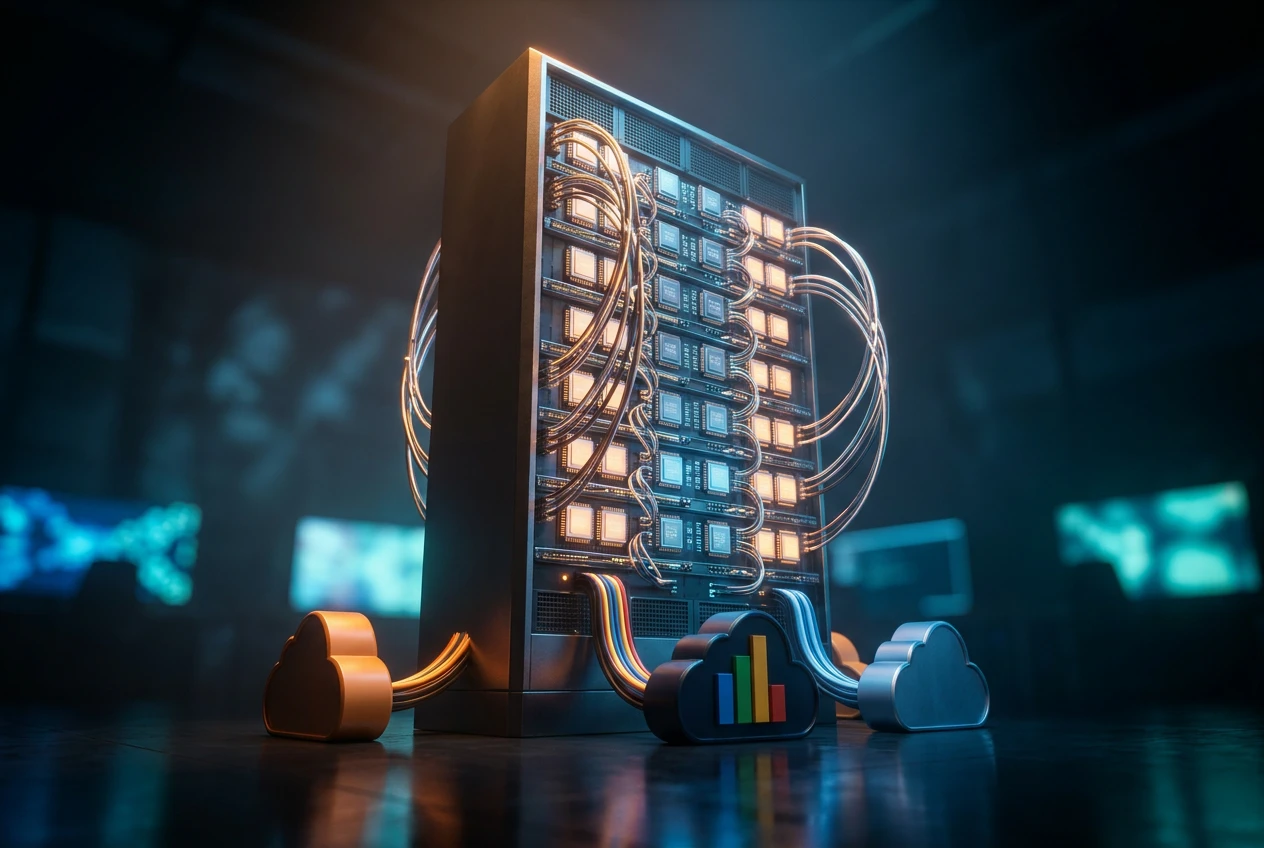
From $350 Billion to $965 Billion in Three Months
The valuation arc is the part that stops people mid-scroll. Anthropic’s February round, its Series G, raised $30 billion at a $350 billion valuation. The Series H roughly doubled the cash and nearly tripled the price tag, all inside one calendar quarter.
| Round | Date | Capital raised | Post-money valuation |
|---|---|---|---|
| Series G | February 2026 | $30 billion | $350 billion |
| Series H | May 2026 | $65 billion | $965 billion |
That figure now tops OpenAI, the ChatGPT maker, which was last valued at roughly $850 billion after a financing earlier this year, according to reporting on the round. Anthropic’s revenue growth is the engine behind the leapfrog: a run-rate that climbed from about $10 billion last year to $30 billion and then past $47 billion, driven largely by businesses paying for AI that writes and reviews software code.
The investors leading the round see the price as early rather than stretched.
The technological progress we are seeing right now is breathtaking. And we believe that we are still in the earliest days of both the development and commercialization of this technology.
That was Marc Stad, managing partner at Dragoneer, one of the round’s lead backers. His optimism captures the bull case in a sentence, and it is the assumption the entire $965 billion rests on.
The Compute Bill Behind the Headline Number
Anthropic spelled out where the demand for capital comes from. In recent weeks it expanded computing agreements with four suppliers at once, each measured not in dollars first but in gigawatts of power, the unit that now defines AI scale.
- Amazon: up to five gigawatts of new capacity, with close to one gigawatt expected online by the end of 2026
- Google and Broadcom: five gigawatts of next-generation tensor processing unit (TPU) capacity, the custom chips Google designs for AI training, with much of it arriving from 2027
- SpaceX: access to graphics processing unit (GPU) capacity inside its Colossus 1 and Colossus 2 data center clusters
- Micron, Samsung and SK hynix: memory and infrastructure partners that also took equity in the round
The dollar weight of these commitments dwarfs the raise itself. Anthropic agreed last year to spend around $200 billion over five years with Google for cloud and TPU access, with up to one million chips and more than a gigawatt coming online during 2026. Details sit in the expanded Google and Broadcom compute agreement. Those obligations help explain why a company can raise $65 billion and still need more, especially as Google’s recent Gemini price cuts push the cost of serving each query lower across the industry.
The Loop Tying Valuation to Its Suppliers
Here is the second-order effect almost nobody put in a headline. The companies selling Anthropic its compute are also among the companies funding it, and the accounting links the two flows in a way that flatters everyone involved.
How the Money Circles
Together, Anthropic and the rival lab account for more than half of the roughly $2 trillion future cloud backlog held by Microsoft, Oracle, Google and Amazon, according to analysts tracking the deals. Anthropic’s $200 billion Google commitment alone represents more than 40 percent of Google’s disclosed backlog. Money moves from investor to AI lab to cloud provider, and a slice of that cloud provider is, in turn, an investor.
Analysts at asset manager GMO have described the arrangement as reminiscent of the circular financing seen during the late-1990s internet bubble, where suppliers, customers and shareholders were often the same firms wearing different hats.
Why Accounting Rules Amplify It
A 2016 update to United States accounting standards requires companies to mark private equity stakes to fair value at each new funding round. So when Anthropic’s valuation jumps, the investors who hold its shares, including Amazon and Google’s parent Alphabet, can book paper gains, without a single new paying customer changing hands.
That mechanism is entirely legal. It also means the same valuation surge that made headlines this week quietly improves the reported profits of the very cloud giants supplying Anthropic’s chips, a feedback loop with no obvious off-switch while the rounds keep getting bigger.
The Loss Column Under the Run-Rate
The $47 billion run-rate is real revenue, but it is not profit. Anthropic is projected to lose around $11 billion in 2026, the cost of buying compute far faster than customers can pay for it. The Wall Street Journal has reported that the company expects a revenue surge of roughly 130 percent to carry it to its first operating profit, a milestone it has not yet hit.
The wider demand picture is murkier than the funding euphoria suggests. A study from the MIT Media Lab found that despite tens of billions of dollars in enterprise spending on generative AI, about 95 percent of organizations reported no measurable return on the investment.
That gap between spending and payback is the soft spot under every trillion-dollar valuation in the sector. If enterprise budgets tighten before the productivity gains show up in the numbers, the run-rate that justifies $965 billion could prove more fragile than a quarterly chart implies.
What Claude Adoption Looks Like in the Enterprise
The bull case lives in the workflow, not the valuation. Anthropic’s growth has leaned heavily on coding, where tools such as Claude Code and its newer Cowork product are being wired into how companies build and ship software.
The clearest signal is how budgets are shifting. Salesforce, for instance, has earmarked roughly $300 million for Anthropic tokens this year while keeping its engineering hiring frozen, a trade detailed in Salesforce’s plan to spend on Anthropic tokens instead of new engineers. When a software giant chooses tokens over headcount, that is the adoption pattern investors are paying for.
Anthropic’s pitch to its backers is that Claude is learning how real businesses operate, the context and the judgment, and that this institutional knowledge compounds. Sequoia partner Alfred Lin made that case explicitly, arguing the company is building a bridge between where enterprise AI stands now and where it is heading.
So the bet comes down to timing. If enterprise demand keeps growing fast enough to turn that 130 percent revenue surge into durable profit before the compute bills come due, the valuation looks early. If the payback stalls while the gigawatt commitments keep arriving, the loop that lifted Anthropic past its rivals starts working in reverse.
Frequently Asked Questions
How Much Did Anthropic Raise in Its Series H Round?
Anthropic raised $65 billion in its Series H round, announced May 28, 2026, at a $965 billion post-money valuation. Roughly $15 billion of that total came from investments hyperscalers had previously committed rather than new cash.
Is Anthropic Now Worth More Than OpenAI?
On paper, yes. Anthropic’s latest valuation sits above the most recent disclosed figure for the rival lab behind ChatGPT, which was reported at roughly $850 billion earlier this year. Both numbers are private valuations set by investors, not public market prices.
Is Anthropic Profitable?
No. Anthropic is projected to lose about $11 billion in 2026, even with annualized run-rate revenue past $47 billion, because it buys computing capacity faster than customers pay for it. The Wall Street Journal has reported the company expects to reach its first operating profit after a sharp revenue increase.
What Is Anthropic Spending the Money On?
The bulk goes to computing capacity. Anthropic has expanded agreements with Amazon, Google, Broadcom and SpaceX, alongside safety and interpretability research and product development for tools such as Claude Code and Cowork.
When Will Anthropic Go Public?
Anthropic has not announced an initial public offering or a date. Several outlets have framed the Series H as a possible final private round before a listing, but the company itself has made no such commitment.
 Adobe Bets on Experience Cloud’s Anil Chakravarthy as CEO
  The Quiet Architect Behind Akshay Oberoi’s Karjat Home
  Nothing Ear 3A Hits $79 and Repeats the Slide
  Hyderabad Gold Dip Freezes Buying as Duty Talk Hits Wedding Season
  India Pushes Japan CEPA Review After 15 Years of One-Way Gains
  HDFC Bank’s US Class Action Turns Deposit Scheme Into Securities Reckoning