
 Ishan Crawford
 HDFC Bank Ltd. and two of its top executives face a federal securities class action in New York after allegations that the lender disguised roughly Rs 45 crore in extra interest payments to a Maharashtra state agency as marketing spend. American Depositary Receipts slipped 0.87% to $23.43 in after-hours trading as the news circulated on August 27.
Investor Jwalant Natvarlal Soneji filed the complaint on August 13 in the U.S. District Court for the Southern District of New York. The suit names the bank, managing director and CEO Sashidhar Jagdishan, and chief financial officer Srinivasan Vaidyanathan. It seeks class certification for buyers of HDFC securities, including ADS, between July 17, 2023 and May 26, 2026.
The filing turns a domestic deposit controversy into a US disclosure fight. Buyers who held paper through the March resignation, the May exposé and the August lawsuit now form the proposed class. The bank’s public denial sets the stage for motions practice that will test how much of the MSRDC story should have appeared in SEC filings while the stock still traded higher.
The Suit Targets Disclosures on a Deposit Arrangement
Plaintiffs allege violations of Sections 10(b) and 20(a) of the Securities Exchange Act of 1934. They claim the bank’s SEC filings, including Form 20-F reports for fiscal years 2024 and 2025, painted a false picture of effective internal controls and net interest income while an internal scheme ran.
The complaint says senior management knew about the payments yet generic risk warnings about fraud or calamities never flagged the specific practice. Lead-plaintiff motions are due by October 13, 2026. The class period runs to May 26 2026 and the case number is 26-cv-06943.
- Failure to disclose camouflaged payments to induce deposits
- Senior management approval of the arrangement
- Likely breaches of RBI rules and the bank’s own anti-bribery policies
- Resulting overstatement of interest income and operating expenses
- Materially misleading statements about controls and prospects
Those five pillars define the omission theory. Plaintiffs treat the Form 20-F controls language and the net interest income figures as the statements that kept prices elevated. Section 20(a) then reaches the named executives if the bank’s primary liability is established.
HDFC Bank has called the action without merit and said it will fight.
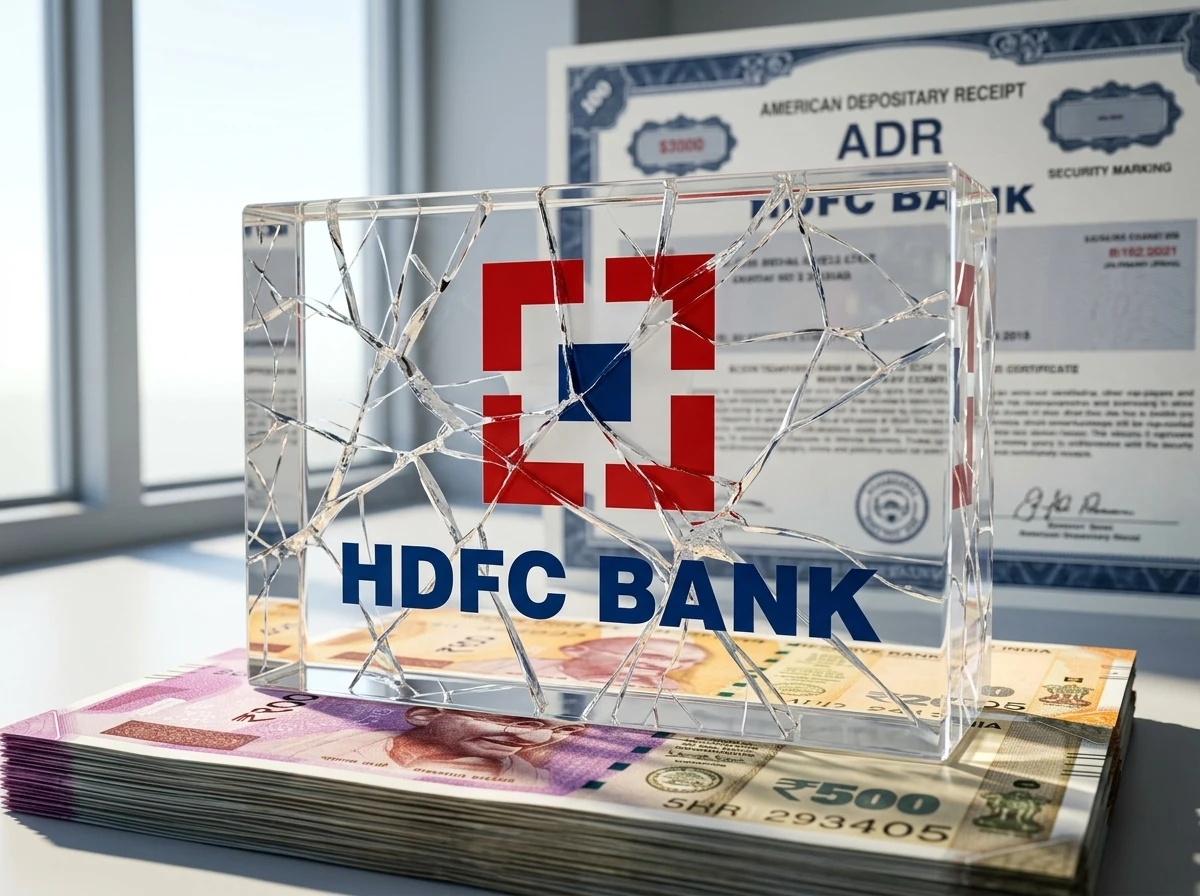
How the MSRDC Payments Were Structured
At the centre sits the Maharashtra State Road Development Corporation. According to the filing and the May 27 Indian Express investigation that triggered the stock moves, HDFC offered MSRDC an effective 6.01% return on deposits. That sat 2.51 percentage points above the 3.5% savings rate available to ordinary customers.
Banking rules bar negotiated rates for individual depositors. The suit and the Express report say the differential, totalling about Rs 45 crore ($4.7 million) across 2023-2025, was routed through the marketing department and booked as sponsorship of an MSRDC road-safety campaign. Funds moved via third-party vendors.
| Item | Figure |
|---|---|
| Effective rate to MSRDC | 6.01% |
| Standard savings rate cited | 3.5% |
| Markup | 2.51 percentage points |
| Alleged differential total | Rs 45 crore (~$4.7 million) |
| Period of payments (suit/Express) | 2023-2025 (FY24-FY25) |
An internal vigilance probe ordered by the audit committee in March 2026 reportedly found more than ten senior officials responsible. The Express said chief marketing officer Ravi Santhanam told the probe the marketing side acted as a “facilitator to camouflage differential interest reimbursement as marketing spend.” A portion of the money covered actual campaign activity to support invoices.
The dual booking kept the higher return off the interest line and on the marketing line. Plaintiffs say that split inflated reported interest income while treating the extra cost as ordinary operating expense. The probe concluded the manoeuvre breached RBI Master Directions and the bank’s internal policies against improper inducement.
Third-party vendors supplied the paper trail that made the sponsorship invoices look routine. The suit treats that routing as evidence of intent to hide the true economic deal from both regulators and investors reading the Form 20-F.
The Cracks That Preceded the Filing
The public timeline began months earlier.
- March 12, 2026, Audit committee orders internal vigilance investigation into the MSRDC payments.
- March 18, 2026, Chairman Atanu Chakraborty resigns, citing “certain happenings and practices within the bank\ldots that are not in congruence with my personal Values and Ethics.” ADS fell 7.28% on heavy volume.
- March 19, 2026, Interim chairman Keki Mistry says the bank has “very strong ethics” and that Chakraborty gave no specifics when pressed.
- May 27, 2026, Indian Express publishes its exposé on the camouflaged payments and the probe’s findings, including alleged verbal approval involving CEO Jagdishan. ADS fell $1.02, or 4.1%, to close at $23.78.
- July 23, 2026, Board, acting on a special disciplinary committee of independent directors, concludes the conduct was “business overreach” rather than mala fide action or personal enrichment.
- August 13, 2026, Class action filed in New York; summonses issued the next day.
The resignation and the Express story together erased more than 11% from the ADS in two sessions. Law firms began investigating possible securities claims in July. The August filing moved the matter into court.
Each step narrowed the gap between internal knowledge and public price. The March probe and resignation came first. The May story put numbers and names in the open. The July board finding tried to close the chapter as overreach. The August complaint reopened it under US securities law.
The Board’s Own Penalty Came First
Before any US complaint, HDFC’s board imposed its own discipline. On the recommendation of independent directors, it fined Jagdishan, Vaidyanathan and group head of retail assets Arvind Vohra Rs 1 lakh each. Warning letters went to other employees. The bank said the matter would be reported to the RBI.
The board framed the issue as business overreach linked to deposit arrangements that stretched back in some accounts to 2017 and 2021, though the suit focuses on the later class-period activity. No finding of personal gain was recorded. Some market voices on X treated the public fine on a sitting CEO as a rare signal of internal accountability rather than mere optics.
- Board view: business overreach, no mala fide action, no personal enrichment
- Discipline imposed: Rs 1 lakh fines on three senior officers plus warning letters
- Plaintiff view: non-disclosure of the arrangement and its approval damaged buyers
- Class focus: activity inside the July 17, 2023 to May 26, 2026 window
That self-reckoning has not shielded the bank from the US claims. Plaintiffs argue the non-disclosure itself damaged investors who bought at inflated prices before the news broke. The modest fines and the overreach label may support a defence narrative of containment. They do not, on the plaintiffs’ theory, cure the silence in the Form 20-F reports for fiscal years 2024 and 2025.
Where the Stock and the Index Sit Now
| Event | ADS / Share Move |
|---|---|
| March 18 chairman resignation | ADS -7.28% |
| May 27 Indian Express story | ADS -4.1% to $23.78 |
| August 27 lawsuit news | ADR -0.87% to $23.43; India shares as low as -1.18% to Rs 718.60 |
HDFC Bank carries heavy weight in Indian indices, roughly 10% of the Nifty 50 and more than 20% of Bank Nifty on recent tallies circulating among traders. The stock has traded well below its 52-week high. Retail and institutional holders who bought during the class period now form the potential plaintiff pool. Domestic shareholders feel the same governance questions even if the suit is limited to US-listed paper.
On X, several posts linked the fresh lawsuit to a broader trust deficit that began with the chairman’s ethics letter and has not fully closed.
Index weight magnifies each drop. A single-name slide of several percent pulls Nifty and Bank Nifty with it, so the governance story reaches investors who never held the ADS. The after-hours slip to $23.43 on lawsuit news was smaller than the March and May moves, yet it extended a pattern of headline-driven declines already priced into the class-period losses plaintiffs will try to prove.
Bank Defence Versus US Material-Omission Standard
HDFC’s public response is terse and familiar to anyone who follows US securities litigation.
In the United States, these types of shareholder lawsuits are incredibly common after a company experiences a stock drop, and many companies listed in the U.S. routinely defend these lawsuits each year. The Bank believes the lawsuit is without merit and intends to vigorously defend itself.
HDFC Bank statement, August 2026
Indian counsel quoted in market coverage note the case will turn on whether the payments were genuine sponsorship or a disguised interest top-up. The bank’s internal probe and the later “business overreach” finding may be offered as evidence that the matter was examined and contained. Plaintiffs counter that the very existence of the arrangement, its approval level, and its accounting treatment should have been disclosed while the stock traded higher.
A separate independent legal review of Chakraborty’s resignation letter, completed later and reported in August, found no documentary support for the concerns he raised, according to the bank. Chakraborty did not participate in that review, the bank said. That finding sits beside the deposit-case penalties and does not directly address the securities claims.
Materiality will be the hinge. The bank can point to the Rs 45 crore scale, the board process, and the absence of personal enrichment. Plaintiffs can point to the 2.51 point rate gap, senior approval, the marketing camouflage, and the more than 11% two-session drawdown once the story surfaced. The Southern District will decide which framing governs the class-period disclosures.
RBI Rules Leave Little Room for Negotiation
The Reserve Bank of India’s Master Directions on interest rates on deposits state that rates shall not be subject to negotiation between depositors and the bank. Rates must follow a board-approved schedule disclosed in advance. Additional incentives or commissions on deposits are tightly limited. The same framework appears in the regulator’s RBI interest rate on deposits FAQs.
Plaintiffs say the MSRDC structure was designed to evade exactly that prohibition. The bank’s own vigilance findings reportedly agreed the payments violated the directions and internal anti-bribery rules. Whether that domestic regulatory tension translates into a US securities violation is the question the Southern District will eventually answer.
For other Indian private banks that chase large institutional and government deposits, the episode is a reminder that creative accounting classifications can travel. ADR programs convert local practices into US disclosure obligations. A finding of material omission here would raise the cost of any future deposit-pricing experiments that sit near the edge of RBI rules.
Class Period Buyers Carry the Next Burden
The proposed class covers purchasers of HDFC securities, including ADS, from July 17, 2023 through May 26, 2026. That window captures the fiscal 2024 and 2025 reporting cycle named in the complaint and ends after the Express story had already moved the price.
Lead-plaintiff motions close on October 13, 2026. Whoever wins that role will drive the complaint’s shape and any settlement talks. Early procedure will also test whether the court treats the board’s July “business overreach” conclusion as helpful context or as proof that the bank already knew enough to speak sooner.
| Stage | Marker already on the record |
|---|---|
| Class window | July 17, 2023 to May 26, 2026 |
| Lead-plaintiff deadline | October 13, 2026 |
| Named individual defendants | Jagdishan and Vaidyanathan |
| Core statute pair | Sections 10(b) and 20(a) |
Summonses issued the day after the August 13 filing. No merits ruling exists yet. The bank continues under the July board findings while it prepares the defence sketched in its August statement.
Why the ADR Wrapper Changes the Stakes
Local deposit practices became US disclosure questions the moment HDFC maintained an ADR program and filed Form 20-F reports. Investors who bought the New York paper rely on those filings for a true picture of controls, interest income, and operating expenses.
The complaint’s theory is that camouflaged payments to MSRDC broke that picture. Generic fraud warnings did not, on this account, replace a specific description of a senior-approved marketing route around RBI rate rules. The more than ten officials named in the vigilance probe and the verbal-approval allegation reported by the Express supply the knowledge element plaintiffs need for scienter arguments.
Domestic shareholders live with the same governance questions even though the docket is limited to US-listed securities. Index weight near 10% of the Nifty 50 and above 20% of Bank Nifty means price swings travel far beyond the ADS holder list. The Rs 45 crore line item is small beside the bank’s balance sheet, yet the disclosure fight now measures whether that size still required plain talk in the SEC reports.
The suit remains at the earliest stage. No merits ruling has been issued. Lead-plaintiff selection and motions to dismiss will shape the next months. HDFC continues to operate under the board’s July findings while it prepares its defence. The Rs 45 crore figure that started as an internal marketing line item now sits at the centre of a multi-year US class action whose outcome will measure how far domestic “overreach” can travel before it becomes a securities problem for global investors.
 Hyderabad Gold Dip Freezes Buying as Duty Talk Hits Wedding Season
  India Pushes Japan CEPA Review After 15 Years of One-Way Gains
  Gold Holds Above $4600 as Treasury Buybacks Fuel Debasement Bid
  Scotland’s Prevention Push Leaves Community Groups Squeezed
  Amazon Locks Three Million Nvidia GPUs Even as Trainium Grows
  Nvidia’s 70% Growth Call Carries Its Own Margin Squeeze