
 Ishan Crawford
 Spot gold held just above the $4,600 mark on Thursday, trading near $4,630 an ounce after reclaiming most of Wednesday’s losses. Traders are waiting for Federal Reserve Chair Kevin Warsh’s first Jackson Hole speech on Friday, yet the metal’s resilience already points past the usual rate-path calculus.
The deeper support comes from the US Treasury’s decision last week to double long-dated bond buybacks. That move revived dollar-debasement fears and produced a 5% weekly jump that still cushions prices even as sticky inflation lifts hike odds.
The result is an unusual split screen. Policy-sensitive odds still price a meaningful chance of tighter money before year-end, while the fiscal signal from the long end keeps a floor under bullion. That tension, not the speech alone, frames the tape into Friday.
Treasury Buybacks Shifted the Ground Under Gold
On August 19 the Treasury said it would raise the size of certain long-end buyback operations to at least $4 billion, targeting 10- to 30-year securities from early September through early November. Secretary Scott Bessent later indicated the figure could go higher.
The immediate effect was a sharp drop in long yields and a weaker dollar. Gold responded at once, climbing more than 5% last week and roughly 14% so far in August. The buybacks do not shrink the overall debt stock; they swap longer duration for shorter-term bills.
That swap matters for the debasement read. By pulling duration out of private hands and leaning on bills, the Treasury eases pressure at the long end without a headline cut in net supply. Markets treated the step as a willingness to manage the cost of funding rather than leave price discovery entirely to buyers.
- Long-end yields fell on the announcement before partially reversing.
- The dollar softened across the board, boosting dollar-priced bullion.
- Bitcoin and other scarce assets also surged, confirming the debasement read.
- Investors framed the step as fiscal dominance: officials managing yields rather than letting markets clear.
Kelvin Wong, senior market analyst at OANDA, put the medium-term case plainly: the dollar-debasement narrative, coupled with concerns about the US budget deficit, remains supportive of gold.
The August path already shows how quickly that narrative can reprice the metal when the fiscal channel opens. A 5% weekly advance inside a roughly 14% monthly gain leaves a cushion that ordinary inflation prints have not fully erased.
- August 19: Treasury lifts long-end buybacks to at least $4 billion, aimed at 10- to 30-year paper from early September through early November.
- Following sessions: Long yields drop, the dollar softens, and gold jumps more than 5% on the week.
- Later clarification: Secretary Scott Bessent signals the buyback size could rise further.
- This week: Sticky PCE data revive hike odds, yet bullion holds the bulk of the August advance near $4,630.

Sticky PCE Keeps Hike Bets Alive
Wednesday’s Personal Consumption Expenditures data kept the inflation debate open. The headline PCE Price Index held at 3.7% year-over-year through July, hotter than the 3.6% consensus. Core PCE, excluding food and energy, stayed at 3.3% as expected.
That reading marks the 65th straight month above the Fed’s 2% target. Markets still assign roughly a 36.5% probability to a September rate hike and about 73% odds of at least one move by December, per the CME FedWatch Tool. Higher rates normally weigh on non-yielding gold.
Yet US bond yields have stayed depressed relative to the inflation impulse. The Treasury’s buyback program is one reason. The net result is a tug-of-war in which traditional rate pressure meets structural fiscal support for the metal.
In plain terms, the inflation print keeps the Fed’s tightening option alive, while the buyback channel keeps long-end yields from fully reflecting that risk. Gold trades the net of those two forces rather than either one in isolation.
| Pressure | Market signal | Typical gold effect |
|---|---|---|
| Headline PCE at 3.7% | Hotter than 3.6% consensus; 65th month above 2% | Supports hike odds, a headwind for bullion |
| Core PCE at 3.3% | In line with expectations | Keeps inflation debate open without a clean cool-down |
| September hike odds | Roughly 36.5% (CME FedWatch) | Near-term rate risk for non-yielding metal |
| Hike by December | About 73% probability | Extends the policy overhang into year-end |
| Long-end buybacks | Yields depressed vs inflation impulse | Fiscal support that cushions gold |
Key snapshot
- Spot gold: ~$4,630 (+0.8% early Thursday)
- August gain: ~14%
- PCE headline: 3.7% y/y
- Core PCE: 3.3% y/y
Central Banks Keep Adding Tonnes
Official-sector demand supplies a second durable bid. The World Gold Council’s latest survey found that 89% of central banks expect global gold reserves to rise over the next 12 months. A record 45% plan to increase their own holdings.
Q2 2026 net purchases reached 289 tonnes after a softer first quarter. Poland led recent buying, followed by China. The same Q2 gold demand trends and average price of $4,506 showed the metal 37% higher than a year earlier even before the latest Treasury-driven leg.
| Buyer / Metric | Detail |
|---|---|
| Poland YTD | Leading accumulator, targeting 700 t total |
| China | Continued monthly additions, reserves ~2,300+ t |
| Q2 net CB demand | 289 t |
| Survey expectation | 89% see global reserves higher next year |
Three-quarters of respondents also expect the US dollar’s share of global reserves to decline moderately or significantly over five years, with gold gaining ground as a diversifier and geopolitical hedge.
That reserve shift works on a slower clock than a single PCE print or a Jackson Hole address. It still matters for the floor under prices: official buyers that already lifted Q2 demand to 289 tonnes, and that still target higher holdings into next year, absorb supply when tactical flows fade.
Poland’s push toward a 700 t total and China’s steady climb above roughly 2,300 t illustrate the same point from two large holders. The survey’s 45% share planning their own increases extends that bid beyond the names already most active.
Technical Levels Still Favor the Bulls
On the daily chart XAU/USD sits well above the 200-day simple moving average near $4,525, which coincides with the 38.2% Fibonacci retracement of the earlier decline. RSI at 68 hovers near overbought but has not rolled over. MACD remains positive.
Traders are watching a clean break and hold above $4,700 before committing to the next leg. That zone sits near the 50% retracement. Beyond it the 61.8% level at roughly $4,861 comes into view, then higher Fibonacci targets and the prior cycle highs.
- Immediate support: $4,525-$4,515 confluence
- Secondary demand: 21- and 100-day SMAs clustered near $4,380
- Upside trigger: sustained move past $4,700
- Stretch target: $4,861 (61.8% Fib)
A deeper pullback would first test the 23.6% retracement near $4,302 before the structural floor around the cycle low. For now the structure remains constructive above the key moving-average cluster.
The map leaves little ambiguity for positioning. Hold the $4,525 to $4,515 band and the August advance stays intact; lose it and the 23.6% area near $4,302 becomes the next reference. On the upside, $4,700 is the gate to the 61.8% stretch near $4,861.
Hormuz Residual Risk Adds a Floor
Geopolitics still supplies a modest safe-haven premium. Media reports point to a possible new US-Iran ceasefire announcement in coming days. Iran’s Deputy Foreign Minister Kazem Gharibabadi said Tehran and Oman have agreed a temporary maritime route through the Strait of Hormuz.
Full reopening, however, remains conditional on the United States meeting commitments under the June interim deal. That unfinished business keeps a risk premium in oil and, by extension, a mild tailwind for gold. Softer oil prices this week have simultaneously eased some inflation pressure and limited the dollar’s safe-haven bid.
- Temporary Hormuz route agreed between Tehran and Oman
- Full reopening still tied to US steps under the June interim deal
- Oil retains a residual risk premium while gold keeps a mild hedge bid
- Softer oil this week trims some inflation heat and caps the dollar’s defensive lift
The net is a small but persistent floor rather than a panic bid. As long as the June conditions stay unresolved, the strait story can reappear on any setback, even if a ceasefire headline briefly cools the tape.
Warsh’s Debut Speech Carries the Near-Term Risk
Warsh, appointed earlier this year, has kept forward guidance deliberately sparse. His July press conference drew market pushback. Friday’s Jackson Hole address is his first major chance to set a clearer tone on inflation and rates after five years of overshoots.
He has repeatedly insisted the 2% target is not soft and that the Fed will act if needed. Several officials already favor a hike. Markets will parse every sentence for whether he leans hawkish enough to firm the dollar or stays opaque enough to leave debasement concerns intact.
The market is awaiting the speech for greater clarity on how the Fed will navigate the current economic landscape. If he does not provide specific forward-looking monetary policy guidance, current market pricing for rate hikes is likely to remain largely unchanged.
Kelvin Wong, senior market analyst at OANDA
Jobless claims data due before the speech offer a secondary cue. Risk-on flows, including strong Nvidia earnings, have also helped keep the dollar on the back foot and gold supported.
Clarity would reprice the 36.5% September and 73% year-end hike probabilities. Opacity would leave those odds, and the debasement bid beside them, roughly where Thursday’s session found them.
Fiscal Support Still Outweighs One Speech
Strip the week to its moving parts and the hierarchy is clear. The Treasury’s long-end buybacks reset the fiscal tone on August 19. Official-sector demand added a second bid through 289 tonnes in Q2 and survey plans that still lean toward higher reserves. Sticky PCE and Warsh’s debut supply the near-term volatility, not the sole foundation under $4,600.
Buybacks that start at least $4 billion and may run larger, aimed at 10- to 30-year paper into early November, keep the duration swap in view for weeks. That calendar outlasts a single Friday address. So does central-bank accumulation toward targets such as Poland’s 700 t and China’s holdings above roughly 2,300 t.
Gold’s roughly 14% August gain and the 5% surge after the buyback news show how fast the metal can reprice when the fiscal channel opens. The 37% rise from a year earlier to the Q2 average of $4,506 shows the same trend was already in train before this latest leg.
Warsh can firm the dollar if he leans hard on the 2% target and on officials who already favor a hike. He can also leave markets guessing, as Wong noted, and hold hike pricing steady. Either path still collides with a fiscal signal that markets have already read as support for scarce assets.
Debasement Fears Tie Gold to Other Scarce Assets
The same week that gold jumped more than 5%, Bitcoin and other scarce assets surged as well. That co-movement was not a coincidence in the tape. Investors cast the Treasury’s duration swap as a debasement story, then bid the assets that historically benefit when faith in long-run purchasing power slips.
Wong’s medium-term case rests on that narrative plus budget-deficit concern. The World Gold Council survey adds a parallel strand: three-quarters of respondents expect the dollar’s reserve share to decline over five years, with gold gaining as a diversifier and geopolitical hedge. Private scarce-asset flows and official reserve shifts point the same direction even when their clocks differ.
Rate odds still matter. A hotter 3.7% headline PCE and a 65th month above target keep the Fed’s option to tighten alive. Higher policy rates normally pressure non-yielding bullion. The offset is the weaker dollar that followed the buyback announcement and the risk-on tone, including strong Nvidia earnings, that has kept the dollar from mounting a lasting defensive rally.
Into Friday, that leaves gold less dependent on a single sentence from Jackson Hole than on whether the fiscal and official bids remain credible. Hold those, and dips toward the moving-average cluster stay buyable for trend followers. Lose the $4,525 zone in force, and the debasement cushion would face its first real technical test since the August surge.
For now the metal’s hold above $4,600 rests less on the speech itself than on the fiscal signal sent by the Treasury’s long-bond operations and the steady official-sector bid. Spot gold up 0.8% at $4,630 early Thursday already prices that second-order reality. A sustained push through $4,700 would confirm the next phase; failure to hold the $4,525 zone would reopen the door to a deeper correction.
Disclaimer: This article is news reporting and market analysis for informational purposes only. It does not constitute investment, trading or financial advice of any kind. Readers should consult a qualified financial advisor or licensed broker before making any decisions involving gold, currencies or related instruments. All prices, probabilities and policy statuses reflect publicly available sources as of 27 August 2026 and can change rapidly with new data or speeches.
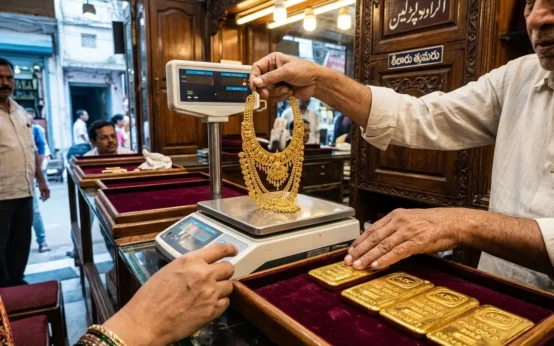 Hyderabad Gold Dip Freezes Buying as Duty Talk Hits Wedding Season
  India Pushes Japan CEPA Review After 15 Years of One-Way Gains
  HDFC Bank’s US Class Action Turns Deposit Scheme Into Securities Reckoning
  Scotland’s Prevention Push Leaves Community Groups Squeezed
  Amazon Locks Three Million Nvidia GPUs Even as Trainium Grows
  Nvidia’s 70% Growth Call Carries Its Own Margin Squeeze