
 Ishan Crawford
 A diagnostics log confirming the iPhone 18 Pro’s long-rumored variable aperture camera has surfaced inside more than 630 gigabytes of files stolen from Tata Electronics, the Indian manufacturer Apple depends on to build a growing share of its iPhones outside China. Hackers calling themselves World Leaks posted the trove on a dark web leak site in June, and researchers have been combing it for Apple secrets ever since.
Apple has not confirmed the camera spec. Tata Electronics has confirmed a breach that pulled employee passport scans, Tesla trade-secret drawings and internal Apple quality standards out of one supplier’s servers, months before the phone even launches.
A Diagnostics Log Surfaces Inside 630 Gigabytes of Stolen Files
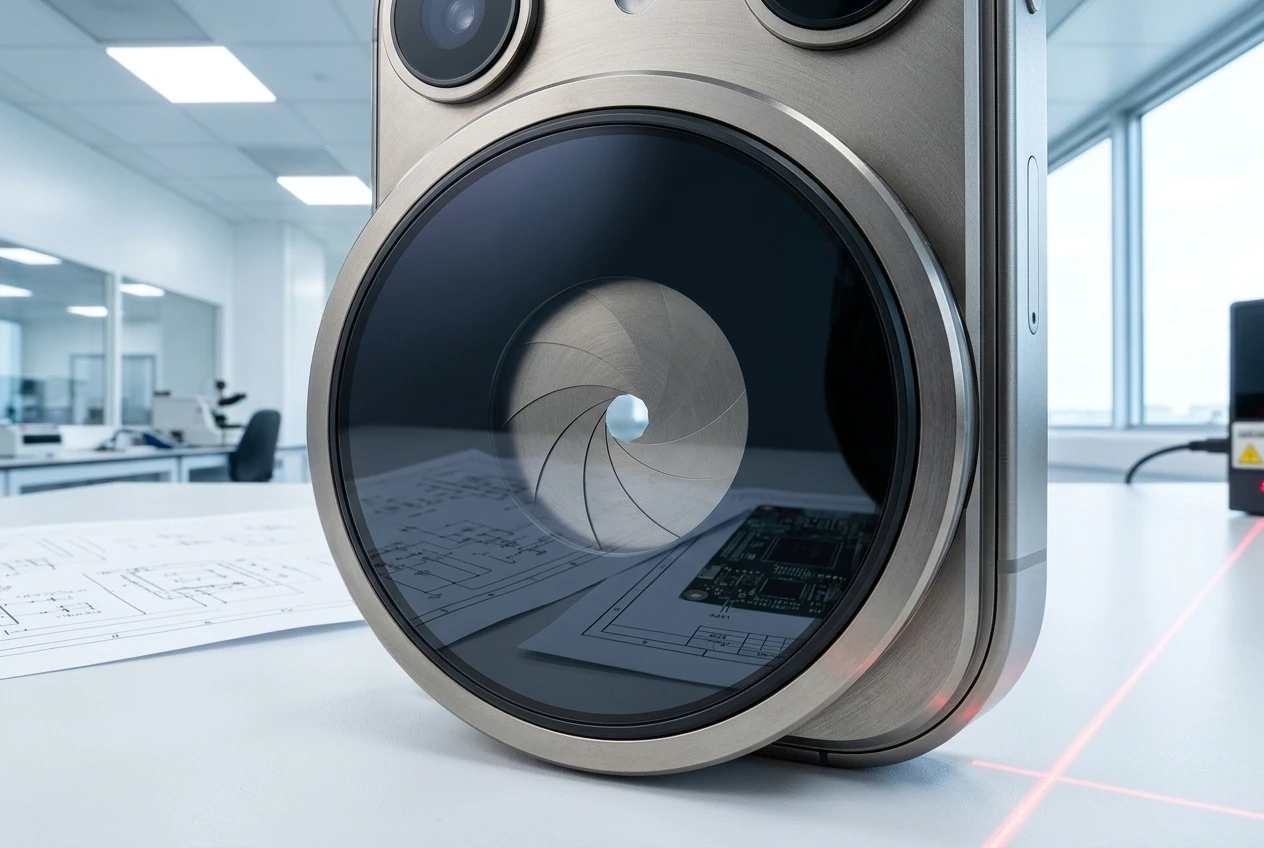
The log identifies a new main camera sensor, Sony’s IMX905, replacing the chip used in the current generation. Its pixel size holds at 1.22 micrometers, unchanged from the iPhone 17 Pro, suggesting Apple built variable aperture hardware around a familiar sensor rather than redesigning the imaging system from scratch.
The rest of the camera array carries over untouched. The telephoto lens, the ultrawide, the LiDAR scanner (light detection and ranging, used for depth mapping) and the selfie camera all match the outgoing iPhone 17 Pro and Pro Max, according to the leaked file.
It also lines up with separate supply-chain reporting on a heavier chassis and a climbing price tag for the same two phones, drawn from component leaks that surfaced well before this breach.
What World Leaks Actually Stole
World Leaks posted a listing on its dark web leak site tagged simply “Tata Electronics, 630.4 GB.” Tata Electronics confirmed a cybersecurity incident affecting parts of its IT infrastructure but said operations continued without disruption.
“A few weeks ago, Tata Electronics identified a cybersecurity incident on some of our systems,” a company spokesperson said. “Our response protocols were deployed immediately, and the incident has had no impact on our operations across businesses, which remain unaffected.”
Researchers who reviewed the dump for Reuters said it ran past 200,000 files. The categories included:
- Apple manufacturing data – folders labeled “com.apple.factorydata,” along with component schematics, PCB designs and material specifications
- A 52-page quality inspection standard covering iPhone circuit board components
- Tesla engineering files marked “TRADE SECRET” and tied to the revamped Model 3 and Model Y
- References to TSMC and Qualcomm, two of Apple’s chip suppliers
- Employee records, including passport scans of foreign nationals, internal emails and multi-year event logs
Tata Electronics has not disclosed how the attackers got in. Reporting around the breach indicates the company received a ransom demand, which it has declined to discuss publicly.
Tata Electronics Was Supposed to Be Apple’s Insurance Policy
Tata Electronics only started assembling iPhones in November 2023, when it bought Wistron’s Indian operations outright and became the first Indian company to build Apple’s flagship phone. It later picked up a 60% stake in Pegatron’s India unit and now runs plants across Tamil Nadu and Karnataka.
The company still trails Foxconn, which builds about two-thirds of the iPhones assembled in India to Tata’s one-third, according to Counterpoint Research. India as a whole is on track to produce 26% of the world’s iPhones this year, up from just 6% four years ago, and Tata is the fastest-growing piece of that shift.
A sister Tata Group firm added to that footprint with a $100 million acquisition of a Chinese supplier’s India unit last year. By production value rather than unit count, Tata’s own share of India’s iPhone assembly reportedly jumped from 26% to 44% after the Wistron deal, and the company has said it wants $30 billion in revenue within five years.
| Metric | Tata Electronics | Foxconn (India) |
|---|---|---|
| Share of India-assembled iPhones | About one-third | About two-thirds |
| FY25 revenue | ₹66,001 crore (about $7.9 billion), up from ₹400 crore three years earlier | Estimated $15 billion to $20 billion a year |
| Committed India investment | About ₹1.18 trillion (roughly $14 billion) in fab and chip-testing plants | About ₹36,000 crore, after exiting a fab joint venture |
| Stated growth target | $30 billion in revenue within five years | Expansion into servers and data center hardware |
That growth is exactly what makes the breach uncomfortable for Apple. More of its sensitive manufacturing data now sits with a single partner, and that partner just lost control of a large slice of it.
The IMX905 and a Feature Apple Waited Two Years to Confirm
Apple’s own supply chain had been signaling this move for a while. Analyst Ming-Chi Kuo first reported in December 2024 that the iPhone 18 Pro’s main camera would get variable aperture, and a later report said Apple was already discussing variable aperture components with suppliers.
A variable aperture works like the iris in a DSLR. It physically adjusts the size of the lens opening rather than relying only on software to fix exposure afterward. A wider opening pulls in more light for night scenes; a narrower one sharpens images in bright sun.
| Camera Component | iPhone 17 Pro / Pro Max | iPhone 18 Pro / Pro Max |
|---|---|---|
| Main sensor | Previous-generation Sony sensor | Sony IMX905 (new) |
| Main aperture | Fixed | Variable, per the leaked log |
| Main sensor pixel size | 1.22 micrometers | 1.22 micrometers, unchanged |
| Telephoto, ultrawide, LiDAR, selfie | Baseline | Unchanged from prior generation |
Apple typically keeps such specifications under wraps until its own event. This time, a criminal leak site got there first.
Samsung Tried This First, and Quietly Gave Up
Variable aperture is not new to phones. Samsung built the first version into the Galaxy S9 in 2018, switching between f/1.5 and f/2.4 depending on available light.
Samsung dropped the feature a year later on the Galaxy S10, judging the real-world benefit too small for the added thickness and cost. Xiaomi tried a similar approach on its 14 Ultra in 2024 and abandoned it the following year.
Samsung is reportedly reconsidering. Korean trade outlet ET News reports the company is weighing a revival of its shelved feature, timed almost exactly to Apple’s own rollout, with speculation pointing to a future Galaxy Ultra phone.
Why Is the iPhone 18 Pro Getting More Expensive?
A global shortage of computer memory chips is driving any price increase on the iPhone 18 Pro this year. Demand from AI data centers has pulled DRAM (dynamic random-access memory) and NAND flash supply away from phone makers, and Apple is expected to pass at least some of that cost onto buyers when the phones launch in September.
Samsung, SK Hynix and Micron have redirected factory capacity toward high-bandwidth memory for AI servers, where margins run far higher than in phone components. IDC expects DRAM supply growth of just 16% this year, well under historical norms.
Contract DRAM prices jumped 90% to 95% quarter over quarter in the first quarter of 2026, and NAND flash rose 55% to 60%, according to TrendForce. Counterpoint Research says mobile DRAM prices are up close to 70% over roughly the same stretch.
“A lot of these memory companies are asking smartphone vendors to stand in line behind the hyperscalers,” said Tarun Pathak, an analyst at Counterpoint Research.
Apple has already flagged the pressure. Tim Cook told the Wall Street Journal in June that further price increases were becoming hard to avoid, and Apple raised prices on tablets, speakers and laptops that same month. Samsung moved first among phone makers, adding as much as $80 to some Galaxy models earlier this year.
Against that backdrop, the rumored increase of up to $200 for the iPhone 18 Pro and Pro Max looks tied to memory costs industrywide. Both phones are still expected in September alongside the iPhone Ultra, part of a staggered two-wave launch strategy that pushes cheaper models to a later date.
Tata Tightens Access as the Investigation Continues
Tata Electronics has brought in outside forensic investigators and reported the breach to the Indian government and to corporate clients, including Apple. It has restricted remote access to internal tools, such as those used to place purchase orders, to a smaller list of employees.
The changes apply company-wide rather than to a single factory. Work-from-home arrangements remain in place, but access to sensitive systems from outside company facilities is now far stricter.
- Early June 2026: Security researchers say files from Tata Electronics begin circulating on the dark web.
- Mid-June 2026: World Leaks formally lists “Tata Electronics, 630.4 GB” on its leak site.
- Late June 2026: Tata Electronics confirms a cybersecurity incident, saying operations remain unaffected.
- Following weeks: Tata restricts internal system access, hires forensic investigators and notifies the Indian government and clients.
- July 2026: A diagnostics log inside the stolen files surfaces, confirming the iPhone 18 Pro’s variable aperture camera.
Rajshekhar Rajaharia, a cybersecurity researcher who reviewed the leaked files for Reuters, pointed to a separate ransomware attack on Jaguar Land Rover, another Tata Group company, as a warning sign. “Hacking manufacturing systems or gaining network access to extort ransom has become very common,” he said. “It doesn’t matter if you are an IT company or not.”
Rajaharia said he expects other hacking groups to test Tata’s networks next. Tata has not said whether it paid the ransom demand it received, and Apple has said only that it is investigating.
Frequently Asked Questions
Is the iPhone 18 Pro launch delayed by the Tata Electronics hack?
No. Apple and Tata Electronics have both indicated the breach did not disrupt production, and the iPhone 18 Pro, iPhone 18 Pro Max and iPhone Ultra remain on track for a September unveiling.
What is a variable aperture camera?
It is a lens that physically widens or narrows its opening to control how much light reaches the sensor, similar to the iris in a DSLR camera, rather than relying only on software to correct exposure afterward.
Did hackers breach Apple’s own systems?
No. The confirmed breach hit Tata Electronics, a manufacturing partner in India, not Apple’s internal network. Apple has said it is concerned about the exposure and is investigating how supplier data tied to its products ended up on a leak site.
Who is World Leaks?
World Leaks is considered a rebrand of Hunters International, a ransomware gang that wound down its own encryption-based attacks in 2025 and pivoted entirely to stealing data and threatening to publish it, a model researchers call hack-and-leak extortion.
Will the iPhone 18 Pro definitely cost $200 more?
Not confirmed. Leaked estimates point to an increase of up to $200 tied to rising memory chip costs, but Apple sets final pricing at its own launch event and has not announced iPhone 18 Pro pricing.
 ONGC licence frees Venezuela cash and operatorship talks
  Anthropic Hits $65 Billion Run Rate and Flips the AI Cash Test
  Supreme Court grounds the fare free-for-all with three-week clock
  Gold Nears $4400 as Soft Data Meets Oil Inflation Risk
  Nifty Slips as Zaggle Circuits and Dhoot Debuts Big
  Diesel Crack Tops $100 as Iran Rhetoric Lifts Crude