
 Ishan Crawford
 The Supreme Court on Monday said airlines that fail to comply with government directions on fares should be grounded, as the Centre told the court that final rules on airfares, surge pricing and excess baggage charges would be notified within three weeks. Draft rules went in under sealed cover. The next hearing is September 7.
Petitioners told the bench that carriers were ignoring existing directions. The Ministry of Civil Aviation has been relying on office memorandums in the meantime. That interim system is now under direct judicial pressure.
The exchange leaves little room for another soft extension. A sealed draft is already with the court. A three-week notification promise is on the record. The grounding language turns delay into an operational risk rather than a paperwork dispute.
Court warning lands with sealed draft in hand
A bench of Justices Vikram Nath and Sandeep Mehta heard the matter. The government said the rule-making process had been fast-tracked even while discussions continued. Until notification, MoCA office memorandums remain the guide for airline pricing.
The Supreme Court responded that non-compliant airlines should face grounding. The observation, reported by CNBC-TV18 and Moneycontrol, moves the discussion past polite reminders. Grounding is an operational sanction, not a fine that can be absorbed into ticket prices.
- Draft coverage: airfares, surge pricing and excess baggage charges
- Interim tool: MoCA office memorandums
- Next date: September 7
- Notification window: three weeks from the Monday hearing
The petition was filed by social activist S Laxminarayanan. It seeks binding rules on airfare pricing plus measures on surge, baggage, cancellation and refund norms, and an independent aviation regulator with consumer-protection powers.
That mix matters. Fare rules alone would still leave refund fights and regulator design for another day. The sealed draft, as described in court, tracks the pricing and baggage slice first. The wider petition items remain part of the case the bench is managing.
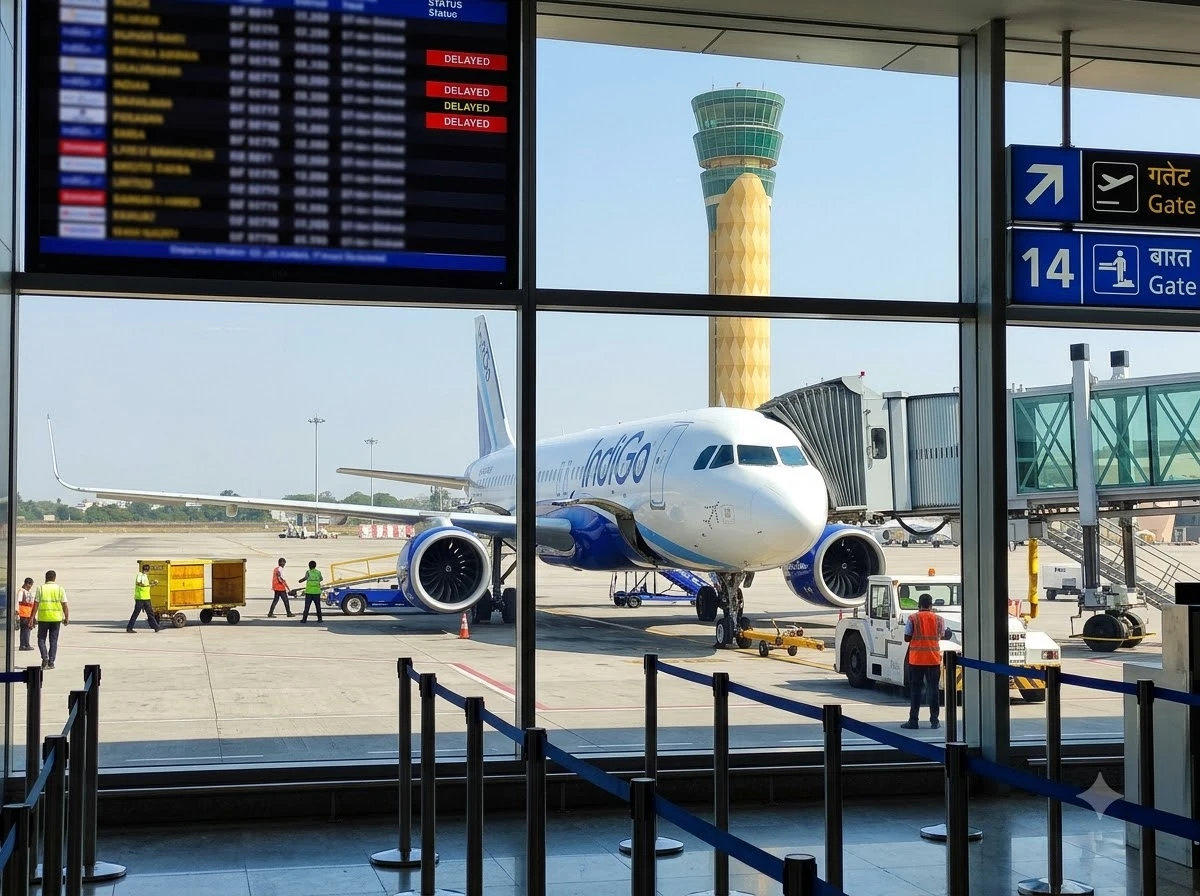
The 2024 law that finally arms tariff control
The Bharatiya Vayuyan Adhiniyam, 2024 replaces the Aircraft Act of 1934 and gives the Centre clear powers for the economic regulation of civil aviation and air transport services. The Act came into force in January 2025.
Section 10 specifically allows rules on the approval, disapproval or revision of airline tariffs. The definition of tariff is broad: passenger fares and other charges, plus the rules, regulations, practices or services that affect those charges, and even commission terms for sales agents.
Broken into plain parts, the same definition already on the statute reaches:
- Base passenger fares and other charges collected from travellers
- Rules, regulations, practices or services that change what those charges become
- Commission terms for sales agents who sell the tickets
That language reaches dynamic pricing models and ancillary fees that passengers meet at booking and at the gate. Airport aeronautical tariffs stay under the separate Airports Economic Regulatory Authority. Passenger and cargo airfares fall under the new central rule-making power.
In July the same bench directed the government to place the proposed aviation rules before the court in a sealed cover within two weeks, whether or not they had been laid before Parliament. The Centre said the drafts were ready and undergoing the statutory process. Monday’s sealed submission meets that direction.
The sequence is deliberate. The court did not wait for a full parliamentary cycle before demanding sight of the text. Sealed cover keeps commercial and drafting detail off the public docket for now, while still letting the bench test whether the Centre’s speed matches its assurances.
Festival spikes and the IndiGo capacity shock
The court has treated unpredictable fare changes during festivals and peak periods as a matter of serious concern for months. At a January hearing it pointed to steep increases during the Kumbh Mela and other festivals and described the pattern as exploitative. Justice Mehta noted fares from Delhi to Prayagraj and Jodhpur running three times normal levels.
In March the Centre sought more time, citing aviation disruptions and higher fuel costs linked to the West Asia conflict. Separately, India imposed temporary domestic airfare caps in December after widespread IndiGo cancellations cut capacity and pushed fares higher on many routes.
| Stage length | One-way fare cap (Rs) |
|---|---|
| Up to 500 km | 7,500 |
| 500-1,000 km | 12,000 |
| 1,000-1,500 km (incl. Delhi-Mumbai) | 15,000 |
| Above 1,500 km | 18,000 |
Those caps were withdrawn in March once the government judged capacity and operations had normalised. Airlines were still told to keep fares reasonable and transparent and to protect passenger interests. The temporary numbers show what the Centre was willing to impose when supply collapsed. They also show how quickly the ceiling can be lifted.
Festival spikes and a capacity shock are different triggers. One is demand surging on fixed seats. The other is seats vanishing from the schedule. Both produced the same passenger complaint: prices that jump faster than any ordinary traveller can plan around. The court’s language of exploitation attached first to the festival pattern. The December caps answered the capacity shock with hard numbers, then vanished when operations settled.
Who feels the pricing shift first
Passengers on festival, pilgrimage and peak leisure routes stand to gain the most from clearer rules on surge and baggage. Unpredictable jumps have turned last-minute travel into a high-stakes gamble. Families and smaller businesses that cannot lock tickets months ahead absorb the volatility.
Airlines face the opposite pressure. Dynamic pricing has been central to yield management on high-demand sectors. Binding rules that can approve, disapprove or revise tariffs shrink that freedom. Excess baggage and other ancillaries, long a profit centre after base fares were unbundled, also sit inside the draft framework.
The split in who absorbs cost looks roughly like this:
- Passengers: clearer surge and baggage limits reduce last-minute bill shock on pilgrimage and leisure routes
- Low-cost carriers: aggressive last-minute pricing faces the earliest compliance squeeze
- Full-service operators: more corporate and long-haul mix may ease adaptation, though not immunity
- Every carrier treating MoCA notes as soft guidance: grounding risk if the court or ministry acts
Low-cost carriers that fill seats through aggressive last-minute pricing will feel the compliance cost first. Full-service operators with more corporate and long-haul mix may adapt faster, but every carrier that has treated MoCA memorandums as guidance rather than hard limits now faces a grounding risk if the court or the ministry decides to act.
On X, the grounding language itself drew sharper notice than another round of fare complaints. Older high-engagement posts from the IndiGo disruption period still circulate the view that private carriers have repeatedly extracted concessions while passengers lack strong compensation culture and deterrent penalties. That crowd reading frames Monday’s warning as overdue rather than sudden.
Why office memorandums never stuck
Petitioners argued in July that the existing framework was not being adequately enforced and pointed to tools against predatory pricing and unfair practices. The Centre said the old framework would continue until new rules took effect. That gap between power on paper and practice on the ground is exactly what the sealed draft and the grounding observation now target.
DGCA remains under central government control for safety and regulatory functions, unlike independent sector regulators in telecom or electricity. PRS Legislative Research has noted that structure. Fare regulation under the new Act still runs through government rule-making rather than a fully arm’s-length body of the kind the petition also seeks.
Office memorandums can be updated quickly. They can also be read as advice rather than a ceiling. Binding rules under Section 10 change the posture: approval, disapproval or revision becomes a formal legal act, not a ministry circular carriers can price around. The court’s grounding remark supplies the missing deterrent tone that petitioners said earlier tools lacked.
- November 2025: Supreme Court issues notices on the petition.
- January 2026: Bench flags festival spikes as “exploitation” and seeks responses.
- May 15, 2026: Court says airfares need rationalisation; Solicitor General notes the 2024 Act is in force and rules are being finalised.
- July 2026: Direction to file proposed rules in sealed cover within two weeks.
- August 17, 2026: Sealed draft submitted; government promises notification in three weeks; court speaks of grounding non-compliant carriers.
- September 7, 2026: Next hearing.
The timeline shows repeated judicial prodding meeting slow statutory process. Monday’s hearing compressed that tension into a short clock and a hard sanction.
What the September hearing will actually test
By September 7 the three-week window will have nearly closed. The court will be able to ask whether the final rules have been notified, what they contain on surge and baggage, and whether interim memorandums are being obeyed in the meantime. Any claim of continued non-compliance will sit next to the grounding observation already on record.
Three practical checks will dominate that date. First, notification status against the three-week clock. Second, whether the published text matches the draft themes already named in court: fares, surge and excess baggage. Third, whether any carrier is still treating office memorandums as optional while the final instrument is printed.
What we know
- Draft rules on fares, surge pricing and excess baggage are before the court in sealed cover.
- Centre has committed to notification within three weeks.
- The 2024 Act supplies the legal basis for tariff approval, disapproval or revision.
What remains open
- Exact final text of the rules and any caps or approval mechanisms.
- Whether grounding will move from observation to actual direction against a named carrier.
- Whether an independent regulator with consumer powers is still under active consideration.
Grounding Risk Rewrites the Compliance Clock
Fines fold into the cost of a ticket. Grounding does not. A grounded aircraft earns nothing, burns schedule integrity, and strands passengers the airline must re-accommodate. That is why the bench’s Monday language landed harder than another request for status reports.
Until notification, MoCA office memorandums still set the interim line. After notification, Section 10 rules can approve, disapprove or revise tariffs under the 2024 Act. The court’s observation bridges both phases. Non-compliance before or after the three-week mark now carries an operational threat the earlier memorandum regime never matched.
Carriers that built yield models on flexible surge and unbundled baggage therefore face a shorter planning horizon. The September hearing will show whether the threat stays rhetorical or attaches to conduct the bench finds still out of line.
How Far Temporary Caps Already Went
The December caps, later lifted in March, remain the clearest public signal of how far the Centre would go when capacity failed. Stage-length ceilings ran from Rs 7,500 on the shortest hops to Rs 18,000 above 1,500 km, with Delhi-Mumbai held inside the Rs 15,000 band.
| Phase | Centre’s posture on fares |
|---|---|
| December capacity shock | Hard one-way caps by stage length |
| March normalisation | Caps withdrawn; reasonableness guidance retained |
| Monday hearing | Sealed draft plus three-week notification promise |
| September 7 listing | Court can test notification and interim obedience |
Those caps were a crisis instrument, not the permanent Section 10 framework. They still prove the government can publish numeric limits when pressed. The sealed draft is meant to replace that on-off pattern with standing rules on fares, surge pricing and excess baggage. Passengers and airlines will read the final text against the memory of how high the temporary ceiling sat, and how fast it came down.
This is not the first time the Supreme Court has pressed the government on market conduct. In another Supreme Court business ruling the court has shown willingness to unwind large regulatory penalties when procedure or substance fails. Here the pressure runs the other way: toward faster, tighter rules rather than relief from them.
Airlines now price every peak-day ticket under a live judicial threat. Passengers will watch whether the three-week promise produces readable, enforceable limits or another round of guidance that evaporates when demand spikes. The September calendar will show which outcome arrives first.
 ONGC licence frees Venezuela cash and operatorship talks
  Anthropic Hits $65 Billion Run Rate and Flips the AI Cash Test
  Gold Nears $4400 as Soft Data Meets Oil Inflation Risk
  Nifty Slips as Zaggle Circuits and Dhoot Debuts Big
  Diesel Crack Tops $100 as Iran Rhetoric Lifts Crude
  CEA Nageswaran presses for E10 option as E20 locks land and water