
 Ishan Crawford
 State-run Oil and Natural Gas Corporation has secured a licence from the US Treasury’s Office of Foreign Assets Control that ends years of self-imposed limits on its Venezuelan assets. Director-finance Anupam Agarwal told investors the company now has “full freedom to work on the Venezuela project” after sanctions-related risks forced it to hold back.
The nod lets ONGC invest, raise output and chase new deals. It also opens a path to recover more than $500 million in pending dividends and to take operatorship of projects now run by PDVSA.
For a company that kept title while freezing activity, the shift is operational rather than symbolic. Capital, people and contracting can move again under a clear compliance path.
What the OFAC clearance actually removes
US sanctions on Venezuela’s oil sector had blocked straightforward financial transactions, fresh capital and day-to-day dealings with PDVSA. ONGC Videsh, the overseas arm, kept its stakes but curtailed activity. Agarwal said those risks “are behind us.”
The licence sits inside a wider 2026 thaw. OFAC has issued and amended multiple general licences covering Venezuelan-origin oil, energy services and certain banking. Specific licences for companies such as ONGC fill remaining gaps.
- Full financial management of existing joint-venture projects
- New investment to lift production at under-worked fields
- Talks on fresh agreements with Venezuelan authorities and partners
- Possible transfer of operatorship from PDVSA on selected assets
- Recovery of long-pending dividends locked by payment channels
Agarwal made clear the company is already in discussions and expects progress “in the near term.”
General licences set the broad perimeter. A specific licence tells a named operator what it may do inside that perimeter without tripping residual prohibitions. That distinction is why ONGC could hold equity for years yet still need fresh paper before writing cheques or redesigning work programmes.
Once both layers align, treasury teams, lenders and contractors regain a route that compliance departments can approve. Without that route, even routine joint-venture cash calls stall.

San Cristobal still runs at a fraction of potential
ONGC Videsh holds a 40 per cent PI in San Cristobal through a joint venture with PDVSA. The field sits in the Zuata subdivision of the Junin Norte block in the Orinoco heavy-oil belt and covers roughly 160 square kilometres. PDVSA keeps 60 per cent.
In the Carabobo-1 project the Indian stake is 11 per cent. Partners include PDVSA at 71 per cent, Repsol at 11 per cent, plus smaller holdings for Indian Oil and Oil India. Petronas exited years ago and its share moved to the Venezuelan side.
| Project | ONGC Videsh stake | Key partner | Recent note |
|---|---|---|---|
| San Cristobal | 40% | PDVSA 60% | 0.265 mtoe in FY26, about one-tenth of potential |
| Carabobo-1 | 11% | PDVSA 71%, Repsol 11% | Still under development |
San Cristobal’s FY26 output of around 0.265 million tonnes of oil equivalent shows how far the assets sit below design. Years of underinvestment, sanctions friction and operational strain left the Orinoco fields short of capital and spare parts. The licence is meant to change that equation.
Heavy-oil belts respond slowly when money and kit stop arriving. Wells need steady steam, diluent and maintenance. Interrupt those flows and decline compounds. A 40 per cent partner cannot force the pace while the majority operator and the banking system are constrained, which is the bind San Cristobal has lived in.
Carabobo-1 remains earlier in its cycle, so the same clearance matters more for future spend than for barrels already on a plateau. The two stakes therefore present different clocks: one is a recovery story, the other a development story.
More than half a billion dollars still trapped
The immediate financial prize is cash already earned. Agarwal said the OFAC paper will let ONGC handle project finances and could unlock a pending dividend of more than $500 million. Market chatter on X has put the frozen figure in a similar $500-600 million range, with older commentary sometimes citing higher totals across the portfolio.
That money has sat idle because dollar channels and banking counterparties refused Venezuela-linked flows. Clearing the licence removes the compliance brake. For a state-owned explorer watching capital discipline, recovering earned dividends ranks ahead of new drilling budgets.
Quick numbers
- More than $500 million, pending dividend ONGC aims to recover
- 0.265 mtoe, San Cristobal FY26 output, roughly 10% of potential
- 303 billion barrels, Venezuela proven crude reserves cited by the company
- 40% / 11%, ONGC Videsh stakes in San Cristobal and Carabobo-1
Whether the full amount lands quickly still depends on Venezuelan counterparties and banking rails, but the legal barrier on the US side is now gone.
Dividends already declared are cleaner to chase than new profit shares still tied to future lifting. They test the pipes. If the first transfers clear, confidence builds for larger capital movements in both directions. If they snag on residual bank caution, investment decisions slip even with the licence in hand.
Western India skills meet Orinoco heavy oil
Agarwal stressed that ONGC wants shallow and onshore fields. The company already runs similar geology and well designs in western India, including Mehsana and Ahmedabad. That operating history is the practical edge it brings to Venezuela.
“ONGC’s focus is on shallow, onshore fields in Venezuela, where it has relevant operating expertise from its domestic fields in Western India, including Mehsana and Ahmedabad,” he said. The fit is technical rather than political. Heavy oil needs steam, diluent management and careful reservoir work. ONGC has done versions of that at home.
Venezuela’s newly enacted petroleum law adds fiscal incentives that could improve project economics. The 2026 hydrocarbons reform opens more space for private participation, adjusts royalties and taxes, and includes an economic-equilibrium clause meant to protect investors when rules change. Details still need testing in contracts, yet the direction matches what foreign operators have asked for.
Shallow onshore work also keeps logistics simpler than deep water. Crews, rigs and surface facilities look more like the western India pattern the company already staffs. That lowers the learning curve when programmes restart and makes operatorship a less remote ambition than it would be in an unfamiliar basin.
India’s crude mix and the search for alternatives
The Venezuela push lands while India manages a long-running dependence on discounted Russian barrels. Shares of Russian crude in Indian imports climbed above 35 per cent in recent fiscal years before newer US pressure and trade talks pushed the figure lower in early 2026. Diversifying sources remains official policy.
ONGC’s existing Orinoco foothold offers one non-Middle East, non-Russia option that uses skills the company already owns. It also sits alongside other overseas capacity moves, including the kind of capacity push after OPEC exit seen elsewhere in the region. For New Delhi the arithmetic is simple: every barrel of equity oil that can be lifted under Indian operatorship reduces exposure to spot markets and chokepoints.
The same logic that drove India’s heavy reliance on Russian crude now encourages a second look at stranded Venezuelan barrels once sanctions compliance is sorted.
Equity barrels do not erase import needs. They change the margin of discretion when prices spike or routes tighten. A higher share of production under Indian technical control is a hedge, not a replacement for seaborne supply.
Operatorship is the quieter power shift
Agarwal said ONGC is exploring taking over operation of some projects currently managed by PDVSA. That would move day-to-day control, work programmes and cost decisions into the hands of the Indian partner. In a joint venture where PDVSA holds the majority, operatorship is often the real lever.
Talks with Venezuelan authorities and other partners are already under way. Success is not guaranteed. PDVSA’s balance sheet, labour rules and local content requirements remain difficult. Political risk inside Venezuela has not vanished just because Washington issued paper. Yet the licence removes the external excuse that previously blocked deeper engagement.
We are very bullish for Venezuela.
Agarwal used that phrase on the investor call and linked it directly to expected new agreements and possible operatorship transfers.
Majority title without operatorship leaves budget pace and contractor choice with the state company. Operatorship without majority title still lets the minority partner set drilling order, maintenance cycles and cost control. That is why the quieter shift can matter as much as headline equity percentages.
Banking Rails Decide How Fast Cash Moves
Legal clearance and practical settlement are different steps. The OFAC licence answers the first. Correspondent banks, compliance filters and Venezuelan payment entities still answer the second.
Dollar-clearing counterparties spent years treating Venezuela-linked flows as automatic rejects. Retraining those filters takes more than a single licence letter. Early transfers will be watched closely by every treasury desk that must move the next one.
- Pending dividends above $500 million as the first real test of open channels
- Project-level financial management once routine cash calls can clear
- Fresh investment only after money is proven to move both ways
Agarwal’s near-term language fits that order. Discussions are active, yet the market will judge progress by settled cash, not by optimism on a call. For a state-owned explorer under capital discipline, idle dividends are both a balance-sheet drag and a proof point. Freeing them validates the licence in a way that another memorandum of understanding cannot.
The 2026 Reform Sweetens Investor Terms
Fiscal terms sit beside sanctions relief as the other half of any restart. The newly enacted petroleum law and the wider 2026 hydrocarbons reform adjust royalties and taxes, widen room for private participation, and add an economic-equilibrium clause designed to shield investors when rules shift.
Those changes do not rewrite geology. They rewrite the spreadsheet that decides whether steam-flood money and diluent logistics earn an acceptable return. Foreign operators have asked for that kind of protection for years; the reform’s direction tracks the request even if contract detail still has to be tested field by field.
Paired with OFAC paper, the reform lowers two stacked barriers at once: the external compliance wall and the internal fiscal drag. Either barrier alone can stall a work programme. Removing both is what makes Agarwal’s bullish tone coherent rather than aspirational.
Equilibrium clauses matter most when governments later face budget stress. Investors price the risk that royalties move after capital is sunk. A written balance mechanism will not erase that risk, but it gives negotiators a reference point that earlier frameworks lacked.
Near-term steps after the paper arrives
The practical sequence is cash first, then capital, then barrels. Recovering the dividend tests whether banking channels actually open. Fresh investment decisions will follow once money can move both ways. Operatorship negotiations will run in parallel with Venezuelan counterparts who need foreign technical capacity but prefer to keep title.
- Now: confirm banking paths and press for release of pending dividends above $500 million
- Next: resume full financial management on existing joint ventures and line up new investment cases
- In parallel: negotiate operatorship transfers on selected PDVSA-run assets
- Later: lift San Cristobal from about one-tenth of potential and advance Carabobo-1 development
Venezuela still holds the world’s largest proven crude reserves, around 303 billion barrels by the figures ONGC and industry trackers cite. Production has lagged for more than a decade. The Venezuela-related sanctions framework is no longer the hard stop it was for this particular Indian investor.
How fast San Cristobal climbs from one-tenth of potential will show whether the second-order effects materialise. The licence is the starting gun, not the finish.
Reserves on that scale only matter if wells can be funded, staffed and maintained. The clearance gives ONGC permission to try. Output figures in the coming fiscal periods will show whether permission turned into barrels.
 Anthropic Hits $65 Billion Run Rate and Flips the AI Cash Test
 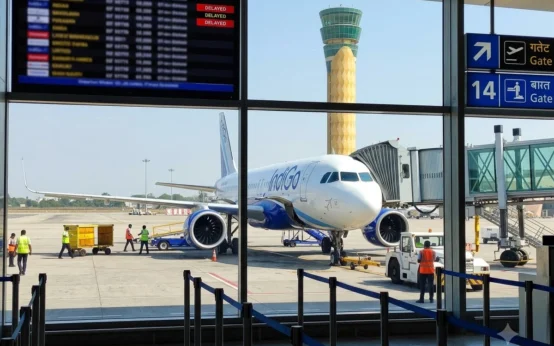 Supreme Court grounds the fare free-for-all with three-week clock
  Gold Nears $4400 as Soft Data Meets Oil Inflation Risk
 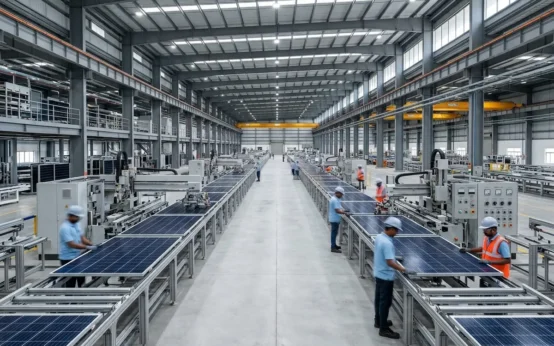 Nifty Slips as Zaggle Circuits and Dhoot Debuts Big
  Diesel Crack Tops $100 as Iran Rhetoric Lifts Crude
 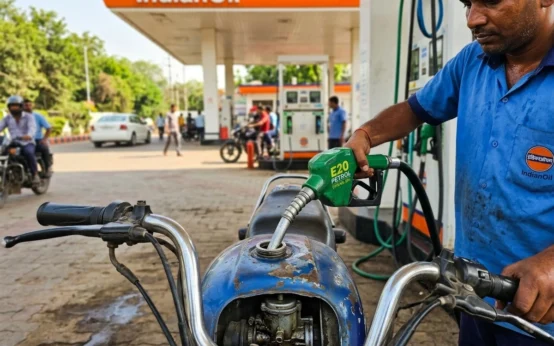 CEA Nageswaran presses for E10 option as E20 locks land and water