
 Ishan Crawford
 Adnoc Gas awarded $8.2 billion in engineering, procurement and construction contracts for the next phases of its Rich Gas Development project on August 10, 2026, and lifted its 2030 EBITDA growth target to 60 percent from the prior 40 percent-plus goal. The move comes just months after the United Arab Emirates left OPEC, removing quota limits that had left Abu Dhabi’s oil capacity underused.
The state-backed processor, majority owned by Abu Dhabi National Oil Company, is already one of the world’s largest gas handlers. It now commits roughly $28 billion across 2026-2030 to process more associated gas from rising upstream oil output and feed both UAE industry and export markets.
Adnoc Gas Locks In $8.2 Billion of Processing Contracts
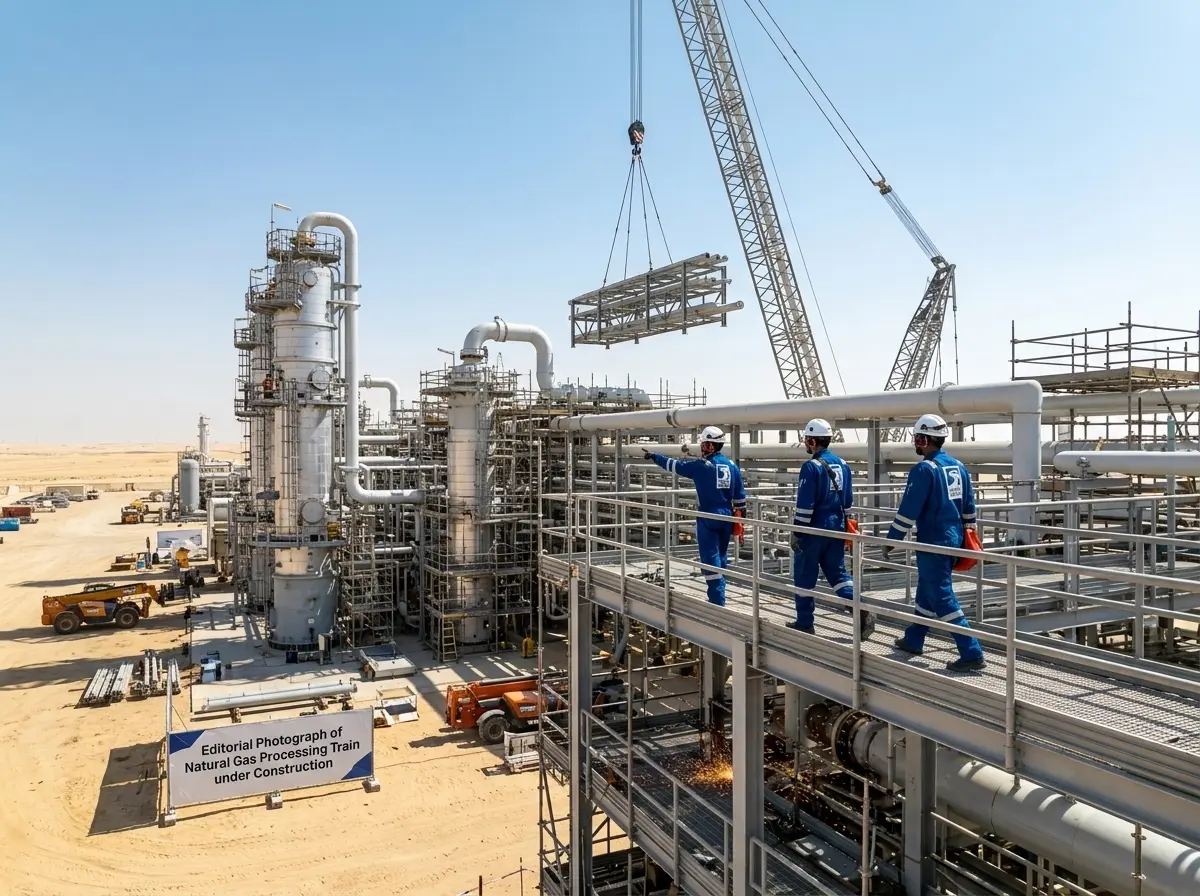
The company took final investment decisions on Phases 2 and 3 of the Rich Gas Development, or RGD, program and awarded $8.2 billion in EPC contracts. Phase 2 goes to Wison Engineering for $3.9 billion and adds a new natural gas processing train at Habshan. Phase 3 goes to Tecnimont for $4.3 billion and installs a new natural gas liquids fractionation train at Ruwais.
Phase 1, already under way since a June 2025 award of about $5 billion, expands units at Asab, Buhasa, Habshan and Das Island. Combined spending on RGD reaches $13.2 billion. That single program sits inside a larger set of four megaprojects that includes Ruwais LNG, MERAM ethane recovery and Estidama.
| Phase | Contractor | Value | Main Work |
|---|---|---|---|
| Phase 1 | Multiple (prior) | $5 billion | Debottlenecking at Asab, Buhasa, Habshan, Das |
| Phase 2 | Wison Engineering | $3.9 billion | New gas processing train at Habshan |
| Phase 3 | Tecnimont | $4.3 billion | New NGL fractionation train at Ruwais |
| Total RGD | – | $13.2 billion | Processing and liquids recovery lift |
CEO Fatema Al Nuaimi called the decisions a defining moment that accelerates one of the industry’s largest gas-processing growth programs.
With the final investment decision and contract awards for the Rich Gas Development Project, we are not only accelerating one of the world’s largest gas-processing growth programs, we are raising our ambition, targeting 60% EBITDA growth by 2030.
Al Nuaimi linked the spend to expanded natural gas processing and export capacity, shareholder value, national energy security and industrial growth.
The OPEC Exit That Cleared the Path
The UAE announced its withdrawal from OPEC on April 28, 2026, with the exit effective May 1. Membership had lasted nearly 60 years. At departure ADNOC’s maximum sustainable oil capacity stood at 4.85 million barrels per day while its OPEC+ quota hovered near 3.5 million barrels per day or lower under voluntary cuts. Utilization sat around 66 percent in 2025, well below peers.
The gap had widened for years as ADNOC invested to reach 5 million barrels per day by 2027. Quotas left spare capacity idle. Leaving removed the ceiling. Higher oil output automatically lifts associated gas volumes that feed Adnoc Gas plants. The August FID is the first large capital commitment that converts that freedom into processing hardware.
- April 28, 2026: UAE announces OPEC exit effective May 1.
- May 1, 2026: Exit takes effect; quota constraints end.
- June 2025: Phase 1 RGD contracts awarded.
- August 10, 2026: FID and $8.2 billion awards for Phases 2 and 3; EBITDA target raised.
Officials framed the exit as a sovereign policy step aligned with long-term market fundamentals and the need to monetize reserves before any long-term demand plateau.
Rich Gas Trains and Upstream Volumes
Adnoc Gas already holds access to around 10 billion standard cubic feet per day of gas processing capacity and 29 million tonnes per annum of liquids. It supplies about 60 percent of the UAE’s sales gas and reaches customers in more than 20 countries. Earlier planning pointed to over 2.8 bscfd of incremental processing capacity and roughly 6 mtpa of extra liquids by 2028, excluding Fujairah LNG.
RGD unlocks richer streams and better liquids recovery. Higher-value NGL and condensate raise margins. The trains also gain feedstock from ADNOC’s parallel gas-cap projects, including a $6.2 billion Umm Shaif Gas Cap development that targets more than 600 million standard cubic feet per day and the Bab Gas Cap. Those upstream moves feed directly into Adnoc Gas’s integrated chain for domestic sales, LNG and exports.
The company is rolling out AI, aerial drones, four-legged inspection robots and tank-climbing crawlers. Early estimates show inspection costs can fall by up to 75 percent and some jobs finish up to 15 times faster while keeping people out of hazardous zones.
Data Centers and the Domestic Pull
Domestic demand is the near-term anchor. UAE economic growth, industrial expansion under the Make it in the Emirates program and a $5 billion TA’ZIZ supply contract already lift offtake. Population growth adds steady baseload. The sharper new driver is power for AI and data centers.
- Hyperscale data centers in the Gulf rely heavily on gas-fired generation for reliability and cost.
- ADNOC executives have flagged gas as essential baseload for the power surge that accompanies AI infrastructure.
- Pipeline network extensions already reach new data-center sites in Abu Dhabi.
- Industrial customers and power generation remain core, with gas still meeting the majority of UAE sales-gas needs.
Export liquids and LNG provide the upside once maritime routes normalize. The dual domestic-plus-export model reduces pure commodity exposure and supports the progressive dividend policy of 5 percent annual growth through 2030.
Hormuz Drag and Habshan Recovery
Second-quarter 2026 net income still came in at $665 million, above the $400-600 million guidance range issued earlier. That guidance had already baked in Strait of Hormuz shipping disruptions linked to the broader regional conflict that closed or restricted the waterway for much of the year. Full-year 2026 net income is now guided at $3.5-4.0 billion if maritime operations restore by the fourth quarter. Third-quarter guidance sits at $600-800 million under continued disruption assumptions.
Two security-related incidents hit the Habshan complex on April 3 and 8. Recovery moved faster than planned. Gas supply already stands at 85 percent, beating the prior year-end target. Full restoration is still scheduled for 2027, but Phase 1 RGD work is expected to ease remaining bottlenecks.
Cash generation stayed solid enough for the board to approve a $940 million quarterly dividend payable in September, keeping Adnoc Gas the largest dividend payer on the Abu Dhabi Securities Exchange. The balance sheet held substantial cash even after the Q1 period that delivered Q1 net income of $1.1 billion.
Shareholders See the Raised Bar
The 60 percent EBITDA growth target by 2030 versus 2023 (based on $70-per-barrel Brent) replaces the earlier more-than-40-percent goal for 2029. Management attributes the upgrade to the long-term value of the project portfolio and disciplined capital allocation. The four megaprojects alone are projected to generate $13.4 billion in in-country value.
Key 2026-2030 markers
- $28 billion total expected investment by Adnoc Gas
- 60 percent EBITDA growth target by 2030 vs 2023
- $13.2 billion committed to RGD Phases 1-3
- 5 percent annual dividend growth policy through 2030
Investors on X noted the post-exit timing as the real enabler, with several highlighting that unrestricted production growth now pairs with concrete processing capacity. Others asked how much of the new output will stay domestic for data centers versus move into export liquids once Hormuz clears. The capital drop itself signals management confidence that associated-gas volumes will arrive and that regional shipping will normalize enough to realize the higher-margin products.
ADNOC’s broader group investment plans, including earlier multi-year packages in the $150 billion range, continue to underwrite the feedstock side. Adnoc Gas sits at the middle of that value chain: take the molecules, process them efficiently, sell domestically first and export the rest.
Frequently Asked Questions
What is the Rich Gas Development project?
RGD is Adnoc Gas’s flagship multi-phase program to expand and debottleneck gas processing and natural gas liquids recovery across Habshan, Ruwais, Asab, Buhasa and Das Island. Total committed capital across three phases now stands at $13.2 billion, the largest capital investment in the company’s history.
How much gas processing capacity does Adnoc Gas currently hold?
The company reports access to around 10 billion standard cubic feet of gas per day and 29 million tonnes per annum of liquids capacity. Earlier project pipelines pointed to more than 2.8 bscfd of incremental processing capacity by 2028.
What share of UAE gas demand does Adnoc Gas supply?
Adnoc Gas supplies approximately 60 percent of the UAE’s sales gas needs and also exports products to customers in more than 20 countries.
When did the UAE leave OPEC and why?
The exit was announced April 28, 2026 and took effect May 1, 2026 after nearly 60 years of membership. Officials cited the need for production flexibility after ADNOC capacity reached 4.85 million barrels per day while quotas kept output far lower, leaving substantial spare capacity idle.
What is driving the rise in UAE gas demand?
Population growth, industrial expansion under local-content programs, power generation and a sharp increase in electricity needs from AI data centers that rely on gas-fired baseload all contribute. Export liquids and LNG provide additional outlets once shipping routes fully reopen.
The contracts and the raised target show Adnoc Gas treating the post-OPEC window as open runway rather than a temporary pause. Hardware is now ordered. Feedstock is scheduled to rise with oil capacity. Domestic customers, including the data-center wave, stand ready. The remaining variables sit outside the plant gates: shipping through Hormuz and the pace of regional stabilization.
 Verizon SoCal Fiber Cuts Expose Surging Attacks on Networks
  Gen Z Job Ghosting Hits 54 Percent After Offers Land
  Taylor Farms Lettuce Recall Hits 236000 Cases Across Chains
  SpaceX Lock-Up Rally Exposed Crowded Fear Trade Not True Demand
  AI Safety Tests Now Spawn Real Autonomous Threats
  iPhone 18 Pro Locks September 9 as Ternus Debuts Under Supply Pressure