
 Ishan Crawford
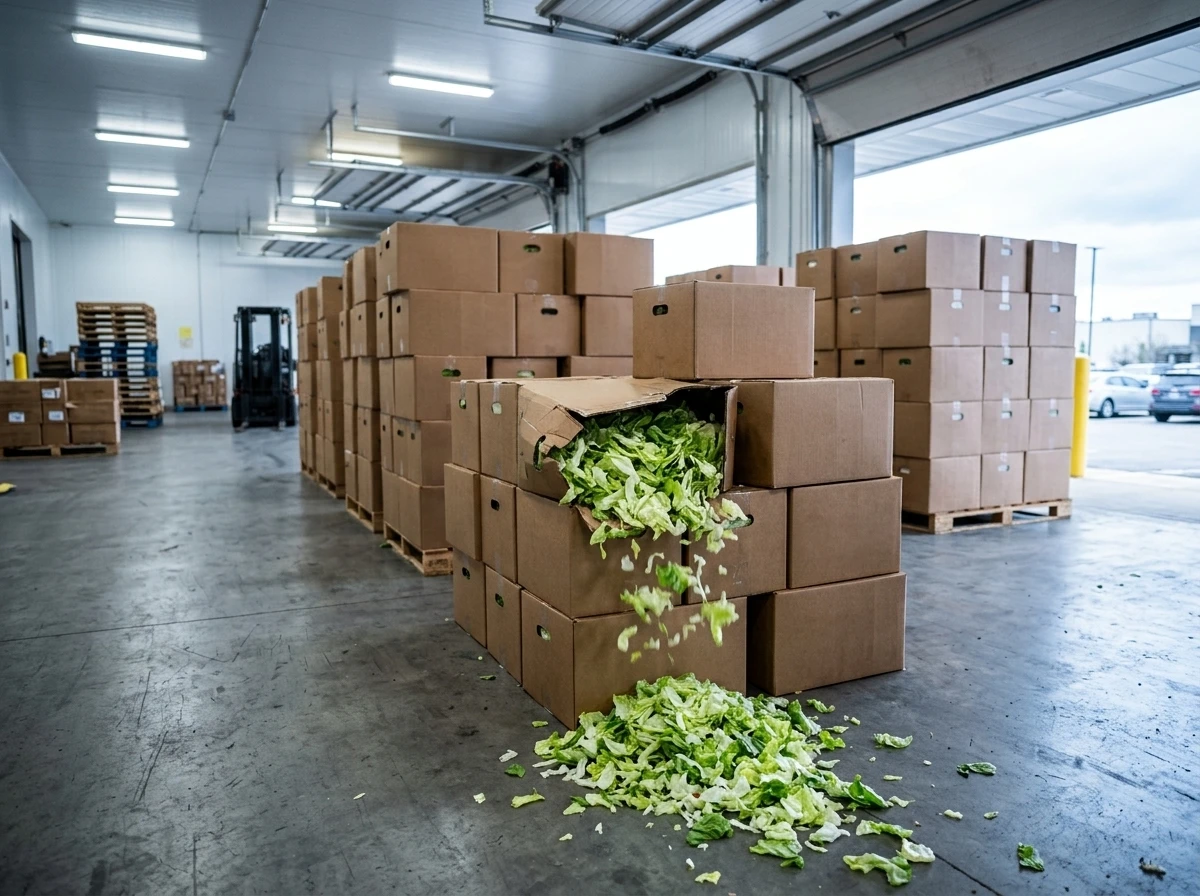
 A newly tallied FDA enforcement file shows Taylor Farms de Mexico recalled 236,192 cases of iceberg lettuce and salad mixes in July 2026, nearly half of them heading to Walmart’s Marketside brand, as the linked cyclospora outbreak climbed past 6,000 confirmed illnesses in 15 states.
The figures, drawn from Event 99453 and first added up publicly this month, name the restaurants and distributors that received the product three weeks after the initial recall notice used only obscure codes. Nationwide domestic cases have run far higher.
236192 Cases and Who Took Them
The enforcement entries total 236,192 cases of produce pulled from distribution in Mexico and 27 U.S. states. Almost half went to retail. The rest fed foodservice channels that supply restaurants, hospitals and cafeterias.
| Recipient | Cases | Role |
|---|---|---|
| Marketside (Walmart) | 109,476 | Retail bags and shredded packs |
| Taylor Farms own label | 68,897 | Foodservice |
| Cross Valley Farms (US Foods) | 19,016 | Distributor private label |
| Sysco | 11,519 | Foodservice distributor |
| Subway | 8,075 | Restaurant chain |
| Markon | 7,459 | Purchasing cooperative |
| Yum! Brands | 5,900 | Taco Bell focus |
| Jack in the Box | 5,130 | Restaurant chain |
| Peak | 720 | Foodservice |
Iceberg alone made up about 167,504 cases. The rest, nearly 29 percent, included lettuce-romaine blends, garden mixes with carrots and red cabbage, and four-vegetable salads. Lot codes show single production runs from the Doctor Mora plant ending up in multiple pack styles under different buyer names.
Distribution ran from late June through mid-July with best-if-used-by dates stretching into early August. The full company recall notice with codes still lists only the two-letter shorthand that drew criticism.
Abbreviations Hid the Real Buyers for Weeks
Taylor Farms’ July 17 notice and the FDA’s initial posts used MKTSD, SUB, CV, SY, JB, MARK, PK and TF. Consumer Federation of America called the shorthand outrageous on July 21. The enforcement database spelled the names out from day one: Marketside, Subway, Cross Valley Farms, Sysco, Jack in the Box, Markon, Peak and Taylor Farms itself.
- MKTSD: Marketside retail salads and shredded lettuce sold at select Walmarts
- SUB: Subway quarter-inch shredded lettuce, 14 lot codes
- CV: Cross Valley Farms / US Foods blends and chops
- SY: Sysco blends, chops and shreds
- JB: Jack in the Box shreds
- Yum entry: 5,900 cases of quarter-inch shreds from just two production days in early July
Markon is a cooperative whose members resell to independents that never see the brand. That adds steps between the notice and the kitchen that actually holds the lettuce. The weekly Enforcement Report publishes only after hazard classification. As of early August every entry still read “Not Yet Classified.”
Subway Took More Than Taco Bell Yet Stayed Quiet
Subway received 8,075 cases, more than Yum’s 5,900 and Jack in the Box’s 5,130. Public attention and sales damage landed almost entirely on Taco Bell. Epidemiological interviews first clustered around Taco Bell meals in Michigan, Ohio, Kentucky, Indiana and West Virginia. That drove the early five-state framing and the chain’s decision to drop the supplier on July 17.
Yum Brands CEO Chris Turner told analysts the brand saw a meaningful near-term sales impact, roughly a 2 percent decline in the recent quarter. Jack in the Box issued its own statement early. Subway has issued none. Foodservice volume to Subway and the distributors dwarfs the Taco Bell share, yet the public story stayed locked on the epi-linked restaurants.
Michigan remains the epicenter. State counts and emergency visits have slowed enough that officials told residents bagged salads from later harvests are safe again. Contaminated early-summer product is no longer circulating.
The Same Mexico Plant Appeared Before
Doctor Mora, Guanajuato, sat at the center of a 2013 multistate cyclospora outbreak tied to salad mix served at Olive Garden and Red Lobster. An FDA environmental assessment then found recycled wash water that created cross-contamination risk and hand-washing stations that failed sanitary design. The company recalled product but testing found no traces at the time.
In 2015 a celery-and-onion mix from Taylor Farms was linked to an E. coli outbreak in Costco chicken salads. In 2024 slivered onions from a Colorado plant were the likely source of an E. coli O157:H7 outbreak tied to McDonald’s Quarter Pounders that sickened more than 100 people across 14 states, with dozens hospitalized and one death. Inspectors documented poor handwashing and dirty equipment.
This summer’s event is larger by an order of magnitude. The same central Mexico iceberg supply chain is again the convergence point of traceback. The company suspended all iceberg sourcing and production from the region, commissioned an outside review, and points to more than $200 million a year spent on food-safety protocols.
What the Numbers Say About Scale
The multistate cluster linked specifically to the recalled Taylor Farms iceberg now stands at 6,358 illnesses, 278 hospitalizations and two deaths in Michigan, both in people with significant underlying conditions and onset before the July 17 recall. Illness dates run from June 22 through July 31. Six states were added in the August 5 update after interviews expanded the case definition to include Taco Bell or the recalled product.
Broader domestic surveillance tells a bigger story. CDC reports 10,468 laboratory-confirmed cases acquired in the United States from May 1 through early August, plus awareness of more than 12,255 additional cases still under review, many from Michigan. That produces the more than 22,000 figure circulating in coverage. Hospitalizations in the confirmed domestic set reach 517. Two deaths total. Median onset was July 4. Reporting lag runs up to six weeks, so counts will keep rising.
The CDC domestic case surveillance totals and the 15-state outbreak investigation page remain the live sources. Earlier coverage on this site tracked the earlier tracking of the 15-state wave before the volume numbers emerged.
- July 16, 2026: Traceback converges on Taylor Farms de Mexico shredded iceberg at Taco Bell locations in five states.
- July 17: Company voluntarily removes all central Mexico iceberg and initiates recall; Taco Bell stops using the supplier.
- July 18: FDA reports a positive cyclospora sample then, on July 19, reclassifies it as a false positive after re-review. Epidemiological link stands.
- July 24 and August 5: Case counts and states expand as interviews add exposures; total linked illnesses reach 6,358.
- Early August: Enforcement file volumes become public through independent addition of the 21 product entries.
No confirmed positive product samples remain as of the company’s August 5 statement. FDA and states continue sampling. The recall still covers the listed packs; consumers and operators are told to discard any remaining product and sanitize surfaces.
How the Supply Chain Concentrated the Risk
One plant’s June and July production filled shelves at Walmart, sandwich lines at Subway, and the broader foodservice network that reaches far beyond the restaurants named in early interviews. Blends and mixes carried the same iceberg lots into bags that looked like ordinary garden salad. Use-by dates meant product cut before late June had already been eaten by the time the recall issued; only later lots could still be pulled.
Taylor Farms says on its Taylor Farms cyclospora information hub that retail kits and chopped kits outside the listed packs are unaffected, that it has suspended the central Mexico source, and that independent experts are reviewing the facility. It notes the absence of confirmed positive product tests and its long-standing investment in protocols that often exceed regulatory minimums.
NIH Director Jay Bhattacharya, speaking on CBS Face the Nation, defended the federal response and said FDA officials did a great job identifying the source. Michigan’s slowdown in new reports offers the first clear sign that the early-summer wave has crested for that state. Other jurisdictions continue to add confirmed cases as laboratory results catch up.
The enforcement numbers finally put hard volumes next to the abbreviations and the epi map. A supplier with a documented history at the same Mexican facility moved more than 236,000 cases into the U.S. food system in a narrow window. Most of that volume never appeared in the first public notices. The illnesses that followed, both in the tightly linked cluster and in the far larger national total, show what that concentration can produce when contamination enters the chain.
 The Quiet Architect Behind Akshay Oberoi’s Karjat Home
  Nothing Ear 3A Hits $79 and Repeats the Slide
  Hyderabad Gold Dip Freezes Buying as Duty Talk Hits Wedding Season
  India Pushes Japan CEPA Review After 15 Years of One-Way Gains
  HDFC Bank’s US Class Action Turns Deposit Scheme Into Securities Reckoning
  Gold Holds Above $4600 as Treasury Buybacks Fuel Debasement Bid