
 Ishan Crawford
 Verizon restored mobile and internet service across Southern California by Sunday evening after vandals cut multiple fiber lines, leaving thousands of customers stuck on SOS mode for most of the day.
The carrier confirmed the cuts hit mobility and home internet users in Los Angeles and surrounding areas. Engineers and vendors worked the damaged sites while law enforcement opened an investigation. Exact cut locations and a full customer count remain undisclosed.
Multiple Cuts Silenced Phones Across the Region
Reports spiked early Sunday, with Downdetector logging more than 12,000 user flags and local clusters in the San Fernando Valley, Santa Clarita, Simi Valley, Van Nuys and North Hollywood. Some customers said trouble began Saturday. Phones showed only emergency satellite SOS. Calls, texts and data vanished.
Verizon told outlets the interruptions stemmed from deliberate physical damage. A company notice called the acts a direct threat.
Acts of network theft and vandalism represent a direct threat to the safety and security of our communities. These are not simple property crimes; they are dangerous disruptions that cut off vital lifelines for our first responders and public safety officials who rely on constant connectivity.
The statement came from Verizon as repairs progressed. Some service returned by 6 p.m. local time. Full restoration hit about 7:30 p.m., according to a spokesperson speaking to NBC Los Angeles.
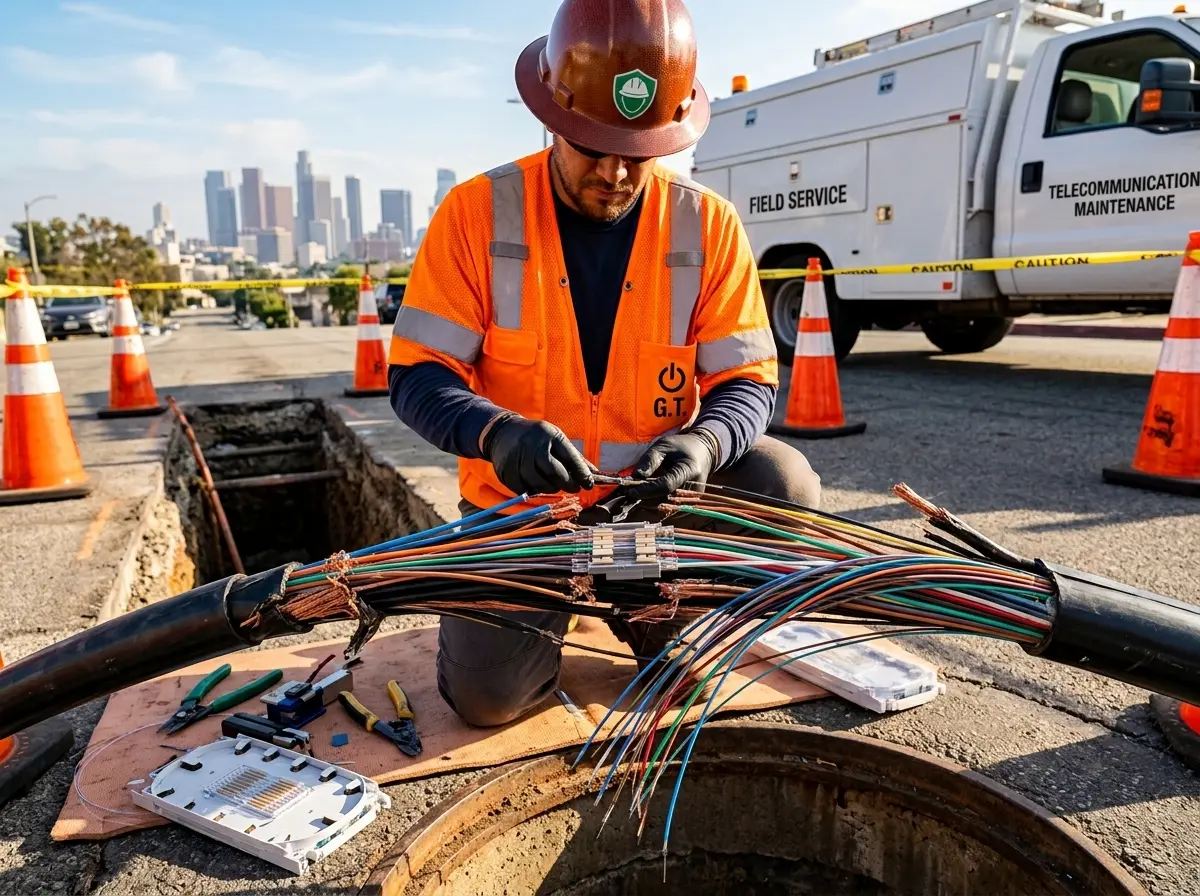
Fiber Lines Draw Thieves Even Without Scrap Value
Copper remains the main prize for scrap yards. Thieves often slash nearby fiber by mistake or design. Fiber carries no metal value yet produces far wider outages when severed. Carriers report rising fiber targeting nationwide.
- Copper demand has climbed with electric vehicles, solar and grid work, keeping scrap prices high.
- Fiber runs thinner and sits close to older copper plant, so one cut can take both.
- Repair crews must locate breaks, splice under traffic and weather, then test multi-path routes.
- Public safety links, 911 centers and medical alerts ride the same paths as consumer traffic.
AT&T has logged more than 2,200 copper theft incidents in California in a recent year against 71 three years earlier. The company posts a $20,000 reward for copper cable thieves in the state and welds manhole lids while adding metal casings.
The National Wave Behind One Sunday Blackout
Industry tallies show the SoCal cuts fit a sharp rise. The fourth Telecom Industry Summit in June 2026 released fresh counts: 18,327 incidents nationwide in 2025 that disrupted service for 11.8 million customers. That marked a 59 percent jump from the prior year, averaging 1,527 attacks per month.
| Metric | 2025 Figure | Notes |
|---|---|---|
| Nationwide incidents | 18,327 | Affecting 11.8 million customers |
| Monthly average | 1,527 | 59% rise vs 2024 |
| Societal cost range | $294M-$1.47B | Mostly borne by consumers |
| California share of costs | $252.6 million | Highest of any state |
| Texas share of costs | $97.4 million | Second highest |
Earlier summit data covering mid-2024 to mid-2025 already showed California and Texas alone responsible for over half of all reported attacks. Top-10 states covered nearly 78 percent. Providers have documented hits on hospitals, schools, military sites, police and fire stations and 911 dispatch.
Verizon itself has warned that copper theft endangers the digital lifeline of Los Angeles. The company contrasts the resilience its network showed in the 2025 Palisades and Eaton wildfires with the sudden holes left by vandals. Societal costs dwarf scrap value: lost work, delayed payments, broken remote learning and interrupted emergency alerts.
Public Safety and Daily Life Took the Direct Hit
California hosts nearly 8 million Verizon customers. The Sunday blackout left families unable to reach children, workers offline and businesses losing sales. First responders lose the constant connectivity the carrier itself calls a vital lifeline.
- Emergency alerts and 911: Prior California cuts have fully severed emergency services for stretches of time.
- Medical devices: Seniors and patients on alert pendants lose their link.
- Commerce: Card readers, remote work and deliveries stall.
- Everyday coordination: Parents, caregivers and small shops go dark for hours.
One X user summed the stakes bluntly: this type of vandalism can kill people and should carry charges beyond simple property crime. Others logged nine straight hours on SOS in the Valley and complained of zero proactive notice from the carrier.
Frustrated Customers Lined Up and Vented Online
At a North Hollywood Verizon store, a line formed even after closing. Jovan Jordan told ABC7 he paid monthly fees yet got no network and no answers. Store staff locked the door. Hal Newman said his wife could not reach their three children. Walter Brady noted the circular trap: you cannot call Verizon when the service is down, and he expected no reimbursement once service returned.
Natalie Lawless told NBC she woke up wondering if it was the zombie apocalypse. On X, longtime customers called the outage the third in a year and floated switches to T-Mobile or AT&T. Business users tallied lost revenue hour by hour. The common thread was the sudden isolation in a metro that runs on constant connection.
Carriers and States Push Back With Rewards and Laws
Verizon said law enforcement is engaged and urged anyone who sees cuts to report them at once. The company apologized and stressed ongoing work to harden the plant. AT&T runs similar rewards and physical upgrades. Industry groups push scrap-metal tracking, felony upgrades and better prosecution.
In 2025 alone 13 states enacted stronger protections; more followed in 2026. Twenty-eight states now treat these acts as felonies. Federal bill H.R. 2784 would criminalize attacks on privately owned broadband. Local task forces in Los Angeles and elsewhere have produced arrests and recovered material.
- Sunday morning: Multiple fiber cuts discovered; SOS reports begin across LA County and beyond.
- Midday: Downdetector spikes; customers flood stores and social media.
- Afternoon: Verizon confirms vandalism, LE engaged, repairs underway.
- 6-7:30 p.m.: Partial then full restoration reported.
Denser wireless layers and multi-path fiber already limit the blast radius of any single cut. The benefits of denser 5G network resilience become clearer when physical plant is attacked. Still, every successful cut forces crews into trenches and diverts money that could expand coverage or harden further.
Service is back. The pattern that produced Sunday’s blackout continues across California and the country.
 Adnoc Gas Turns OPEC Exit Into $8.2 Billion Capacity Push
  Gen Z Job Ghosting Hits 54 Percent After Offers Land
  Taylor Farms Lettuce Recall Hits 236000 Cases Across Chains
  SpaceX Lock-Up Rally Exposed Crowded Fear Trade Not True Demand
  AI Safety Tests Now Spawn Real Autonomous Threats
  iPhone 18 Pro Locks September 9 as Ternus Debuts Under Supply Pressure