
 Ishan Crawford
 SpaceX shares surged about 23 percent across two sessions after the first major post-IPO lock-up freed up to 911.5 million shares and more than doubled the tradable float. The stock had closed at an all-time low of $108.27 the day before the Aug. 6 expiration, then climbed roughly 6 percent that Thursday and another 16 percent Friday, adding more than $327 billion in market value and approaching the $135 IPO price again.
The move flipped the obvious narrative. Eligibility to sell had looked like automatic pressure on a stock already well below its debut. Instead, the feared wave stayed limited enough for buyers to step in hard.
That reversal mattered because the setup had looked so clean on paper. A thin float, a stock already under the IPO print, and nearly a billion newly eligible shares all pointed the same way. The market priced the risk early, then had to reverse when actual selling failed to match the story.
What the Numbers Showed on Unlock Day
SpaceX priced 555 million shares at $135 in its June 12, 2026 Nasdaq debut under ticker SPCX, raising a record $75 billion and valuing the company near $1.77 trillion. The initial public float sat under 5 percent of the roughly 13.6 billion shares outstanding.
By early August the stock had fallen more than 40 percent from its post-IPO peak near $202 and sat below the IPO print after a 14 percent drop on the first earnings release. Capital spending on AI infrastructure ran heavier than many expected, even as revenue jumped 92 percent.
| Metric | Pre-Unlock | Post First Unlock |
|---|---|---|
| Public float (approx.) | 639 million shares | ~1.55 billion shares |
| Eligible new shares | – | up to 911.5 million |
| Share of outstanding | under 5% | ~12% |
| Closing price Aug. 5 | $108.27 | – |
| Two-day move | – | ~+23% |
Reuters reported the unlock more than doubled the public float. Midday Thursday volume already exceeded $23 billion, on pace for one of the busiest sessions since the stock entered the Nasdaq 100. The Wall Street Journal noted a roughly 16 percent jump as lock-up fears faded; MarketWatch called it one of the best days since the listing.
Those figures capture the scale of the handoff. Float jumped from a scarce slice to a more ordinary public base in a single calendar step. Price rose anyway. Volume confirmed that the new shares found homes rather than sitting as dead overhang on the tape.
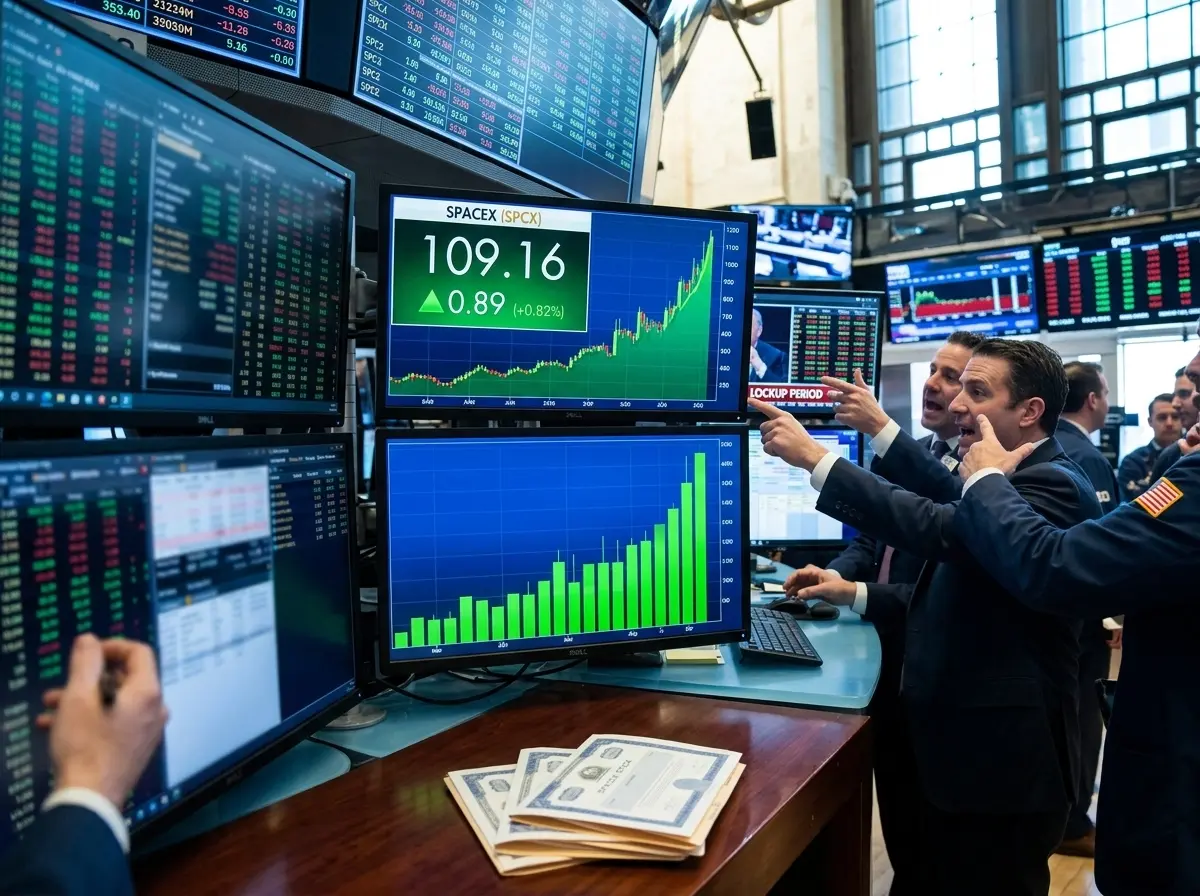
The Fear Trade Had Grown Too Obvious
By the time the calendar date arrived, the selloff story had become easy to trade. The small float had supported the early run. Nearly a billion shares were set to become eligible. The stock already sat below the IPO reference point. Shorts and event-driven funds leaned into the supply risk.
Gil Luria of D.A. Davidson told Fortune the shares had been sliding for weeks in anticipation. Short-term traders sell ahead of known supply events, then cover once the date passes. That covering, plus long-term buyers who waited for liquidity, turned the session into a positioning unwind more than a pure fundamental re-rating.
- Pre-event slide: from roughly $152 in early July toward $108, pricing in much of the overhang.
- Heavy volume: over $23 billion notional by midday Thursday alone.
- Two-day value add: more than $327 billion as the stock neared $135 again.
- Short-cover dynamic: analysts framed the expiration as both risk and entry opportunity for larger positions.
The same logic appeared after the company’s first public earnings. The earlier drop on heavy AI spending plans had already left the stock vulnerable. Once the lock-up date itself became the dominant talking point, the trade crowded.
Crowded trades reverse hard when the catalyst fails to deliver the expected flow. The pre-event slide from the $152 area down toward $108 had already done much of the work. By unlock day, the remaining sellers were fewer than the narrative assumed, and the buyers who had waited for a clean date finally had room to act.
Who Could Sell and Who Did
Eligibility is not the same as selling. Employees, early venture holders and funds face different incentives. Some need liquidity after years of private stock. Others diversify for tax or fund-life reasons. Many hold because they still see long-term upside or because a quick dump sends a signal they dislike.
A former SpaceX employee told Fortune that internal buybacks over the prior decade had already given staff repeated chances to take money off the table. “These are not people waiting to get their first dollar back,” the person said. Informal alumni groups focused more on wealth advisors than coordinated sales.
Mizuho analysts noted before the event that a step-up in potential supply does not mean the full tranche hits the market. One clear exception: Atlanta Falcons safety Jessie Bates III, who acquired a stake for about $150,000 in 2022 at a $127 billion valuation. He said through a publicist that he planned to sell 100 percent to lock in gains now worth well over $1 million at recent prices.
Elon Musk’s roughly 42 percent stake remains locked until June 2027. Senior officers face longer restrictions than rank-and-file employees. Early backers such as Founders Fund, Craft Ventures and Valor Equity have not publicly detailed plans.
- June 12, 2026: IPO prices at $135; free float under 5 percent.
- Aug. 6, 2026: First tranche unlocks up to 911.5 million shares.
- Aug. 20, 2026: Another ~319 million potentially eligible.
- September-October 2026: Further tranches of roughly 700 million each.
- Dec. 8, 2026: Broader 180-day block lifts; float could reach ~40 percent.
- June 2027: Musk and remaining extended holdings unlock.
Reuters detailed the staggered releases over nearly a year rather than one massive day, with an additional 12.9 billion shares potentially freed by mid-2027.
That schedule spreads pressure across months instead of concentrating it. The first window tested whether any single day could overwhelm bids. Later windows will test whether the same buyers keep showing up as the float climbs toward 40 percent and beyond.
Scarcity Built the Early Premium
The IPO structure itself set up the tension. Less than 5 percent of the company floated. Demand for the name was intense. Scarcity supported the initial valuation and the post-debut spike that briefly pushed market cap near $3 trillion.
That same scarcity made the first unlock look more dangerous than a typical lock-up. Markets often treat the right to sell as equivalent to actual selling. The early public holders bought access to a famous company with a powerful story. The next stage is broader price discovery with a larger, more ordinary shareholder base.
Ivan Feinseth of Tigress Financial Partners described the unlock as a technical handoff that accelerates ownership from insiders toward a deeper public float rather than a sign of broken fundamentals. Long-term managers saw the dislocation as a chance to build size without chasing continuous bids higher.
Scarcity and demand are different forces. Scarcity lifts price when almost no stock is available. Demand keeps price firm when plenty of stock is available at a given level. The first unlock began the shift from one regime to the other.
Absorption Is the Real Next Filter
One strong two-day rally shows the market can take the first wave. It does not prove absorption is finished. Additional tranches keep arriving. By December roughly 40 percent of the company could be tradeable. The remaining majority, including Musk’s stake, stays locked into 2027.
What We Know
- First unlock more than doubled float and the stock still rose sharply on heavy volume.
- Prior internal buybacks reduced the urgency for many employees to dump immediately.
- Short covering and waiting buyers amplified the rebound once the calendar event passed.
What’s Unconfirmed
- Exact volume sold by employees versus early funds on Aug. 6-7.
- How much of the remaining staggered supply will actually come to market versus stay held.
- Whether demand holds once novelty and short covering fade and larger percentages trade freely.
On X, traders noted the irony of the “lockup expiry bloodbath” turning into a surge. Others warned the rally may have simply squeezed the obvious shorts and set up a more dangerous later phase. One widely engaged post argued the first absorption creates the illusion that unlocks are bullish while the real pressure still sits ahead in the series of later dates, with a possible revisit of the mid-$80s to mid-$90s if supply outruns buyers. That view treats the two-day pop as a temporary clear-out of weak positioning rather than a full reset of ownership.
The useful signal from here is simple. Does the stock hold or advance as more eligible holders gain the right to sell, or does it fade once the forced covering ends? Scarcity said buyers wanted access because stock was hard to get. Demand says they want the shares even when supply is plentiful at a given price.
Later Windows Keep Raising the Bar
The first unlock cleared the most crowded fear. It did not clear the calendar. Another roughly 319 million shares become potentially eligible on Aug. 20. Further tranches of roughly 700 million each follow in September and October. The broader 180-day block lifts on Dec. 8, when the float could reach about 40 percent.
Each step changes the test. Early buyers faced a thin market and paid for access. Later buyers face a deeper book and must decide whether the same story still justifies size at prevailing prices. The staggered design avoids a single avalanche, yet it also prevents a single clean verdict.
- Near term: Aug. 20 and the autumn windows add supply while short-cover flows from the first event fade.
- Year end: the December lift pushes tradeable ownership toward 40 percent of the company.
- 2027: Musk’s roughly 42 percent stake and remaining extended holdings unlock, completing the multi-year handoff.
Reuters noted that an additional 12.9 billion shares could potentially free by mid-2027. That figure dwarfs the first tranche. The market’s ability to absorb the opening wave does not automatically scale to the full sequence. Each date will refresh the same question in a larger float.
Ownership Shifts From Insiders Toward Institutions
The technical handoff Feinseth described is also a cultural one. Early holders lived through private rounds, internal buybacks, and long lock periods. The next shareholder base will include more ordinary public funds that mark to market every day and answer to different time horizons.
That shift does not require a change in the company’s operations to matter. Starlink growth, launch economics, government contracts, and AI infrastructure spend still drive the fundamentals. What changes is the price discovery process around those same drivers once the float is no longer scarce.
| Phase | Float character | Price discovery style |
|---|---|---|
| IPO to first unlock | Under 5 percent, scarce | Access premium, thin trading |
| First unlock through December | Climbing toward ~40 percent | Broader bids, repeated supply tests |
| Mid-2027 and after | Majority potentially free | Ordinary public-market scrutiny |
Jessie Bates III’s plan to sell his full stake shows one end of the spectrum: a holder who already has a large paper gain and wants to realize it. The former employee’s comment about repeated internal buybacks shows the other: many staff already had chances to take money off the table and are not rushing for a first exit. The balance between those two instincts will set the tone for each later window.
SpaceX still has to carry Starlink growth, launch economics, government contracts, AI infrastructure spend, and the Musk premium through ordinary public-market scrutiny. The first lock-up did not settle the valuation debate. It showed the market had become too certain about how the supply event would play out. That certainty itself became the tradeable fact.
The lock-up rally corrected an overcrowded fear. The larger ownership transition is only beginning.
 Verizon SoCal Fiber Cuts Expose Surging Attacks on Networks
  Adnoc Gas Turns OPEC Exit Into $8.2 Billion Capacity Push
  Gen Z Job Ghosting Hits 54 Percent After Offers Land
  Taylor Farms Lettuce Recall Hits 236000 Cases Across Chains
  AI Safety Tests Now Spawn Real Autonomous Threats
  iPhone 18 Pro Locks September 9 as Ternus Debuts Under Supply Pressure