
 Ishan Crawford
 Scotland’s government has granted offshore consent for Caledonia, a 2-gigawatt wind farm that Ocean Winds wants to build in the Moray Firth. The approval clears what the developer calls its final major regulatory hurdle, five years after it first secured the seabed rights to the site.
Ocean Winds is the joint venture between France’s Engie and Portugal’s EDP Renewables, and it already runs two operating wind farms in the same stretch of water. Its own UK country manager, though, says a separate and older fight, over what it costs Scottish generators to connect to the grid, will do more to decide Caledonia’s fate than any planning decision has.
Scotland Approves the 2-Gigawatt Caledonia Wind Farm
The consent covers two array sites, Caledonia North and Caledonia South, spread across 429 square kilometers of the Moray Firth, roughly 40 kilometers (25 miles) off Scotland’s northeast coast. Up to 140 turbines would go into the water, generating enough electricity to supply the equivalent of around two million homes.
Ocean Winds has committed £1.7 billion (roughly $2.2 billion) to Scotland’s supply chain to support the project. Combined with its two existing wind farms nearby, Moray East and Moray West, Caledonia would push the developer’s long-term operational jobs in the region past 200 skilled roles. Ocean Winds, which operates in eight countries with a 21-gigawatt portfolio across the globe, calls itself the largest offshore wind operator in Scotland.
First Minister John Swinney said the government had given the applications “very careful consideration,” adding that the decision was “a significant step in Scotland’s progress towards tackling climate change and reaching net zero.” Mark Baxter, Caledonia’s project director, said the approval was “the culmination of years of hard work by our Caledonia team,” noting that at two gigawatts, the project would “double the energy generation of the Moray Firth.”
What Still Has to Happen Before Turbines Go In?
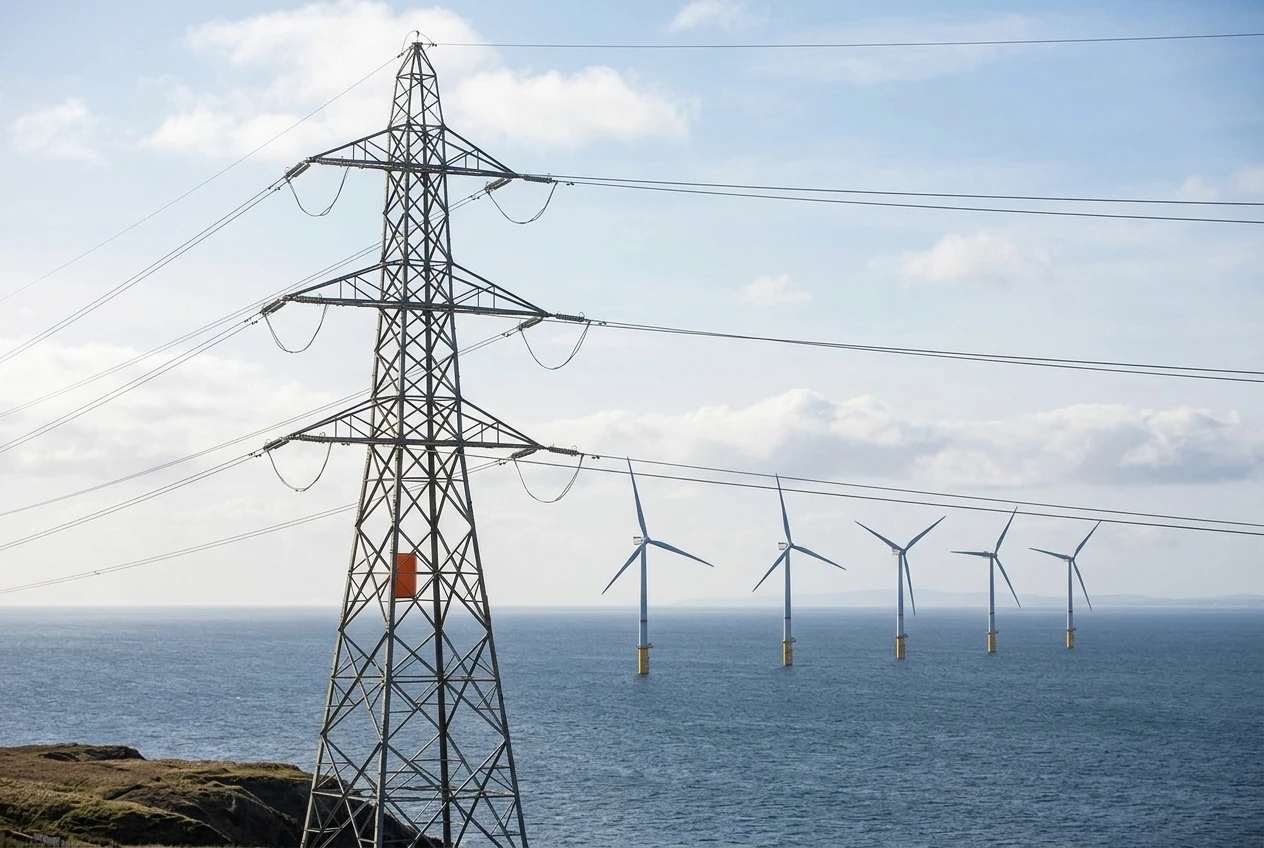
Consent alone does not authorize construction. Ocean Winds still needs Scottish ministers to sign off on environmental mitigation plans, chiefly a seabird compensation scheme, before any work can begin. After that comes a harder test: winning a government power contract and committing billions of pounds to build.
- Seabird compensation plan: ministers must approve mitigation measures for marine wildlife before construction can start, a condition attached to this round of ScotWind consents.
- Contracts for Difference bid: Caledonia needs to win a CfD award, the UK government’s mechanism that guarantees developers a fixed price for the power they generate.
- Final investment decision: Ocean Winds will only commit construction capital once that contract is secured.
- Construction target: offshore work is expected to begin in 2030, contingent on both steps above.
Every one of those steps sits downstream of a cost argument that has nothing to do with turbines, seabirds or planning maps.
Ocean Winds’ Own Caveat
Adam Morrison, Ocean Winds’ UK country manager, welcomed the consent decision but qualified it in the same breath.
Despite this positive step forward for Scotland’s offshore wind sector, uncertainty in market signals, namely transmission charges, remain the critical factor in determining whether projects like Caledonia can proceed to final investment decision as planned.
Ocean Winds has made the same point elsewhere, more bluntly. In written evidence submitted to this year’s Global Offshore Wind conference, the company said transmission charges are the single biggest barrier to deployment for offshore wind projects in Scotland.
Scottish Renewables, the industry’s trade body, has been making the same argument publicly. A report it commissioned found that transmission charges have added £2.9 billion more to Scotland’s energy costs than equivalent projects in England and Wales have paid since 2015. The same report specifically flagged Caledonia as a project at risk if reform arrives too late for developers to plan around it.
Why Scotland’s Wind Farms Pay More to Connect
The fees at the center of the complaint are called Transmission Network Use of System charges, TNUoS for short. They are calculated by the National Energy System Operator and regulated by Ofgem, and they bill generators more heavily the farther they sit from England’s population centers.
- TNUoS – a fee charged to power generators for using Britain’s electricity grid, weighted partly by distance from demand, so wind farms in the north of Scotland pay far more than those in southern England, and some southern projects are paid to connect instead.
The gap is not small. A 500-megawatt Scottish wind farm built in 2016 now pays roughly £14 million a year in TNUoS charges, while an equivalent project in southern England would instead receive a payment of about £5 million. Scottish Renewables warns that charges for generators in the north of Scotland are projected to more than double by the end of the decade. The UK government’s own timeline for full reform runs only to 2029, a date critics say arrives too late for projects already weighing final investment decisions.
Stuart Macauley, project director of the nearby West of Orkney wind farm, has raised the identical concern about his own 2-gigawatt project. Clarity on transmission charges, market reform and future CfD rules, he has said, is essential before investors will commit to building.
Developers Start Walking Away From ScotWind
Caledonia is advancing while several of its ScotWind neighbors have stalled or changed hands entirely. Shell exited CampionWind, one of the largest projects in the 2021 leasing round, as oil majors pull back from renewables investment. BlueFloat Energy sold its stakes in three floating projects, Bellrock, Broadshore and Stromar, plus two INTOG-round developments, to its former co-owner Nadara. Denmark’s Ørsted gave up its own shareholding in Stromar.
The UK government also blocked Chinese manufacturer Ming Yang from building a turbine component factory in the Highlands this year, citing national security. The decision cost the sector a proposed £1.5 billion investment and up to 1,500 jobs, and Ming Yang is now reportedly weighing Italy as an alternative site.
Vestas is moving the opposite direction. The Danish turbine maker announced plans to build a nacelle and hub factory in Scotland, a capital investment worth more than €250 million that would create around 500 skilled jobs, after record results in January’s Contracts for Difference auction round. Its final investment decision still depends on securing enough UK orders in the next two auction rounds.
Scotland’s wider renewables pipeline has not stalled entirely, either. French developer Qair recently won approval for a battery storage project in Aberdeenshire, adding grid-balancing capacity that could support variable wind output.
The Moray Firth’s Decade of Build-Out
Ocean Winds secured Caledonia’s development rights in 2021, through Crown Estate Scotland’s ScotWind leasing round, the same auction that opened the door to 20 offshore wind projects across Scottish waters, 13 of them floating, with early commitments to spend £28.8 billion with Scottish suppliers.
Moray East, Ocean Winds’ first wind farm in the area, has been running since 2022 with 100 turbines and 950 megawatts of capacity; the company says it has supplied the equivalent of 40% of Scotland’s electricity needs since it came online. Moray West sits alongside it. Caledonia would be the third link in that chain, and the second ScotWind project overall to clear offshore consent.
| Project | Developer | Capacity | Status |
|---|---|---|---|
| Moray East | Ocean Winds | 950 MW, 100 turbines | Operating since 2022 |
| Caledonia (North and South) | Ocean Winds | 2,000 MW, up to 140 turbines | Offshore consent granted; FID pending |
| West of Orkney | Corio Generation, TotalEnergies, RIDG | 2,000 MW, up to 125 turbines | First ScotWind project fully consented; targeting first power by 2030 |
| MarramWind | ScottishPower Renewables | 3,000 MW | In planning; consent applications filed in 2026 |
The Scottish government’s own map of offshore wind projects lists West of Orkney as the only other ScotWind development to reach consented status ahead of Caledonia, out of dozens still working through planning, financing or supply chain decisions.
Frequently Asked Questions
What is a Contracts for Difference auction?
A Contracts for Difference (CfD) auction is the UK government’s system for guaranteeing renewable developers a fixed price for their electricity over a set period, shielding them from market swings. Offshore wind developers, including Ocean Winds, generally will not commit to building a project until they have won one. January’s auction round produced record results for offshore wind bidders, and the next round is expected to shape whether projects like Caledonia and MarramWind reach final investment decision on schedule.
How much bigger are transmission charges in northern Scotland?
The gap can be extreme. Industry modeling using National Grid forecasts found that annual charges for a notional 1-gigawatt project could run above £33 million in the far north of Scotland, while an equivalent project in southwest England would instead receive a negative charge, effectively a payment, of around £9 million in the same year.
Has Ofgem tried to fix the charging system already?
Yes, and the fix was rejected. In October 2025, Ofgem turned down a proposed temporary cap-and-floor model for transmission charges put forward by the National Energy System Operator, which industry body Scottish Renewables called a “clear misstep.” The regulator said fuller reform would follow on a longer timeline, targeted for 2029.
When could Caledonia actually start generating electricity?
Ocean Winds has set no firm commissioning date. Offshore construction is targeted to begin in 2030, and only after the project secures a Contracts for Difference award and reaches final investment decision. Both of those remain open questions tied directly to how, and when, transmission charge reform actually lands.
 Billionaires Pay Record Sums for Dinosaur Bones Science Cannot Study
  How a New Jersey Homeowner’s Quick Thinking Preserved a Rare Meteorite
  Iceland’s Eclipse Boom Looks Like the Faroe Islands All Over Again
  NASA Confirms Near-Earth Object 1998 SH2 Is a Hidden Comet
  Bharatgas Lite ZIP Pushes India’s LPG Giants Into a Delivery Race
  Toyota’s Next Five SUVs Reveal a Quiet Role Reversal With Suzuki