
 Ishan Crawford
 Two numbers from Hero MotoCorp’s May 2026 dispatch sheet sit at opposite ends of the same portfolio. Motorcycles grew 6% year on year. Scooters grew 104%. The gap between those two rates is the real story beneath a headline dispatch total of 5,70,068 units, a 12.28% year-on-year gain that looks measured on its surface.
Scratch that surface and three trends converge: scooter volumes more than doubled in twelve months, the VIDA electric brand posted 166% retail growth, and export dispatches surged nearly 78% to a new monthly high. Together they point to a portfolio remixing that goes well beyond the unit-count headline Hero reported for May.
May 2026 Dispatches by the Numbers
Hero MotoCorp, the world’s largest manufacturer of motorcycles and scooters by annual volume, reported total dispatches of 5,70,068 units in May 2026, up from 5,07,701 units in May 2025. Domestic volumes contributed 5,36,784 units, or 94.16% of the total, growing 9.77% over 4,88,997 units sold domestically in the year-ago period. On a month-on-month basis, total dispatches edged 0.70% above April 2026’s 5,66,086 units.
Retail momentum confirmed the wholesale figures. VAHAN registrations, India’s government vehicle database used as a real-time consumer-demand proxy distinct from dealer-to-dealer channel fills, reached 4,96,957 units in May, consistent with organic household demand absorbing the dispatched volume without significant channel overhang.
Structural tailwinds partly explain the trajectory. The GST (Goods and Services Tax, India’s unified indirect tax on consumption) rate rationalisation implemented in September 2025 provided a demand lift that has persisted across both commuter and premium tiers, helping Hero close FY26 with roughly 6.5 million units shipped, approximately 10% above FY25 levels. Monthly data is published through Hero MotoCorp’s official newsroom and press releases.
The segment breakdown shows where the growth concentrated most sharply.
| Segment | May 2026 Units | May 2025 Units | YoY Change |
|---|---|---|---|
| Motorcycles (total) | 5,03,763 | 4,75,164 | +6.02% |
| Scooters (total) | 66,305 | 32,537 | +103.78% |
| Domestic dispatches | 5,36,784 | 4,88,997 | +9.77% |
| Exports | 33,284 | 18,704 | +77.95% |
| Total dispatches | 5,70,068 | 5,07,701 | +12.28% |
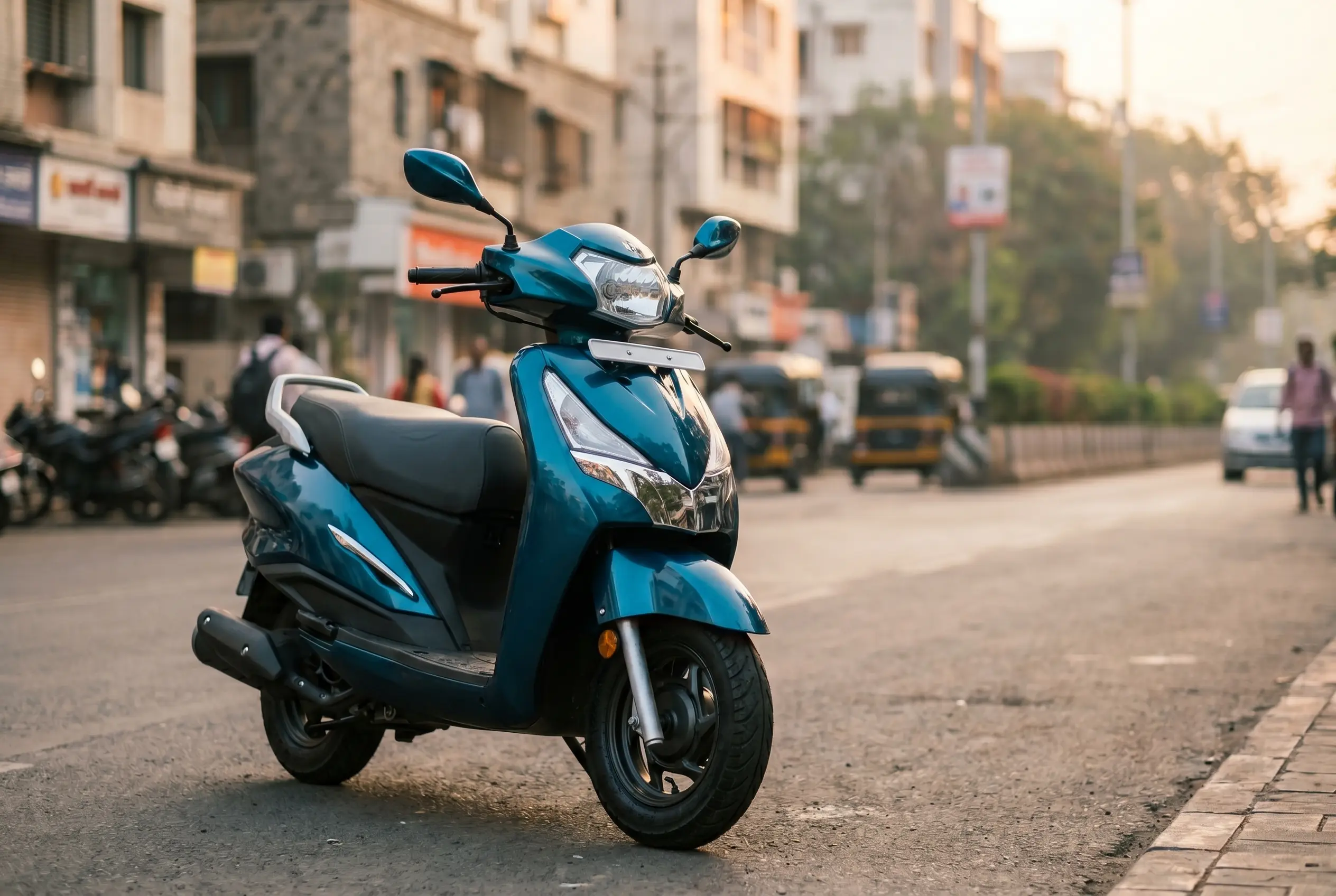
The Scooter Volume That Doubled
Scooter dispatches hit 66,305 units in May, up from 32,537 in May 2025. A 103.78% year-on-year increase is not the product of a soft prior-year base; May 2025 was a broadly normal month for the segment. The volume expansion is real, and it has compounded consistently across every month of the past year.
Scooters now represent 11.63% of Hero’s total dispatch mix, roughly double the approximately 6.4% share they held in May 2025. That shift matters commercially: scooters in the 125cc tier, where Hero concentrates most of its portfolio, carry higher average transaction values than comparable entry-level commuter motorcycles. Hero credited its Deluxe 125cc range as a primary demand driver, while the late-May launch of the Super Splendor XTEC 2.0 reinforced the same 125cc commuter slot from the motorcycle side. This sustained push on 100cc and 125cc platforms is also visible in Hero’s flex-fuel Splendor programme for commuter bikes, which draws on the same engine families.
Month on month, scooter sales added another 3.13% in May versus April. Sequential growth at an already-doubled base suggests the category momentum is sticky rather than a pre-summer surge that resets when roads get wet.
VIDA’s Triple-Digit Retail Push
Hero’s electric mobility brand VIDA, launched commercially in October 2022, recorded 19,052 VAHAN registrations in May 2026, representing 166% retail growth versus May 2025. The May number sits marginally below the brand’s all-time monthly registration peak of 21,434 units set in March 2026, but VIDA has held consistently above 15,000 units per month since the Vida VX2 product range arrived in late 2024.
The brand’s retail traction traces partly to its BaaS (Battery As a Service, a pay-as-you-go ownership model that removes the battery cost from the upfront purchase price) offering, which opened access to buyers who could not absorb the full electric scooter ticket price. The model has since been adopted by competitors including Ather Energy and TVS Motor, validating the commercial logic Hero bet on early.
During May, Hero also commenced retail operations for the DIRT.E K3 in select markets. The off-road-oriented electric model extends VIDA’s appeal beyond the urban commuter profile that drove its early volume, reaching younger, terrain-oriented riders who were not previously in the brand’s addressable base.
The cumulative scale of the ramp puts the May figure in context. VIDA crossed 2,02,422 retail deliveries by late March 2026, a milestone the brand reached across the first 34 months for the first lakh of units and then matched again in just 8 months for the second lakh. Full-year FY26 dispatches grew 154% year on year, and Q4 FY26 alone registered 190% retail growth, the sharpest single quarter in VIDA’s operating history.
Looking into the rest of FY27, Hero has signalled plans to add new VIDA models targeting lower price points, including a variant with a fixed battery pack that would compete directly in the segment currently led by Bajaj Chetak, TVS iQube, and Ather Energy. Production capacity at the Sri City facility in Andhra Pradesh is set to scale to accommodate the anticipated volume ramp, with output reportedly targeting close to double current levels by the end of the financial year.
Exports Surge 78% on Global Recovery
International dispatches reached 33,284 units in May 2026, up from 18,704 units shipped in May 2025. The 77.95% year-on-year gain added 14,580 units to the export ledger in a single month, representing one of the strongest monthly export performances Hero has recorded. A marginal sequential dip of 1.10% from April’s 33,653 units was negligible against the scale of the year-on-year move.
Hero has been expanding its global distribution network deliberately. In early 2026, the company formalised a partnership with Quilmotors as its exclusive distributor for Ecuador, adding another market in Latin America. Full-year FY26 global business dispatches grew approximately 40% year on year, reaching an all-time high by the company’s own description, and the FY27 opening months are running at roughly double that rate.
The broader Indian two-wheeler export environment supports Hero’s numbers without fully explaining their magnitude. Bajaj Auto’s May 2026 export book also climbed 34%, with commercial vehicles jumping 65%, confirming that the recovery in African and Latin American markets is lifting the whole sector simultaneously. Hero’s 78% gain outpaces Bajaj’s 34% rate substantially, suggesting Hero is recovering market share in specific corridors or benefiting from a richer geographic mix of recovery across its international markets.
Markets in Sub-Saharan Africa and Latin America, which weighed on Indian two-wheeler exports for much of the prior three years as local currencies weakened and dollar liquidity dried up at importers, have been recovering across multiple OEMs (original equipment manufacturers) at the same time. The reversal of that macro headwind, combined with Hero’s expanding distributor network and premium product push, is the structural driver behind the monthly export surge rather than any single model win.
FY27’s First Two Months Set a Record Opening
Cumulative dispatches for April and May 2026, the opening two months of FY2026-27, came in at 11,36,154 units, a 39.73% increase over the 8,13,107 units shipped across the same window of FY26. The year-on-year arithmetic is partly flattered by a low April 2025 industry base; the absolute two-month volume figure is nonetheless the strongest opening to a financial year Hero has recorded by a considerable margin.
Within those two months, the mix acceleration is steeper than any single month shows in isolation.
- 11,36,154 total dispatches in April-May FY27, up 39.73% year on year
- 1,30,600 scooter units across the same period, up 151.86% from approximately 51,900 units in April-May FY26
- 66,937 export units in April-May, up 88.10% year on year
What the Portfolio Remix Signals for Earnings
FY26 marks a defining chapter for Hero MotoCorp. This growth was broad-based, driven by a strong premium and electric vehicle product portfolio and momentum across both domestic and global markets.
Harshavardhan Chitale, chief executive officer of Hero MotoCorp, made that remark alongside the company’s Q4 FY26 results in May 2026, when consolidated net profit rose 26.1% year on year to Rs 1,474 crore and total income climbed 29.1% to Rs 13,188 crore. The direction he outlined in those results is now visible inside the May dispatch data: revenue is growing faster than unit count because the units being shipped carry higher average values than a year ago.
Scooters moving from approximately 6.4% to 11.63% of Hero’s mix in twelve months has a compounding pull on ASP (average selling price) across the portfolio. Nirmal Bang analysts had projected roughly 4% ASP improvement for Q4 FY26, attributing it specifically to mix enhancement and product upgrades; Axis Direct similarly cited a richer product mix as the margin tailwind that would partially offset raw material cost pressures. May’s scooter data suggests that mix tailwind is not narrowing. Separately, Chitale told PTI in an interview this year that Hero expects over half of its total scooter sales to be electric by 2030, which adds a longer-horizon electrification layer to the immediate mix story that will take time to show up in quarterly filings but is already traceable in the VIDA registration trends.
If scooter volumes hold above 60,000 units through the June and July monsoon months, the 11.63% mix share becomes the new floor rather than a seasonal peak, and analyst ASP assumptions across the street will need to be revised upward. If those volumes slide back below 50,000 as wet roads cool showroom traffic, the May numbers read as a pre-monsoon surge that the September festival quarter must rebuild. Hero’s stated target of double-digit FY27 volume growth, combined with the strongest April-May opening the company has recorded, makes the bullish scenario the more probable path, but the monsoon always gets a vote before the festival season does.
 ONGC licence frees Venezuela cash and operatorship talks
  Anthropic Hits $65 Billion Run Rate and Flips the AI Cash Test
  Supreme Court grounds the fare free-for-all with three-week clock
  Gold Nears $4400 as Soft Data Meets Oil Inflation Risk
  Nifty Slips as Zaggle Circuits and Dhoot Debuts Big
  Diesel Crack Tops $100 as Iran Rhetoric Lifts Crude