
 Ishan Crawford
 Hero MotoCorp’s board has cleared an additional investment of up to Rs 1,000 crore (roughly $114 million) in Ather Energy, the electric scooter maker it has backed since 2016. The Committee of Directors signed off on July 14, deepening a stake that already sits at 29.48% of Ather’s fully diluted share capital.
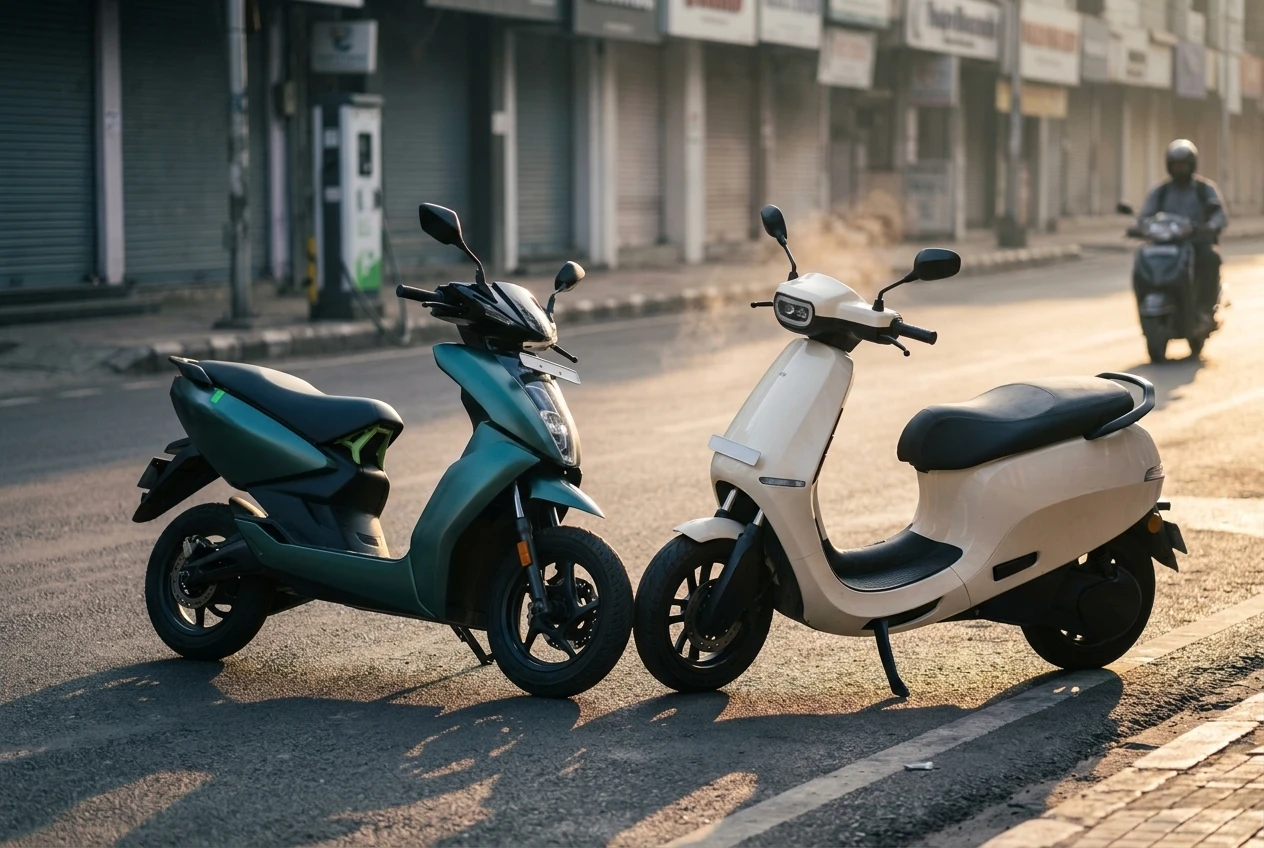
The cash lands about six weeks before Ather unveils a scooter built for a price band Hero already dominates through its own Vida brand. Hero is, in effect, funding the vehicle designed to fight its own showroom floor.
Hero’s Committee of Directors Clears Another Round of Cash
The approval covers a preferential allotment of equity shares or other eligible securities, Hero said in its filing. Payment will be in cash, and the deal still needs sign-off from Ather’s own board and shareholders before it can close.
Because Ather counts as an associate company, the transaction is technically a related-party deal. Hero said it will still be carried out at arm’s length, and that no promoter or promoter group holds any direct interest in the additional investment. The company expects the whole process to wrap within 15 days of receiving those final approvals.
The commitment lands weeks after Hero’s own scooter dispatches doubled and exports jumped 78% in May, a reminder that its petrol-and-scooter business is still what funds this electric side bet. Hero’s shares barely moved on the news, closing at Rs 4,880.70 on the National Stock Exchange the day after the filing.
- 29.48% – Hero’s current fully diluted stake in Ather as of June 30, 2026, making it the company’s largest shareholder.
- Up to ₹1,000 crore – the ceiling on the fresh cash, via preferential shares or convertible securities.
- July 14 – the date Hero’s Committee of Directors cleared the deal, ahead of Ather’s own board and shareholder votes.
- 15 days – the window Hero expects for closing once final approvals land.
This is not Hero’s first top-up. It has returned to Ather’s cap table repeatedly since 2016, well before the scooter maker’s public listing on the BSE and NSE.
Ather’s Losses Shrink While Revenue Nearly Doubles
Ather’s own numbers explain why Hero keeps coming back. Revenue from operations surged 62.8% to Rs 3,671.76 crore in the financial year ended March 31, 2026, up from Rs 2,255 crore in FY25 and Rs 1,753.80 crore in FY24.
The net loss narrowed too, falling to Rs 517.17 crore in FY26 from Rs 812.28 crore a year earlier, a drop of more than a third. Total income for the year reached Rs 3,823.08 crore, against Rs 2,305.22 crore in FY25, while total expenses climbed to Rs 4,335.21 crore on higher material and employee costs. The company also booked a one-time Rs 5.04 crore hit tied to new Labour Codes.
| Fiscal Year | Revenue (₹ crore) | Net Loss (₹ crore) |
|---|---|---|
| FY24 | 1,753.80 | Not disclosed in this filing |
| FY25 | 2,255.00 | 812.28 |
| FY26 | 3,671.76 | 517.17 |
Volume tells the same story. Ather delivered 2,62,942 scooters in FY26, up 69% from the year before, powered largely by the Rizta family scooter, which turned into the brand’s highest-volume product almost overnight.
EL01 Aims at a Price Band Ather Has Never Held
Before the new platform arrives, Ather has already refreshed what is on sale. The Rizta now offers LFP battery cells on selected variants, and packs across the 450 and Rizta families have been revised. The 450S and 450X keep 2.9kWh packs rated for 122km and 126km of claimed IDC (Indian Driving Cycle) range, while the larger pack has grown to 3.5kWh for a claimed 161km.
The bigger move comes on August 29, when Ather reveals the first scooter built on its new EL platform at Community Day in Bengaluru, the fourth edition of its annual event. Trade reports peg the price between Rs 1 lakh and Rs 1.25 lakh ex-showroom, territory Ather has never sold into before.
The vehicle is widely referred to as EL01, after the concept Ather showed at last year’s Community Day, though the company has not confirmed the showroom model will keep that name. It marks Ather’s first entirely new platform since the 450 architecture launched in 2016.
- Battery range: packs from 2kWh to 5kWh, letting one platform stretch from city runabouts to family and maxi-scooter formats.
- Structure: a steel unibody shell replaces the cast-aluminium frame used on the 450 and Rizta, cutting parts count and assembly time.
- Wheels and motor: 12 to 14-inch wheel options paired with a swingarm-mounted motor instead of the existing transmission layout.
- Software: AtherStack 7 carries over, adding crash and pothole alerts alongside a braking system blending regenerative and conventional stopping.
Ather’s own investor presentation makes the gap plain. As of December 2025, Bajaj, Ola, TVS and Vida collectively sold 12 variants priced between Rs 1 lakh and Rs 1.25 lakh, plus another ten below Rs 1 lakh. Ather had none in either band; its entire range sat above Rs 1.25 lakh.
Pricing has shifted since then. The Rizta S now starts around Rs 1.17 lakh ex-showroom in Bengaluru. But Ather still lacks a platform engineered from scratch for sustained high-volume production at that price, which is exactly what EL is meant to fix.
Why Is Hero Funding a Rival to Its Own Vida Brand?
Hero owns 29.48% of Ather and benefits financially as the startup grows, even though Ather’s incoming EL01 is expected to compete for the same Rs 1 lakh to Rs 1.25 lakh buyers Hero is chasing with its own Vida VX2. Trade publications already list the VX2 among the models EL01 will likely rival once it reaches showrooms, alongside the Bajaj Chetak C2501, TVS Orbiter and Ampere Nexus.
Vida has quietly become the surprise growth story inside Hero’s own two-wheeler business. The brand climbed to fourth place among India’s electric two-wheeler makers in June 2026, with market share touching double digits for the first time.
Pricing is the engine behind that climb. The VX2 Go starts at Rs 73,850 ex-showroom, dropping to Rs 44,990 under Hero’s Battery-as-a-Service plan, which separates the battery cost from the vehicle price. That structure has since been copied by Ather and TVS Motor as well.
Vida’s market share climbed from roughly 6% to 11% over the course of FY26, alongside a brand refresh that added the DIRT.E range and teased a future NOVUS concept. Vida needed 34 months to sell its first 100,000 scooters in India. The brand then reached its second 100,000 sales in eight months, crossing 200,000 cumulative deliveries by late March 2026.
That timeline puts Vida and EL01 on a collision course in the same aisle of the same price bracket, funded in part by the same parent company’s balance sheet.
TVS and Bajaj Still Own the Volume Everyone Wants
Ather and Vida are both still chasing the two companies that lead India’s electric scooter market outright. TVS Motor kept the top spot in June 2026 with 47,064 retail scooter registrations in June, a 24.3% share. Bajaj Auto held second with roughly 43,200 units and a 22% share, driven by the Chetak C2501.
| Rank | Brand | June 2026 Units | Market Share |
|---|---|---|---|
| 1 | TVS Motor | 47,064 | 24.3% |
| 2 | Bajaj Auto | 43,234 | 22% |
| 3 | Ather Energy | 31,188 | 16% |
| 4 | Hero Vida | 21,792 | 11% |
| 5 | Ola Electric | 16,144 | 8% |
Zoom out to the April-June quarter and the order holds, with Ather at 86,504 units in third place and Vida adding 56,125, up 161.6% year on year. Brokerage Motilal Oswal said Bajaj’s electric scooter business had “ramped up very well over the last few months,” particularly after the C2501’s launch.
Across the first half of 2026, TVS, Bajaj, Hero MotoCorp and Ather accounted for nearly 96% of the industry’s H1 growth, leaving Ola Electric to absorb almost the entire decline. Ola’s share fell from 18.6% to 6.8% year on year, even as the overall market grew 53.3% to 970,993 units.
A Motorcycle Tease and a Factory Deadline Loom Over August 29
Community Day has grown into Ather’s biggest annual showcase. Last year’s edition, held August 30, 2025, drew more than 4,000 attendees and introduced the EL platform, the Redux concept and AtherStack 7.0. This year runs under the theme “A New Dawn of Magic.”
Timing adds pressure of its own. Ather had originally targeted July 2026, the same month Hero’s board approved this investment, for the first phase of Factory 3.0 to begin production. The plant, in the AURIC industrial estate near Chhatrapati Sambhajinagar in Maharashtra, is meant to add capacity for five lakh scooters a year, with a second phase potentially taking that to ten lakh.
Ather has also confirmed work on a separate electric motorcycle platform called Zenith. Community Day has floated as a possible stage for a first concept built on it, a preview that would stretch Ather’s ambitions well past scooters even if a production motorcycle is still years off.
Ather will find out on August 29 whether Rs 1 lakh is enough to pull mass-market buyers out of showrooms that also sell Hero’s own Vida.
 ONGC licence frees Venezuela cash and operatorship talks
  Anthropic Hits $65 Billion Run Rate and Flips the AI Cash Test
  Supreme Court grounds the fare free-for-all with three-week clock
  Gold Nears $4400 as Soft Data Meets Oil Inflation Risk
  Nifty Slips as Zaggle Circuits and Dhoot Debuts Big
  Diesel Crack Tops $100 as Iran Rhetoric Lifts Crude