
 Ishan Crawford
 The Sensex added more than 582 points this week even as Brent crude jumped 16% and the rupee posted its worst week since May. Friday’s session alone pushed the index up over 1%, led by IT and banking stocks, and the Nifty 50 settled at 24,334.
Most weekend market rundowns list six separate factors steering Dalal Street into next week. Three of them, the Iran war, oil prices and the rupee, are really one chain reaction running through the Indian economy, and Friday’s rally is a bet that the chain holds a little longer.
The War Hiding Inside Factor Two
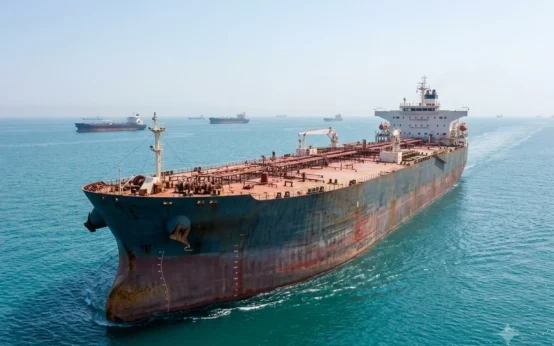
Friday’s strikes landed in the fifth month of a war that began on February 28, when the United States and Israel launched Operation Epic Fury, a bombing campaign that killed Iran’s Supreme Leader Ali Khamenei and triggered a near-total shutdown of the Strait of Hormuz.
A ceasefire held from April 8. A second truce, meant to last 60 days, was negotiated in mid-June. It collapsed within a month, and the strikes that resumed this month included the US hitting bridges and an airport inside Iran, while Iran struck a Kuwaiti power and desalination plant and hit targets inside Syria for the first time.
Indian markets have felt this exact shock before. Oil’s last spike on US-Iran tensions dragged the Sensex through a 561-point single-day slide earlier in the conflict.
Rapidan Energy Group, an energy consultancy, has called the Hormuz shutdown the largest oil-supply disruption on record, more than three times the scale of the 1973 Arab oil embargo. About 6,000 seafarers remain stranded on vessels in the strait, which once carried roughly 130 ships a day, the International Maritime Organization said this week. UN Secretary-General Antonio Guterres called the renewed strikes “alarming.” UN Spokesperson Stephane Dujarric warned that a full-scale return to war would bring “catastrophic consequences” for the region and the global economy.
- February 28, 2026: The US and Israel launch Operation Epic Fury, killing Iran’s Supreme Leader Ali Khamenei and prompting Iran to shut the Strait of Hormuz.
- April 7 to 8, 2026: Washington and Tehran agree to a ceasefire, though strait traffic stays far below pre-war levels.
- Mid-June 2026: A second, 60-day truce is negotiated as Brent eases from its wartime highs.
- July 15 to 17, 2026: The truce collapses. The US strikes bridges and an airport in Iran; Iran hits a Kuwaiti desalination plant and strikes inside Syria for the first time.
Oil is the first place that chain shows up. The rupee is the second.
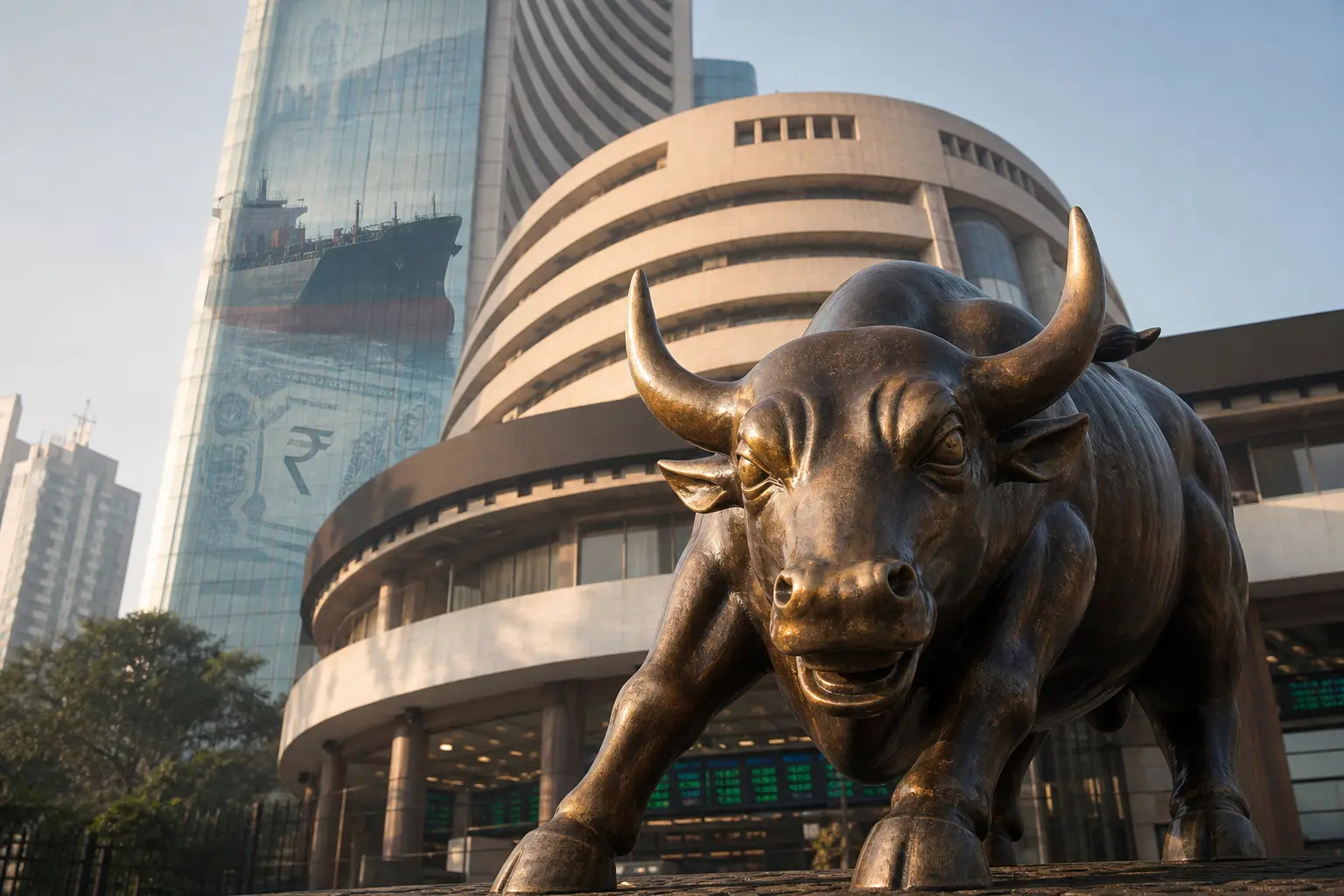
The Rupee Creeps Back Toward a Record Low
The rupee settled at 96.28 to the dollar this week, its sharpest weekly decline since May. “Technically, the rupee is expected to trade in the 96.00-96.55 range, with the overall trend favouring further weakness,” said Jateen Trivedi, VP research analyst for commodity and currency at LKP Securities.
That range sits just shy of the rupee’s record low, 96.84, struck in May. Oil and the currency have moved together for months, just not always at the same time.
| Period | Brent Crude | Rupee (Per US Dollar) |
|---|---|---|
| February 2026 (pre-war) | About $69 a barrel | About 90.4 |
| April 2026 (Hormuz shut) | Averaged $118, highest since 2008 | Sliding sharply |
| May 2026 | Easing from its wartime peak | All-time low of 96.84 |
| July 18, 2026 (this week) | $88.10, up 16% for the week | 96.28 |
Oil tends to move first. The rupee tends to catch up within weeks, not days.
Foreign Funds Sell, Domestic Money Buys the Dip
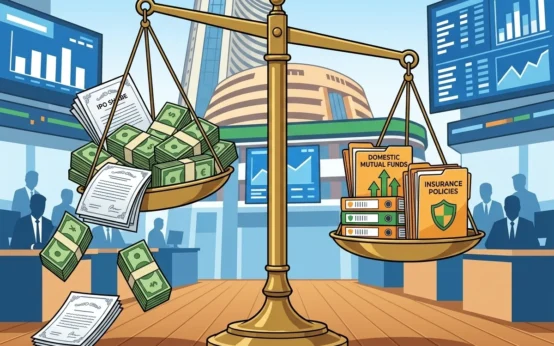
After strong inflows earlier this month, foreign institutional investors turned net sellers last week, pulling Rs 8,743.35 crore out of Indian equities, according to Vinit Bolinjkar, head of research at Ventura. Domestic institutional investors absorbed nearly all of it.
| Investor Type | This Week’s Net Flow | Direction |
|---|---|---|
| Foreign Institutional Investors | Rs 8,743.35 crore | Net sellers |
| Domestic Institutional Investors | Rs 8,790.75 crore | Net buyers |
Domestic buying almost exactly offset foreign selling this week, and that has been the broader pattern for months. Foreign funds pull back on every oil and rupee scare. Domestic money steps in, and the index barely flinches. Foreign investors pulled a record sum out of Indian shares last year on this same pattern, the largest annual exodus on record by some flow trackers, long before this war even started.
Refiners Are Rewriting Where Their Oil Comes From
Washington spent early 2026 pushing India to quit Russian crude, and it nearly worked. Reliance Industries, the country’s largest private refiner and one of Friday’s biggest gainers, bought no Russian oil at all in January, as Gulf suppliers climbed back to a combined 55.9% of India’s import basket by late February.
Then the war made that Gulf oil the risky option. Washington granted a sanctions waiver in March, and Indian refiners went back to Russian barrels. By June, Russian crude hit a record 52% of India’s crude basket, even after that waiver had technically expired. India’s fuel import bill for the April to June quarter grew 23% year on year, to $60.62 billion, as prices climbed.
- January 2026: Reliance Industries buys zero Russian crude as US tariff relief pulls India back toward Gulf suppliers.
- Late February 2026: Iraq, Saudi Arabia, the UAE and Kuwait combine for 55.9% of India’s import basket.
- March 2026: A US sanctions waiver reopens the door to Russian barrels as the war makes Hormuz risky again.
- June 2026: Russian crude hits a record 52% of India’s import mix even after the waiver expires.
Two of the refiners caught in that math, BPCL and HPCL, report June-quarter results this coming week.
Earnings Season Hits Full Stride
Some 256 companies report June-quarter results in the coming week. Paytm, Bajaj Auto, TVS Motor, Adani Power, BPCL, Eternal, IndusInd Bank, HPCL, UltraTech Cement, Infosys and Bank of Baroda headline the calendar.
Vinod Nair, head of research at Geojit Investments, said market sentiment remains supported by encouraging Q1 FY27 business updates and rising optimism over a healthy earnings season. He also pointed to a rotation into largecaps, away from a richly valued broader market and toward blue chips with clearer earnings visibility.
On the sectoral front, IT stocks led gains following constructive management commentary and positive earnings expectations, while consumer durables benefited from optimism around stronger domestic demand in the second half of FY27. In contrast, realty and metal stocks remained under pressure.
Nair said corrections in select Asian markets over stretched AI valuations could actually help India’s case among emerging markets, given the country’s macro fundamentals and resilient domestic demand.
Chips Crash, India’s Software Stocks Don’t
Chipmakers dragged the Philadelphia Semiconductor Index more than 20% below its June record, pushing it into a bear market, in the same week Tech Mahindra, TCS and Infosys each rose as much as 4% in Mumbai.
The S&P 500 lost 1.55% for the week, the Nasdaq fell 2.9%, and the Dow slipped 0.93%. South Korea’s Kospi sits in a bear market despite being up nearly 62% for the year, and Japan’s Nikkei entered correction territory on Friday. Europe’s tech sector was among the week’s worst performers, months after posting its best quarterly rally since 2001.
Indian markets have flipped on this exact trade before, gapping to a flat open after a Tuesday AI-led selloff in late June, then opening higher on an AI-led Wall Street rally days later.
Analysts have taken to calling this India’s anti-AI advantage: benchmark indices light on the chipmakers absorbing the brunt of the global selloff, and heavy on IT services companies that sell software and outsourcing rather than silicon. That distinction may not hold if a broader AI-spending pullback reaches the enterprise budgets that fund those same exporters’ order books.
What Do the Charts Say About Monday?
The Nifty 50 looks set to stay firm heading into next week, with room to run toward 24,800 should support at 24,200 hold, said Rupak De, senior technical analyst at LKP Securities. A break below that support would risk a different outcome entirely.
De said the index continues trading above its key moving averages, while the relative strength index (RSI, a momentum gauge) has entered what he called a bullish crossover, a signal of strengthening momentum. A decisive break below 24,200, he said, could trigger “a phase of consolidation.”
Monday’s open will show which number is winning: the Nifty’s 127-point weekly gain, or Brent crude’s climb toward $90.
Frequently Asked Questions
What Is Q1 FY27 in India’s Earnings Calendar?
India’s financial year runs from April to March, so Q1 FY27 covers April through June 2026, the quarter companies are now reporting. That is one quarter ahead of the calendar year most global investors use, which is why Indian earnings commentary can look out of step with US reporting seasons.
How Much of the World’s Oil Passes Through the Strait of Hormuz?
Roughly 27% of the world’s maritime crude oil trade normally transits the strait, according to a Congressional Research Service analysis. Tension over the waterway is not new. The US and Iran also clashed there in 1988’s Operation Praying Mantis and again during a standoff in 2019.
What Is the RBI Doing to Defend the Rupee?
The Reserve Bank of India has been intervening in spot and forward currency markets for months to slow the rupee’s slide rather than reverse it outright. Currency analysts have also pointed to a special deposit window courting NRI dollars, aimed at drawing tens of billions of dollars in by September to help offset this year’s equity outflows.
Is the Rupee’s Slide Unique to India?
No. The Indonesian rupiah fell below levels last seen in its 1998 financial crisis, and the Korean won hit a 17-year low earlier in 2026, as the same combination of high oil prices and capital flowing toward the US AI trade weighed on several Asian currencies at once. The rupee and rupiah have been hit hardest because both economies rely heavily on imported oil.
Disclaimer: This article is for informational purposes only and is not investment advice. Equities, currencies and commodities carry real risk, so consult a licensed financial adviser before acting, and note that the figures above reflect market levels as of July 18 and 19, 2026.
 Hormuz Stalemate Masks Products Squeeze Toward $120 Oil
  Shiprocket IPO Heat Masks Float Risk and Adjusted Losses
  Oil Relief Meets Drone Tariffs as Nifty Turns Macro
  Scotland’s Drug Deaths Drop Then Rebound as Recovery Lags
  FPIs Exit 60% of IPO Anchors in a Year as Domestic Funds Hold Firmer
  Domestic Winners Outrun Tata PV Drag on Friday Focus List