
 Ishan Crawford
 For four days in 2021 David Rowat lay dying in his East Kilbride flat. His daughter found him with only hours of oxygen left in his blood. “Every rock bottom is a trap door,” the former heroin addict later said. “You need to be in the darkest, lowest place to want change.” Four years in a rural recovery commune then freed him from addiction.
Scotland’s latest figures show why that path remains rare. Registered drug misuse deaths fell, The Thistle opened, yet suspected deaths climbed again and rehab beds trail the promised mark. The reckoning for choices made under the National Mission is now plain.
Four Days in an East Kilbride Flat
Rowat’s near-death sits inside a national pattern. Scotland’s age-adjusted drug misuse death rate reached 19.1 per 100,000 in 2024, still more than three-and-a-half times the 2000 level and two to three times the rate in other UK nations. Opioids were implicated in 80% of cases. Nearly half the deaths hit people aged 35-49.
Public Health Scotland’s Dr Tara Shivaji called the toll “one of the most significant public health challenges in Scotland” and noted that poverty, homelessness, trauma and stigma keep driving harm. The same statement linked the 2024 fall to ongoing work while flagging rising harms already visible in 2025 RADAR data.
1,017 Registered Deaths and the 2025 Rebound
National Records of Scotland counted 1,017 drug-related deaths in Scotland in 2024, a 13% drop (155 fewer) from 2023 and the lowest total since 2017. That was progress after years of records.
Suspected drug deaths told a different story the following year. Scottish Government figures put the 2025 total at 1,146, an 8% rise (81 more) on the 1,065 suspected in 2024. The rolling 12-month total turned upward after the 2024 decline.
- 2024 registered: 1,017 deaths, down 13%
- 2025 suspected: 1,146 deaths, up 8%
- Opioids share: 80% of 2024 deaths
- Age peak: 46% of 2024 deaths in the 35-49 group
Scotland still carries one of the highest drug-death rates in the developed world. European comparisons place its burden far above the EU average of roughly 25 overdose deaths per million adults aged 15-64.
| Year | Measure | Number | Change |
|---|---|---|---|
| 2023 | Registered | 1,172 | – |
| 2024 | Registered | 1,017 | -13% |
| 2024 | Suspected | 1,065 | – |
| 2025 | Suspected | 1,146 | +8% |
The 2024 fall bought breathing room. The 2025 rebound removed it.
Inside the UK’s First Legal Consumption Room
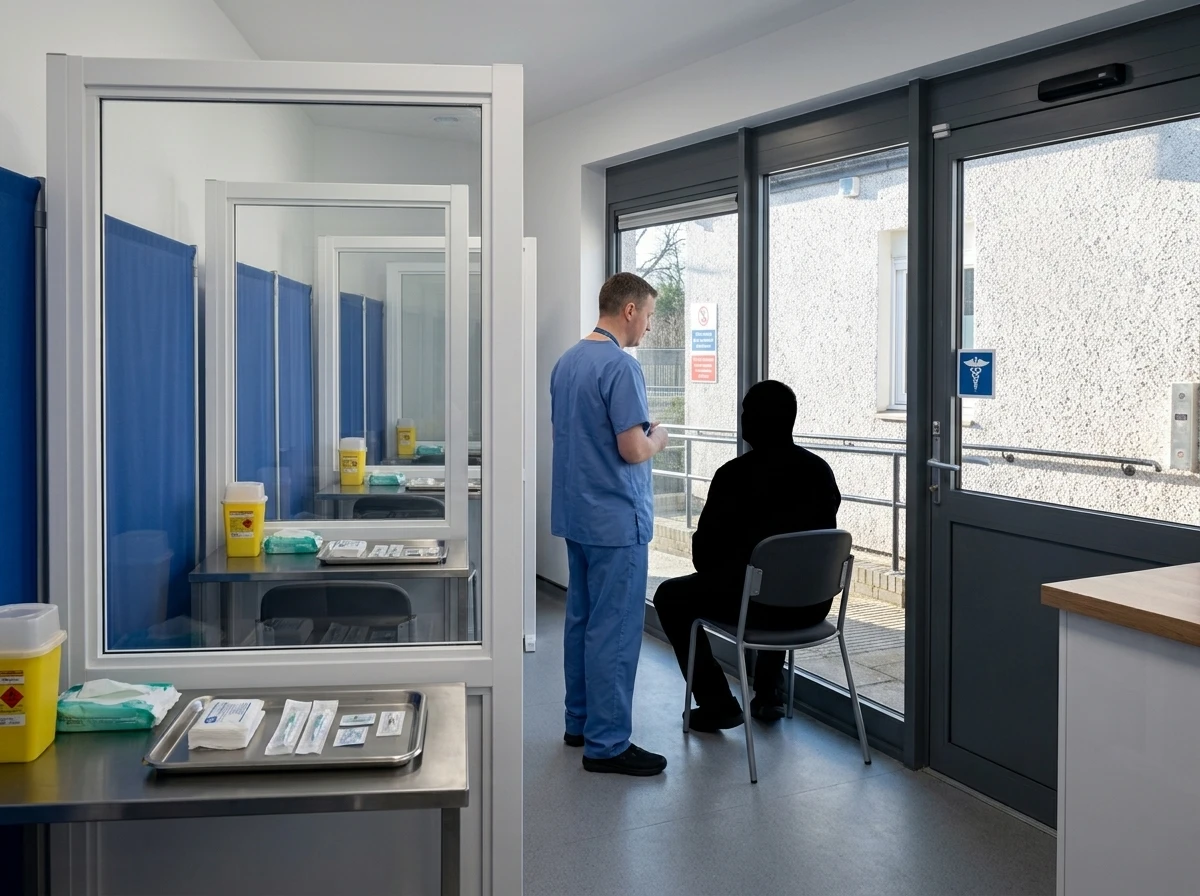
Glasgow’s The Thistle safer drug consumption facility opened on 13 January 2025 as a three-year pilot. It is the first legal supervised injecting site in the UK. Staffed by nurses, harm-reduction workers, social workers and medical teams, it runs 9am-9pm every day.
First-year numbers released in January 2026 showed heavy use:
- 575 people registered (448 men, 127 women)
- 11,348 visits and 93 medical emergencies managed on site
- 7,827 supervised injections
- Zero deaths inside the facility from those emergencies
Scottish Government funding runs to £2.3 million a year. Officials and local leaders called the uptake better than expected and noted referrals into wider health, housing and treatment services. An independent evaluation is under way. Plans for a smoking/inhalation space are advancing.
Local litter, discarded needles and street injecting were core justifications. Early data suggest those street harms have eased near Hunter Street. National death totals have not followed the same path.
Beds Climb to 574 but the Target Was 650
Residential rehabilitation formed a headline promise of the National Mission £250 million funding package launched in 2021. The government pledged to lift capacity from roughly 425 beds to 650 by 2026 and to fund at least 1,000 publicly paid placements a year.
An October 2025 survey found a maximum capacity of 574 beds across 28 facilities, up 78 (16%) from a revised 496 the year before. That leaves the programme short of the final target with months remaining. Capital funding of £18 million supported new builds and expansions. A national service directory and commissioning framework arrived to smooth placements.
| Date | Maximum beds | Notes |
|---|---|---|
| 2021 baseline | ~425 | Start of National Mission |
| Sept 2024 revised | 496 | Prior count |
| Oct 2025 | 574 | +78 beds |
| 2026 target | 650 | Still open |
Placement numbers have risen, yet access is still described by campaigners as a “golden ticket.” Some facilities report far more private or overseas clients than NHS-funded Scottish ones. Aftercare and detox capacity remain uneven.
Parliament Rejected a Legal Right to Treatment
In October 2025 MSPs voted down the Right to Addiction Recovery (Scotland) Bill. The member’s bill would have created a legal right to treatment for anyone addicted to alcohol or drugs. Supporters argued that without an enforceable right, recovery stays optional and under-resourced while harm-reduction services expand.
The defeat left the existing mix of Medication Assisted Treatment standards, opioid substitution, naloxone distribution and the single consumption room as the main pillars. Naloxone kits are now carried by more than 12,500 police officers and stocked in community pharmacies. Long-acting buprenorphine is on formularies. Benzodiazepine and stimulant pathways are still being built.
Critics of the vote say the decision locked in a system better at keeping people alive in addiction than at helping them leave it.
Recovery Voices Call Harm Reduction a Destination
On X and in recovery networks the sharpest objections have come from people with lived experience and groups such as Faces and Voices of Recovery UK. They point to rehabs closing or losing premises while government tenders fund more injecting equipment. One widely shared post noted a £4 million package for needles and foil alongside the shutdown of a 16-bed Glasgow stabilisation unit.
Harm reduction should never become the destination itself. Recovery should always be the destination.
Annemarie Ward, CEO of FAVORUK, has argued that cities which pioneered consumption rooms and safer supply are now reassessing results, while Scotland consults on a second room and doubles down. Local emergency saves at The Thistle are real. The national exit ramps are not yet matching them. Crowd posts repeatedly note that Glasgow itself saw sharp rises in suspected deaths even after the facility opened, and that street dealing and discarded gear still blight neighbouring streets for some residents.
These voices do not reject clean needles or overdose reversal. They reject a system that treats managed long-term use as success when people like Rowat only changed after hitting absolute bottom and finding a full-time recovery place.
Scotland’s Next Decade Plan Faces the Same Trade-off
In March 2026 the Scottish Government and COSLA published the Alcohol and Drugs Strategic Plan 2026-2035, titled Preventing Harm, Promoting Recovery. It sits alongside a new national specification for minimum local services. The language balances both poles: prevent harm, promote recovery, save lives.
Implementation will decide the balance. The Thistle evaluation will report on referrals into treatment, not only on emergencies averted. Bed capacity must still close the gap to 650. MAT standards need consistent delivery. Poverty and housing remain the backdrop that every clinical tool runs into.
Rowat’s line about the trap door still lands. Scotland has more supervised rooms, more naloxone and more registered beds than five years ago. It also has a 2025 death rebound and a recovery sector that feels chronically second. The new plan’s first years will show whether the reckoning produces more exits from addiction or simply better management of the people still inside it.
 The Quiet Architect Behind Akshay Oberoi’s Karjat Home
  Nothing Ear 3A Hits $79 and Repeats the Slide
  Hyderabad Gold Dip Freezes Buying as Duty Talk Hits Wedding Season
  India Pushes Japan CEPA Review After 15 Years of One-Way Gains
  HDFC Bank’s US Class Action Turns Deposit Scheme Into Securities Reckoning
  Gold Holds Above $4600 as Treasury Buybacks Fuel Debasement Bid