
 Ishan Crawford
 Shiprocket’s Rs 1,617.5 crore IPO stood 3.16 times subscribed by 5 pm on 13 August, the second day of bidding, with retail investors driving the books to nearly 10 times while QIBs remained near zero. Grey-market trades put the premium at about 35 percent, or roughly Rs 34 a share above the Rs 97 upper band.
The issue closes today, 14 August. Listing is slated for 19 August. The heat is real. The questions underneath it are larger.
Books Show Retail First, Institutions Later
NSE data captured by Economic Times put the day-two totals at 3.16 times overall. Retail Individual Investors reached 9.77 times. Non-institutional investors hit 4.84 times. QIBs (ex-anchor) sat at 0.03 times. Employee portion was 13.29 times.
| Category | Day 1 | Day 2 close |
|---|---|---|
| QIBs (ex-anchors) | 0.02x | 0.03x |
| NIIs | 1.23x | 4.84x |
| Retail | 3.34x | 9.77x |
| Total | 0.97x | 3.16x |
Early day-three chatter on X put the overall multiple already past 6 times as final-hour bids arrived. Anchor investors had already taken 7.5 crore shares for Rs 727.41 crore at Rs 97 on 11 August. Domestic mutual funds took the bulk of that book through 31 schemes. Names included SBI Mutual Fund, HDFC AMC, Nippon, Kotak and Mirae.
The pattern is familiar in recent Indian mainboard deals: retail and HNIs fill first, institutions decide on the final day. GMP tracked by InvestorGain and others sat near 35 percent on day two, pointing to an indicative Rs 131. GMP remains unofficial and can vanish before listing.
Retail’s jump from 3.34 times to 9.77 times in a single session shows how quickly the small-ticket book can swell once price discovery feels settled. NII demand more than tripled over the same window. The QIB line barely moved. That gap is the live question for the close: whether the final day brings the institutional volume that turns a retail-led book into a fully balanced one, or leaves the subscription skewed toward the categories that already bid hard.
Anchor support from large domestic houses sets a floor of professional participation before the open. It does not guarantee that the remaining QIB quota fills at the same pace. The employee portion at 13.29 times is a side signal of internal confidence, not a substitute for the big institutional cheques still outstanding.

Core Shipping Pays, Emerging Businesses Spend
Shiprocket runs a merchant-first API-led enablement platform that connects MSMEs and retailers to logistics, checkout, payments, fulfilment and cross-border tools. Official materials describe more than 2 lakh active merchants and hundreds of millions of transactions.
Value Research and the RHP split show the core domestic shipping and apps business generated the bulk of the Rs 2,024 crore FY26 operating revenue and roughly Rs 187 crore of adjusted EBITDA at double-digit margins. Customer acquisition cost in core fell to Rs 2,829. Operating cash flow turned positive at about Rs 53 crore.
The emerging slice (cross-border, checkout, marketing tech, hyperlocal, credit) grew faster, to over 25 percent of revenue, yet still posted an adjusted EBITDA loss near Rs 169 crore. Absolute burn widened even as the percentage improved. Fresh issue money earmarks hundreds of crores for marketing and technology aimed mainly at these newer lines.
- Core revenue FY26: roughly Rs 1,485 crore, margin expanding to ~12.5 percent adjusted
- Power merchants (100+ transactions a month): only 10,090, up 0.85 percent year-on-year, yet nearly 89 percent of revenue
- ARPU on power merchants: rose 23.6 percent to Rs 17.8 lakh, carrying growth while headcount stalled
- Five courier partners: handled 84.5 percent of volume; no exclusive contracts
The middleman model works while partners stay cooperative. It thins if they raise rates or build their own merchant front ends.
Core unit economics are doing the heavy lifting. Lower acquisition cost and positive operating cash flow give the domestic shipping engine room to fund itself. The emerging stack is the opposite story: faster top-line share, still deep adjusted losses, and a claim on the fresh capital that will arrive after listing. Investors are therefore underwriting two businesses at once, one that already prints cash and one that has not yet closed the gap between growth and contribution.
Adjusted Profit Turns on a Definition
The company reported its first positive adjusted EBITDA of Rs 17.6 crore in FY26. The adjustment excludes share-based payment expense of Rs 112.3 crore. Treat ESOP as the recurring compensation cost it is and the figure flips to a loss of roughly Rs 95 crore, worse than the prior year on the same basis.
Reported Adjusted EBITDA is positive only because a ₹112.3 crore recurring cost is defined out of it.
That line comes from Inflection Point Research’s forensic note on the full Red Herring Prospectus filing. Receivables also grew 61 percent while revenue rose 24 percent; expected-credit-loss charges fell sharply as a percentage of the book. Net loss narrowed dramatically from FY24 levels that carried large impairments, yet stayed near Rs 79 crore in FY26 (or lower on some reported P&L cuts). Losses are smaller. They have not disappeared.
The gap between the adjusted headline and the post-ESOP result is not a footnote. Equity compensation at that scale is a real claim on future dilution or cash, and it arrives every year the talent pool is paid in stock. Receivables running well ahead of revenue growth adds another layer of working-capital watch. Narrower losses are progress. They are not yet proof that the platform has crossed into sustained, fully loaded profitability.
Who Is Selling and Who Is Staying
The Rs 1,617 crore issue is 55 percent fresh (Rs 885.5 crore) and 45 percent offer for sale. Lightrock is exiting its entire stake. Founders Saahil Goel (MD & CEO) and Gautam Kapoor (ED & COO) each sell about 20 percent. Bertelsmann, Eternal (formerly Zomato), Temasek’s MacRitchie and several other large holders sell nothing. There is no identifiable promoter group, so the usual 18-month promoter lock-in does not apply.
Proceeds after debt repayment of Rs 210 crore go mainly to platform growth, marketing (Rs 206 crore), technology (Rs 160 crore) and unidentified acquisitions plus general corporate use. Borrowings stood near Rs 245 crore before the issue.
- Full exit: Lightrock
- Partial sale (~20 percent each): Saahil Goel, Gautam Kapoor
- Holding steady: Bertelsmann, Eternal, Temasek’s MacRitchie and other large names
- Lock-in note: no promoter group, so no 18-month promoter lock
- 12 August 2026: Bidding opens; anchors already locked
- 14 August 2026: Bidding closes
- 17 August 2026: Basis of allotment
- 19 August 2026: Expected listing on NSE and BSE
The same professional management structure that removes promoter risk also removes the traditional locked block that cushions early float.
A clean split between sellers and stayers matters for post-list signalling. Full exits and founder trims free supply into the OFS. Strategic names that sell nothing keep skin in the game past listing day. The debt paydown of Rs 210 crore against pre-issue borrowings near Rs 245 crore cleans the balance sheet first; what remains of the fresh Rs 885.5 crore is growth capital, not repair capital.
Valuation Sits Beside a Profitable Peer
At the upper band the post-issue market capitalisation is about Rs 7,057 crore. That is roughly 3.1-3.5 times FY26 revenue. The larger integrated logistics peer Delhivery traded near 3.2 times EV/sales on far higher revenue, positive operating margins and strong cash flow around the same dates. Shiprocket’s asset-light pitch argues for a premium. Negative post-ESOP EBITDA and a contribution margin that did not expand argue the market is already giving the benefit of the doubt.
| Metric | Shiprocket (upper band) | Context |
|---|---|---|
| Post-issue m-cap | ~Rs 7,057 cr | Down round vs last primary at Rs 163 |
| EV / sales | ~3.1-3.5x | Delhivery ~3.2x, profitable |
| Price / last primary | 0.59x | Clear reset from private marks |
| P/B | ~2.9x | Net worth ~Rs 2,410 cr post |
Unicommerce, the prospectus peer, is a smaller pure-software order-management business and not a clean multiple match. Private rounds once valued Shiprocket far higher; the IPO size itself was cut from earlier draft plans. Investors who chased private marks facing public market tests have seen that reset play out elsewhere this year.
Pricing at roughly three times sales next to a profitable peer on a similar multiple leaves little room for execution slip. The 0.59 times last-primary ratio already bakes in a public-market discount to private marks. Whether that discount is enough depends on whether emerging lines can turn their revenue share into margins before the narrative shifts from growth story to cash story.
Six-Month Unlock Multiplies the Float
Because no promoter lock exists, the entire locked portion follows the standard six-month rule. Free float at listing is projected near 23 percent. After six months the tradable stock can jump roughly 4.4 times. That cliff lands around mid-February 2027 with no large strategic block standing behind it.
Short-term listing gains priced by the 35 percent GMP can coexist with later supply pressure. Retail buyers who receive allotment today become the first layer of that future float. Crowd discussion on X already flags the no-promoter structure and the gap between headline adjusted profits and cash economics; those points travel farther once the lock expires.
Similar mainboard stories this season, including another recent mainboard IPO that listed strong, have shown that first-day premiums and longer-term ownership are separate calculations.
A 4.4 times float expansion is not a routine drip of unlock shares. It is a structural re-rating event for liquidity and for any holder who treated the listing pop as the end of the trade. The absence of a promoter cushion means price discovery after mid-February 2027 will rest entirely on institutional and retail appetite, not on a locked strategic bid underneath the tape.
Power Merchants Carry the Revenue Base
Nearly 89 percent of revenue rides on just 10,090 power merchants. That cohort grew only 0.85 percent year on year. ARPU on the same group rose 23.6 percent to Rs 17.8 lakh. Growth is coming from deeper wallet share inside a nearly flat headcount, not from a widening top of the funnel.
More than 2 lakh active merchants sit behind the headline count. The distance between that broad base and the power tier is the concentration risk in plain view. If a slice of high-volume names slows, switches platform, or renegotiates rates, the revenue impact lands faster than the merchant count would suggest.
| Merchant signal | Figure | What it implies |
|---|---|---|
| Power merchants | 10,090 | Tiny share of total names |
| Revenue from power tier | ~89 percent | Extreme concentration |
| Power headcount growth | 0.85 percent YoY | Base barely expanding |
| Power ARPU | Rs 17.8 lakh (+23.6 percent) | Monetisation, not logos, drives growth |
Five courier partners already handle 84.5 percent of volume with no exclusive contracts. Merchant concentration and courier concentration therefore stack. The platform’s leverage works in both directions: efficient when partners and power users stay put, fragile if either side reprices or builds around the middle layer.
Fresh Capital Funds the Emerging Stack
The fresh issue of Rs 885.5 crore is the growth cheque. After Rs 210 crore of debt repayment, the stated priorities are marketing at Rs 206 crore, technology at Rs 160 crore, plus unidentified acquisitions and general corporate use. Those lines map directly onto the emerging businesses that already take more than 25 percent of revenue while still losing about Rs 169 crore at adjusted EBITDA.
- Debt first: Rs 210 crore repayment against ~Rs 245 crore pre-issue borrowings
- Marketing: Rs 206 crore aimed at newer lines
- Technology: Rs 160 crore for platform build-out
- Balance: acquisitions and general corporate purposes
Core shipping already produces roughly Rs 187 crore of adjusted EBITDA and about Rs 53 crore of operating cash flow. It does not need the IPO to stay alive. The raise is a bet that cross-border, checkout, marketing tech, hyperlocal and credit can close their loss gap once marketing and product spend scale. Absolute burn in that slice has still widened even as the loss ratio improved. Capital buys time and distribution. It does not by itself rewrite unit economics.
Investors reading the use-of-proceeds table are therefore funding a turnaround inside the growth segment, not a simple capacity expansion of the cash engine. How fast that turn arrives will matter more after the six-month unlock than on listing day.
Final Day Demand Still Has Room to Move
QIBs have barely opened their books. Final-day institutional bids routinely decide whether an issue finishes at 5 times or 20 times. A strong close would validate the grey-market optimism. A soft institutional finish would leave the retail-heavy book looking thinner once allotment is set.
Shiprocket’s core shipping engine is real, cash-generative and still gaining efficiency. The IPO prices growth that the emerging businesses have yet to prove at scale, after stripping out a large recurring equity cost and ahead of a multi-fold increase in free float. The books are full enough for a listing. The longer bet starts after the unlock calendar, not before it.
Disclaimer: This article is for information only and is not investment advice. IPO investments carry risk of loss; consult a SEBI-registered adviser and read the prospectus before acting.
 Hormuz Stalemate Masks Products Squeeze Toward $120 Oil
  Oil Relief Meets Drone Tariffs as Nifty Turns Macro
  Scotland’s Drug Deaths Drop Then Rebound as Recovery Lags
 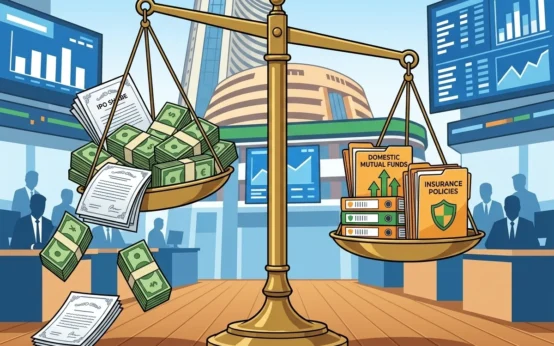 FPIs Exit 60% of IPO Anchors in a Year as Domestic Funds Hold Firmer
  Domestic Winners Outrun Tata PV Drag on Friday Focus List
 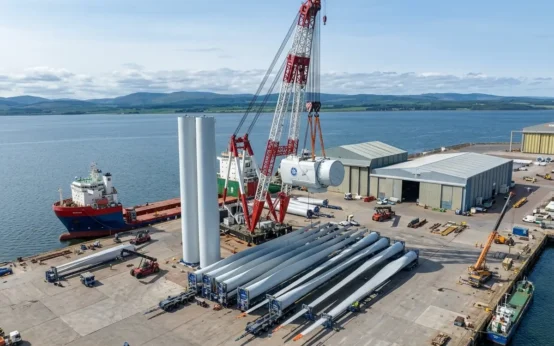 Nigg’s 180 Dogger Bank Jobs Cement Highlands Wind Hub