
 Ishan Crawford
 Google Pixel shipments grew 16% year over year in the second quarter of 2026, even as the broader smartphone market shrank to its lowest point since 2013. That streak is colliding with Google’s Made by Google event on August 12 in New York, where the Pixel 11 series arrives already leaked down to its storage tiers and price tag.
The real test that day is not whether Google can still surprise anyone. It is whether a price increase tied to a global memory shortage, and distribution that still stops at around 30 countries, can slow a business that finally started moving the right way.
Pixel Just Outgrew Nearly Every Major Rival
Counterpoint Research reported that global smartphone shipments fell 11% year over year in the second quarter of 2026, the weakest second-quarter total since 2013. The culprit is a memory chip shortage that has driven up component costs across the industry.
Pixel did not just survive that squeeze. It grew 16% year over year in the same quarter, a run Counterpoint credited to the Pixel 10 and Pixel 10a performing well in mature markets. Android Headlines summed up the moment by noting Google is growing faster than every one of the top five smartphone brands right now.
| Brand | Q2 2026 Global Share | Year-over-Year Change |
|---|---|---|
| Samsung | 24% | Grew again, the strongest pace among the top five |
| Apple | 20% | +3% |
| Xiaomi | 12% | Fell more than 10% |
| Oppo | 11% | Fell more than 10% |
| Vivo | 8% | Fell more than 10% |
| Huawei | Outside the top five by volume | +6% |
| Google Pixel | Outside the top five by volume | +16% |
Samsung and Apple still tower over Google in raw volume, and Xiaomi, Oppo and Vivo all lost double-digit share as buyers pulled back. Pixel’s gain came from a smaller base, which makes the percentage easier to hit. It is still real growth in a quarter where almost nobody else managed it.
Not everyone reads that streak as a green light. Droid Life summed up the ceiling on that growth bluntly, writing that Google may never crack the top tier of shipments because it does not sell their phones in enough countries.
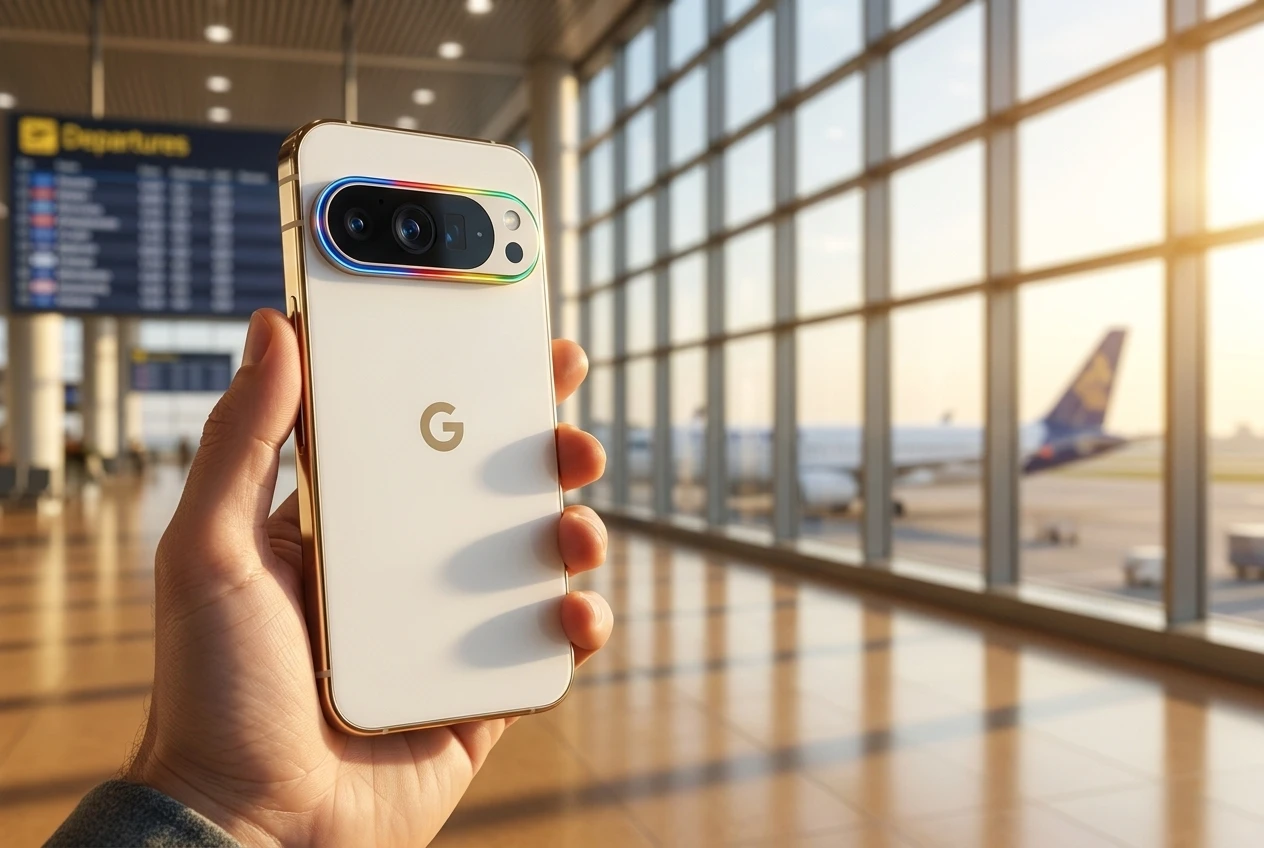
Four Phones Take the Stage on August 12
Google has already confirmed the date. The Made by Google keynote runs August 12, 2026, in New York City at 6 p.m. ET, eight days earlier than last year’s Pixel 10 unveiling on August 20, 2025. The event is also starting later in the evening than Google’s usual midday slot, and it is the second year running that New York hosts the show.
Google’s own invite, sent to press outlets this month, did not name a single device. It showed a gold metal frame and a pill-shaped camera bar instead, which is more than enough for anyone paying attention. Android Central noted the teaser itself has a distinctly Apple-like feel, right down to how Google is now managing the reveal.
Four phones are expected on stage, based on regulatory filings and supply chain leaks:
- Pixel 11 (codename cubs), the standard model
- Pixel 11 Pro (codename grizzly), expected to headline the gold finish
- Pixel 11 Pro XL (codename kodiak), the larger Pro variant
- Pixel 11 Pro Fold (codename yogi), likely following the other three to market later, as the Fold has in past years
All four are expected to run on Tensor G6, Google’s first chip built on a 2 nanometer process through TSMC. The Pixel Watch 5 is also expected to share the stage, alongside a possible refresh of Pixel Buds Pro, though almost nothing concrete has leaked about new earbuds.
A Memory Shortage Is Driving Up the Price
Here is where the good news gets complicated. Leaks point to Google dropping the 128GB base storage tier entirely and starting every Pixel 11 model at 256GB. That sounds like a gift until the price tag shows up attached to it.
A leak from the French outlet Dealabs, which has a track record on European pre-order pricing, points to roughly a €100 (about $114) increase across the Pixel 11 lineup, with the UK seeing a comparable £80 (about $107) jump over Pixel 10 pricing. Engadget and Ars Technica have both traced the increase back to the same memory chip shortage squeezing the rest of the industry.
Google is not alone in absorbing that cost. Apple is reportedly dealing with its own version of the problem: leaked iPhone 18 Pro specs point to a heavier build and a higher price tag when it arrives roughly a month after the Pixel 11. The difference is that Pixel’s recent growth leaned heavily on being the more affordable AI-capable flagship. A higher entry price narrows that gap right as Google needs it most.
How Many Countries Will Actually Sell the Pixel 11?
Right now, Pixel phones reach a bit more than 30 countries, a footprint that has grown steadily but still trails Samsung and Apple by a wide margin. That gap, not a missing camera trick, is the ceiling analysts keep pointing to when they explain why Pixel struggles to crack the industry’s top tier.
The trajectory is real, even if it is slow. The Pixel 6 launched limited to just nine countries around the world back in 2021. The Pixel 7 expanded that to 17 countries in 2022. By this July, Engadget was describing Pixel’s footprint as available in more than 30 countries, more than tripling its reach in five years.
Samsung, for comparison, was already selling phones in 130 countries back in 2021. Even then, IDC India research director Navkendar Singh observed that Google simply lacked the manufacturing and retail scale to compete with Samsung on distribution, a gap that has narrowed only slightly since.
Part of the problem is not entirely Google’s to fix. Engadget’s reporting on international Pixel differences notes that the US enforces stricter carrier testing and vetting requirements than many other countries, and that many international Pixels skip mmWave 5G entirely to keep costs and complexity down. Getting a phone certified for full 5G bands in a new country is a carrier negotiation as much as a manufacturing decision, which is exactly the kind of friction a keynote announcement cannot wave away.
Pixelsnap Still Needs More Than a Ring Stand
Google’s other lingering gap is smaller in scale but just as visible to shoppers: accessories. The Pixel 10 series introduced Pixelsnap, Google’s Qi2-based answer to MagSafe, built directly into the phone’s chassis instead of requiring a special case.
| Accessory | Price | What It Does |
|---|---|---|
| Pixelsnap Charger | $39.99 | Puck-style Qi2 charger, up to 25W on the Pro XL |
| Pixelsnap Charger with Stand | $69.99 | Docks the phone upright and enables Hub Mode |
| Pixelsnap Ring Stand | $29.99 | Magnetic grip and kickstand |
| Pixelsnap Cases | From $49.99 | Needed on some models for full magnetic alignment |
Google’s own product page for the Pixelsnap lineup promises accessories that snap into place without a case at all for basic charging. Third-party support has followed, with car mounts, wallets and grips arriving from outside brands, though the selection still trails what iPhone owners have had for years under MagSafe.
Quality has been the bigger complaint. Google’s own Pixelsnap Ring Stand has been reported to scratch the Pixel 10’s glass back over time, and the $50 first-party case has reportedly fallen apart after only a few months of everyday use. Those are not small details for a company trying to convince outside accessory makers that the platform is worth building for. If the Pixel 11 event does not pair new magnetic accessories with better quality control, Pixelsnap risks staying a nice idea that third parties hesitate to fully commit to.
What Google Confirmed, and What Leakers Found First
Almost nothing about the Pixel 11 has arrived from Google itself. That has become the normal pattern for these launches, and Google has adapted its own marketing around it rather than fighting it.
- Confirmed by Google: The event date, time and location, plus an invite image showing a gold metal frame and pill-shaped camera bar.
- Still unconfirmed: The 256GB base storage tier, the roughly $114 price increase, the exact function of a new light-up feature called Pixel Glow, and four rumored color options. All of it traces back to leaks, not Google.
Pixel Glow is the one item nobody has fully explained yet. Code discovered in an Android 17 beta points to an LED array along the back of the phone that lights up to signal notifications when the device is face down, and Google itself showed a brief ring of light around a Pixel 10 Pro XL during its I/O keynote earlier this year. Whether that turns into a genuine notification system or a cosmetic flourish is still open, and it is reportedly arriving at the cost of the temperature sensor found on Pixel 10 and older models.
Camera hardware is the other wildcard. Fans have pointed to Apple’s square selfie sensor on the iPhone 17 as the kind of exclusive trick Google has not matched yet, something that changes how a photo gets taken rather than just how it looks afterward. Nothing that specific has leaked for the Pixel 11, which for once might mean Google actually kept something back.
August 12 Will Judge the Streak, Not Just the Specs
Google will confirm the final prices, the final country list and Pixel Glow’s real purpose in New York on August 12. Everything else has already leaked.
The number worth watching afterward is not a chip name or a color option. It is whether the 16% growth that defined Pixel’s second quarter survives contact with a higher price and the same narrow shelf space that has limited every Pixel since the very first one.
 Scotland Reader Photos Capture Eclipse Week Beyond the Sky
  Scotland’s Rare World Cup Win Over Haiti Still Echoes
  Scottish Morning Roll Campaign Echoes Baguette Path to Unesco
  Samsung Passport Fold8 Turns Apple Fans Into Switchers
  Android’s Quiet Shift to Ambient AI Hardware This Week
  Poco F9 Leak Hands Global Buyers Less Battery for More Money