
 Ishan Crawford
 Two years after Motorola climbed back into India’s top five smartphone brands, the company is asking ₹38,999 for a phone with a 6,500mAh cell, a 5,200-nit display, and one camera fewer than the version it replaces. The Edge 70 Pro went on sale in India in late April 2026 at that price, and the bigger Edge 70 Pro+ ships on June 4 from Motorola’s site, Flipkart, and offline retail.
The phone wins almost every spec-sheet contest in the ₹40,000 band on the back of those two numbers. It also drops the telephoto lens that Nothing’s Phone (4a) Pro and most close rivals still ship, replacing it with a sensor aimed at low-light scenes from the main camera.
Motorola Swapped the Telephoto for a Light Sensor
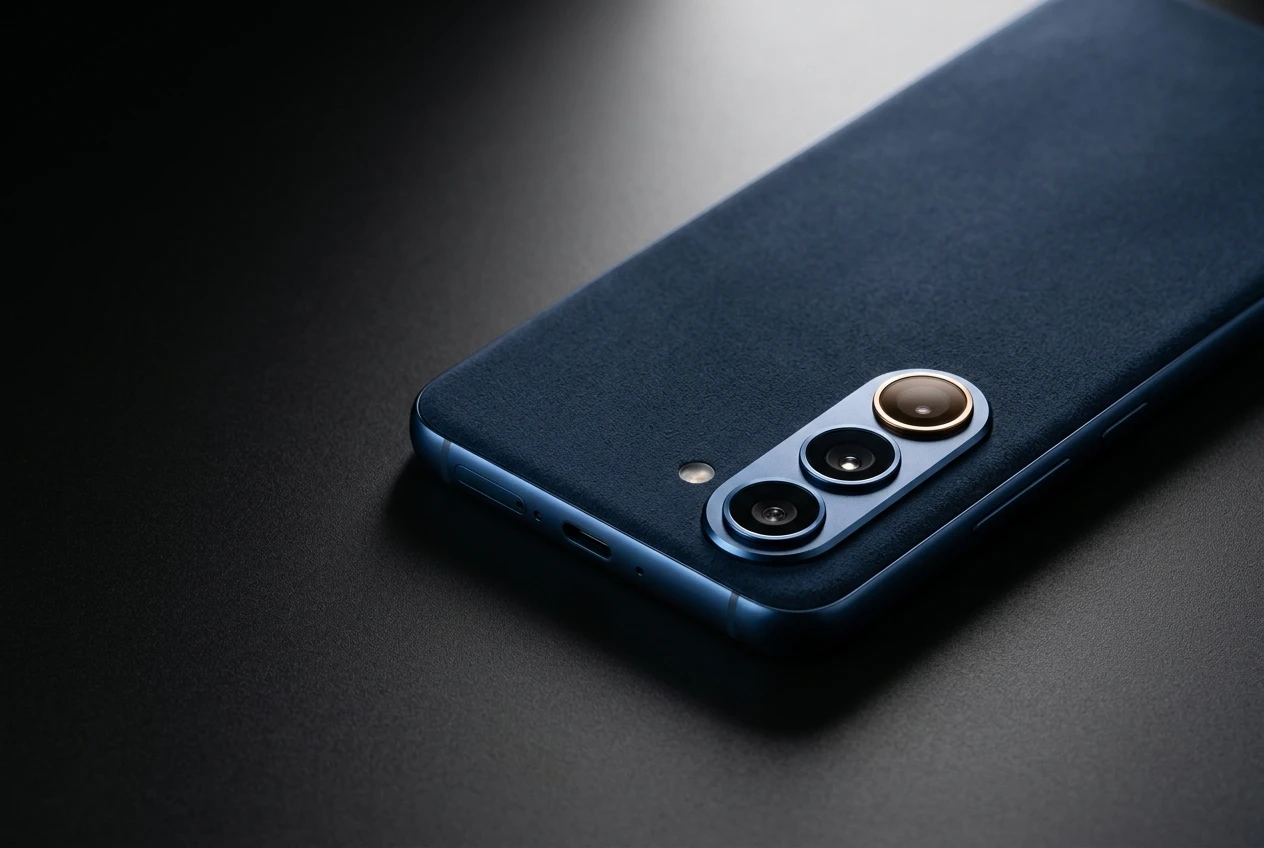
The Edge 70 Pro keeps three openings on the back. Only two of them take pictures. The third opening, in the same place the previous Edge Pro carried a 2x telephoto, now holds a 3-in-1 light sensor designed to feed exposure, white-balance, and color data into the 50-megapixel (MP, the resolution unit for camera sensors) Sony LYT-710 primary lens.
Reviewers who took the device through the first month of testing reported that low-light frames came out cleaner than the price band usually allows, with less noise and steadier color than the outgoing Edge 50 Pro produced in the same scenes. The ultrawide is also a 50MP sensor with a macro focus mode, and the front camera is another 50MP unit. On paper, three 50MP lenses look generous.
The arithmetic falls apart at the moment a buyer wants to zoom. Without an optical telephoto, anything past 2x reaches into digital crop territory powered by the primary sensor and the on-device pipeline. Business Today’s review described the resulting portrait frames as oversaturated in daylight, with skin tones that pushed into a reddish cast beyond what looked natural. The phone holds composure on close-up subjects; it loses depth and reach at 3x and above.
Nothing’s Phone (4a) Pro, which sits ₹1,000 above the Motorola at ₹39,999, ships a 50MP periscope telephoto rated for 3.5x optical zoom and up to 140x digital. The OnePlus Nord 6 at ₹42,999 skips the telephoto entirely, like Motorola, but doesn’t pretend a sensor is a third camera. Both rivals still print “triple camera” on the box. Only Motorola’s third opening on the back has no lens.
Where the Edge 70 Pro Wins on the Spec Sheet
The compromise on the back pays for headroom almost everywhere else on the device. Motorola pitched the launch around the panel and the cell; both numbers stand up to the marketing.
The 6.8-inch LTPO (low-temperature polysilicon oxide, a panel architecture that allows variable refresh rates for battery efficiency) AMOLED display, branded “Extreme AMOLED” by Motorola, peaks at 5,200 nits in HDR content and supports 144Hz refresh with HDR10+. Reviewers found it readable in direct April sun across Mumbai testing, which is the practical threshold for outdoor use in India through summer. Dolby Atmos certification covers the dual speakers.
- 5,200 nits peak HDR brightness, segment-leading in the ₹40,000 band
- 6,500mAh battery, roughly 30% larger than the Phone (4a) Pro’s 5,000mAh cell
- 90W wired charging from the in-box brick, full top-up in about an hour
- 6.99mm chassis thickness at 190 grams, with IP68 and IP69 plus MIL-STD-810H
The 90W charger ships in the box, which most rivals at this price stopped doing two product cycles ago. The frame is plastic, but the front uses Corning Gorilla Glass 7i, and the chassis carries military-grade drop certification. Real-world durability sits closer to the Nord 6 than to the Phone (4a) Pro, which only carries an IP65 rating covering low-pressure water jets, not full immersion.
The Dimensity 8500 and Its Thermal Ceiling
The processor at the center of the device is MediaTek’s Dimensity 8500 Extreme, a 4-nanometer part that benchmarks within striking distance of the Snapdragon 8s Gen 4 powering the Nord 6. Geekbench results published in December clocked the chip at roughly 1,709 single-core and 6,532 multi-core, with AnTuTu projections approaching 2.3 million points. Motorola pairs the silicon with up to 12GB of LPDDR5X RAM (random-access memory, the fast working memory used while apps run) and 256GB of UFS 4.1 (Universal Flash Storage v4.1, the current high-speed storage standard).
The thermal envelope is where the picture changes. Business Today’s review noted that during extended gaming, the device heats up quickly and that the display in BGMI runs at 120Hz and 90Hz rather than the advertised 144Hz under load.
During heavy usage like extended gaming hours, the smartphone tends to heat up quickly, affecting the performance.
That observation came from Business Today’s Edge 70 Pro review on May 15. The 6.99mm chassis, the same engineering choice that lets the battery sit in a phone weighing 190 grams, leaves less internal space for a vapor chamber or layered graphite stack. Light gaming and daily work are uneventful. Genshin Impact and BGMI at higher settings sustain frame rates for the first 20 minutes and then start to back off.
For users who treat the phone as a daily tool with occasional gaming, the throttling is invisible. For a buyer planning two-hour PUBG sessions, the Snapdragon 8s Gen 4 inside the Nord 6 holds its ceiling longer at the same price.
How It Stacks Up Against Nothing and OnePlus
The three phones share more than they differ. All three target the ₹38,000 to ₹43,000 band, all three run an AMOLED panel above 120Hz, all three ship 5G modems and roughly the same storage tier. The differences sit at the edges, and those edges decide the buyer.
| Spec | Motorola Edge 70 Pro | Nothing Phone (4a) Pro | OnePlus Nord 6 |
|---|---|---|---|
| Launch price (India) | ₹38,999 | ₹39,999 | ₹42,999 |
| Chipset | Dimensity 8500 Extreme | Snapdragon 7 Gen 4 | Snapdragon 8s Gen 4 |
| Peak brightness | 5,200 nits | 3,600 nits | 3,600 nits |
| Refresh rate | 144Hz LTPO | 144Hz | 165Hz |
| Battery | 6,500mAh | 5,000mAh | 5,500mAh |
| Wired charging | 90W | 50W | 80W |
| Telephoto | None (light sensor) | 50MP, 3.5x optical | None |
| IP rating | IP68/IP69, MIL-STD-810H | IP65 | IP66/68/69/69K, MIL-STD-810H |
The table maps cleanly onto buyer preference. The Phone (4a) Pro wins on camera flexibility on the back of its periscope; the Nord 6 wins on sustained performance and refresh rate; the Motorola wins on display brightness, battery capacity, and charging speed by margins that are visible in daily use. Durability sits roughly even between Motorola and OnePlus.
What none of the three buyers will get at this price is a phone that wins all three contests at once. Each maker picked the spec axis where they wanted the headline. Motorola picked the screen and the battery.
Motorola’s Bigger Bet on India
The launch sits inside a sharper Motorola India trajectory than the spec discussion suggests. IDC’s Quarterly Mobile Phone Tracker for the first quarter logged Motorola at 8.9% market share in India, up from 4.6% in Q1 2024, lifting the brand into the country’s top five for the first time in the post-Lenovo era, according to India smartphone shipment data published by IDC. The company moved from ninth position to fifth in eight quarters.
That climb is built on three pillars Motorola management has cited repeatedly: the moto g volume tier, the Edge mid-premium line where this phone sits, and the razr foldable range that anchors the brand at the top. This launch is the volume engine of the middle pillar; the Pro+ shipping June 4 is the upper bound of the same band.
The bet is that brand-led mid-range buyers, who four years ago defaulted to Redmi or Realme, are now open to Motorola if the spec sheet stands up. The 6.8-inch panel and the 6,500mAh cell are aimed precisely at that buyer. The dropped telephoto is the price of getting both into one chassis at the launch price, alongside a long evolution of smartphone design from brick to sleek that has progressively forced thinner bodies and bigger cells into the same hand.
The other side of the bet is the Nord 6 and the Phone (4a) Pro, both built by brands chasing the same buyer with sharper performance and sharper cameras respectively. Q3 share data will show whether the display-and-battery pitch holds the buyer once the rivals share the same retail aisle.
Who Should Buy the Edge 70 Pro
The phone breaks down cleanly by use case, and the use case for it is narrower than its specs suggest.
- Heavy outdoor users. Delivery riders, photographers shooting reference frames, anyone who works on a phone in direct sun. The 5,200-nit panel sets a new floor at this price.
- Two-day endurance buyers. Travelers, people without easy daytime charging, anyone tired of carrying a power bank. The 6,500mAh cell with 90W charging is the strongest single-device endurance pairing in the ₹40,000 band.
- Field-use buyers. The IP68 plus IP69 and MIL-STD-810H combination beats what most rivals in the segment ship. Construction sites, fieldwork, and rough travel get tougher tolerance than the Nothing competitor at the same price.
The buyer to direct away from this phone is the camera-first user. Anyone who values the 3x to 5x zoom range, takes portraits regularly at varied focal lengths, or shoots short-form video that switches between lenses will be better served by the Phone (4a) Pro’s periscope. Anyone planning extended gaming sessions at high settings will find the Dimensity chip throttles before the Snapdragon inside the Nord 6 does. For buyers comparing across price tiers, the segment looks very different at the top, where coverage of the iPhone 18 Pro Max India pricing and chip details sets the ceiling reference point.
Motorola’s Edge 70 Pro+ launches on June 4 at an expected ₹47,999 starting price, with a 50MP periscope telephoto offering 3.5x optical zoom and up to 16GB of RAM. Buyers who want the Motorola design and battery story with the camera flexibility intact have a short wait.
Frequently Asked Questions
What Is the Launch Price of the Motorola Edge 70 Pro in India?
The phone starts at ₹38,999 for the 8GB RAM with 256GB storage variant, with the 12GB RAM and 256GB storage option priced at ₹41,999. Sales began through Flipkart and Motorola’s official site in late April 2026.
Does the Edge 70 Pro Have a Telephoto Camera?
No. The third opening on the back of the device is a 3-in-1 light sensor that feeds exposure and color data to the primary 50MP Sony LYT-710 lens. Zoom shots beyond 2x rely on digital crop from the main camera, not on optical hardware.
How Does the Pro Compare to the Edge 70 Pro+?
The Pro+ launches on June 4, 2026 at an expected starting price near ₹47,999. It adds a 50MP periscope telephoto with 3.5x optical zoom, up to 16GB of RAM, and up to 512GB of storage. The display peak brightness and battery hardware match the cheaper sibling.
Is the Plastic Frame a Problem at This Price?
Less than the spec implies. The chassis carries IP68 and IP69 ingress ratings and a MIL-STD-810H drop certification, with Corning Gorilla Glass 7i on the front. Real-world durability sits closer to Nord 6 levels than to the Phone (4a) Pro’s IP65-only rating.
Can the Phone Handle BGMI and Genshin Impact?
At medium settings, yes. At maximum settings extended past 20 minutes, the chipset begins throttling and the panel drops from 144Hz to 120Hz or 90Hz under sustained load. Casual gamers will not notice; competitive players may.
When Does the Motorola Edge 70 Pro+ Go on Sale in India?
June 4, 2026, through Motorola’s official website, Flipkart, and leading offline retail partners. Motorola has confirmed Pantone-partnered color finishes and Turbo Power wired-plus-wireless charging for the Pro+ model.
 Scotland Reader Photos Capture Eclipse Week Beyond the Sky
  Scotland’s Rare World Cup Win Over Haiti Still Echoes
  Scottish Morning Roll Campaign Echoes Baguette Path to Unesco
  Samsung Passport Fold8 Turns Apple Fans Into Switchers
  Android’s Quiet Shift to Ambient AI Hardware This Week
  Poco F9 Leak Hands Global Buyers Less Battery for More Money