
 Ishan Crawford
 Google will let its rivals move inside the Play Store starting July 22, ending a five year antitrust fight with Epic Games that the two companies spent the past year trying to soften. Both sides abandoned that gentler settlement this week, leaving a federal injunction standing at full strength.
The same week hands Android a very different headline. Oppo confirmed OnePlus is quitting Europe and North America for good, undone by the same brutal phone economics that Samsung, Google and Xiaomi are about to sharpen further with new hardware. Android’s platform layer got more open this week while its hardware lineup got thinner.
Google Play Opens the Door to Rivals on July 22
The mechanics are specific. Enrolled third party stores get access to Google Play’s own app descriptions, screenshots and metadata, and users will be able to download those rival stores directly from inside Google Play rather than sideloading them through Android’s more complicated install process. US developers’ listings become available to enrolled rival stores automatically once the program opens, unless a developer opts out first.
The injunction behind this goes beyond distribution. It also stops Google from paying phone makers or carriers to keep rival stores off a device, and from forcing developers into restrictive OEM deals that favored the Play Store.
Joining costs money on top of that. Rival stores pay a $5,000 annual fee for what Google calls security and policy reviews, and the operational bar is just as strict:
- Malware has to stay under 1% of installation attempts or the store risks removal from the program
- Trust and safety policies must be clear, non discriminatory and open to every eligible developer, with no curated exclusives
- Stores must operate inside the United States only, with no distribution of apps beyond its borders
- Working mechanisms for app updates and uninstalls are required before a store can enroll
Google framed the reversal as a way to stop dragging out a fight it looked likely to lose anyway.
“We’ve agreed with Epic to withdraw our motion to modify the US Court’s injunction rather than prolonging this process which creates uncertainty for the ecosystem.”
Dan Jackson, a Google spokesperson, said in a statement to The Verge. Google added it “remains committed to maintaining Android’s industry leading security” even as it complies with the order.
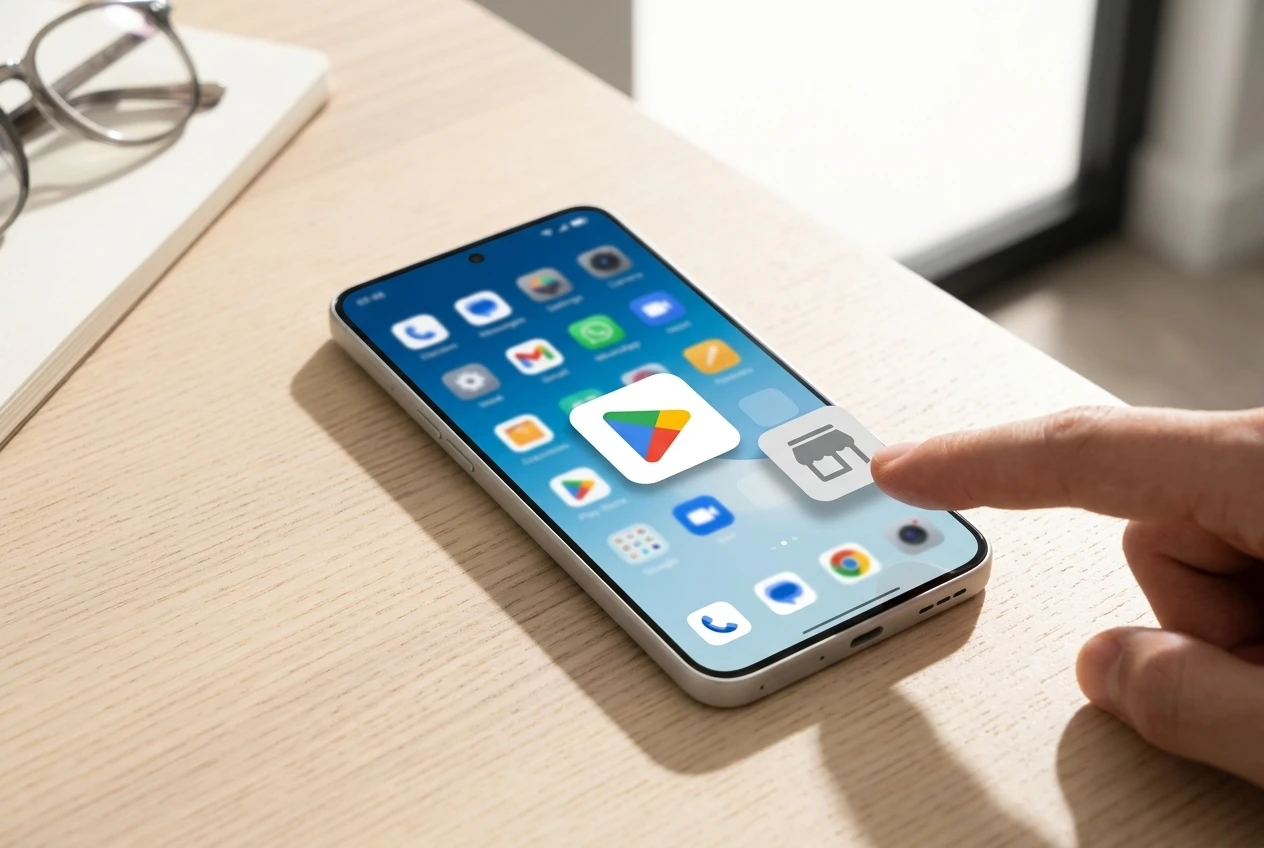
The Five Year Road From a Deleted Game to a Court Order
The case took five years to reach this point. Epic sued Google in August 2020, days after Google pulled Fortnite from the Play Store for dodging its 30 percent commission through a direct payment tool called Project Liberty. A California jury sided with Epic on every claim in December 2023, finding Google had illegally maintained its monopoly over Android app distribution and in app billing. Judge James Donato’s permanent injunction followed in October 2024.
Google appealed and lost again. The Ninth Circuit’s July 2025 opinion upheld the jury’s verdict in full, in a market where the Play Store was generating a 71 percent operating profit as of 2021. Google won a brief reprieve straight after that ruling: an emergency administrative pause from the same appeals court while it prepared a further challenge.
- August 2020: Epic Games sues Google after Fortnite is pulled from the Play Store over a direct payment tool that dodged its 30 percent commission.
- December 2023: A California jury sides with Epic on every claim, finding Google illegally maintained its Android app distribution monopoly.
- October 2024: US District Judge James Donato issues a permanent injunction ordering Google to open Android to rival app stores.
- July 31, 2025: The Ninth Circuit affirms the verdict and the injunction in full.
- November 2025: Google and Epic unveil a softer settlement that would have kept rival stores out of Google Play itself.
- July 15, 2026: Both companies withdraw that settlement, reviving Donato’s original order.
- July 22, 2026: Google’s Play Catalog Access Program takes effect across the United States.
Then came a twist. With an $800 million partnership between the two companies freshly announced, Epic and Google proposed a softer deal in November 2025 that would have let rival stores run through a smoother sideload program instead of living inside Google Play itself. A judge questioned why the two once bitter rivals had suddenly become close, and the deal never won final approval. This week both sides gave up on it entirely.
Can Rival Stores Actually Beat the Play Store?
Not on price or catalog, at least not yet. Enrolled stores must accept every eligible developer and cannot curate around exclusives, so they cannot win by offering a game or app Google Play doesn’t carry. Google still processes every download and still collects its service fee no matter which storefront a user taps, leaving interface and discovery as the only real battlegrounds left open to challengers.
That structural limit shapes the whole opening. A rival store can win on speed, layout or a cleaner recommendation feed, but it cannot win on content, because the same catalog sits behind every storefront’s door. The injunction Google must now follow also blocks it from requiring its own payment system for these transactions, one more restriction a federal court has locked in place.
What we know:
- Google’s own court filing sets July 22 as the launch date for the Play Catalog Access Program
- Enrolled stores pay at least $5,000 a year and must keep malware under 1 percent of install attempts
- Epic Games and Aptoide were already available as sideloaded apps in the US by the end of 2025
What’s unconfirmed:
- Whether Epic Games Store, Aptoide or any other storefront will actually be listed inside Google Play on day one
- Whether the $5,000 fee stands alone or comes with an additional onboarding charge, since Ars Technica and Engadget have reported the fee structure differently
- How the court’s Technical Committee will rule on disputes over what counts as Google unreasonably blocking a rival store’s app
Google’s fight over app stores is a fight over software rules. Android’s hardware side is fighting a rougher battle this week, one that just cost it a familiar name.
OnePlus Quits the West After a Decade Chasing Samsung
Oppo confirmed on July 16 that OnePlus will stop launching phones in North America and Europe, calling it a “proactive global strategic adjustment.” The OnePlus 15 is now the brand’s last phone sold in the West, and Oppo says it will keep honoring warranties and the software support already promised.
The retreat had been building for years. OnePlus’s US market share peaked at 1.8% in 2021 and had slid to just 0.1% by 2025, according to IDC, not helped by T-Mobile dropping the brand from its lineup in 2023. IDC separately found OnePlus’s US shipments plunged 90% over six years. OxygenOS is being retired after 11 years too, with future phones folding into Oppo’s ColorOS.
A global memory chip shortage, nicknamed RAMageddon by parts of the industry, is squeezing thin margin brands hardest, and Counterpoint Research found Oppo’s shipments down by double digits year over year in the second quarter of 2026. The retreat is part of a wider reshuffle across Oppo’s sub brands. Realme, another Oppo label, is pulling back from China at the same time to chase Northern Europe and Southeast Asia instead, almost a mirror image of OnePlus’s exit from the West. Realme’s own Narzo 100x 5G launch aimed at India’s budget buyers shows exactly where the company keeps investing while OnePlus steps back.
Budget rivals only add to the squeeze further down the price ladder. Motorola’s G77 Power sale undercut by a cheaper sibling this week is a reminder of how thin margins have gotten even one tier below OnePlus’s old sweet spot. A OnePlus spokesperson told CNET the shift was “neither an OPPO directive to OnePlus nor a unilateral decision by OnePlus,” adding that the two companies had spent months weighing what OnePlus users would need most in 2026.
India remains the exception, for now. The country regularly accounts for more than half of OnePlus’s global shipments, and the brand kept launching new budget models there even as the West goes dark.
Samsung, Google and Xiaomi Raise the Hardware Stakes
The phones OnePlus couldn’t keep pace with keep getting harder to match. Samsung has confirmed Flex Titanium, a new foldable display stack for the Galaxy Z Fold8, Fold8 Ultra and Flip8, replacing the polymer film beneath the OLED panel with a titanium alloy layer Samsung says is 20 times stiffer, and about a third the thickness of a human hair. A second titanium plate underneath uses micro patterned holes to remove air gaps that build up stress with every fold.
Samsung holds Unpacked in London on July 22, the same day Google’s rival app stores go live. Screen repairs remain foldables’ weak spot regardless of the fix: replacing just the inner display on a Galaxy Z Fold7 runs close to $885 in Europe today, and both screens together cost near $1,500 on a phone that started at $1,999.
| Device | Headline Upgrade | Key Detail | Timing |
|---|---|---|---|
| Galaxy Z Fold8 / Fold8 Ultra / Flip8 | Flex Titanium display stack | Titanium alloy film rated 20 times stiffer than the old polymer layer | Unpacked, July 22 |
| Pixel 11 family | Pixel Glow light ring, leaked specs | 12GB RAM on base models, 16GB on Pro variants per leaked Amazon listings | Made by Google, August 12 |
| Redmi Note 17 | Silicon carbon battery | 8,000mAh cell with 45W wired and 22.5W reverse charging | Already on sale |
Google’s own reveal lands August 12, when the Pixel 11 family is expected to launch officially. Early Amazon listings, complete with UPC codes, already point to entry models shipping with 12GB of RAM and Pro variants starting at 16GB, and teaser images have shown a circular, multicolored light built into the camera block that’s being called Pixel Glow. Xiaomi’s Redmi Note 17 is already on sale with that 8,000mAh silicon carbon cell, rated for 1,600 charge cycles.
Samsung’s foldables will run on One UI 9, part of the same One UI 9 beta rollout reaching millions of Galaxy phones this summer, the software backbone tying Samsung’s hardware push together while OnePlus walks away from the region entirely.
A Quieter Update Rounds Out Android’s Week
Google slipped in a smaller change too. Tap to Share, rolling out now in the Contacts app, puts a saved “Your info” card, phone number, email address and the rest, at the top of the screen for quick sharing with another person.
July 22 now carries two separate stories at once: Samsung’s Unpacked event in London, and the first day Google is legally required to let rivals set up inside its own store.
Frequently Asked Questions
Will OnePlus phones already sold stop getting software updates?
No. Oppo says existing OnePlus devices will keep receiving the software updates and security patches already promised for each model. Owners get a choice to move to ColorOS or stay on OxygenOS, with a rollback option available if they change their mind.
Is OnePlus leaving India too?
Not yet. India regularly accounts for more than half of OnePlus’s global shipments and the company says business there continues as usual, though Bloomberg has reported the broader pullback could extend to India and other markets sometime in 2027.
Does the Epic Games ruling against Google affect the iPhone and Apple’s App Store?
Not directly, but Apple is fighting a related battle of its own. Apple was already ordered to allow outside payment links in 2021, was later held in civil contempt over how it complied, and has appealed to the Supreme Court, which is expected to hear the case in late 2026 or early 2027.
Which app stores are likely to appear inside Google Play first?
Nobody is confirmed yet. Epic Games and Aptoide were already available as sideloaded apps in the US by the end of 2025, making them the most likely early candidates, though neither has confirmed a day one listing inside Google Play itself.
Why are Android phone makers struggling with memory chips right now?
A global shortage of DRAM and NAND flash memory, driven partly by AI data center demand, has pushed component costs up sharply since early 2025. Analysts expect it to shrink total smartphone shipments by more than 13 percent in 2026.
 Scotland Reader Photos Capture Eclipse Week Beyond the Sky
  Scotland’s Rare World Cup Win Over Haiti Still Echoes
  Scottish Morning Roll Campaign Echoes Baguette Path to Unesco
  Samsung Passport Fold8 Turns Apple Fans Into Switchers
  Android’s Quiet Shift to Ambient AI Hardware This Week
  Poco F9 Leak Hands Global Buyers Less Battery for More Money