
 Ishan Crawford
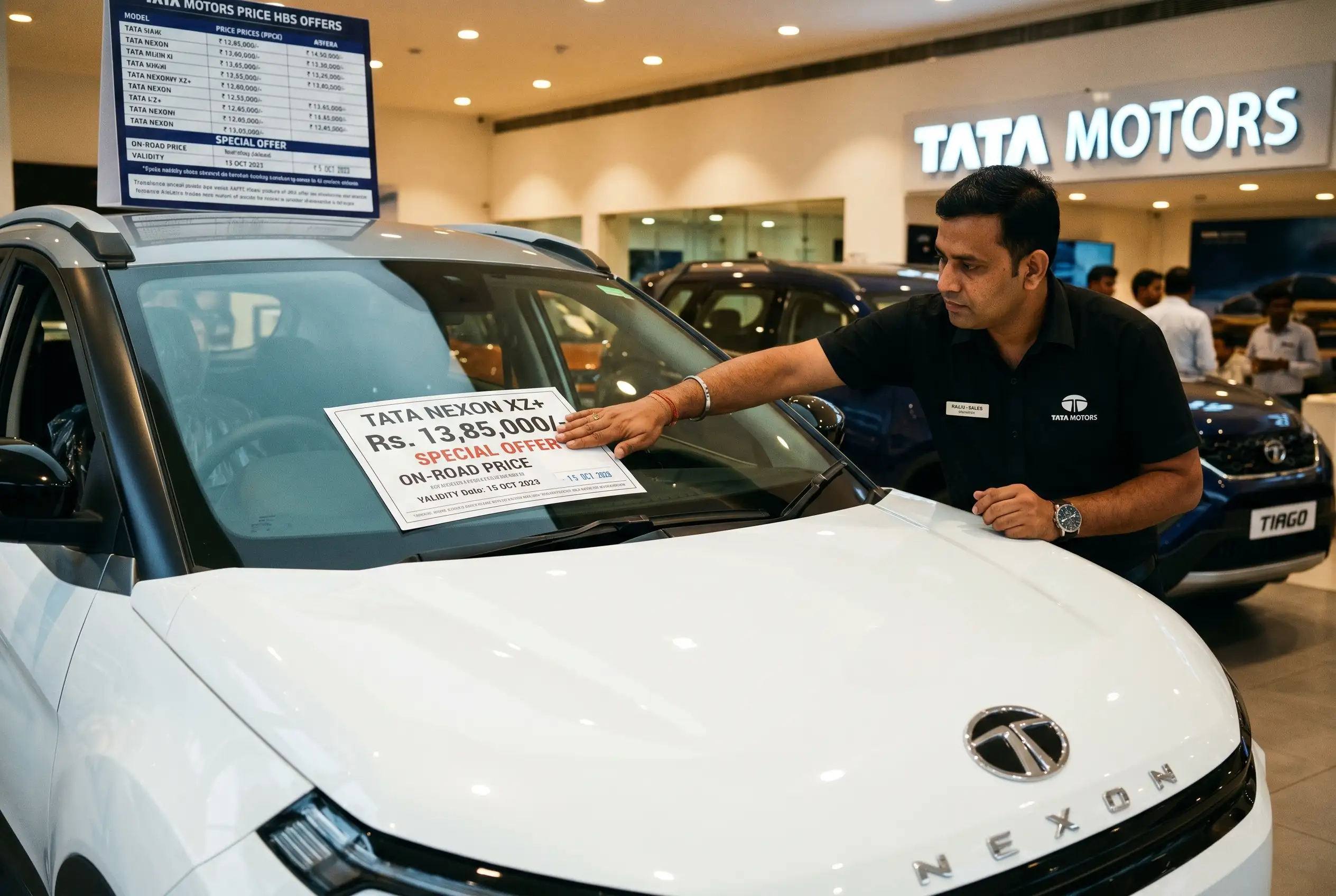
 Tata Motors Passenger Vehicles said on Friday it will raise prices across its passenger vehicle portfolio by up to 1.5% from July 1, 2026, applying the increase to both internal combustion engine and electric models. The move is its second price hike in three months, following a 0.5% weighted average increase on its ICE range from the April 1 ICE price hike, per the company’s July 1 exchange filing.
The company said the revision is meant to “partially offset” rising input costs and sustained inflationary pressures. TMPV is absorbing a large share of the cost rise itself, with the filing noting that the increase covers only part of the impact. The exact increase will vary by model and variant. The “overall value proposition of each offering” is to be maintained, per the filing language.
TMPV’s Second Hike in Three Months
The Friday filing to the stock exchanges applies to TMPV’s full passenger vehicle range and takes effect on July 1, 2026. The cap of 1.5% is higher than the 0.5% weighted average the company applied to its ICE range alone on April 1, 2026. The earlier hike did not touch the electric portfolio, while the new one covers both powertrains.
“This price revision is being undertaken to partially offset the impact of rising input costs and sustained inflationary pressures,” the company said in the filing, adding that “the extent of the price increase will vary across models and variants, ensuring that the overall value proposition of each offering is maintained.” A March 20, 2026 press release from TMPV used similar language when it pre-announced the April 1 hike, with both filings leaning on the same “partial offset” framing the company is now applying for a second time this year.
Variant-level pricing will be the deciding factor for buyers. TMPV sells ICE and electric models from the Tiago hatchback at the entry level to the Safari and Sierra SUVs at the top. The 1.5% cap adds up across the lineup and applies to a much wider range of vehicles than the April 1 hike, which was ICE-only.
Carmakers Across India Are Pushing Through Increases
TMPV’s filing ties the move to “ongoing West Asia conflict-led disruptions” feeding into commodity costs, with the cost backdrop including commodity price moves, currency fluctuations and persistent input inflation that has hit steel, aluminium, plastics and battery materials. Maruti Suzuki India and Hyundai Motor India, two rival carmakers, moved first with their own June 1 increases.
Maruti Suzuki India raised prices across its portfolio by up to ₹30,000 from June 1, citing “inflationary pressures and an adverse cost environment,” and Hyundai Motor India followed with an increase of up to ₹12,800 from the same date, with the Hyundai June 1 price increase confirmed separately. TMPV’s July 1 increase completes the three-carmaker pricing round, with all three passing on at least part of the cost rise to customers.
| Carmaker | Increase | Effective date | Scope |
|---|---|---|---|
| Tata Motors Passenger Vehicles | Up to 1.5% | July 1, 2026 | ICE and EV portfolio |
| Maruti Suzuki India | Up to ₹30,000 | June 1, 2026 | Full portfolio |
| Hyundai Motor India | Up to ₹12,800 | June 1, 2026 | Full portfolio |
The 20% Market Share Bet by 2030
The cost-side pressure sits next to a larger wager that TMPV Chairman N Chandrasekaran laid out at the company’s Dealer Business Planning Meet 2026 in Goa earlier this month. If India’s passenger vehicle market grows to around six million vehicles by 2030, TMPV should aim to sell 1.2 million of them. That would mean holding more than 20% market share, he told dealers. The framing of the target is part of a longer-running push to position TMPV as India’s number-two passenger car maker behind Maruti Suzuki.
To back that ambition, TMPV has already committed ₹35,000 crore of capital investment through 2030, with Chandrasekaran saying “we will recalibrate as we progress” on the plan. The figure is now on the table as a firm commitment. The plan rests on new products, capacity expansion, technology investment and execution.
Chandrasekaran reminded the room of how far the company has come, noting that less than a decade ago TMPV was told by some to exit the passenger vehicle business altogether and focus only on commercial vehicles. Today, the company is firmly among the top two players in India’s passenger vehicle market, behind only Maruti Suzuki, with Chandrasekaran framing the 2030 target as evolution from being a “good company” into a “great one” and pointing to dealer partners as the ones who would deliver the customer experience that the products alone cannot.
The gap is the size of the bet. Chandrasekaran’s 1.2 million unit 2030 target is the company’s stated goal. TMPV ended FY2026 as India’s No. 2 passenger car maker, behind only Maruti Suzuki, on domestic sales that the chairman wants to more than double. The chairman’s framing positions the bet as a stretch from a current challenger position to a top tier player in the segment.
The Indian auto industry is poised for significant growth. If the industry moves towards 6 million vehicles by 2030, there is no reason why we should not aim for 1.2 million vehicles and over 20% market share.
Chandrasekaran, who is also Chairman of Tata Sons, delivered the remarks at TMPV’s Dealer Business Planning Meet 2026 in Goa earlier this month.
Where TMPV Sits in the Market Today
TMPV ended FY2026 with a 13.48% share of the Indian passenger vehicle market on domestic sales of 631,387 units, per PTI figures cited in industry coverage, and a 40.2% share of the electric vehicle segment. May 2026 domestic sales came in at 59,090 units, up 42% year-on-year, with EV sales of 10,517 units setting a new monthly high. The May print was TMPV’s first month above 10,000 EVs on its own books.
By VAHAN retail registrations, TMPV is the No. 2 player in India’s passenger vehicle market, behind Maruti Suzuki. May 2026 retail growth came in at more than 50% year-on-year, per the company’s May 2026 sales release. Tata Passenger Electric Mobility, a TMPV subsidiary, contributes the EV units to that count. TMPV’s relative strength in EVs, where it holds more than 40% of the segment, gives the company a margin lever that pure-ICE rivals do not have.
- 13.48% TMPV’s share of India’s PV market in FY2026
- 631,387 TMPV domestic passenger vehicle units sold in FY2026
- 59,090 TMPV domestic PV units sold in May 2026, up 42% year-on-year
- 40.2% TMPV’s share of India’s electric PV segment in FY2026
- 10,517 TMPV EV units sold in May 2026, a new monthly high
The EV Engine and the Avinya X Bet
Chandrasekaran pointed to TMPV’s early bet on electric vehicles, made seven to eight years ago, as a “significant strategic advantage” the company is now trying to extend. The Avinya X, the first car on the planned Avinya line, will be built on the Chery-Jaguar Land Rover Freelander platform and is targeted for a 2027 launch.
Pricing on the new EVs will be watched closely because the July 1 increase also applies to the electric portfolio, a fact that underlines how cost pressure cuts across the lineup. A Tata Sierra EV is scheduled for an India debut on June 30, the day before the new prices take effect, and the Nexon Pure+ PS with a panoramic sunroof will also see its variant-level price move on July 1. The full EV lineup includes the Tiago.ev, Punch.ev, Nexon.ev, Tigor.ev, Curvv.ev, and Harrier.ev, with the Sierra EV set to follow.
The EV bet is doing real numbers in the meantime. May 2026 EV sales of 10,517 units were up 85% year-on-year, a new monthly high for the company. TMPV ended FY2026 with 40.2% of the Indian electric PV segment, per PTI figures. The segment leadership gives the company a foothold in the faster-growing corner of the Indian car market, where competitors are still building scale.
Chandrasekaran’s 1.2 million unit 2030 target sits against an EV business that sold 10,517 units in May 2026, a base the company is now trying to grow from.
Frequently Asked Questions
When does the new Tata Motors price take effect?
The new prices take effect from July 1, 2026, applying to TMPV’s full passenger vehicle portfolio of ICE and electric models, with the exact increase varying by variant.
Which Tata models are affected?
All passenger vehicles are in scope, including the Tiago, Tigor, Punch, Nexon, Altroz, Curvv, Harrier, Safari and Sierra on the ICE side, and the Tiago.ev, Punch.ev, Nexon.ev, Tigor.ev, Curvv.ev and Harrier.ev on the EV side, with the Sierra EV set to follow on June 30.
How does the July 1 hike compare to the April 1 hike?
The April 1 hike was a 0.5% weighted average on the ICE portfolio only, while the July 1 hike is up to 1.5% across both ICE and EV, a larger and broader move on both powertrains and percentage terms.
Why is Tata raising prices now?
The company filing cites “rising input costs and sustained inflationary pressures” linked to “ongoing West Asia conflict-led disruptions” as the driver, calling the increase a partial offset, with the company absorbing the rest of the cost rise itself rather than passing all of it on.
How does this compare with Maruti and Hyundai?
Maruti Suzuki raised prices by up to ₹30,000 from June 1 across its full portfolio, and Hyundai Motor India raised prices by up to ₹12,800 from the same date, both moves also tied to input cost inflation.
 Hormuz Stalemate Masks Products Squeeze Toward $120 Oil
  Shiprocket IPO Heat Masks Float Risk and Adjusted Losses
  Oil Relief Meets Drone Tariffs as Nifty Turns Macro
  Scotland’s Drug Deaths Drop Then Rebound as Recovery Lags
  FPIs Exit 60% of IPO Anchors in a Year as Domestic Funds Hold Firmer
  Domestic Winners Outrun Tata PV Drag on Friday Focus List