
 Ishan Crawford
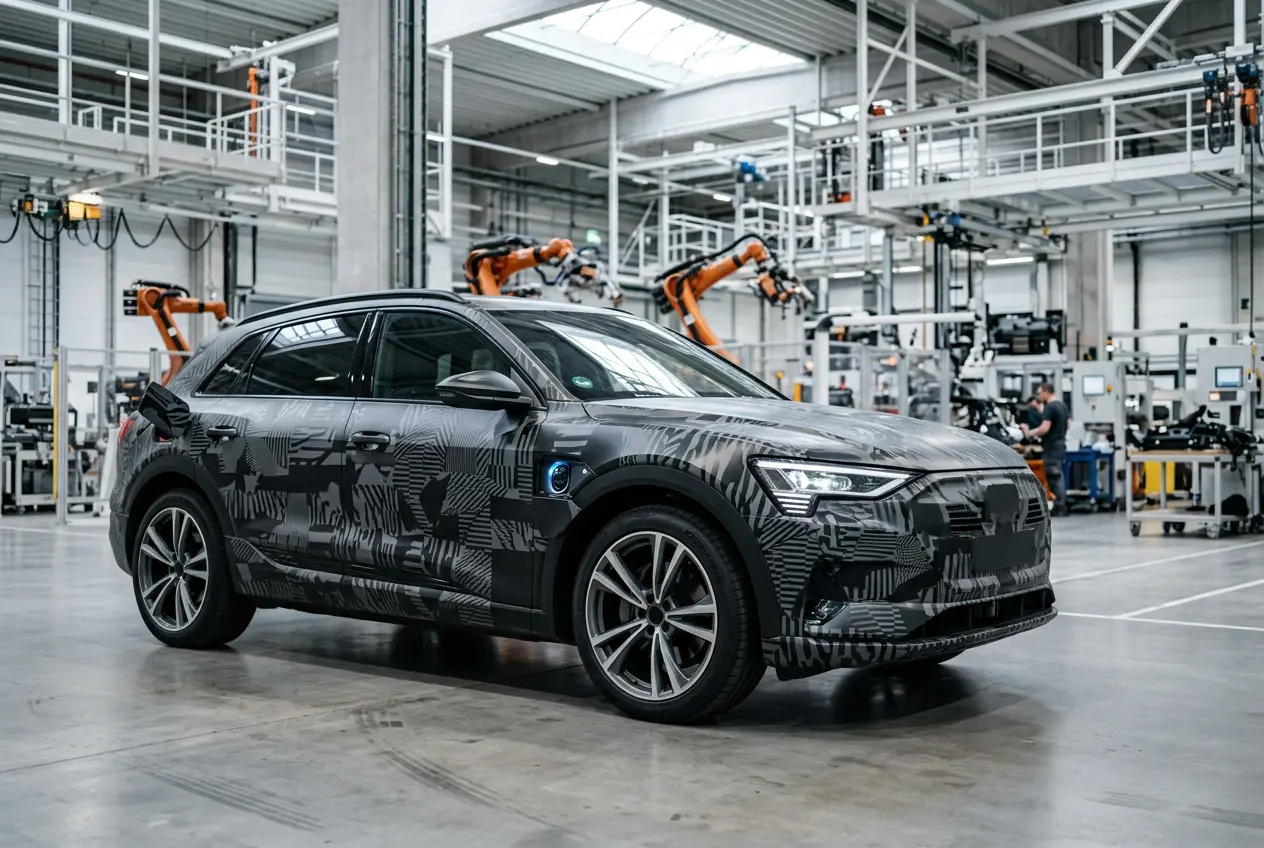
 Tata Motors has dropped Jaguar Land Rover’s in-house EV architecture for its flagship Avinya premium electric brand. The first car, the Avinya X, will instead use the Freelander platform built by Chery-JLR, the Chinese joint venture JLR half-owns, with an India launch targeted for 2027 in the roughly ₹30 lakh to ₹40 lakh band.
Tata calls it a speed-and-cost decision. The result is that the core engineering of its priciest car now comes out of China’s electric-vehicle industry.
Tata Swaps JLR’s Platform for a China-Built One
In an emailed statement, Tata Motors confirmed the change directly. The company said the first Avinya vehicle to launch in India in 2027 will use the Freelander platform produced by Chery-JLR (CJLR, the China-based joint venture in which JLR owns 50%) and will be built at the recently opened Tata Motors Passenger Vehicles-JLR plant in Panapakkam, near Chennai in Tamil Nadu.
People aware of the programme said the first production model under the revised roadmap is the Avinya X, known internally as the P2 programme. The earlier P1 model has taken a back seat. Engineering prototypes are expected later this year, ahead of the 2027 sale date.
The hardware is Chinese in origin, but it does not arrive untouched. Tata is reworking the electronics, software and vehicle-control systems for Indian conditions, with Tata Technologies’ engineering teams in China adapting the architecture alongside teams in India and the UK. The plant in Panapakkam sits inside Tamil Nadu’s wider auto cluster, a region the state has pushed hard through its Tamil Nadu electric vehicle policy incentives for manufacturers and component makers.
Inside the Chery-JLR Freelander Brand
The Freelander name is no longer a Land Rover. JLR and Chery revived it as a standalone new-energy-vehicle (NEV) brand under their joint venture, deliberately split off from the Range Rover and Defender house of brands so it can chase a lower price point in China without diluting them.
That is the platform Tata is now borrowing. Here is what the Freelander operation looks like today:
- A joint venture between JLR and Chery, with Tata holding its stake through JLR’s 50% ownership
- Relaunched as an independent NEV brand, separate from Land Rover’s lineup
- Built on Chery’s iMAX architecture, which supports battery-electric, plug-in hybrid and range-extender powertrains
- Six EV models planned over five years, the first debuting in China in the second half of 2026
- Produced at Chery’s plant in Changshu, in China’s Jiangsu province
For Tata, the appeal is a proven, in-production EV base it can adapt rather than a clean-sheet platform it has to fund, validate and tool from scratch.
What the First Avinya Buyer Gets in 2027
Pricing puts the car well above anything Tata sells today. The first Avinya models are expected to land in the ₹30 lakh to ₹40 lakh range, roughly $35,000 to $47,000, a clear step above the brand’s current electric lineup and a deliberate move into luxury territory.
On battery, industry sources point to packs of 65 to 80 kWh, sized to balance range, weight and cost rather than chase a headline number. Tata Group’s own cell venture, Agratas, remains central to the long game, but the first cars are likely to lean on existing battery-ecosystem partners until Agratas reaches scale. The Panapakkam plant, with capacity of around 30,000 units a year, is expected to support initial assembly before localisation deepens.
The repositioning is steep when you look at where Tata’s EVs sit now, with mass-market models and a coming three-row Safari EV anchoring the range. Coverage of the Safari EV testing against the Mahindra XEV 9S shows the ceiling Avinya is trying to vault over. The table below sets the old plan against the new one.
| Attribute | Original Avinya plan | Revised Avinya plan |
|---|---|---|
| Lead platform | JLR EMA (in-house born-EV) | Chery-JLR Freelander platform |
| Engineering origin | JLR, UK | Chery-JLR, China; adapted in India and UK |
| First model | P1 programme | P2 programme (Avinya X) |
| Target launch | 2025, since slipped | 2027 |
| Build location | Tamil Nadu | Panapakkam, Tamil Nadu |
Why the EMA Platform Stopped Making Sense
The original promise dates to April 2022, when Tata unveiled the Avinya concept and aimed for a 2025 launch. The car was meant to be the group’s first true born-electric vehicle, riding on JLR’s Electrified Modular Architecture (EMA, a dedicated skateboard EV platform) with flat floors and radical packaging.
Two things went wrong. Setting up the EMA production line in Tamil Nadu took longer than planned, pushing the timeline out by years. And as Tata sharpened the positioning and volume targets for Avinya, the cost of adapting a low-volume premium architecture stopped adding up. People familiar with the programme put it plainly: the economics of stretching EMA to fit Avinya’s intended price and scale had become difficult to justify.
Cost competitiveness matters more in India because the buyer pool at ₹35 lakh is thin and price-sensitive. Government policy is trying to help close the gap, with the heavy-industries ministry’s production-linked incentive scheme for advanced automotive products rewarding deep localisation of EV components. A platform already in mass production elsewhere gives Tata a faster route to those local-content thresholds than a bespoke architecture built for a single niche model.
China’s EV Ecosystem Becomes the Shortcut
Tata is not alone here. Global automakers are increasingly plugging into China’s EV ecosystem, which now leads on batteries, software integration, supply-chain scale and sheer development speed. Borrowing a Chinese platform is becoming a recognised way for a legacy carmaker to skip three or four years of engineering.
The scale behind that pull is large. Chinese EV and battery firms poured roughly $143 billion into overseas ventures between 2014 and 2025, according to Rhodium Group’s tally of the global investments powering China’s EV push. That capital has built the supplier base, the cell capacity and the software stacks that a partner like Tata can rent into rather than rebuild.
An industry executive familiar with the discussions framed the logic around volume.
The more scale you can generate around a common architecture, the stronger the localisation case becomes.
That is the trade Tata has accepted. It gets a proven base and faster time to market; it gives up the clean story of an Avinya engineered end to end inside the group, and takes on dependence on a Chinese platform for its most prestigious car.
Where the Architecture Bet Could Spread
The single-model view undersells what Tata and JLR are setting up. JLR is expected to draw on the same Freelander architecture family for future global products, opening the door to shared sourcing, manufacturing and supplier investment across the two businesses. Chery, for its part, is expected to supply the architecture to several partners worldwide, including ventures it is planning in India.
If other makers, including JSW Motor on future programmes, end up on the same architecture family, the component commonality could improve supplier economics and speed up localisation of key parts in India. China already dominates the export side of this market, with electric-car shipments topping 2.5 million units in 2025 by the International Energy Agency’s global EV outlook, so the supplier base feeding any shared platform is already operating at volume.
Beyond the first car, Tata is evaluating a larger three-row premium electric SUV to follow the Avinya X and turn Avinya into a standalone brand rather than a one-off. The closer tie-up with JLR is showing up in personnel too, with Balaje Rajan, a senior Tata Motors executive, moving into a larger UK role to align future vehicle programmes. It fits a wider group pattern of betting capital on technology platforms, the same instinct visible in the Tata Sons FY27 roadmap and its deep-tech spending. The first proof, or the first problem, arrives when Avinya prototypes hit the road later this year.
Frequently Asked Questions
What platform will the Tata Avinya X use?
The Avinya X will use the Freelander platform developed by Chery-JLR, the China-based joint venture in which Jaguar Land Rover holds 50%. Tata is adapting the electronics, software and vehicle systems for Indian conditions while keeping the core mechanical architecture from the Chery-JLR ecosystem.
When will the Tata Avinya launch in India?
A market launch is targeted for 2027. Engineering prototypes of the first model are expected on the road later this year, with production at the Tata Motors-JLR plant in Panapakkam, Tamil Nadu.
How much will the Tata Avinya cost?
The first Avinya models are expected to be priced between ₹30 lakh and ₹40 lakh, roughly $35,000 to $47,000. That positions the brand a clear step above Tata’s current electric lineup and squarely in luxury-EV territory.
What battery will the Avinya have?
Industry sources point to battery packs in the 65 to 80 kWh range, chosen to balance range, weight and affordability. Early cars are likely to use existing battery-ecosystem partners before Tata Group’s own cell venture, Agratas, reaches scale.
Is the Tata Avinya a Chinese car?
No, though its base architecture is Chinese in origin. The mechanical platform comes from the Chery-JLR Freelander family, but Tata is reworking the software and electronics for India and building the car in Tamil Nadu, with engineering input from teams in India, China and the UK.
 Hormuz Stalemate Masks Products Squeeze Toward $120 Oil
  Shiprocket IPO Heat Masks Float Risk and Adjusted Losses
  Oil Relief Meets Drone Tariffs as Nifty Turns Macro
  Scotland’s Drug Deaths Drop Then Rebound as Recovery Lags
  FPIs Exit 60% of IPO Anchors in a Year as Domestic Funds Hold Firmer
  Domestic Winners Outrun Tata PV Drag on Friday Focus List