
 Ishan Crawford
 Reliance Industries Limited (RIL) reports its June-quarter results today after market hours, and the figure likely to decide the surprise has little to do with Jio. Singapore’s gross refining margin surged to $21.3 a barrel this quarter from just $5.6 a year earlier, according to Jefferies. Mukesh Ambani’s oil-to-telecom conglomerate now has to show it actually caught that windfall.
Brokerages do not agree on how much of it RIL kept. JPMorgan models a 24% jump in refining and petrochemical earnings. Nomura, the most cautious voice on the Street, puts the same number at just 4%. That gap is wider than anything Jio or Reliance Retail can produce this quarter, and it is why refining, not the telecom arm everyone is watching ahead of its initial public offering (IPO), will move the stock.
A Stock Going Nowhere Before the Numbers Land
RIL shares closed at ₹1,296.60 on Thursday, up just 0.08% for the day, ahead of a board meeting scheduled for after market hours today. The stock is down 17.7% so far this year, weighed by volatile crude prices and a broader sell-off tied to global geopolitical tensions.
Technically, the shares are stuck. RIL trades below both its 20-day and 50-day moving averages. The options market is pricing a swing of about 4% in either direction once the numbers land, based on the at-the-money strike for the July 28 expiry.
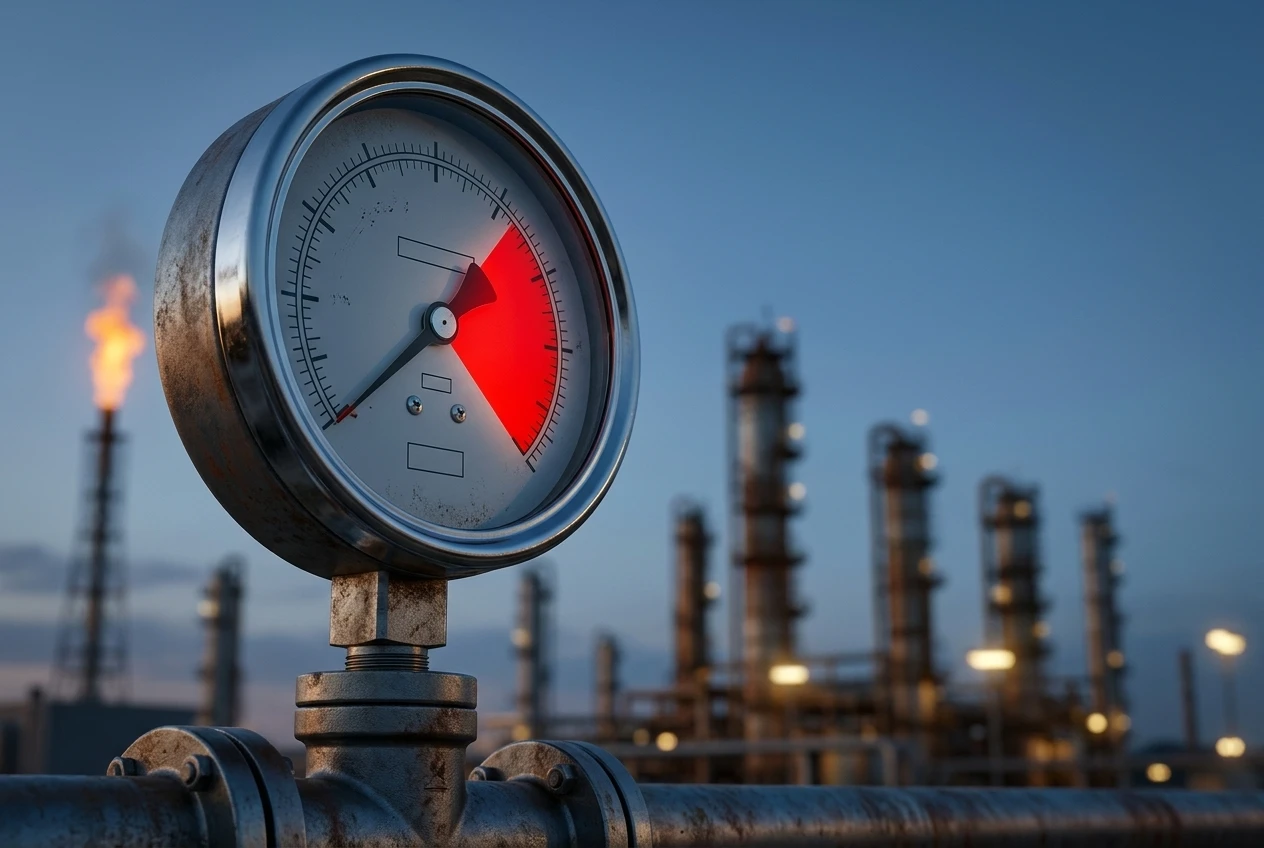
Refining Cracks Went Vertical
The scale of the swing is easier to see fuel by fuel. Diesel, gasoline and aviation-fuel cracks, the premium refiners earn over crude, moved sharply over the past year, according to Jefferies.
- Diesel cracks jumped 263% year on year, the largest single driver of the margin surge.
- Gasoline cracks rose 152% over the same twelve months.
- Aviation-fuel cracks surged 342%, the sharpest move of the four.
- Blended petrochemical margins expanded 56% year on year.
None of this arrived out of nowhere. Singapore’s refining margin had already touched its highest level since September 2023 late last year, at $9.96 a barrel, before this quarter’s move pushed it more than double that level again. Structural forecasts had pointed to something calmer: one regional research outlook had margins averaging $5.5 to $6 a barrel over three years, close to the pre-pandemic norm. This quarter ran nearly four times past that baseline.
Brokerages Split Sharply on How Much of It Reaches Earnings
The disagreement starts with one question: how much of that margin reached RIL’s oil-to-chemicals (O2C) business, the unit combining refining, petrochemicals and fuel retailing. Estimates for O2C and consolidated earnings before interest, tax, depreciation and amortisation (Ebitda) vary widely by brokerage.
| Brokerage | O2C Ebitda (YoY) | Consolidated Ebitda | Net Profit (YoY) |
|---|---|---|---|
| JPMorgan | +24%, to ₹18,025 crore | +12%, to ₹48,115 crore | +6%, to ₹19,136 crore |
| Jefferies | +20% | +10% | Not disclosed |
| Citi | Not disclosed separately | +11%, to ₹47,473 crore | +6%, to ₹19,098 crore |
| Nomura | +4%, to ₹15,020 crore | +5%, to ₹44,860 crore | Not disclosed |
JPMorgan’s number assumes the strongest transmission of margins into profit. The brokerage has said company guidance on that “transmission,” not the print itself, may matter more to investors this quarter. A strong O2C print this quarter would do more than beat estimates once. It could also raise confidence that these margins hold up for the rest of FY27, opening the door to estimate upgrades across the Street.
Complicating the picture, RIL completed scheduled maintenance on one of its four crude distillation units (CDUs) during the quarter, a planned shutdown that trimmed volumes even as cracks were at their widest. A weaker rupee should partly offset the lost output by lifting the rupee value of dollar sales, though it also raises operating and foreign exchange costs, according to JPMorgan.
Antique Stock Broking expects a similarly healthy 12% jump in consolidated Ebitda, to ₹48,100 crore, and calls the quarter strong across every segment except upstream. Systematix lands close on Ebitda, forecasting growth of 9.9% to ₹47,100 crore, but its profit estimate breaks from the pack. It expects net profit to fall nearly 3% year on year, to ₹19,700 crore, even as Ebitda climbs, a reminder that costs sitting below the Ebitda line can erase an otherwise strong operating quarter.
Upstream oil and gas is the one segment where brokerages actually agree, and the agreement runs the other way. JPMorgan models a 13% Ebitda decline; Jefferies and Nomura both see a steeper 21% drop, citing weaker KG-D6 gas output and softer realisations.
Jio Stays Steady While Retail’s Margin Story Gets Messier
Jio offers none of that drama. Nomura expects Jio Platforms to add 8 million subscribers, to 532.4 million, with average revenue per user (ARPU) rising to ₹217 a month from ₹214. Centrum’s estimate lands close by, at 531 million subscribers and ARPU of ₹216, still up from ₹209 a year ago. Nomura pegs Jio Platforms’ Ebitda growth at 14% year on year, to ₹20,860 crore. Centrum’s model shows 11.7% growth, to ₹18,650 crore.
Retail is where the quiet narrative breaks down a little. Jefferies expects 11% revenue growth and 8% Ebitda growth. Nomura sees revenue up 12% but Ebitda rising just 3%, with a sequential Ebitda decline of 5% to ₹6,590 crore. Systematix, by contrast, models retail Ebitda growth of 12.4%. Citi expects retail Ebitda growth to trail revenue growth again this quarter because of continued spending on quick commerce.
Soft O2C and Retail, while Jio likely remained steady
Nomura wrote that in its earnings preview this week, the one major brokerage betting against a big refining swing showing up in the print.
Jio’s numbers carry extra weight because the business is midway through India’s largest planned share sale. Jio Platforms filed its Draft Red Herring Prospectus (DRHP) with the Securities and Exchange Board of India (Sebi) on June 19, structured as a 100% fresh issue rather than the offer-for-sale once floated, via its filing for India’s largest share sale. The listing was also cleared by a rule allowing 2.5% minimum public float for companies valued above ₹5 lakh crore, a change that let Jio proceed without diluting a large slice of the business at once.
What Could Cap the Refining Rebound
A handful of costs could keep the O2C rebound from fully reaching the bottom line.
- The planned shutdown of one crude distillation unit trimmed volumes exactly when cracks were at their widest.
- Fuel retailing losses and higher refinery LPG output, both flagged by Nomura, ate into segment margins.
- A weaker rupee lifts the value of export sales but also raises operating and foreign exchange costs.
- Reliance Retail’s quick commerce build out continues to outrun the revenue it generates, per Citi.
- Costs sitting below Ebitda, on depreciation, interest or tax, could still trim profit even where operating earnings beat estimates, as Systematix’s own forecast shows.
Guidance on how durable these margins are for the rest of the fiscal year may carry more weight with investors than the quarter’s headline number.
When Will the Jio IPO Actually List?
Jio Platforms filed its draft prospectus on June 19, 2026, starting a regulatory clock that typically runs 30 to 75 days before Sebi clears a price band and dates. Based on that timeline, the listing is expected sometime in the August to October 2026 window, though nothing is confirmed yet.
The filing itself is a fresh issue of up to 27 crore equity shares, meaning existing investors are not selling any stock in this round. That marks a shift from the offer-for-sale structure once discussed, after reported pricing disagreements between Reliance and some of Jio’s outside shareholders. Some reports earlier flagged the risk of the process sliding toward a 2027 listing instead of 2026, though the June filing suggests Reliance is still working toward the nearer end of that window.
None of that changes what happens after 3:30 pm today. If O2C Ebitda lands anywhere near JPMorgan’s ₹18,025 crore estimate, Ambani’s refining bet will have paid off in the one quarter investors were busy watching Jio instead.
Frequently Asked Questions
When Will Reliance Industries Announce Q1 Results?
Reliance’s board meets today, July 17, 2026, with results due after market hours, following the standard post 3:30 pm disclosure window. The company’s trading window for insiders closed on July 1 and reopens 48 hours after the results are made public, a standard procedure meant to prevent insider trading.
What Is RIL’s Oil-to-Chemicals (O2C) Business?
O2C combines Reliance’s refining, petrochemicals and fuel retailing operations, anchored by its refining complex at Jamnagar in Gujarat, including a dedicated special economic zone (SEZ) unit. It is the most crude-price-sensitive part of the group, and this quarter it is also the most closely watched.
How Big Could the Jio Platforms IPO Be?
A Financial Times report cited by Outlook Business ahead of Reliance’s June AGM pointed to a $4 billion draft prospectus filing for Jio Platforms, which would top Hyundai Motor India’s $3.3 billion listing to become India’s largest ever. The final size depends on Sebi’s review of the DRHP actually filed on June 19.
How Many Jio Subscribers Does Reliance Have?
Jio Platforms served more than 524 million customers through 28,163 full-time employees as of March 31, 2026, according to its draft prospectus. Brokerage estimates for the June quarter cluster between 531 million and 532.4 million subscribers. Total borrowings stood at ₹70,781 crore on that same date, and prepaying that debt is the main use for the IPO’s proceeds.
Why Does the Jio IPO Matter for Reliance’s Stock?
A successful listing would put a market price on Reliance’s fastest growing business for the first time, something O2C’s swinging margins cannot offer. Nomura’s own note implied a valuation between $117 billion and $127 billion for Jio Platforms, and estimated that investors such as Meta, Google, Mubadala and the Abu Dhabi Investment Authority could see three to four times their money over six years once the shares list.
Disclaimer: This article is for informational purposes only and does not constitute investment advice. Stock market and IPO investments carry risk, including the risk of capital loss. Brokerage estimates cited here are third-party projections, not guarantees of actual results. Consult a registered financial advisor before making investment decisions. Figures are accurate as of publication on July 17, 2026.
 ONGC licence frees Venezuela cash and operatorship talks
  Anthropic Hits $65 Billion Run Rate and Flips the AI Cash Test
  Supreme Court grounds the fare free-for-all with three-week clock
  Gold Nears $4400 as Soft Data Meets Oil Inflation Risk
  Nifty Slips as Zaggle Circuits and Dhoot Debuts Big
  Diesel Crack Tops $100 as Iran Rhetoric Lifts Crude