
 Ishan Crawford
 Brent crude for July delivery slid 1.6% to $98.03 a barrel by 00:01 ET on Wednesday and West Texas Intermediate dropped 1.9% to $88.75, a coordinated retreat that priced renewed US-Iran negotiations as if the framework deal to reopen the Strait of Hormuz were already signed. It is not.
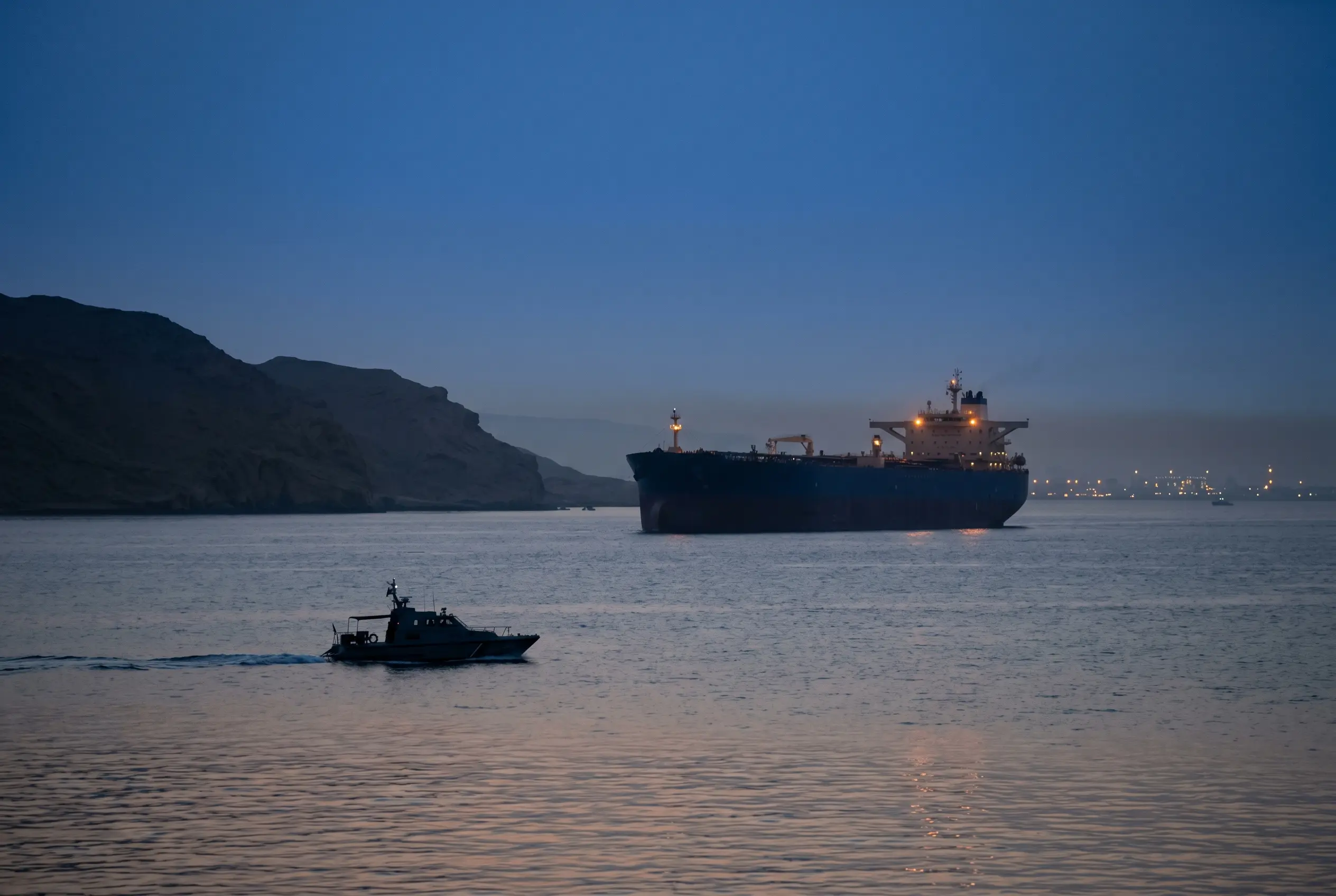
Tankers still cross Hormuz at a fraction of pre-war volumes. A US military strike in southern Iran on Tuesday drew Iranian fire on an American drone and a fighter jet within hours. Wednesday’s tape is pricing a diplomatic outcome the physical oil market has not delivered.
The Tape Versus the Tanker Math
Both crude contracts had climbed sharply Tuesday after the US military said it struck missile launch sites and mine-laying boats in southern Iran. The reversal landed Wednesday on one line from Washington officials: a framework with Tehran to end the war and reopen the strait was “days away.” Traders responded as if the line carried a signature.
Physical buyers did not. Vessel-tracking through Hormuz, where roughly 20 million barrels a day of crude and refined products moved in 2025 according to the US Energy Information Administration’s world chokepoint analysis, still runs at a small fraction of that number despite Iranian Foreign Minister Abbas Araghchi declaring the channel open in mid-April.
The gap between what the screen says and what the pipe carries is the story Wednesday’s tape misses. Brent at $98 is a peace price. The physical balance still reads war, and the closer that mismatch gets to the second-quarter close, the more either the price or the flows have to move.
Speculative positioning is amplifying the swings. Long contracts in Brent and WTI rebuilt through April as the ceasefire held, then trimmed when US strikes broke the calm on Monday and Tuesday. Wednesday’s drop is the next move in that cycle. None of it changes a tanker’s insurance quote, an Iranian mine countermeasure operation, or the number of laden vessels willing to transit the strait before dawn.
The Framework Iran and Washington Are Building
Marco Rubio, US Secretary of State, said this week that negotiators had placed what he called a “solid” framework on the table, with a path to reopen the strait and a separate, time-limited track on the nuclear file. He also warned any deal would be “unfeasible” if Tehran sought permanent control over shipping tolls through Hormuz.
According to negotiator briefings reported by Al Jazeera, CBS News, and CNN this week, and consistent with the macro outlook in the International Energy Agency’s May 2026 Oil Market Report, the emerging framework rests on these terms:
- A 60-day clock. Negotiators get two months to convert the framework into a signed agreement, with no automatic extension if the deadline lapses.
- Iran halts further uranium enrichment and accepts internationally supervised transfer, monitoring, or dismantlement of its existing highly enriched stockpile.
- Hormuz reopens to all commercial shipping without Iranian-imposed tolls, with transit security falling under a multilateral arrangement yet to be named.
- A defined tranche of US sanctions on Iranian oil exports lifts in step with verifiable enrichment halts, not on a calendar.
- Both sides maintain the ceasefire first agreed on April 8.
What the framework does not yet name is who polices Hormuz once the strait reopens, what shipping fees would or would not be permitted, and what counts as final disposition of Iran’s enriched uranium. Those open questions took a possible weekend signing to a Wednesday selloff and back inside 72 hours.
Strikes Did Not Break the Tenuous Ceasefire
The US military said it conducted “defensive” strikes early Tuesday in southern Iran, targeting missile launch sites and vessels Pentagon spokespeople described as preparing to lay mines in the strait approaches. Iranian media said Tehran’s forces returned fire on an American drone and a fighter jet within hours.
Neither side announced a casualty count, and neither walked away from the negotiating channel. That restraint is doing more market work than the strikes did.
Why the talks held through gunfire matters more than the gunfire itself. The April 8 ceasefire has now absorbed two separate exchanges of fire without rupturing. Each absorption raises the marginal cost of breaking the pause, both for Tehran, which would lose the sanctions-relief path, and for Washington, which would lose the political win it has been touting since the framework leaked Sunday.
That is the read traders are running with Wednesday. It is also why the next bad headline will not necessarily move price in proportion to its decibel level. The arc of Tuesday’s strike and Wednesday’s selloff confirms a pattern: paper markets are filtering tactical noise from strategic outcomes, and the strategic outcome they are pricing is a deal closer to signed than to dead.
What still could tear the ceasefire is not a missile strike but a stranded tanker. Iran’s Islamic Revolutionary Guard Corps Navy retains the option to interdict commercial vessels under cover of the dispute over what constitutes Hormuz’s operational area. A single boarded VLCC could reset the entire price stack inside an hour.
Hormuz Reopened on Paper, Not on Water
Iran’s foreign minister Abbas Araghchi declared the strait open on April 17 and reiterated the commitment for the duration of the ceasefire. The declaration changed almost nothing about how Hormuz actually moves oil. Three frictions, each independent of the negotiating outcome, are still keeping commercial volumes well below pre-war levels.
Vessels Cross, Volumes Lag
A handful of tankers have successfully transited Hormuz since the April truce, including test crossings Tehran publicized as proof of compliance. Commercial flow, the kind that fills downstream refineries on schedule, has not returned at that pace. The Dallas Federal Reserve’s quarterly Energy Survey, released in late April, found nearly 80% of upstream executives expect the strait will not reopen to pre-war levels until August or later. That number is a better proxy for what is actually moving than any single Iranian headline.
Insurance Costs Have Not Eased
War-risk premiums on Gulf transits remain elevated. Brokers price each laden tanker entering the strait with a discretionary surcharge that, in normal times, is essentially zero. Since February it has been a material line item, and the May 26 strikes added another kick before underwriters had finished pricing the April lull. Carriers without long-standing Gulf agency relationships are skipping the route entirely, sending crude on Cape of Good Hope diversions that compress refining margins and extend voyage times by weeks.
The IRGC’s New Operational Area
In May, Iran’s Islamic Revolutionary Guard Corps Navy publicly redefined Hormuz as a “vast operational area” stretching from the port city of Jask to Siri Island, well beyond the narrow waterway around the islands of Hormuz and Hengam. The framing matters because it expands the geography within which Iran reserves the right to inspect, escort, or interdict shipping. Even with a signed deal, that doctrine does not auto-cancel. Removing it will need either a positive Iranian statement or a multilateral security framework with on-water enforcement.
The Risk Premium Baker Hughes Refuses to Drop
Lorenzo Simonelli, Baker Hughes Co’s chief executive, was explicit on the company’s first-quarter earnings call that the oilfield-services firm is building its forward guidance around a continued Hormuz closure through the end of June. Baker Hughes’ Q1 2026 earnings release filed with the Securities and Exchange Commission carries the same planning assumption.
Oil and LNG prices will face persistent risk premiums while Hormuz operates below capacity. Our planning assumption is that the strait will not be fully operational until the second half of the year.
Simonelli’s earnings-call math put dimensions on the shock. The Hormuz shutdown removed roughly 10% of global oil supply from accessible markets and disrupted around a fifth of global liquefied natural gas (LNG) output, the deepest single chokepoint disruption in modern oil history. The partial reopening since April has clawed back only a portion of that loss, and Baker Hughes’ guidance treats the recovery as a back-half story, not a Q2 story.
The implication for Wednesday’s selloff is uncomfortable. If Baker Hughes is right that full Hormuz traffic does not return until August at the earliest, then Brent at $98 has already done much of its work, and the next leg lower needs a signed deal, not a leaked one. That is also context for prior coverage on the Hormuz oil shock and the dollar’s reaction, which traced how risk-asset flows have priced each ceasefire tape since February.
Brent’s Path Forks at the End of June
The 60-day framework clock, if it starts when both leaders sign rather than when the leak hit, points to a late-July decision date. Baker Hughes’ Q3 guidance assumes that timeline. Most analyst desks polled this week price three forks from here.
| Scenario | Trigger | Brent estimate | Realistic timing |
|---|---|---|---|
| Framework signed, Hormuz reopens to commercial volumes | Tehran completes first-phase uranium transfer; US lifts oil-export sanctions tranche | $72 to $78 | Late July to early August |
| Ceasefire holds, deal stalls past June 30 | Status quo through summer, partial Hormuz flows, no signature | $92 to $100 | Through August |
| Talks collapse, hostilities resume | Renewed strikes or full IRGC interdiction returns | $115 to $130 | Within weeks of collapse |
Two of the three paths leave Brent below Wednesday’s close. The third resets the supply shock and adds new risk premium on top of what is already in the curve.
What pushes price toward path one is mechanical. A verifiable Iranian uranium transfer under International Atomic Energy Agency (IAEA, the United Nations’ nuclear watchdog) monitoring, a multilateral Hormuz transit deal that Tehran publicly endorses, and the first month of normalised tanker insurance quotes. None of those is a slogan. Each is a paper trail traders can verify within hours of publication.
What pushes price toward path three is also mechanical. A single boarded vessel under the IRGC’s expanded operational doctrine, or a US strike that breaks the unwritten rule that talks survive gunfire. The Iranian fire on the American drone and fighter jet earlier this week sat exactly at that line, and pulled back from it.
If the framework signs and Hormuz traffic returns to even 80% of February levels by mid-August, $98 looks like the upper bound of a six-week range. If June 30 arrives without movement on enriched uranium and without a publicly endorsed Hormuz transit arrangement, that same $98 starts to look like the lower bound of a different range entirely. The next twenty trading days will tell which one is the print.
 Scotland Reader Photos Capture Eclipse Week Beyond the Sky
  Scotland’s Rare World Cup Win Over Haiti Still Echoes
  Scottish Morning Roll Campaign Echoes Baguette Path to Unesco
  Samsung Passport Fold8 Turns Apple Fans Into Switchers
  Android’s Quiet Shift to Ambient AI Hardware This Week
  Poco F9 Leak Hands Global Buyers Less Battery for More Money