
 Ishan Crawford
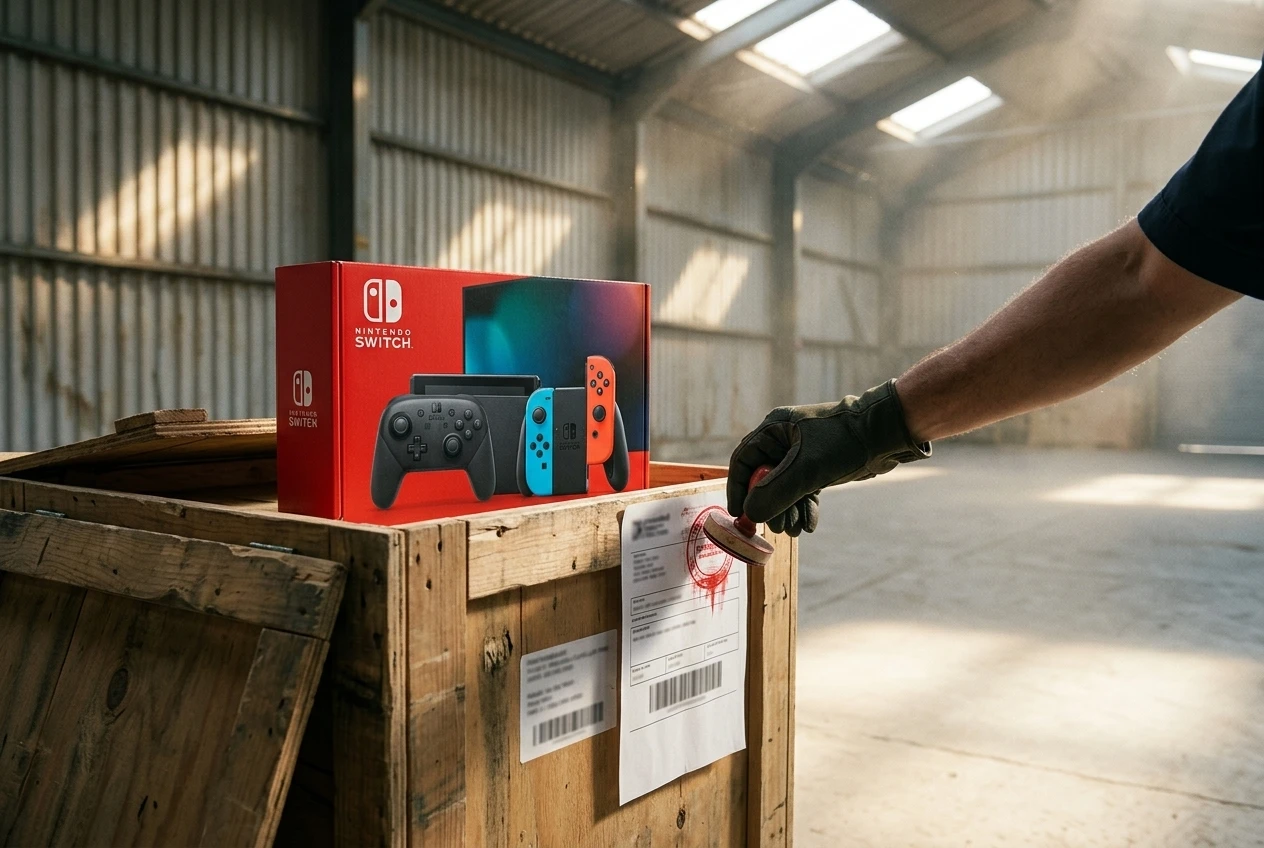
 Nintendo told a federal court this week that Switch 2 buyers who paid higher prices during the tariff fight already got exactly what they paid for. The video game giant is fighting a proposed class action that argues it should hand back some of the price increases it blamed on tariffs, now that those tariffs have been ruled illegal. Nintendo’s attorneys called the claim meritless in a motion filed late Monday.
The fight extends far beyond one console. Nearly identical lawsuits now target Ford, General Motors, Amazon, Costco and Nike, all testing whether anyone but the companies themselves will see a dollar of the $166 billion in tariff refunds now moving through the American economy.
The Motion Nintendo Just Filed
Nintendo raised prices on the original Switch and a run of Switch 2 accessories, including Joy-Con 2 controllers, the Pro Controller, the Dock Set and the Switch 2 Camera, in August 2025, on top of an earlier price move tied to the initial tariff rollout around the console’s launch. Two American consumers, Gregory Hoffert and Prashant Sharan, sued in April, arguing it would be illegal for Nintendo to keep money from both the price hikes and a later government tariff refund. Their proposed class covered anyone in the U.S. who bought the affected products over roughly a year, from February 2025 to February 2026.
Nintendo’s answer, filed late Monday, leans on a single idea: a sale is a sale.
Nintendo or one of its retailers set a price for each product, and consumers decided whether that price was worth paying. Those who bought Nintendo’s products received exactly what they bargained and paid for: a console, game and/or accessory at a price to which both parties agreed.
Nintendo’s attorneys wrote that in the motion to dismiss, first reported by GameFile, a video game industry trade publication. The filing goes further, arguing consumers are “not entitled to a rebate simply because of intervening legal developments related to tariffs” and that the plaintiffs’ unfairness argument does not hold up because “that is not how commercial transactions work.” Nintendo has separately sued the U.S. government itself, in a case styled Nintendo of America Inc. v. United States of America, seeking a refund with interest on the same tariffs it says its own customers have no claim to.
Ford, GM and a Growing List Face the Same Fight
Nintendo did not invent this legal theory and it is not the only company being forced to answer it. A near identical playbook is now running through courts in Michigan, Washington and elsewhere, aimed at some of the biggest consumer brands in the country.
- Ford faces Bullock v. Ford Motor Company, filed July 9, 2026 in the U.S. District Court for the Eastern District of Michigan by Jason Bullock, a San Diego resident who bought a Mexico built Ford Mustang Mach-E in February 2026 and says tariff costs were baked into both the sticker price and the destination fee.
- General Motors expects roughly $500 million in IEEPA related refunds and has told customers, like Ford, that it will not reimburse them for the price increases those tariffs helped cause.
- Stellantis has flagged an expected refund worth hundreds of millions of euros without committing to pass any of it back to buyers.
- Amazon, Costco and Nike all face their own proposed class actions arguing the companies collected tariff inflated prices and are now positioned to collect a refund on those same costs a second time.
Ford booked a one-time $1.3 billion tariff benefit in its first quarter results, tied to duties paid between March 2025 and February 2026 and mostly touching its Ford Blue and Ford Pro divisions. The Bullock complaint argues that if “Ford retains the (tariff refunds) while also retaining the tariff-related price increases paid by consumers, Ford will receive a double recovery and unjust windfall.” Ford spokesperson Richard Binhammer said the company is reviewing the complaint, adding, “We have a lineup of affordable and accessible vehicles today and we’ll continue to act on that commitment in ways that make sense for customers and dealers.”
How a Supreme Court Ruling Created a $166 Billion Problem
None of this litigation exists without one case. In February, the Supreme Court ruled the president lacked authority to impose the tariffs under the International Emergency Economic Powers Act, a 1977 law never before used this way. The 6 to 3 decision, Learning Resources v. Trump, wiped out tariffs that had been collected since early 2025.
The Court of International Trade then ordered U.S. Customs and Border Protection to unwind the damage. More than 330,000 importers had paid a combined $166 billion in now-illegal duties across some 53 million shipments, and the agency built a new processing system to sort out who gets paid and when. Because the Court of International Trade holds exclusive jurisdiction over the underlying tariff claims, that is the venue where Nintendo, Ford and thousands of other importers of record filed to reclaim their own money, a separate track from the consumer lawsuits now playing out against those same companies in ordinary courts.
Not every dollar is flowing quickly. The government has pushed back on how far the refund order should reach, and the process is unfolding in stages rather than all at once.
Where Nintendo, Ford and the Refusers Stand
| Company | Tariff Refund Position | Passing Anything to Consumers? |
|---|---|---|
| Nintendo | Suing the U.S. government for a refund with interest at the Court of International Trade | No; moved to dismiss the consumer class action outright |
| Ford | Booked a $1.3 billion one-time benefit for Q1 2026 | No; faces Bullock v. Ford Motor Company |
| General Motors | Expects about $500 million in refunds | No, per company statements to date |
| Costco | Refund total undisclosed | Only as future lower prices, not rebates to past buyers, CEO Ron Vachris said in March |
| FedEx | Received reversals on tariff charges billed to shippers | Yes; refunding shippers and consumers who paid the charges directly |
| UPS | Received reversals on tariff charges billed to shippers | Yes; reimbursing customers for tariff-related charges |
Costco’s position is worth a second look. Ron Vachris, the company’s chief executive, said in March that tariff refunds would translate into “lower prices and better values,” language that reads generous until you notice it is forward looking. It does nothing for someone who already paid a higher price months ago, which is exactly why Costco still turned up on a plaintiffs’ list alongside Amazon and Nike.
Why ‘You Got What You Paid For’ Keeps Winning in Court
Nintendo’s argument is not a new invention. It is a version of the benefit of the bargain doctrine, the idea that once both sides agree to a price and the transaction closes, later changes in a seller’s costs, taxes or legal exposure do not reopen the deal. Companies lean on it because it has a long history of holding up, and because it lets them treat a price hike and a subsequent refund as two unrelated events rather than one long con.
Economists have been skeptical that ordinary shoppers will see much regardless of how the litigation shakes out. UBS chief economist Paul Donovan wrote earlier this year that it “seems unlikely anyone will rush to lower prices to their consumers,” arguing tariff rebates mostly benefit the U.S. importers who wrote the checks to Customs and Border Protection in the first place, not the retail customers who paid marked up shelf prices.
What we know:
- Nintendo has formally moved to dismiss the consumer case and no judge has ruled on that motion yet.
- The Supreme Court’s February ruling triggered a refund process now worth $166 billion across more than 330,000 importers.
- Ford, General Motors, Amazon, Costco and Nike all face comparable consumer lawsuits over the same double recovery theory.
What’s unconfirmed:
- Whether any judge will actually force a company to share tariff refund money with consumers.
- How much Nintendo itself will recover from the government, or on what timeline.
- Whether a pending appeal will shrink the pool of importers eligible for refunds at all.
Nintendo’s Stock Dipped, but the Case Is Just Starting
Shares of Nintendo fell 4% in Tokyo trading Tuesday, the Associated Press reported, a modest move for a company whose console business has weathered bigger swings. The bigger number to watch sits in Washington, where the government has appealed the sweeping order compelling customs authorities to refund every importer, not just those who sued. That appeal alone could stretch the timeline for Nintendo, Ford and everyone else waiting on their own government checks.
Refunds are arriving in phases rather than a single wave. The first phase alone is expected to cover 63% of affected entries, worth nearly $127 billion, with later phases pushing into the back half of 2026. Nintendo’s motion has not been ruled on. Ford has barely begun to answer its own complaint. For now, the console, the truck and the sneakers all cost what they cost, and the companies that set those prices intend to keep it that way.
Frequently Asked Questions
Will Switch 2 Buyers Get Any Money Back?
Not unless a judge denies Nintendo’s motion and the case later succeeds on the merits. No class has been certified, so even a favorable ruling would only clear the way for further litigation, not an automatic check to past buyers.
What Is IEEPA and Why Does It Matter Here?
The International Emergency Economic Powers Act is a 1977 law that lets a president regulate trade during a declared emergency. The Supreme Court’s 6 to 3 ruling found it does not give a president the power to impose tariffs, which is the legal hook behind every refund case now in motion, including Nintendo’s own suit against the government.
Which Companies Have Actually Promised Refunds?
Only a small handful nationwide, against more than 330,000 importers who paid the tariffs. FedEx and UPS said they would reimburse shippers and consumers who paid tariff charges directly, while Costco has only promised future price improvements rather than rebates to people who already bought something.
Has Any Court Ruled on These Lawsuits Yet?
No. Nintendo’s motion to dismiss remains pending, and Ford said only that it is reviewing the complaint filed against it in early July. These cases are all still in their opening stages.
Where Does the $166 Billion Actually Go if Companies Win?
It goes back to the importers of record, the companies that wrote the original checks to Customs and Border Protection, rather than to the shoppers who paid marked up retail prices. A pending government appeal of the refund order could still change how much of that money moves, and to whom.
 Scotland Reader Photos Capture Eclipse Week Beyond the Sky
  Scotland’s Rare World Cup Win Over Haiti Still Echoes
  Scottish Morning Roll Campaign Echoes Baguette Path to Unesco
  Samsung Passport Fold8 Turns Apple Fans Into Switchers
  Android’s Quiet Shift to Ambient AI Hardware This Week
  Poco F9 Leak Hands Global Buyers Less Battery for More Money