
 Ishan Crawford
 Google renamed NotebookLM to Gemini Notebook on Thursday, folding a research tool used by more than 30 million people into its flagship AI brand. Every notebook is also getting a secure cloud computer that can write and run code against a user’s own documents, a capability moving from paying Ultra subscribers toward millions of free and Pro users over the coming weeks.
The stated goal was clarity: drop the clunky “LM,” put everything under one Gemini roof. Within hours, reviewers who cover Google for a living were publishing pieces with titles like “I’m Confused.” The Gemini app already has a feature called Notebooks. Now there are two products carrying that name, with a third on the way.
Same Tool, New Name
NotebookLM started as Project Tailwind, shown off at Google I/O in May 2023. Google’s own announcement says the team built it with a simple goal to help people learn. Three years later, the company says more than 30 million people and over 600,000 organizations now use it, a figure Google reported itself without outside audit.
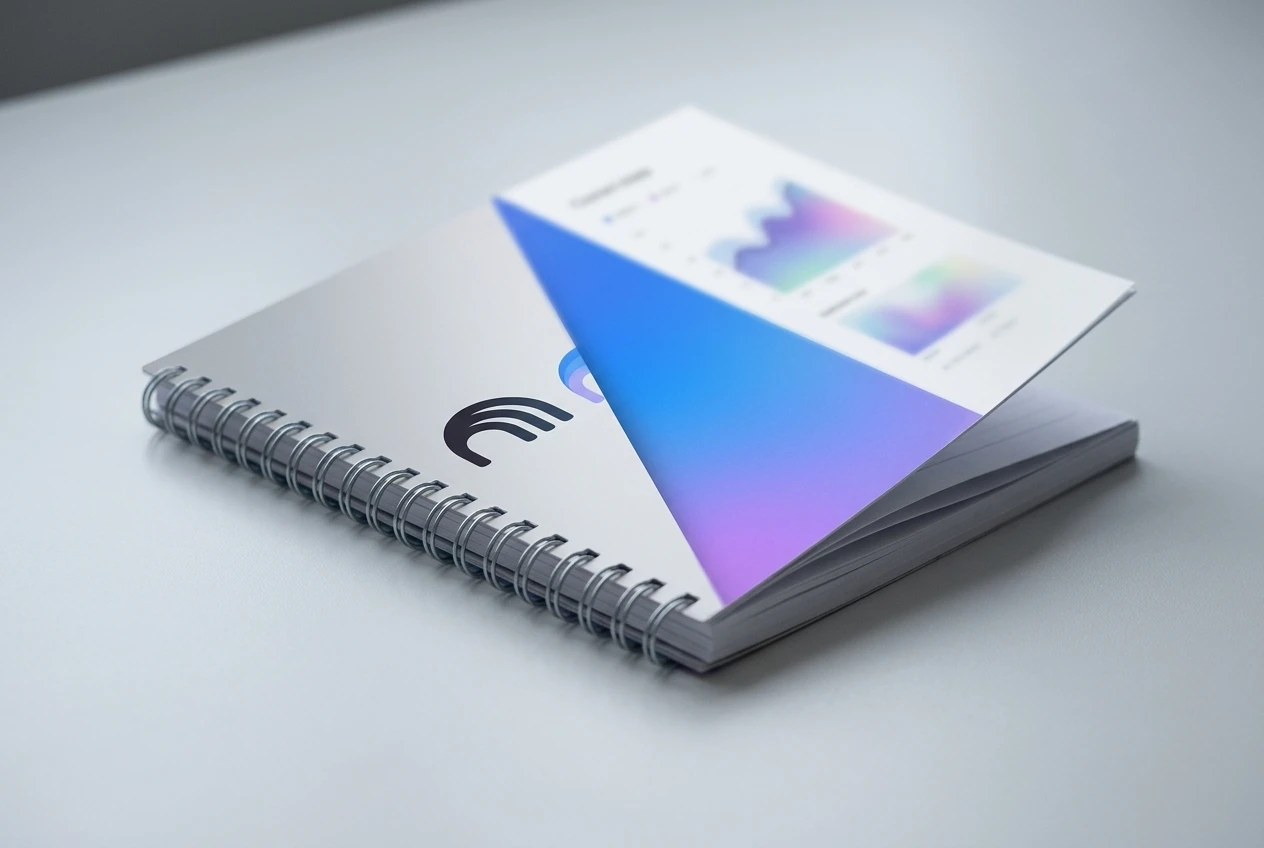
The “LM” stood for language model, jargon that never really landed with casual users. Gemini Notebook drops it and picks up a blue and purple gradient logo to match the rest of Google’s AI lineup. The app stays separate from the main Gemini chatbot. Google’s post describes it as remaining a standalone product focused on being a premier research tool, while also doing more across the company’s other apps.
Reaction so far splits pretty cleanly. On Hacker News, one commenter called it a way better name for the masses. Underneath the news elsewhere, a reader shrugged it off entirely: it’s not that deep, they wrote, all the functions remain. Not everyone agreed that a name is just a name.
Every Notebook Gets a Cloud Computer
The rename is not the substantive change. That happened on June 8, when Google swapped the model powering NotebookLM from Gemini 1.5 to Gemini 3.5 and wired in Antigravity, the company’s agentic orchestration layer introduced at I/O 2026. Every notebook picked up a sandboxed cloud computer, an isolated environment that can write and execute Python code against whatever a user has uploaded.
That is a different product than the one people got used to. The old NotebookLM indexed documents, retrieved relevant passages, and summarized them in prose. It could describe a spreadsheet but never touch it. The new version writes code, runs it inside that sandbox, and hands back charts, tables, or finished documents instead of just paragraphs. Google’s own cloud documentation frames the underlying method as letting a model generate code, run it, watch what happens, and correct itself before finishing, the same loop now built into every notebook.
Access still depends on what a user pays. Here is how the rollout breaks down as of this week:
| Tier | Monthly Price | Cloud Computer Access | Where Notebooks Live |
|---|---|---|---|
| Free | $0 | Not yet announced | Standalone app, Gemini app |
| AI Pro | $19.99 | Rolling out over coming weeks | Standalone app, Gemini app, soon AI Mode |
| AI Ultra | $99.99 | Live since June 8, 2026 | Standalone app, Gemini app, soon AI Mode |
| Workspace (Ultra/Expanded Access) | Business pricing | Live since June 8, 2026 | Standalone app, Gemini app |
Google has not said whether or when the free tier gets code execution at all. For now it is a perk reserved for the two paid plans and eligible Workspace accounts, with a library the company says covers more than 100 curated software skills for handling different kinds of analysis.
Why Does the Gemini App Already Have Notebooks?
Because Google shipped a feature called Notebooks inside the main Gemini app back in April, months before Thursday’s rename, letting users start a research project in Gemini and continue it in what was still called NotebookLM at the time. That earlier move is exactly why the rebrand lands as more confusing rather than less, since it hands two different products the same core word.
Three surfaces now share the name, and Google has not published a clean explanation of how they differ:
- Gemini Notebook (standalone) – the rebranded app itself, still reachable at gemini.google.com, with the deepest feature set including Audio Overviews and Video Overviews.
- Notebooks inside the Gemini app – a chat organization feature that syncs sources and instructions with the standalone product but cannot generate Studio outputs on its own, according to Google’s own support documentation on cross-app syncing.
- Notebooks inside AI Mode in Search – not live yet, promised soon, which would let a search session pull context from a user’s own uploaded material.
One Forbes contributor who runs AI workshops for teachers put the tangle bluntly in a column published the same day.
So are they different products or do we now have Gemini Notebooks and Notebooks in Gemini. I’m confused again.
Dan Fitzpatrick, the Forbes contributor, still called the rename a good move overall, arguing NotebookLM’s sourced, citation-heavy style makes it the most useful AI tool he has found for classrooms. The naming, in his telling, is the one part Google has not gotten right.
Educators Worry the Shortcut Hides the Work
Fitzpatrick’s bigger concern is not the name. It’s what happens when a notebook can pick the analysis method, write the code, run it, and explain the result on its own, leaving a student further from the actual work than before. “The easier analysis becomes, the easier it is to accept a result without understanding how it was reached,” he wrote.
That tension shows up outside education too. A MakeUseOf column published the same day traced how NotebookLM’s grounding, the promise that it answers only from a user’s own uploaded sources and admits when it can’t, has eroded gradually since Discover Sources let Gemini find material for users last year, and further since a Deep Research feature let the tool browse hundreds of sites on its own. Code execution is described as the point where that shift became official.
None of this makes the update less useful. A school leader can now upload attendance and behavior records and ask the notebook to clean the data and look for patterns. A teacher can compare curriculum documents across subjects in minutes instead of hours. The catch, several reviewers agree, is that polished output can look authoritative even when the underlying method is wrong.
Google Has Run This Rebrand Play Before
NotebookLM’s path from experiment to Gemini-branded product follows a pattern Google has repeated across its AI lineup: launch something under its own name in Labs, let it prove itself, then absorb it once it hits scale. Bard became Gemini in 2024. Duet AI folded into the same brand around the same time. NotebookLM is simply the latest name to disappear into that umbrella.
The tool’s own history shows how fast that scale arrived:
- May 2023: Google unveils Project Tailwind at I/O, an experimental notebook that learns from a user’s own documents.
- October 17, 2024: Google removes the “experimental” label, signaling NotebookLM is a stable product.
- December 2024: NotebookLM Plus launches as a paid tier for enterprise customers.
- February 10, 2025: The Plus tier opens to individuals through Google One AI Premium.
- June 8, 2026: Google swaps in Gemini 3.5 and Antigravity, adding a secure cloud computer for Ultra and Workspace users first.
- July 16, 2026: NotebookLM becomes Gemini Notebook, with cloud computer access headed to Pro subscribers next.
Google is not slowing that cadence anywhere else, either. Its June 2026 Android system update changelog ran to dozens of entries the same month the cloud computer feature quietly went live, evidence of a company shipping AI changes on a near-constant loop rather than saving them for splashy events.
Rivals Now Compete With a Free Analyst
The scale Google is folding into Gemini Notebook is what makes the update matter beyond branding. Newsletter AI Weekly framed it plainly: any product that needs a separate compute environment, or charges extra for notebook-style analysis, now competes against a free-tier Google offering with built-in distribution and a Search integration still to come.
Google is not alone in chasing this territory. OpenAI has spent months expanding ChatGPT’s memory and project features. Anthropic’s Claude offers artifact creation and persistent conversations of its own. Perplexity has built a following in AI-assisted search, particularly among researchers who want sourced answers fast. OpenAI is also pushing on an entirely different front, having just completed a worldwide launch of its live voice model, a reminder that the fight for AI attention is not confined to notebooks and documents.
What none of those competitors have is Gemini Notebook’s installed base. Thirty million users and 600,000-plus organizations, tech outlet Gagadget noted, put the tool among the more widely adopted AI productivity products outside of ChatGPT itself. A free code-execution sandbox stacked on top of that base raises the bar every paid rival now has to clear.
Frequently Asked Questions
Is Gemini Notebook the Same Product as NotebookLM?
Yes. Google’s own Gemini Notebook product page confirms it rebranded from NotebookLM in July 2026 and that every existing notebook stays fully accessible. Personal data is not used for model training unless a user separately shares feedback.
Does Gemini Notebook Cost Money?
No, a free tier remains available worldwide. Paid tiers unlock the cloud computer feature faster: AI Pro runs $19.99 a month and AI Ultra runs $99.99 a month, with Workspace business accounts priced separately through admin plans.
What Does the Secure Cloud Computer Actually Do?
It gives a notebook its own sandboxed environment on Google Cloud’s code execution platform, letting the model write and run Python scripts against uploaded sources instead of only summarizing them. Google says the sandbox draws on more than 100 curated software skills to produce charts, tables, and structured documents.
Will Notebooks Inside Gemini and Gemini Notebook Ever Merge?
Not yet, and Google has not committed to it. The two stay synced on sources and instructions, but only the standalone Gemini Notebook can generate Studio-style outputs like Audio Overviews and Video Overviews; the version inside the main Gemini app cannot build those on its own.
Do I Need to Do Anything to Keep My Old Notebooks?
No. Google says existing shared notebook links and URLs redirect automatically, and no action is required from admins or individual users. Mobile users may simply need to update their app to see the new name and logo.
Whatever Google ends up calling it next, the 30 million people who already trusted this tool with their documents now have their notebooks living in two places at once, with a third, inside Search, arriving soon.
 ONGC licence frees Venezuela cash and operatorship talks
  Anthropic Hits $65 Billion Run Rate and Flips the AI Cash Test
  Supreme Court grounds the fare free-for-all with three-week clock
  Gold Nears $4400 as Soft Data Meets Oil Inflation Risk
  Nifty Slips as Zaggle Circuits and Dhoot Debuts Big
  Diesel Crack Tops $100 as Iran Rhetoric Lifts Crude