
 Ishan Crawford
 Apple’s first foldable iPhone is on track for the second half of 2026, and Counterpoint Research says it will push foldable panel shipments to about 27.5 million units this year, a roughly 24 percent rise over 2025, while lifting average selling prices 18 percent. Apple’s debut lands in a category already reshaped by Samsung and Huawei, with Counterpoint’s July 1, 2026 panel forecast giving Samsung 31 percent of procurement, Apple’s first-year share around 29 percent, and Huawei 24 percent. The foldable segment remains a fraction of the broader smartphone market, but its mix is moving quickly toward higher prices and book-style designs.
What Apple’s Entry Looks Like on the Numbers
Counterpoint Research’s July 1, 2026 report on the 27.5 million unit 2026 foldable panel forecast projects a rebound from a soft 2025. Panel revenues are expected to reach about $4.4 billion in 2026, up around 48 percent year over year, a figure that combines rising volume with a richer mix of premium book-type products.
Growth will not be spread evenly across 2026. Counterpoint expects shipments from Q3 and Q4 combined to account for around 64 percent of full-year shipments, as Apple’s procurement ramps and Samsung cycles through new products. In its first year, Apple is forecast to take around 29 percent of foldable panel procurement; Samsung stays at the top with 31 percent and Huawei at 24 percent.
Nikkei Asia reporting carried by 9to5Mac on July 1, 2026 said Apple has told suppliers to prepare roughly 10 million foldable iPhones for 2026, up from a prior target of 7 to 8 million units a few months earlier. The 10 million figure is roughly a third higher than previous estimates for the launch year.
- 27.5 million foldable panels forecast for 2026 (Counterpoint).
- 29% of 2026 panel procurement expected to flow to Apple (Counterpoint).
- 10 million foldable iPhones Apple has told suppliers to prepare (Nikkei via 9to5Mac).
- $4.4 billion in 2026 foldable panel revenue, up about 48% YoY (Counterpoint).

Prices Head Higher Across the Board
Counterpoint’s separate July 2, 2026 report projects the average selling price of foldable smartphones will reach $1,485 in 2026, up 18 percent from 2025 and 29 percent from 2024. Book-type foldables are pulling the figure higher; clamshell models are projected to fall below their 2024 average as more brands enter and production scales.
The shipment share of foldables priced between $1,600 and $2,000 is expected to nearly double, from 30 percent in 2025 to 58 percent in 2026, while models priced at $2,000 or more are projected to slip from 3 percent to 2 percent of shipments. Apple’s device is widely expected to sit at the top of the bracket, with IDC predicting it will carry an average price point of $2,400.
IDC, in a December 9, 2025 release on the 30% YoY growth forecast for 2026 foldables, said Apple’s first foldable will carry an average price point of $2,400 and capture over 22 percent of unit share alongside about 34 percent of the foldables market value in its first year. IDC later raised the figure to an average selling price of $2,500, with storage configurations reaching as high as $3,000, per 9to5Mac’s July 2, 2026 report.
| Brand | 2026 foldable panel procurement share |
|---|---|
| Samsung | 31% |
| Apple (first year) | 29% |
| Huawei | 24% |
Samsung, Huawei and the Three-Pillar Race
Counterpoint’s March 2026 foldable smartphone forecast projects Apple’s entry will capture 28 percent of the broader foldable market in 2026, approaching Samsung’s leading position. Liz Lee, Associate Director at Counterpoint, said in the firm’s 2026 foldable smartphone market growth forecast that foldables still represent only a small fraction of the overall smartphone market, suggesting the category has considerable room for expansion.
Samsung is preparing updates to its foldable portfolio with the next-generation Galaxy Z Fold and Z Flip series, expected to launch in Q3 2026. Counterpoint expects Samsung to adjust its lineup by replacing the previous Flip FE with a Fold variant carrying a wider aspect ratio, designed to compete more directly with Apple’s expected book-type foldable.
Motorola will start selling its first book-type device, the Razr Fold, broadly priced in line with other book-type foldables and projected to launch in Q2 2026. Google is expected to refresh its foldable lineup with the next-generation Pixel Fold in Q4 2026, with a thinner chassis and improved hinge design, positioning the device firmly in the ultra-premium tier.
Huawei’s foldables running on HarmonyOS Next are expected to see shipments almost double in 2026, per IDC. The result is a market that Counterpoint now describes as moving from a Samsung-led international field and a Huawei-led Chinese field into a three-pillar structure led by Apple, Samsung, and Huawei.
Why a Wide Book-Type Design, and Why Now
Counterpoint’s February 11, 2026 report says Apple’s first foldable will adopt a book-type form factor with a 1:1.414 wide-fold display ratio optimized for multitasking, document viewing, and content consumption. The choice is consistent with Apple’s iPad-mini-class interior displays, where the company already has long-standing software optimization work. Liz Lee said the next phase of foldable market expansion will be driven less by novelty and more by clarity of use case and value.
Book-type foldables are forecast to jump to about 65 percent of global foldable shipments in 2026, up from 52 percent in 2025, according to Counterpoint’s 65% book-type foldable share projection for 2026. Samsung reached its own inflection point in the second half of 2025, when Galaxy Z7 Fold shipments surpassed Galaxy Z7 Flip shipments.
Samsung is preparing wider book-type models to better support productivity-oriented, multi-pane use cases, similar to Apple’s expected form factor. Motorola unveiled its first book-type foldable at CES, and Google has continued to invest in the Pixel Fold lineup, signaling broad platform-level support for book-type devices across the Android landscape. The shift, Counterpoint says, is being driven by higher ASP potential, profitability focus, and maturing consumer demand. Tarun Pathak, Research Director at Counterpoint, said book-type foldables are well-positioned as their premium specifications and higher memory configurations support ASP expansion while aligning with value-led growth strategies.
What’s Still Broken in Foldables
Foldables still account for only 1.6 percent of the overall smartphone market in 2025, per Counterpoint’s March 2026 forecast, a reminder that the category has not broken through to mainstream scale. Vendors have spent more than seven years iterating on the form factor since Samsung unveiled the Galaxy Fold in 2019 and Huawei countered with the Mate X the same year. Durability and hinge reliability have improved steadily, and book-type devices now ship with larger displays, better hinges, bigger batteries, and improved cameras, per Counterpoint’s July 2, 2026 report.
Several issues remain unresolved across the category. Industry reporting consistently flags inner-screen flatness, the durability of protective film on the inner display, and the optimization of Android apps as the device switches between inner and outer screens. Manufacturers also say foldables still lack a clearly defined use case in office work, artificial intelligence, and photography, despite offering dual-screen and large-screen experiences.
- Inner-screen flatness and crease visibility on book-type panels.
- Durability of the protective film layered over the inner display.
- Android app behavior when a device switches between inner and outer screens.
H1 Tested the Bottom; H2 Tests the Rebound
Q1 2026 foldable panel shipments declined 7 percent year over year to about 3.9 million units, mainly because of brand inventory control and fewer new product launches, Counterpoint said. BOE remained the panel leader at about 45 percent, supported mainly by Huawei demand, though its share fell by roughly seven percentage points year over year. SDC rose to about 22 percent on Samsung, OPPO, and vivo orders, the supplier with the clearest Q1 share gain.
Counterpoint frames the year as “H1 tests the bottom, while H2 tests the rebound,” with Samsung’s product cycle, Apple’s procurement ramp, and Chinese smartphone OEMs doing the heavy lifting in the second half, alongside the 10 million unit foldable iPhone production target Apple has reportedly asked suppliers to prepare. The firm says Apple’s entry will not immediately displace Samsung and Huawei, but it will expand the market and shift competition toward higher ASPs, stronger reliability, and lower-crease wide book-type foldables.
In-fold has moved from a secondary form factor to the mainstream, shifting from broad parity with clamshell in 2025 to a clear lead in 2026 as clamshell declines.
Enze Qi, Senior Analyst at Counterpoint Research, said this in the firm’s July 1, 2026 panel report.
Frequently Asked Questions
When will Apple release its first foldable iPhone?
Counterpoint’s February and July 2026 reports both expect Apple to introduce its first foldable in H2 2026. 9to5Mac reported on July 1, 2026 that Apple told suppliers to prepare roughly 10 million units for the year. A specific launch date has not been disclosed in the fetched sources.
How much will Apple’s foldable iPhone cost?
IDC’s December 9, 2025 forecast put Apple’s foldable at an average price point of $2,400. A later IDC figure reported by 9to5Mac on July 2, 2026 raised the average selling price to $2,500, with higher storage configurations reaching $3,000.
How much will Apple’s entry raise average foldable prices?
Counterpoint’s July 2, 2026 report puts the 2026 foldable average selling price at $1,485, up 18 percent from 2025 and 29 percent from 2024. Book-type devices are driving the move; clamshell prices are projected to fall below their 2024 average.
How big a share will Apple take in its first year?
Counterpoint’s panel forecast gives Apple around 29 percent of 2026 foldable panel procurement. IDC’s December 2025 release projects Apple will capture over 22 percent of unit share and about 34 percent of the foldables market value in its first year.
What are Samsung and Huawei doing in response?
Samsung is preparing next-generation Galaxy Z Fold and Z Flip updates for Q3 2026 and is expected to introduce a wider book-type device. Huawei’s HarmonyOS Next foldables are projected to almost double in 2026, per IDC. Motorola’s Razr Fold and Google’s next Pixel Fold are also expected to ship book-type devices in 2026.
 Scotland Reader Photos Capture Eclipse Week Beyond the Sky
  Scotland’s Rare World Cup Win Over Haiti Still Echoes
  Scottish Morning Roll Campaign Echoes Baguette Path to Unesco
 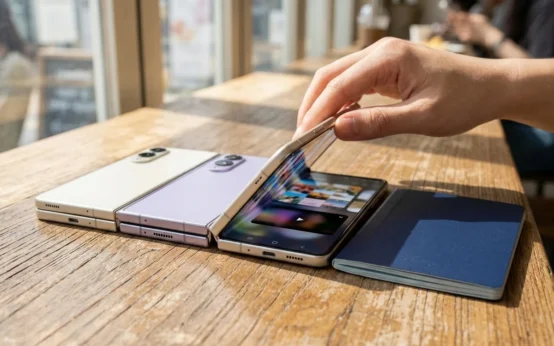 Samsung Passport Fold8 Turns Apple Fans Into Switchers
 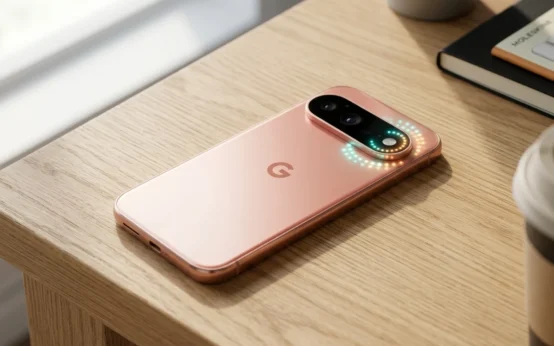 Android’s Quiet Shift to Ambient AI Hardware This Week
 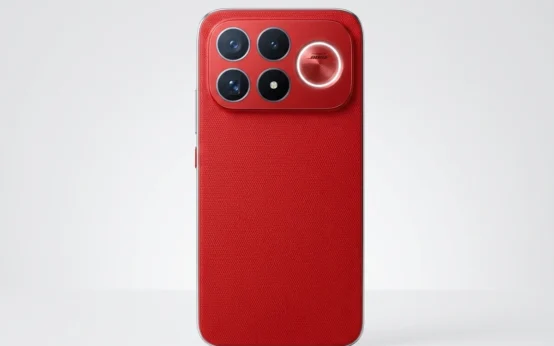 Poco F9 Leak Hands Global Buyers Less Battery for More Money