
 Ishan Crawford
 USD/JPY plunged more than 500 pips on Thursday, hitting a low near 157.8 after a market source said Japan bought yen and sold dollars in New York hours. The pair had traded above 163 earlier and printed a 40-year high of 163.99 days before. At the American-session print in one report it sat near 159.50, down 2.4 percent on the day.
EUR/JPY and GBP/JPY fell nearly 2 percent as the yen strengthened across the board. Weak U.S. second-quarter GDP of 1.5 percent against a 2.1 percent forecast helped soft-dollar conditions, yet the speed and scale pointed past pure data reaction.
The Move That Looked Like Official Buying
Traders and strategists described a sudden, one-way drop without a scheduled catalyst. Dollar/yen broke below 161 then kept falling. Volumes spiked. Japanese banks appeared aggressive sellers of the dollar according to market chatter.
A market source told Reuters that Japan conducted yen-buying intervention, its first such foray in three months. South Korea also sold dollars the same day, sending the won higher. U.S. Treasury Secretary Scott Bessent said Japan may have intervened and called the yen “very undervalued.”
Japan’s top currency diplomat Atsushi Mimura declined direct comment on Friday but said Tokyo was receiving U.S. support “that goes beyond psychological support,” including rate checks. Finance Minister Satsuki Katayama repeated that authorities stood ready to act with urgency.
- Intraday low: 157.8 reported in multiple wires
- Session drop: roughly 2.5 to 3.3 percent at the trough
- Context high: 163.99, a near 40-year peak earlier in the week
- Cross-yen moves: EUR/JPY and GBP/JPY each lost close to 2 percent
By early Friday Asian hours the pair had retraced some ground toward 160 and above, a familiar post-strike pattern.
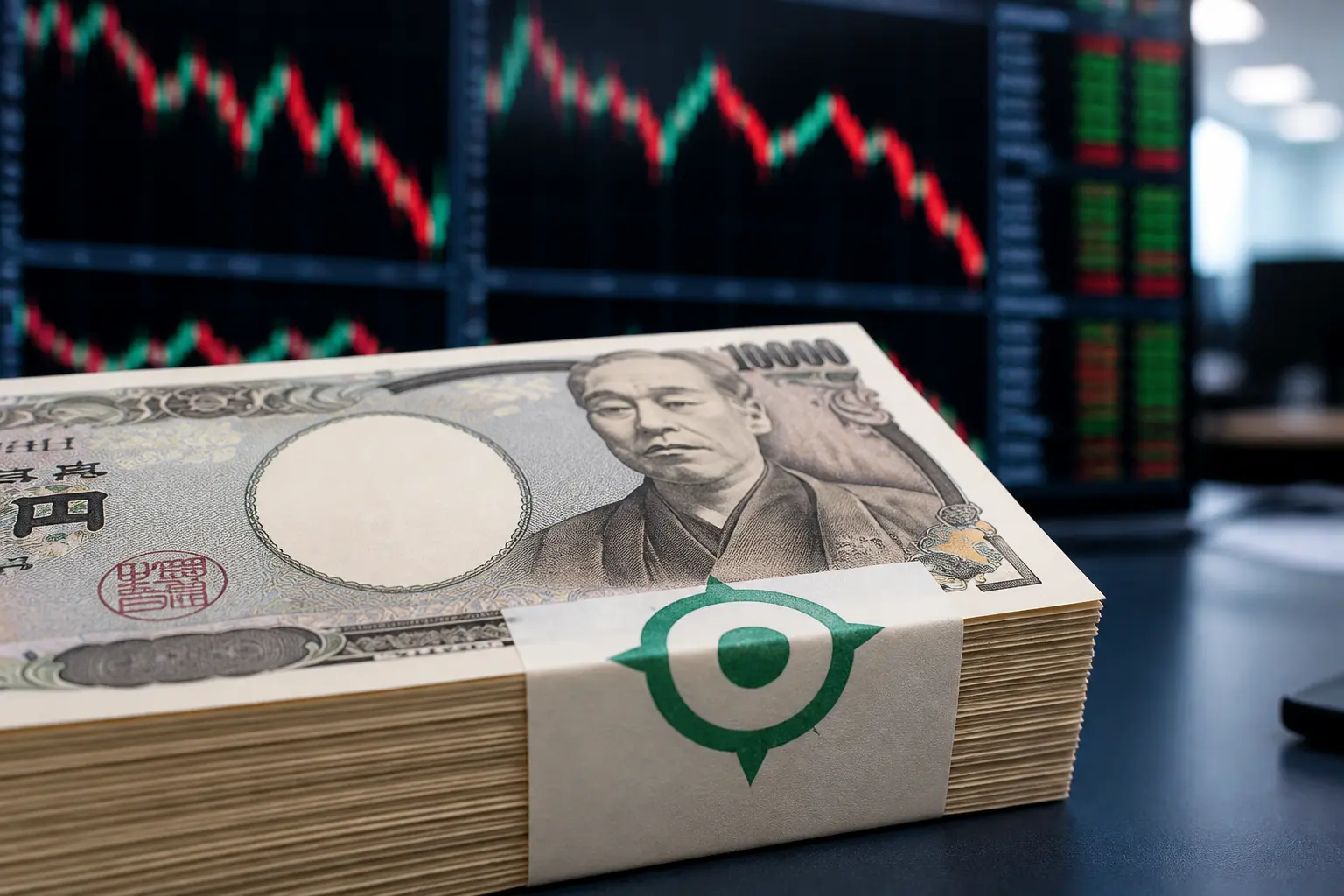
Prior Ops Show the Same Snap Then Fade
Tokyo has stepped in repeatedly when the yen neared or breached multi-decade lows. The latest action fits a clear sequence of large one-day gains that later reverse unless interest-rate differentials shrink.
| Period | Approx. Size | USD/JPY Move | Aftermath |
|---|---|---|---|
| July 2026 | Unconfirmed (source says yes) | From ~164 to 157.8 | Partial retrace above 160 next session |
| April-May 2026 | 11.7 trillion yen (~$73 bn) | To as strong as 155.5 | Weakness resumed to 163.99 |
| July 2024 | 5.53 trillion yen | From 161.76 toward 157 | Gains faded over following months |
| April-May 2024 | 9.79 trillion yen | After 160.245 print | Temporary; new lows later |
| Oct 2022 | 6.35 trillion yen | Largest then on record | Support held only with later policy shifts |
Official confirmation of amounts usually arrives weeks later via Ministry of Finance intervention operations data. The April-May 2026 total set a monthly record. That episode, detailed in coverage of Japan’s 11.7 trillion yen defense earlier this year, bought only a few months of breathing room before the pair returned to fresh lows.
Average one-day declines on confirmed intervention days have run around 1.2 percent historically, with ranges expanding past 3 percent. Thursday’s swing exceeded those medians.
Households Gain Breathing Room, Exporters and Carry Traders Feel Heat
A stronger yen lowers the yen cost of energy and food imports that have driven living costs higher amid elevated oil prices. Importers and consumers stand to benefit if the level holds.
Exporters face the opposite pressure. A firmer currency squeezes overseas earnings when converted back home. Japanese equities often wobble on sharp yen gains for that reason.
The larger market risk sits in the yen-funded carry trade. Investors have borrowed cheap yen for years to buy higher-yielding assets elsewhere. Stretched short-yen positioning left the market vulnerable to a squeeze. Analysts flagged the potential for forced unwinds similar to August 2024 if the yen keeps rising or the Bank of Japan signals faster hikes.
- Winners in the short run: Japanese importers, households facing energy bills, any long-yen positions
- Losers: exporters with unhedged foreign revenue, crowded short-yen carry books, risk assets correlated to yen strength
- Watch point: whether the move triggers broader deleveraging in equities or credit
One strategist noted the suddenness and degree of the dollar/yen drop left little doubt about official involvement even before the source confirmation.
BoJ Holds at 1 Percent With One Dissent
On Friday the Bank of Japan left the overnight call rate at around 1.0 percent by an 8-1 vote. Board member Hajime Takata dissented and proposed 1.25 percent, arguing upside price risks from overseas demand shocks required a nimbler stance.
The Bank of Japan July policy statement kept the door open to further increases if economic and price conditions evolve as expected. The Outlook Report trimmed the FY2026 inflation forecast slightly while lifting growth projections a touch.
Markets had priced the hold at near 99 percent. Focus therefore stayed on Governor Kazuo Ueda’s post-meeting remarks for any shift in the timing of the next hike. Communication around that path matters more than the decision itself after the overnight intervention.
This hold continues the gradual path after the June lift to 1 percent. Earlier coverage of the BoJ’s prior hold and Takata dissent path already showed the board split on pace while yen weakness fed price pressures.
Why the Pattern Keeps Returning
Policy divergence remains the structural driver. Japan’s rate sits far below U.S. levels even after the Fed’s recent path. The 10-year yield gap still favors the dollar for carry and portfolio flows. Real demand from Japanese importers and investors also keeps supplying dollars.
Intervention can punish speculative shorts and reset positioning for a few sessions. It does not rewrite the interest-rate arithmetic. Past episodes show the yen often resumes its decline once the immediate shock fades and no follow-through rate action arrives.
Authorities appear to have timed this strike for maximum surprise, after softer U.S. data and before the BoJ announcement, rather than waiting for the usual post-meeting window. That tactical shift may reflect lessons from earlier, well-telegraphed ops that let positions adjust in advance.
It is hard to imagine anything other than currency intervention causing a drop of as much as 5 yen in such a short period of time.
Daisaku Ueno, chief FX strategist at Mitsubishi UFJ Morgan Stanley Securities, said the market had expected any action after the FOMC and BoJ meetings, so the early strike may have been deliberate.
Coordination Signals and What Can Break Next
The same-day South Korean dollar sales and Mimura’s comments on U.S. rate checks raise the possibility of broader coordination. Rare joint or parallel action can amplify the initial impact. Whether it changes the medium-term trend is another question.
If the pair stabilizes below 160 and Ueda sounds more ready to hike before year-end, short-covering could extend. If the yen drifts back above 161-162 and the BoJ stays patient, the familiar fade returns and another round of intervention warnings will follow.
Energy prices and any further U.S. data surprises remain external swing factors. For now the market has registered that Tokyo will spend reserves when the yen tests multi-decade extremes. History says the spending alone rarely ends the story.
USD/JPY closed the immediate aftermath still well below the week’s highs yet no longer at the intervention trough. The next durable move will depend less on one day’s buying and more on whether Japanese rates keep closing the gap that made the yen cheap in the first place.
 Scotland’s Facial Recognition Push Sparks Mask Ban Call
  Galaxy Z Flip 8 Hits $799 Only If Your Trade-In Qualifies
  If England Had Kept Water Public Like Scotland
  Samsung Smart Switch Now Moves Passwords and eSIM From iPhone
  Old Firm Spend Pulls Clear as Premiership Rivals Patch Squads
  Chinese Studios Quietly Seize the Gamescom Stage