
 Ishan Crawford
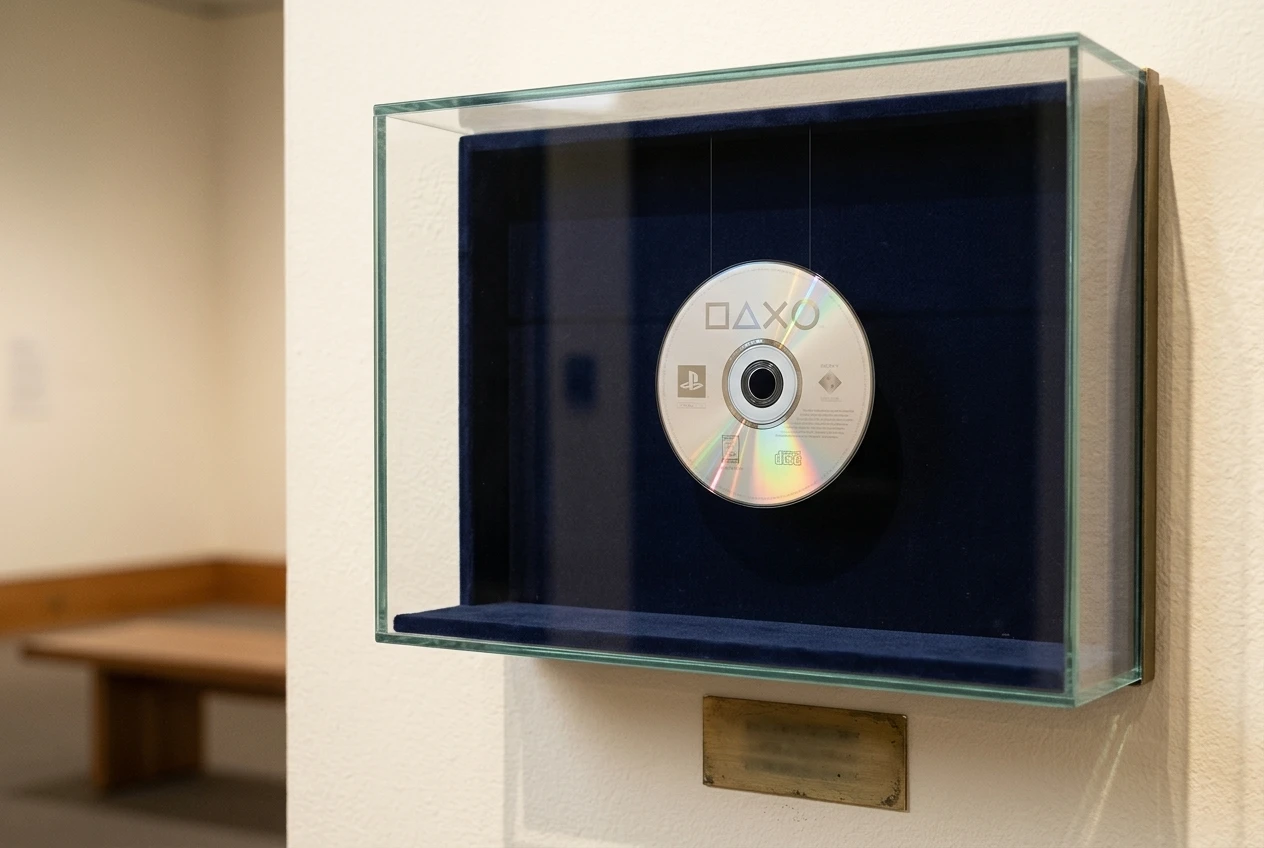
 Sony will stop making physical discs for new PlayStation games starting in January 2028, ending a format that has anchored console gaming for three decades. Every release after that date arrives only as a download, tied to a PlayStation Store account instead of a shelf.
Sony has already shown what happens to a purchase once there is no disc left to prove you own it. Twice now, the company has deleted movies customers paid for, and European regulators just declined to force publishers to guarantee access to anything sold as a download.
What Changes on Shelves Starting in 2028
The mechanics are simple. Physical disc production for every new PlayStation game ends in January 2028, and boxed retail versions, where they still exist, will hold a printed code instead of a disc. Games already released, or scheduled before the cutoff, are unaffected.
Sony framed it as inevitable rather than aggressive. In its own blog post announcing the change, the company called the shift a natural direction to adapt to consumer trends as digital preference outpaces discs.
Grand Theft Auto 6, from Take-Two Interactive’s Rockstar Games, is among the first major titles expected to launch under the new model this year. GTA 6, priced lower in India than in the US despite pricier consoles there, will still ship in a retail case, just with a code instead of a disc inside it.
Sony Already Deleted What Fans Thought They Owned
This is not a hypothetical risk. Sony has run this exact experiment twice already, on movies rather than games, and the results were not reassuring.
- August 2021: Sony stops selling movies and TV shows through the PlayStation Store, though customers keep access to titles already bought.
- December 2023: Sony tells users that roughly 1,200 purchased Discovery shows, including Mythbusters and Deadliest Catch, will be deleted from libraries by year end because of licensing arrangements, with no refund offered.
- Late December 2023: Facing public backlash that cited Federal Trade Commission guidance on digital ownership, Sony reverses course after renegotiating with Warner Bros., guaranteeing access for at least 30 more months.
- June 2026: Sony notifies users in the UK and Europe that 551 previously purchased StudioCanal movies and shows will be removed from libraries on September 1, 2026, again with no refund.
- January 2028: Physical disc production ends for all new PlayStation games, closing off the one format that never depended on a licensing deal staying in place.
Sony’s own legal notice on the Discovery removal put the underlying rule plainly: nothing bought through the store was ever really owned, just licensed on terms Sony could change.
Brussels Declines to Guarantee Game Access
The clearest sign this is now an industry-wide fight, not just a Sony problem, came out of Brussels a month before the disc announcement. A European Citizens’ Initiative called Stop Destroying Videogames gathered 1,294,188 verified signatures asking the European Commission to require publishers to leave discontinued games in a playable state.
The campaign grew out of Ubisoft’s 2024 shutdown of The Crew, an always-online racing game that went dark the moment its servers closed, even for players who owned a copy. Ubisoft chief executive Yves Guillemot responded to the backlash at the time by noting that, as he put it, nothing is eternal.
The Commission’s answer, adopted June 16, 2026, sided with the industry. In its official reply, regulators said it cannot propose a legal obligation to keep video games playable after they stop being provided commercially, citing existing intellectual property law. Instead, the Commission promised a voluntary industry code of conduct on managing games’ end of life by the close of 2026.
Campaigners have not folded. They are now pushing to attach preservation requirements to the EU’s Digital Fairness Act, a separate consumer protection bill still being drafted, and by late June had 45 members of the European Parliament backing the effort.
What a Disc Could Do That a Code Never Will
Strip away the policy language and the practical differences are stark. A disc is a physical object nobody can revoke once it leaves the store. A download code is a permission slip Sony can amend.
| Capability | Physical Disc | Digital Download Code |
|---|---|---|
| Resell or trade in for cash | Yes, at retail or online marketplaces | No secondary market exists |
| Lend to a friend | Yes, hand it over directly | No, locked to one account |
| Keep playing if the PlayStation Store closes | Yes, as long as a console can read it | Only if Sony keeps activation servers running |
| Buy it cheaper once demand fades | Yes, used copies undercut retail price | No, Sony alone decides discount timing |
Michael Futter, founder of video game industry consultancy F-Squared, argues the console comparison to PC digital storefronts does not hold up, since PC owners can still choose between marketplaces like Steam or the Epic Games Store. Consoles offer no such alternative.
This is an extremely anti-consumer decision that has no legitimate justification and communicates a disdain for players in their ecosystem.
Futter told CNBC that framing the console shift as identical to the PC market’s move to digital ignores a key difference: PC players chose that shift because they saw value in it, not because the alternative was removed for them.
GameStop Shrugs While Wall Street Barely Blinks
The most surprising reaction came from the retailer with the most to lose. GameStop chief executive Ryan Cohen, asked about the disc announcement in a July 16 interview with Bloomberg Television, dismissed the threat outright.
“It doesn’t matter at all. It’s totally, totally irrelevant,” Cohen said. Game software now makes up less than 12% of GameStop’s business, he added, while collectibles such as trading cards account for over half of sales.
The numbers back up his pivot away from software, even if they do not erase the industry’s decline. GameStop has closed more than 1,300 stores over the past two fiscal years, and physical game spending overall fell to $1.5 billion in 2025, the lowest total since Circana began tracking the category in 1995, down from a peak of $11.6 billion in 2008.
- Sony calls the shift a natural response to how its community already prefers to buy games.
- Michael Futter calls it a forced transition dressed up as consumer choice, with no working alternative left on console.
- Kazunori Ito of Morningstar says most players would rather adopt digital habits at their own pace than have the option removed for them.
Wedbush Securities managing director Michael Pachter put a number on what disappears with the trade-in economy. Realistically, he told CNBC, at least a third of games have historically sold used, and those resales gave gamers cash to put toward their next purchase. The secondhand game platform market, including consoles and accessories, was worth $7.2 billion globally in 2025 and is projected to reach $13.8 billion by 2034, according to market researcher Dataintelo.
Why Is Sony Betting Consumers Will Not Push Back?
Sony has the sales data to justify its confidence. Nearly four in five full-game purchases on PS4 and PS5 already happen digitally, and Sony’s own results show physical disc revenue running almost ten times below digital download revenue for the two consoles combined.
Sony has also faced organized subscriber pushback before without changing direction. When PlayStation Plus members canceled over price hikes, Sony answered with discount offers aimed at canceling protesters rather than a reversal, and the higher prices stayed in place.
Morningstar’s Ito called the situation genuinely ironic, since Sony built goodwill in 2013 by presenting discs as the simple, consumer-friendly option against Xbox’s restrictive digital policies. That contrast is gone now that Sony controls the same kind of closed ecosystem it once criticized.
Futter’s worry extends beyond resale. If Sony revoked purchased movies twice over licensing terms, he asked what stops the same logic from reaching games people already paid for. Sony and PlayStation did not respond to CNBC’s requests for comment on the record.
Xbox Is Already Copying the Playbook
Sony is not moving alone. Microsoft’s Xbox division has begun testing its own shift away from discs, The Verge has reported, suggesting the entire console industry is converging on the same download-only model within a similar window.
The industry’s next step past download codes is already live elsewhere. GeForce Now, Nvidia’s cloud gaming service, launched in India after years of delayed attempts, letting players stream titles without downloading or storing a copy at all.
The Digital Fairness Act, the EU’s next attempt at regulating consumer protection in digital markets, is expected in the final quarter of 2026, more than a year before Sony’s disc cutoff takes effect.
Frequently Asked Questions
Will PS5 Discs Stop Working After January 2028?
No. The cutoff only affects production of new discs going forward. Existing physical games, and any titles released or scheduled before January 2028, will keep working on consoles that still have a disc drive.
Can I Still Buy a Physical Copy of GTA 6?
Yes, but not on a disc. Retailers including GameStop are expected to sell a boxed version of GTA 6 that contains a printed download code rather than a physical game disc.
Is Xbox Ending Physical Discs Too?
Microsoft has not made a formal announcement, but employees in its gaming division are reportedly testing a comparable disc-to-digital transition, according to The Verge, without a confirmed timeline yet.
What Happens to Used Game Trade-In Credit?
It disappears for any title released after the cutoff. Wedbush’s Michael Pachter estimates at least a third of games have historically sold used, with trade-in cash often funding a gamer’s next purchase, a cycle that has no digital equivalent.
Does Sony Refund Players When It Removes Purchased Content?
Not so far. Neither the 2023 Discovery removal notice nor the 2026 StudioCanal notice offered compensation language, and Sony’s public statements have focused on licensing terms rather than reimbursement.
 Simple Wave Chases Range as Ather Konarc Cuts Price
  Adobe Bets on Experience Cloud’s Anil Chakravarthy as CEO
  The Quiet Architect Behind Akshay Oberoi’s Karjat Home
  PaperCut Rushes a Third Patch as Print Servers Fall
  Apple’s Foldable iPhone Hinges on Samsung Display Supply
  Farah Calls the Evoluto F355 Restomod a Costly Triumph