
 Ishan Crawford
 A surprise RBI rate hike is back in play. Most economists polled by CNBC, the business news network, expect the Reserve Bank of India (RBI, the country’s central bank) to hold its benchmark repo rate at 5.25% when the Monetary Policy Committee meets on Friday, June 5, though a record-low rupee and a run of larger-than-expected rate increases across Asia have revived bets that policymakers could move instead.
The split among forecasters is narrow, and that is the point. India would be the last big Asian economy still sitting on its hands after Indonesia and Sri Lanka both jolted markets with currency-defending hikes in the past fortnight.
What the Rate Decision Hinges On
CNBC surveyed nine economists in the run-up to the meeting. The majority see the RBI holding and, at most, signalling that a hike could come later in the year. A minority think the central bank acts now, with the currency giving it every reason to.
One of the louder voices in the hike camp is Venugopal Garre, managing director and head of India research at Bernstein. Speaking on CNBC’s Inside India, he argued it is “more logical” for the RBI to raise rates than to wait. A hike would line India up with “how global rates have moved in the more recent weeks,” he said, and could slow outflows at a time when “currency depreciation has been the biggest pain point for policy makers.”
Context matters. The benchmark sits where it does only because the RBI cut it from 6.5% over the past year, a shift you can trace in India’s benchmark interest rate record, and that easing now looks awkward against a falling rupee. Governor Sanjay Malhotra has not said a hike is coming, but his recent language has left the door open.
The central bank will do whatever is required to ensure orderly price discovery in the forex market.
That was Malhotra in a May 25 interview with the news website Mint. He stopped short of flagging a rate move, yet the remark read to many in the bond market as preparation for bolder action. Not everyone buys it. Radhika Rao, an economist at DBS Bank, expects the committee to stay put because second-round inflation spillovers are not yet visible, while Seshadri Sen of Emkay Global has argued that softer crude prices cut the urgency to act.
India Is the Asian Outlier Now
India’s neighbours have already shown what a currency-first central bank looks like this year. Bank Indonesia’s policy rate went up by 50 basis points (bps, hundredths of a percentage point) to 5.25% on May 20, a bigger move than almost anyone expected and its first hike since 2024. Days later the Central Bank of Sri Lanka went further, lifting its overnight rate by a full 100 basis points to 8.75%, its steepest increase in years.
Both moves had the same trigger India now faces: a sliding currency, imported inflation, and a crude-price shock from the conflict in West Asia. Only one of the 10 economists Bloomberg surveyed before the Sri Lanka decision had predicted it.
| Central bank | Date | Move | New policy rate | Market expectation |
|---|---|---|---|---|
| Bank Indonesia | May 20 | +50 bps | 5.25% | Quarter-point or pause |
| Central Bank of Sri Lanka | May 26 | +100 bps | 8.75% | No change |
| Reserve Bank of India | June 5 | To be decided | 5.25% if held | Hold, hike later in year |
If the RBI holds while its peers tighten, the interest-rate gap between India and the rest of the region narrows. That can make rupee assets less attractive exactly when the country needs the money coming in, and it is the argument the hike camp keeps returning to.
The Rupee Is the Pain Point
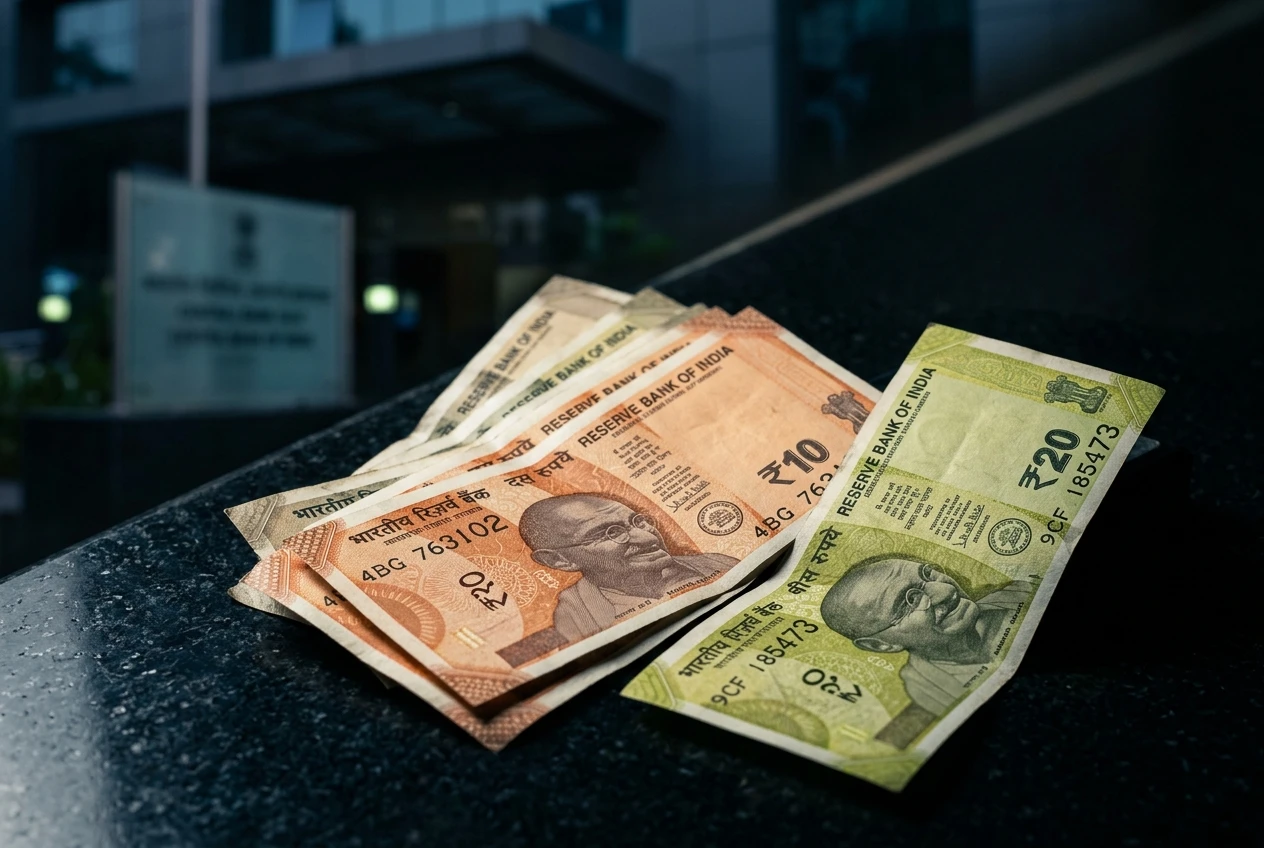
The currency is what turned a routine policy meeting into a live question. The rupee slid to a record low of 96.96 against the dollar before clawing back to a little above 95, helped by RBI dollar sales and softer oil prices. It has flirted with the psychologically heavy 100 mark, a level it has never touched.
The pressure is structural. India imports close to 90% of its oil, so the crude spike that followed the late-February escalation in West Asia widened the import bill just as foreign investors were pulling money out. The week opened on a thin reprieve, with the rupee’s rise to 94.97 against the dollar on June 1 as most Asian currencies slipped.
Policymakers have not been passive. Their defence has run on several tracks at once:
- Dollar sales through state-run banks to slow the slide, according to a Reuters report.
- Higher import duties on gold, aimed at curbing demand and conserving foreign exchange.
- A public appeal from Prime Minister Narendra Modi for citizens to help conserve foreign exchange.
None of that replaces the rate lever, which is why the meeting carries weight. The RBI has been busy elsewhere too, reviving a long-shelved plan to put polymer banknotes back in Indian wallets; the currency, though, is the file driving this week’s debate.
An Inflation Pipeline That Keeps Loading
Headline inflation is still below the RBI’s target, which is the single biggest reason the hold camp feels comfortable. Look underneath it and the pressure is building on several fronts.
The Fuel Pass-Through
India’s consumer price inflation rose for a sixth straight month in April, reaching 3.48%, still under the RBI’s 4% mandate. Food inflation, a heavy weight in the index, ran hotter at 4.2%, up from 3.87% in March, per the April 2026 consumer price index release from the Ministry of Statistics. Wholesale inflation has been worse, hitting 8.3% in April, its highest in roughly three and a half years.
Then came the pumps. Over the past fortnight the government pushed through cumulative fuel price hikes of 7.5 rupees per litre (about $0.08), more than the 5 rupees Citi had built into its base case. The brokerage now sees average inflation for the financial year ending March 2027 at 4.9%, up from 4.6% earlier.
What the Forecasters Now Pencil In
Even the analysts lifting their inflation calls are not, for the most part, calling a June move. “We still expect the June MPC to keep rates on hold,” Citi wrote, referring to the Monetary Policy Committee (MPC, the RBI’s rate-setting panel), while pencilling in two quarter-point hikes in August and October.
Others see emerging risks rather than an immediate trigger. Sakshi Gupta, principal economist at HDFC Bank, pointed to the “pass-through of higher energy costs to retail consumers” and “any weather-related disruptions due to El Nino this year” as the threats to the inflation path. That puts a lot of weight on the rains.
El Nino and a Weak Monsoon Raise the Stakes
The wild card sits in the sky. The India Meteorological Department has cut its forecast for the southwest monsoon to 90% of the long-period average (LPA, the benchmark for normal rainfall), down from 92% a month earlier, and now calls the season below normal. It puts the odds of deficient rains at about 60%, with a 92% chance that El Nino conditions, a warming of the equatorial Pacific that tends to suppress Indian rainfall, develop during the season.
That feeds straight into prices, because nearly 60% of India’s farmland depends on rain rather than irrigation. A weak monsoon lands on food inflation that was already running above 4% in April. The country is also in the grip of a severe early heatwave, with above-normal heat forecast across northern and central states in June.
Fertiliser is the other squeeze. Maximo Torero, chief economist at the United Nations Food and Agriculture Organization (FAO), warned that India faces shortages ahead of the Kharif sowing season. If the mix of Gulf conflict and a below-normal monsoon holds, he said, the country faces “higher import costs, reduced domestic fertilizer availability, and pressure on food inflation, particularly for wheat, rice, and vegetables.”
Malhotra delivers the verdict at 10 a.m. on Friday, with a press conference to follow at noon. The repo rate has held at its current level since the RBI finished cutting last year, and most of the market is betting it stays there for one more meeting before the inflation math forces a turn.
 ONGC licence frees Venezuela cash and operatorship talks
  Anthropic Hits $65 Billion Run Rate and Flips the AI Cash Test
  Supreme Court grounds the fare free-for-all with three-week clock
  Gold Nears $4400 as Soft Data Meets Oil Inflation Risk
  Nifty Slips as Zaggle Circuits and Dhoot Debuts Big
  Diesel Crack Tops $100 as Iran Rhetoric Lifts Crude