
 Ishan Crawford
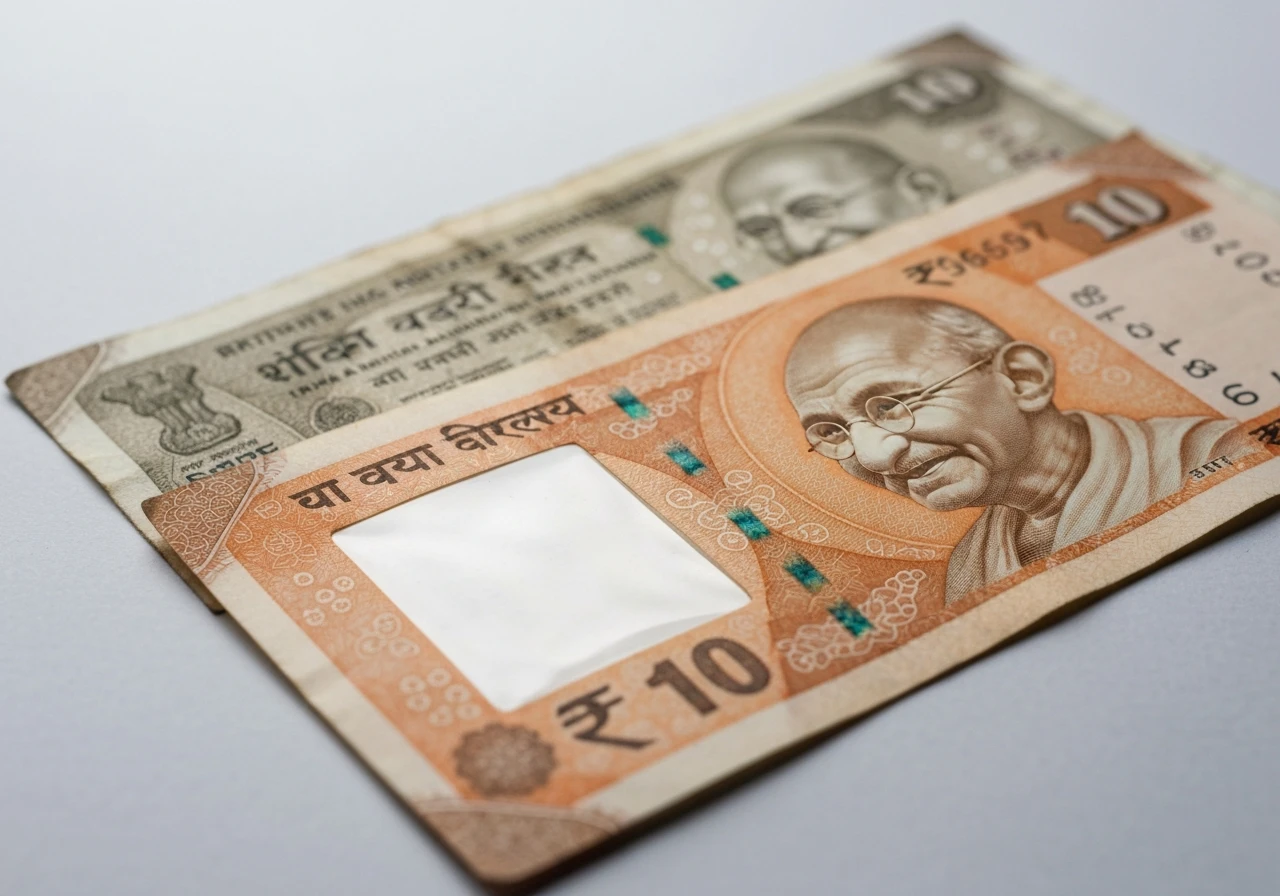
 The Reserve Bank of India is preparing to put plastic money back in your wallet. The central bank is set to launch a pilot for polymer banknotes, starting with low-value Rs 10 and Rs 20 notes, reviving a switch it first tested more than a decade ago and then quietly let lapse. The case is familiar: plastic notes last longer, stay cleaner and could trim a printing bill that runs into thousands of crore a year.
The durability argument is real and the numbers behind it are big. But the last attempt died on a dull, practical problem, and the global record shows that moving a country to polymer is rarely fast or smooth. India is also doing this in the middle of a cash-to-digital shift unlike any in the world, which changes what success even looks like.
India Revives a Plastic-Note Plan It Shelved Once Before
According to multiple reports of the central bank’s thinking, the Reserve Bank of India (RBI, the country’s monetary authority and currency issuer) is expected to announce a pilot in which polymer notes are released into public circulation. The Rs 10 and Rs 20 denominations are the obvious starting point. They change hands constantly, sit in pockets and cash drawers in hot and humid conditions, and wear out far faster than the higher-value notes people tend to store.
The point of the trial is to watch how the notes behave in real use: how quickly they soil, how they survive folding and the monsoon, and whether the machines that count, sort and dispense them can handle the new feel of the substrate. A field test on the smallest denominations is the cheapest way to learn that before committing to anything larger.
What makes the move notable is not that it is new. It is that India has stood at exactly this point before, made the announcement, and walked away. The revival reopens a question the country never finished answering.
Why the Printing Bill Is Driving the Decision
The motive sits in the RBI’s own accounts. Security printing is one of the central bank’s larger recurring costs, and it swings sharply with how many notes the system needs and how often worn ones must be pulled and replaced. Lower-value notes are the worst offenders, getting shredded after a short, hard life and reprinted in enormous volumes.
The annual figures show how much money is at stake, drawn from the central bank’s published accounts.
- Rs 6,372 crore spent on note printing in FY25, a jump of about 24.9% from the previous year, pushed up by stronger banknote demand.
- Rs 4,875 crore in FY26, a notable fall from that peak as fresh-note pressure eased.
- Rs 7,965 crore in FY17, the demonetisation year, when the system reprinted the bulk of its currency at once.
Polymer flips the cost curve. The substrate and printing are dearer upfront, so the first run of plastic Rs 10 notes will cost more than a paper batch. The saving comes later, because a polymer note that survives two or three paper lifecycles cuts the reprinting and the constant disposal of soiled notes. You can read the logic in the RBI’s own reporting in its annual report on currency operations and printing costs, where security-printing expenditure is broken out year by year.
The 2014 Field Trial That Never Scaled
This is where the history matters. Back in 2014, the government told Parliament it would introduce one billion plastic Rs 10 notes on a field-trial basis, printed on a polymer substrate, with the stated aim of extending note life rather than fighting counterfeits. The trial was designed to run across five cities chosen for their different climates, so the notes could be stressed in heat, cold, humidity and dust.
The chosen cities, set out in the government’s own announcement, were:
- Kochi, for coastal heat and humidity
- Mysore, for a milder southern climate
- Jaipur, for dry desert conditions
- Bhubaneswar, for eastern coastal weather
- Shimla, for cold hill-station conditions
The plan never got past the trial stage. The notes ran into handling and machine problems, and a large share of the country’s automated teller machines (ATMs, the cash-dispensing terminals) could not reliably read and pay out the polymer substrate. Recalibrating that hardware nationwide was a bigger bill than the project could justify at the time, and the idea was parked. The official framing of that experiment survives in the government’s press statement on the one-billion-note field trial. RBI officials now say the machine-recognition problem has since been solved, which is the single biggest reason the plan is back on the table.
What Three Decades of Polymer Money Shows
India would not be inventing anything. More than forty countries use polymer notes in some form, and the template was set on the other side of the Indian Ocean.
Australia Wrote the Playbook
Australia issued the world’s first polymer banknote, a commemorative ten-dollar note, in 1988, the product of work by the country’s national science agency (CSIRO) and the Reserve Bank of Australia. It then converted every denomination to plastic by 1996. The central bank’s own history records that the notes proved cleaner, harder to counterfeit and lasted 2.5 to four times longer than paper, and that retired notes are granulated, melted and turned into plastic pellets rather than burned or buried. The detail is laid out in the Reserve Bank of Australia’s museum history of polymer banknotes.
Canada and the UK Took the Slow Road
Others followed, but never overnight. The pattern is a phased rollout that takes years to finish, usually one denomination at a time.
| Country | First polymer note | Full or main transition | Lead motive |
|---|---|---|---|
| Australia | 1988 (commemorative $10) | All denominations by 1996 | Anti-counterfeiting and durability |
| Canada | 2011 ($100) | Main series by 2013 | Security and note life |
| United Kingdom | 2016 (5 pound) | Rolled through to the 50 pound by 2021 | Durability and cleanliness |
The common thread is patience. No major economy flipped its whole cash stack at once. Each tested a single note, watched it for years, fixed the machine problems, then moved up the denominations. India’s plan to start with Rs 10 and Rs 20 fits that script exactly.
The Catch: Heat, ATMs and Sticky Notes
Plastic is not a free win, and India’s conditions stress every one of its weak points. The same toughness that helps a note survive a monsoon creates fresh handling headaches for both machines and people.
The recurring complaints, documented across central banks that have made the switch, are consistent:
- Counting, sorting and ATM hardware needs recalibration to recognise the different texture, the issue that sank India’s first attempt.
- Hard folds leave permanent creases, and badly creased notes can jam cash machines.
- Wet polymer notes tend to stick together, which slows manual handling and machine feeding.
- Direct heat, such as accidental ironing or a note left on a hot surface, can warp or shrink the substrate.
- Early adopters such as Nigeria saw colour fading on some polymer notes, which dented public acceptance.
None of these is fatal, and most have engineering fixes that the cash industry has spent two decades refining. The Bank of England published detailed guidance for businesses on retooling their equipment, which gives a sense of the groundwork involved; its note on adapting cash-handling machines to polymer reads like a checklist of the exact friction India ran into in 2014.
A Plastic Upgrade in a UPI World
There is an irony the RBI cannot ignore. India is spending money to make cash last longer at the very moment it leads the planet in moving away from cash. The country accounts for nearly 49% of the world’s real-time digital payments by volume, and its Unified Payments Interface (UPI, the instant phone-based transfer network) now averages around 66 crore transactions a day.
That does not make better banknotes pointless. Cash in circulation has kept rising in absolute terms even as the digital share climbs, and the smallest notes still do heavy work in rural markets, among street vendors and anywhere connectivity is patchy. A durable Rs 10 note that survives years instead of months is most valuable precisely where digital reach is thinnest.
It does, though, change the math. If physical cash use plateaus or slips over the next decade, the lifetime savings that justify polymer’s higher upfront cost shrink with it. The environmental case is also less clear-cut than it sounds, since plastic notes have to circulate for years to offset their heavier manufacturing footprint, a point the Bank of England weighed in its published life-cycle assessment of paper and polymer notes.
So the pilot is really a wager on time. If the Rs 10 and Rs 20 notes prove they can survive Indian conditions and the machines read them cleanly, the durability dividend compounds for years and the case to scale up writes itself. If cash demand fades faster than the notes pay back their cost, the country will have upgraded a tool just as it stopped needing as many of them.
Frequently Asked Questions
What are polymer banknotes?
Polymer banknotes are made from a thin, flexible plastic film instead of cotton-based paper. They fold like normal currency but resist water, dirt, sweat and tearing, which lets them stay in circulation far longer. The substrate also supports security features such as transparent see-through windows that are hard to copy.
Which Indian notes will become plastic first?
The RBI is expected to test the Rs 10 and Rs 20 denominations first. These low-value notes circulate the most and wear out fastest, so they offer the clearest test of whether polymer extends note life and lowers replacement costs.
Are polymer notes cheaper than paper notes?
Not at first. The substrate and printing cost more upfront, so an initial polymer batch is dearer than paper. The saving comes over time because each note lasts two to three times longer, cutting how often soiled notes must be replaced and reprinted.
Did India try plastic currency before?
Yes. In 2014 the government announced a field trial of one billion plastic Rs 10 notes across five cities with different climates: Kochi, Mysore, Jaipur, Bhubaneswar and Shimla. The plan stalled over handling and ATM-recognition problems and never moved to full rollout.
Which countries already use polymer banknotes?
Australia issued the first polymer note in 1988 and converted fully by 1996. Canada switched its main series by 2013 and the United Kingdom moved its notes to polymer between 2016 and 2021. More than forty countries now use polymer notes in some form.
Are polymer banknotes recyclable?
Yes. Retired polymer notes can be granulated, melted and turned into plastic pellets for reuse in other products. Worn paper notes, by contrast, are generally shredded and then burned or sent to landfill.
 ONGC licence frees Venezuela cash and operatorship talks
  Anthropic Hits $65 Billion Run Rate and Flips the AI Cash Test
  Supreme Court grounds the fare free-for-all with three-week clock
  Gold Nears $4400 as Soft Data Meets Oil Inflation Risk
  Nifty Slips as Zaggle Circuits and Dhoot Debuts Big
  Diesel Crack Tops $100 as Iran Rhetoric Lifts Crude