
 Ishan Crawford
 September WTI crude oil jumped more than 11% this week, its steepest weekly gain in months, after a U.S.-Iran ceasefire broke down for the second time since June. Prices opened near $72.50 a barrel, climbed above $80, then eased slightly into Thursday’s close, according to OilPrice.com.
This is the fourth time in five months that the same war has forced traders to rebuild a risk premium they had just spent weeks tearing down. The previous three reversals followed a similar script: a truce, a rally lower, then a strike that undid it.
WTI’s Wild Week Erases a Month of Calm
The immediate trigger was a fresh round of fighting. New U.S. airstrikes hit military facilities near Iran’s southern coast over the weekend, and Iran answered with missile and drone attacks on U.S. positions in the region. Thursday marked the fifth straight day of U.S. strikes on Iranian targets, according to The National, the Abu Dhabi based newspaper.
Iran also threatened to choke off shipping through the Strait of Hormuz and, through allied Houthi forces, the Red Sea. About a fifth of the world’s seaborne crude oil normally moves through the strait, so traders moved fast to price in tighter supply.
Washington’s own data added fuel. U.S. commercial crude stocks fell 1.7 million barrels in the week ended July 10, to 409.7 million barrels, about 6% below the five-year average, the Energy Information Administration reported. The Strategic Petroleum Reserve fell further too, to 316.5 million barrels, its lowest level since April 1983.
That reserve never really recovered from the war’s first shock. The U.S. drew down roughly 99 million barrels of it after Iran shut the strait on February 28, part of a 172 million barrel release coordinated by the International Energy Agency. It has been drawing down again ever since, a thinner cushion heading into a conflict that has not gone away.
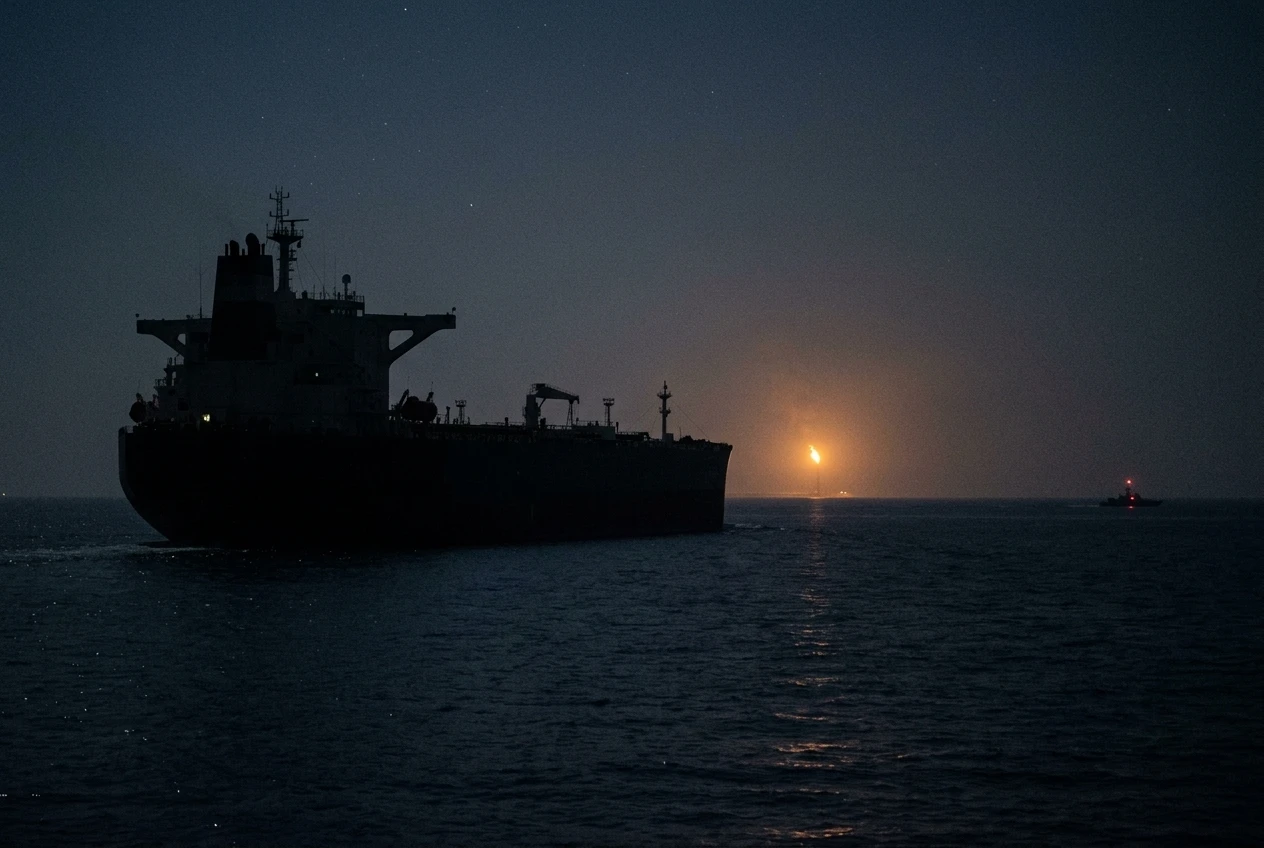
Same War, Four Price Shocks in Five Months
The International Energy Agency has called the closure of the strait the largest supply disruption in the history of the global oil market, and IEA Executive Director Fatih Birol described it as the greatest energy security challenge the world has ever faced. The timeline below explains why traders reacted so fast this week.
- Feb. 28, 2026: The United States and Israel launch strikes on Iran. The Iranian Revolutionary Guard Corps responds by blocking the Strait of Hormuz, and shipping through the waterway collapses within days.
- Late April 2026: Brent, which had traded around $66 a barrel in January before the war began, touches a wartime peak above $188 a barrel as the blockade and a parallel U.S. blockade of Iranian ports squeeze flows further.
- June 18, 2026: The U.S. and Iran sign a memorandum of understanding to end the conflict and reopen the strait, according to the EIA. Tanker traffic starts to pick back up.
- July 1, 2026: Brent slips below $70 a barrel and WTI dips under $69, their lowest levels since late winter, as markets price in a durable peace.
- July 7 to 8, 2026: Iran attacks tankers in Omani waters, Washington revokes Iran’s license to sell oil and launches new strikes, and President Trump says the interim agreement is over. Oil jumps 5% in a day.
- July 14, 2026: Iranian cruise missiles strike two UAE-operated supertankers in the strait’s southern corridor, killing one sailor.
- July 17, 2026: WTI closes out its best week in months, up more than 11%, as the fighting enters its fifth straight day.
The last comparable shock, the September 2019 drone and missile attack on Saudi Arabia’s Abqaiq processing plant, behaved very differently. That single strike knocked out 5.7 million barrels a day, over half of Saudi output, and Brent jumped roughly 14% in a day. But Aramco restored the lost output within two weeks, and prices round-tripped below their pre-attack level within a month.
Nothing about the current war has resolved that fast. The strait has now been disrupted, in one form or another, for close to five months.
Insurance Markets Never Priced the Risk Back Out
Before the war, insuring a $100 million tanker for a transit of the strait cost roughly $250,000, a war-risk premium of about 0.25% of the vessel’s value. By this week, that premium had surged to between 3% and 10% of hull value, meaning the same tanker now costs $3 million to $10 million to insure for a single voyage, The National reported.
Marine insurer Howden Re had already tallied up to $1.75 billion in tanker war losses by late March, based on seven vessels hit at an average value of $250 million each. More ships have been struck since.
“War-risk rates have moved as risk has moved,” said Neil Roberts, head of marine and aviation at the Lloyd’s Market Association, describing how premiums softened after June’s truce before climbing again once vessels came under fire in early July. By July 10, industry estimates put rates around 5% of vessel value. A week later, after more strikes, the range had widened to 3% to 10%.
The Seafarers and Shippers Absorbing the Standoff
The costs are not only financial.
- Nearly 6,000 seafarers are effectively stranded in the Gulf region, the International Maritime Organization has said, as it works to evacuate stranded vessels through safer routes.
- Tankers are increasingly crossing with their transponders switched off. Every one of six commodity carriers that transited the strait on a recent Sunday did so dark, according to ship-tracking data reviewed by Bloomberg News.
- Two Adnoc-operated supertankers, the Al Bahyah and the Mombasa, were struck by Iranian cruise missiles on July 14 while sailing dark through the strait’s southern corridor, killing one sailor and injuring several others.
- The U.S. Navy-led Joint Maritime Information Center raised its advisory for the strait from “substantial” to “severe,” its highest category, for the first time since mid-June.
Shipowners do have another option, a northern corridor Iran says it now controls. But it comes with tolls that Western shippers and their governments have refused to recognize, leaving most of the fleet stuck choosing between paying up, going dark, or waiting it out.
Why Can’t Wall Street Agree on Where Oil Goes?
Forecasts for the rest of 2026 range from BlackRock chief executive Larry Fink’s suggestion that oil could fall to $40 a barrel if peace holds or surge past $150 if the war widens, to far narrower bank targets clustered in the $70s and $90s.
Many investors are assuming oil could quickly fall back toward pre-war levels when tensions do ease. But we believe that assumption is becoming increasingly difficult to justify.
Nigel Green, chief executive of deVere Group, wrote in early June that energy markets are pricing a new reality in which supply security itself now carries a lasting premium.
| Forecaster | Latest Call | Benchmark | As Of |
|---|---|---|---|
| Goldman Sachs | $80 for Q4 2026, cut from $90 | Brent | Mid-July |
| Barclays | $100, risks skewed higher | Brent | May |
| JPMorgan | $97 average for rest of 2026 | Brent | May |
| HSBC | $95 full-year average | Brent | May |
| deVere Group | Low-to-mid $90s, upside to $100 | Brent | Early June |
| EIA | $74 average for Q3 2026 | Brent | July 7 |
The EIA’s own July 7 outlook, penciling in Brent easing to $74 a barrel this quarter, was published a day before the latest ceasefire fell apart. A Reuters poll of 33 economists in May had already put average 2026 Brent at $90.44 a barrel, roughly 40% above pre-war estimates from February.
India and Asia Feel the Squeeze First
Asia absorbed most of the pain when prices first spiked, and it is positioned to again. EIA analysts have noted that Asian countries, more reliant than most regions on Middle East crude, drove the bulk of the demand pullback earlier this year as high prices ate into consumption.
More than 40% of China’s crude oil imports transit the strait, according to World Economic Forum analysis of the crisis, giving Beijing nearly as much riding on a durable ceasefire as Washington has.
India, a heavy importer of Middle East crude, is watching from a different angle. Its state fuel retailers had been closing in on petrol break-even after months of losses, a milestone this week’s rally could push further out of reach.
Frequently Asked Questions
Can oil tankers avoid the Strait of Hormuz entirely?
Only partly. Saudi Arabia can divert some crude west via the East-West pipeline to the Red Sea port of Yanbu, and the UAE can send oil through the Abu Dhabi Crude Oil Pipeline to Fujairah on the Arabian Sea. Combined, those routes carry a fraction of the roughly 20 million barrels a day that normally transits the strait, so neither one replaces it.
Is OPEC+ adding supply to offset the price spike?
Yes, but on a schedule set before this week’s escalation. The group agreed to raise production targets by 188,000 barrels a day starting in August 2026, continuing a gradual unwind of the voluntary output cuts it has held for years.
Will U.S. gasoline prices rise because of this week’s rally?
The EIA’s July 7 short-term outlook had forecast retail gasoline averaging just under $3.80 a gallon in the third quarter, down from more than $4.20 in the second quarter. That forecast was published before the ceasefire collapsed and is now being tested by the fresh rally in crude.
Why doesn’t tanker insurance fall when tensions ease?
International Maritime Organization Secretary-General Arsenio Dominguez has said publicly that pricing is not adjusting as conditions improve, arguing premiums keep reflecting the peak of the crisis rather than current conditions. War-risk cover is typically sold in seven-day blocks and repriced every 24 to 48 hours, which insurers say makes it slow to fall even after a lull in fighting.
 Hormuz Stalemate Masks Products Squeeze Toward $120 Oil
  Shiprocket IPO Heat Masks Float Risk and Adjusted Losses
  Oil Relief Meets Drone Tariffs as Nifty Turns Macro
  Scotland’s Drug Deaths Drop Then Rebound as Recovery Lags
  FPIs Exit 60% of IPO Anchors in a Year as Domestic Funds Hold Firmer
  Domestic Winners Outrun Tata PV Drag on Friday Focus List