
 Ishan Crawford
 State-run oil marketing companies (OMCs) could reach break-even on petrol and diesel within seven to ten days if crude oil holds near current levels, but consumers should not expect pump price cuts any time soon. Petroleum Minister Hardeep Singh Puri said on Thursday that Indian Oil Corporation (IOC), Bharat Petroleum Corporation (BPCL) and Hindustan Petroleum Corporation (HPCL) have together absorbed Rs 74,781 crore in losses on fuel sales through 30 June, with another Rs 500 still being lost on every domestic LPG cylinder.
The Rs 74,781 crore hole matters because it sets the floor on what state refiners need to recoup before pump prices can fall. Global crude has already done most of the work, with Brent back near $72 a barrel and the Indian basket at about $67-68. A six-to-twelve-month recovery window and a frozen excise duty regime mean the relief at the nozzle is still months away.
The Rs 74,781 Crore Hole in the OMC Balance Sheet
India’s three state-run fuel retailers have together lost Rs 74,781 crore on petrol, diesel and subsidised LPG sales through 30 June, Petroleum Minister Hardeep Singh Puri said on Thursday, citing company data. The figure covers the period from 28 February, when the US-Iran conflict began, through the end of the first quarter of the current financial year. It represents the cumulative bill for selling motor fuels below cost while global crude prices spiked.
Industry estimates put the loss rate in May at up to Rs 1,000 crore a day on the three fuels combined, before the partial recovery began. By late June that had eased to Rs 500-600 crore a day as crude retreated from its wartime peak.
The state retailers kept retail pump prices frozen from early April 2022 until mid-May, absorbing the full impact of the West Asia shock on their marketing margins. Crisil Intelligence put the cumulative under-recovery on the same three fuels during March-May 2026 alone at roughly Rs 1 lakh crore over March-May 2026.
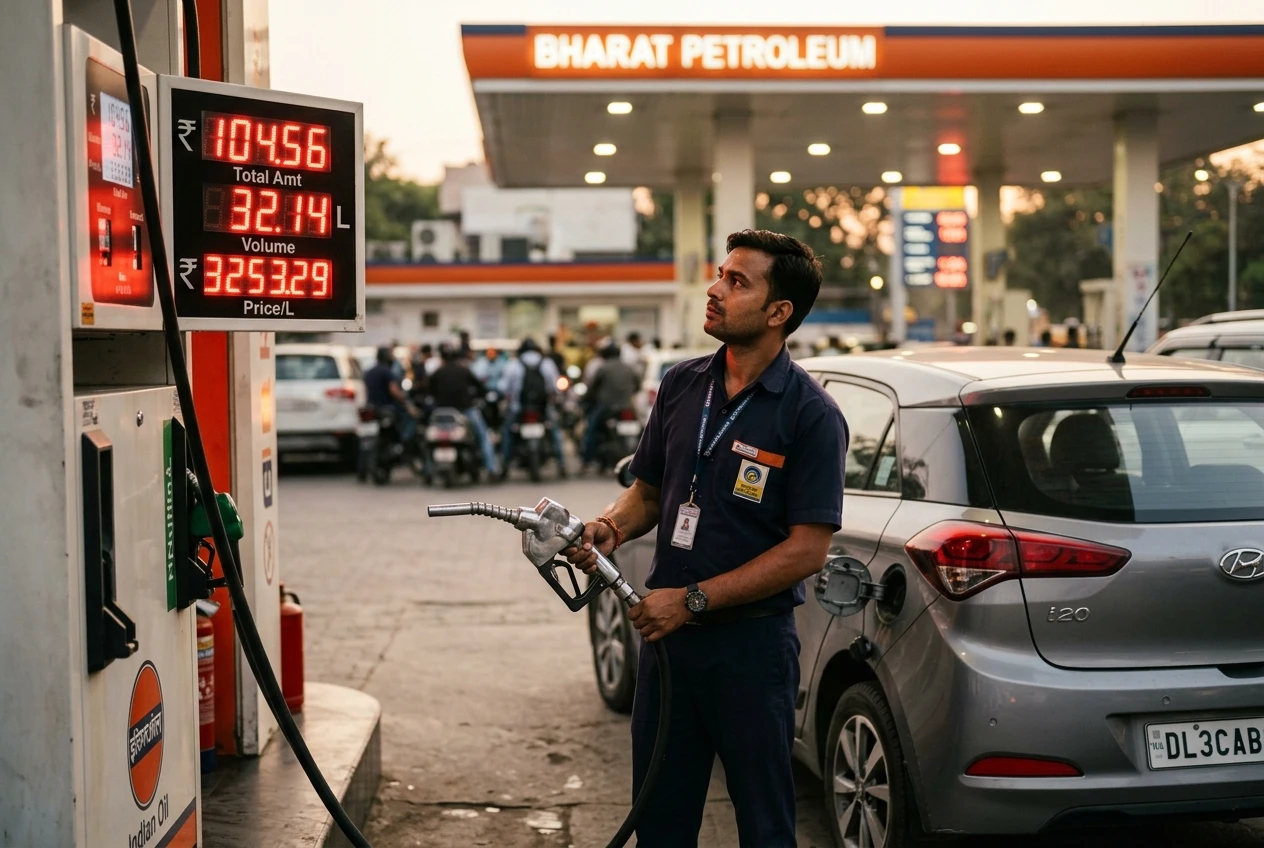
LPG Is Still Bleeding the OMCs Red
Petrol and diesel margins have improved as crude retreated. LPG is still bleeding the OMCs red. Under-recoveries on domestic cylinders in Delhi rose to Rs 651 in May 2026, and the cumulative LPG loss over March-May reached nearly Rs 22,000 crore.
- Rs 74,781 crore: cumulative OMC loss on petrol, diesel and LPG through 30 June (Puri)
- Rs 651: per-cylinder LPG under-recovery in Delhi in May 2026 (Crisil)
- Rs 22,000 crore: LPG under-recovery over March-May 2026 (Crisil)
- 46 per cent: rise in Saudi Aramco LPG contract price, February-June 2026 (Crisil)
- Rs 1,000 crore/day: peak OMC loss rate in May 2026 (industry analyst)
Saudi Aramco’s contract price for LPG, the benchmark India uses for imports, climbed 46 per cent between February and June 2026 as the West Asia war priced in supply disruption risk and higher freight costs. The pass-through to household consumers was limited because the government kept subsidised cylinder prices frozen, so the gap fell entirely on the OMC balance sheet. Even with crude now easing, the OMCs continue to lose about Rs 500 on every domestic cylinder they sell until procurement costs catch up.
Crude Has Already Done Most of the Heavy Lifting
Brent crude has retreated to about $72 a barrel, close to the level it traded at before the war broke out. The Indian crude basket, which reflects the heavier slate Indian refiners actually process, has eased to $67-68 a barrel. Both benchmarks are at their lowest in four months.
The trigger is supply. OPEC+ on Sunday agreed to raise production by another 188,000 barrels per day for August, the fifth consecutive monthly increase since the conflict began. The group has now added 940,000 barrels per day to its collective quota since 28 February, even though much of that planned supply has stayed on paper because the Strait of Hormuz remains disrupted.
For India, which imports nearly 90 per cent of its crude needs, the price reset matters more than the volume reset. Refiners imported crude at an average $106.23 a barrel in May and $114.48 in April, according to the Petroleum Planning and Analysis Cell. The crude being refined this week was largely purchased in April or early May, when international prices were still near their wartime peak. That two-month procurement lag is what keeps the OMC profit and loss statement in the red even as spot prices fall.
Oil companies typically procure crude oil around two months in advance. The crude being refined today was largely purchased in April or early May, when international prices were significantly higher.
Hardeep Singh Puri, Union Minister for Petroleum and Natural Gas, made the procurement point on Thursday while detailing the Rs 74,781 crore loss figure.
Why the Pump Won’t Move Soon
Private retailer Nayara Energy has already trimmed its petrol and diesel prices, but state-run OMCs are unlikely to follow before their losses are recovered. Industry analysts expect OMCs to hold pump prices until the peace deal plays out, with the government likely to give state retailers time to rebuild margins. The OMC daily loss rate peaked at Rs 1,000 crore in May before easing to Rs 500-600 crore by late June as crude retreated. The under-recovery math behind delaying fuel price cuts breaks down the daily loss trajectory and the six-to-twelve-month recovery window.
If crude holds around $75 a barrel, industry estimates suggest the accumulated under-recoveries could begin to unwind over six to twelve months. Until that recovery is visible on the balance sheet, any reduction in pump prices would amount to an additional indirect subsidy, and would require either fresh budgetary support or a cut in excise duties. Retail fuel prices in India rose Rs 7.5 a litre in the first revision after the conflict, more than two-and-a-half months after 28 February.
| Country | Retail petrol price change, 22-26 June 2026 |
|---|---|
| France | +17.74% |
| Germany | +19.05% |
| Italy | +18.39% |
| Pakistan | +39.77% |
| Sri Lanka | +36.66% |
| Nepal | +20.3% |
| Bangladesh | +42.69% |
Excise duty is the second constraint. The Centre adjusted excise in response to crude swings during the conflict, and rolling back the recent changes would shrink fiscal revenues even as it lowered pump prices. Puri’s own data shows that between 22 June and 26 June, retail petrol prices rose 17.74 per cent in France, 19.05 per cent in Germany and 18.39 per cent in Italy, while India’s pump prices held flat. How India Inc’s Q4FY26 earnings met the crude test is a useful read for what the OMCs are now working through.
Lowering pump prices before the OMCs return to profitability would amount to an additional indirect subsidy, and would likely require either fresh budgetary support or further reductions in excise duty. India’s past fuel pricing history shows a different pattern: during periods of lower crude, the government has typically rebuilt fiscal revenues or strengthened OMC balance sheets, with consumer relief coming after. The political logic of an early excise cut, with state retailers still in the red, is weak.
The OPEC+ Supply Story Still Has a Catch
OPEC+ has now hiked its collective quota by 188,000 barrels per day in each of the past five months. Cumulatively, the group has added 940,000 barrels per day to its quota since 28 February, on paper equal to roughly 1 per cent of global oil demand. The seven core producers, led by Saudi Arabia and Russia, approved the August hike at a virtual meeting on Sunday to assess market conditions and the global demand outlook. The increase in supply is expected to help moderate inflationary pressures and let India replenish its strategic petroleum reserves.
The reality on the water is messier. The US-Israel attacks on Iran disrupted energy shipments through the Strait of Hormuz, which before the war carried more than one-fifth of global oil supplies from Saudi Arabia, Kuwait and Iraq. That disruption has kept much of the headline OPEC+ supply increase from reaching the market, even as India’s $43.56 billion in April 2026 exports showed petroleum products still moving.
S&P Global Energy expects Brent to climb back into the $80-90 range in the second half of 2026, with global inventories still drawing down in the wake of the West Asia conflict. That puts the forecast above the $72 Brent is trading at today. Iranian crude, paid for in US dollars, plus additional Venezuelan barrels, has done more to ease prices for importers than the formal OPEC+ quota hikes. Prashant Vasisht, Vice President and Co-Head Corporate Ratings at ICRA, told Moneycontrol that normalisation of crude prices to pre-war levels would take at least two quarters or up to a year.
How India Fared Against Its Neighbours
Puri’s case for keeping pump prices frozen was built on a comparison he laid out on Thursday. Between 22 June and 26 June, retail petrol prices rose 17.74 per cent in France, 19.05 per cent in Germany and 18.39 per cent in Italy, even as India’s pump prices held flat. Among India’s neighbours, the increases were sharper: 39.77 per cent in Pakistan, 36.66 per cent in Sri Lanka, 20.3 per cent in Nepal and 42.69 per cent in Bangladesh.
The comparison also shows the indirect price tag: an Rs 74,781 crore loss at the state retailers, and a budget that captured part of the windfall through higher excise duties that have not yet been reversed. Sehul Bhatt of Crisil Intelligence said if the Indian crude basket stayed below $90 a barrel, under-recoveries were unlikely to rise materially from current levels. ICRA’s Prashant Vasisht told Moneycontrol that normalisation of crude prices to pre-war levels would take at least two quarters or up to a year. The two-month procurement cycle keeps the Rs 74,781 crore loss figure sticky even as crude retreats. The Crisil and ICRA views frame the recovery as a 2026-to-2027 story, not a matter of weeks.
Retail petrol and diesel prices in India remained largely unchanged from early April 2022, the longest price freeze in recent memory. IOC, BPCL and HPCL absorbed the full impact on their marketing margins while global crude prices spiked. India’s past approach shows the pattern: during lower crude periods, the government has generally rebuilt fiscal revenues or strengthened OMC balance sheets. Passing the full benefit through to consumers came later, if at all. The same arithmetic now applies.
Crude, OMC inventory costs, excise duty and a steady OPEC+ supply line all have to settle before the consumer sees a cut. Three are already moving in the right direction. The OMC balance sheet itself needs the six to twelve months industry estimates suggest to catch up.
Frequently Asked Questions
When will Indian OMCs break even on petrol and diesel sales?
Industry analysts said state-run OMCs could reach break-even within seven to ten days if crude oil remains near $72 a barrel. The catch is that refiners imported crude at an average $106.23 a barrel in May, and that higher-cost crude is still working through the refining system.
Why haven’t OMCs cut fuel prices even after crude fell?
Cumulative losses on petrol, diesel and subsidised LPG sales reached Rs 74,781 crore by 30 June 2026, according to Petroleum Minister Hardeep Singh Puri. Analysts expect OMCs to recover those losses over six to twelve months before revising pump prices lower. Any cut before then would effectively be an additional subsidy the budget would have to absorb.
Why are LPG losses so much larger than petrol and diesel losses?
Saudi Aramco’s contract price for LPG imports rose 46 per cent between February and June 2026, while the government kept subsidised domestic cylinder prices frozen. Under-recoveries on LPG hit Rs 651 per cylinder in Delhi in May 2026 and totalled nearly Rs 22,000 crore between March and May.
Will excise duty on fuel be cut to lower pump prices?
Excise duty was adjusted in the budget after the West Asia conflict began, so a rollback would shrink the exchequer’s revenue at a moment when the OMCs are still in the red. Analysts say an excise cut is unlikely until both OMC margins and global crude prices normalise.
Could crude prices rise again?
S&P Global Energy expects Brent to climb back into the $80-90 range in the second half of 2026, with global inventories still drawing down in the wake of the West Asia conflict. Until the Strait of Hormuz fully reopens and OPEC+ supply actually reaches refiners, prices remain vulnerable to fresh shocks.
 Hormuz Stalemate Masks Products Squeeze Toward $120 Oil
  Shiprocket IPO Heat Masks Float Risk and Adjusted Losses
  Oil Relief Meets Drone Tariffs as Nifty Turns Macro
  Scotland’s Drug Deaths Drop Then Rebound as Recovery Lags
  FPIs Exit 60% of IPO Anchors in a Year as Domestic Funds Hold Firmer
  Domestic Winners Outrun Tata PV Drag on Friday Focus List