
 Zane Lee
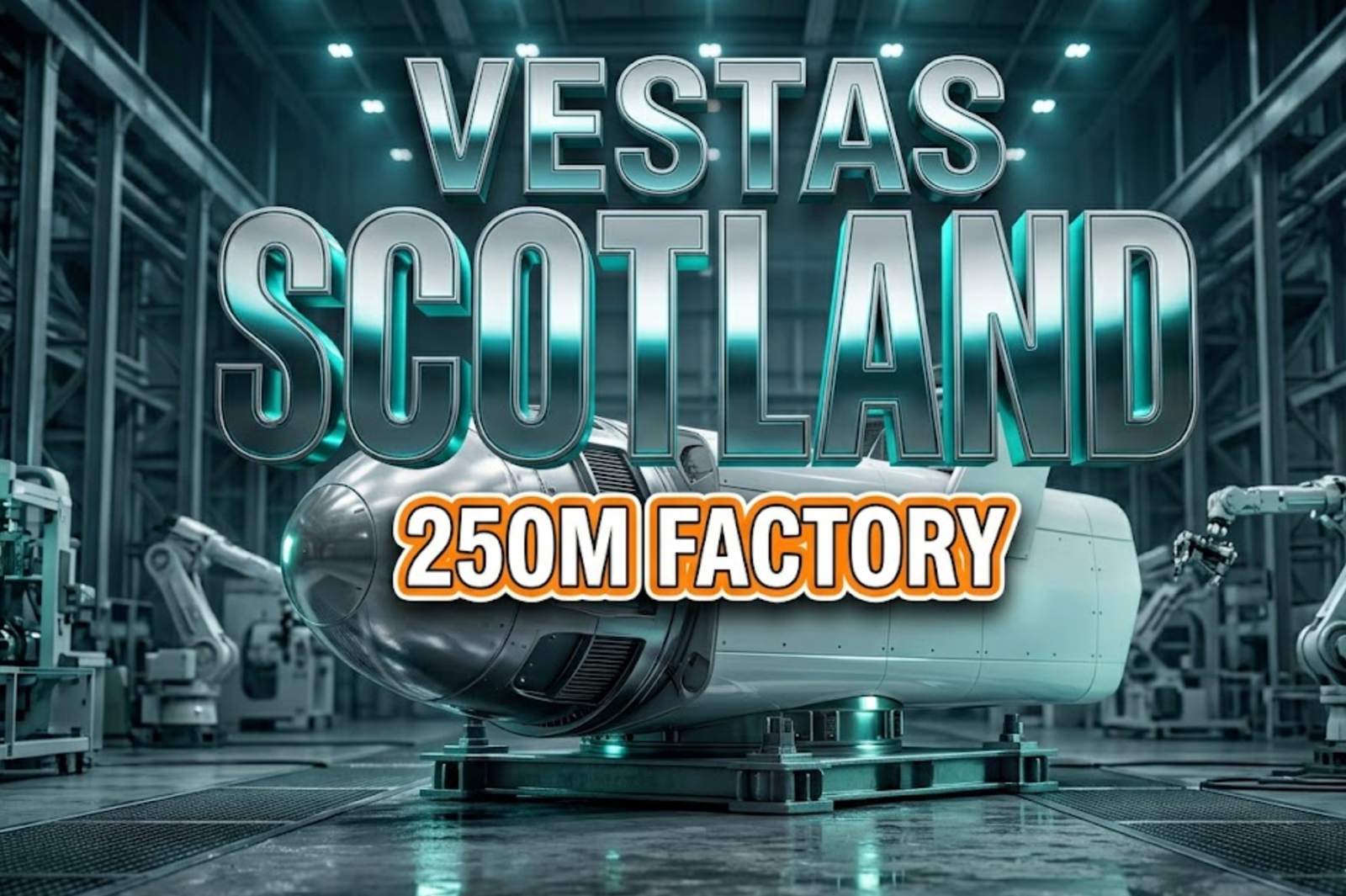
 Vestas has unveiled plans to invest over 250 million euros in a cutting-edge nacelle and hub manufacturing facility in Scotland, a move that could reshape the European offshore wind supply chain. The Danish wind energy giant is banking on upcoming auction rounds to greenlight what would become one of the largest renewable energy industrial investments in the United Kingdom.
The proposed factory would produce components for Vestas’ flagship V236-15.0 MW offshore turbine, currently among the most powerful wind turbines available globally, while creating up to 500 skilled jobs in the region.
Record Auction Results Spark Investment Decision
The announcement comes on the heels of the United Kingdom’s successful AR7 auction in January 2026, which delivered record-breaking results for offshore wind development. That auction provided the market confidence Vestas needed to seriously consider large-scale manufacturing investment on British soil.
The investment decision hinges entirely on securing substantial orders from both the AR7 and AR8 auction rounds. This direct linkage between energy policy outcomes and industrial commitment highlights how government support mechanisms drive manufacturing localization in the renewable sector.
The UK’s offshore wind pipeline has grown substantially, with developers committing to projects that will require hundreds of turbines over the next decade. For Vestas, establishing local production capacity means reduced logistics costs, shorter delivery times, and stronger relationships with British project developers who increasingly value domestic supply chains.
Strategic Manufacturing Hub for Europe
The proposed Scottish facility represents more than just a production line. Vestas envisions it as an anchor for a broader industrial ecosystem that would attract component suppliers and specialized service providers to the region.
The plant would manufacture nacelles, the housing units that sit atop wind turbines and contain the generator, gearbox, and other critical machinery. It would also produce hubs, the central components that connect turbine blades to the nacelle.
If approved, this would mark Vestas’ fifth European manufacturing site dedicated to offshore wind components. The company already operates facilities in Denmark, Germany, and other locations across the continent, but none currently focused on the V236-15.0 MW model at scale.
Key Project Details:
- Total investment: Over 250 million euros
- Direct jobs created: Up to 500 skilled positions
- Primary products: Nacelles and hubs for V236-15.0 MW turbines
- Target markets: United Kingdom and broader European offshore projects
- Potential start date: 2029 or 2030
Government Backing and Economic Impact
Both the British and Scottish governments have expressed strong support for the project, recognizing its potential to strengthen energy security while advancing decarbonization goals. UK Energy Secretary Ed Miliband has publicly highlighted the investment as proof that robust renewable energy policies attract world-class manufacturing.
The facility would contribute significantly to the UK’s ambition to become a global leader in offshore wind technology. Britain already boasts the world’s largest installed offshore wind capacity, and government targets call for massive expansion by 2030.
Beyond direct employment, the project promises substantial multiplier effects. Supply chain companies specializing in electrical components, precision machining, composite materials, and logistics services would likely establish operations nearby or expand existing facilities to serve Vestas.
Scotland in particular stands to benefit from this industrial clustering. The region already hosts several renewable energy manufacturers and has positioned itself as a strategic location for offshore wind development, thanks to favorable wind resources, existing port infrastructure, and a skilled workforce with engineering expertise.
Nearshoring Trend Reshapes Wind Industry
Vestas’ conditional commitment reflects a broader industry shift toward nearshoring, the practice of relocating manufacturing closer to end markets. This strategy has gained momentum as companies seek to mitigate supply chain disruptions, reduce carbon footprints from transportation, and respond to local content requirements in government contracts.
For offshore wind specifically, nearshoring makes particular sense. Turbine components are enormous and expensive to ship internationally. Nacelles for 15 MW turbines can weigh over 500 tons, while individual blades stretch beyond 100 meters in length.
Manufacturing these components locally eliminates the need for specialized heavy-lift vessels for transcontinental shipments, reduces weather-related delivery delays, and simplifies quality control and after-sales service.
The Scottish facility would also strengthen Vestas’ competitive position against rivals like Siemens Gamesa and GE Vernova, both of which have made similar nearshoring investments in recent years. As offshore wind projects grow larger and more complex, developers increasingly favor suppliers with proven local manufacturing and service capabilities.
Critical Timeline and Next Steps
The timeline for the Scottish facility remains contingent on multiple factors, with the AR8 auction results being paramount. That auction round is expected to take place within the next year, and its outcomes will largely determine whether Vestas proceeds with construction.
Should the auctions deliver sufficient orders, Vestas would need to secure planning permissions, finalize site selection, and complete detailed engineering before breaking ground. Industry observers estimate the facility could begin operations between 2029 and 2030 if all approvals proceed smoothly.
This synchronization between offshore project timelines and manufacturing capacity represents a calculated risk. Building the plant too early without confirmed orders would leave expensive equipment idle. Waiting too long could mean losing market share to competitors with established local production.
As Europe accelerates its renewable energy transition and offshore wind becomes central to climate strategies across the continent, manufacturing investments like Vestas’ proposed Scottish facility will determine which countries capture the economic benefits of this energy revolution. The coming months will reveal whether policy support translates into industrial reality, potentially establishing Scotland as a cornerstone of Europe’s offshore wind manufacturing landscape.
What do you think about major renewable energy manufacturers choosing your region for large-scale investments? Share your thoughts in the comments below.
 Indian Man Jailed 6 Months for Molesting a Singapore Airlines Crew
  Meesho Shares Jump 7% as Citi Initiates Coverage With ₹210 Target
  Tata Electronics Cyberattack Exposes Apple and Tesla Files
  Info Edge’s Startup Portfolio Hits Rs 41,300 Crore at 8.4x Multiple
  Tata Motors’ FY31 Plan: Rs 40,000 Crore, 15 ICE Models and 10 EVs
  19-Year-Old Self-Taught AI Entrepreneur Earns Rs 1 Crore a Month