
 Ishan Crawford
 The International Energy Agency expects the global oil market to swing from one of the largest supply disruptions in history to a surplus above 5 million barrels per day in 2027, as Middle East production and exports recover under the U.S.-Iran peace agreement. The agency’s first outlook for next year, published Wednesday in its monthly oil market report, forecasts supply growth of 8 million barrels per day against demand growth of just 2 million bpd. The arithmetic leaves a supply overhang of roughly 5 million bpd by late 2027, a wholesale reversal from a 2026 in which the agency has spent most of the year watching inventories drain at a pace that strained refineries, governments, and central banks from New Delhi to Brussels.
The IEA’s projection assumes the war triggered by U.S. and Israeli strikes on Iran on February 28 has ended, that the Strait of Hormuz has reopened, and that Iran’s oil can flow again once the U.S. naval blockade is lifted. None of those conditions is guaranteed, and the agency was explicit about the downside risks. But the headline number, the surplus the agency has built around a peace that has yet to be formally signed, gives the oil market something it has not had since the war began: a number to plan against.
The Forecast That Flips the Market
The IEA’s June outlook puts the math plainly. Supply is set to outpace demand by roughly 5 million barrels a day in 2027, a figure that would mark the end of the months of war-driven shortages the agency has tracked since February. Reuters first reported the figures on Wednesday.
The mechanics sit on three numbers. The IEA forecasts supply growth of 8 million bpd next year, demand growth of just 2 million bpd, and the gap between them becomes the headline surplus once the lost Gulf and Iranian barrels are netted back into the balance. The IEA’s 2027 surplus forecast from its June report puts the gap at 5.05 million bpd. Demand is set to grow because prices fall and the world economy steadies, not because of any one country’s policy choice. Supply is set to grow because Gulf fields and Iranian exports come back on line at the same time.
If the deal holds, exports and production from the Gulf should see a gradual recovery, not least because Iranian oil exports can fully resume once the U.S. blockade is lifted.
The line sits inside the IEA’s monthly oil market report, the document that has tracked the war’s toll on barrels since late February. The Paris-based agency advises industrialized countries on energy security, and its monthly balances are the official reference most governments use to size emergency releases. The IEA did not name a country or company it expects to drive the assumed 2 million bpd demand rebound; it pointed instead to lower prices and a steadier global economy.
What Blocked the Barrels
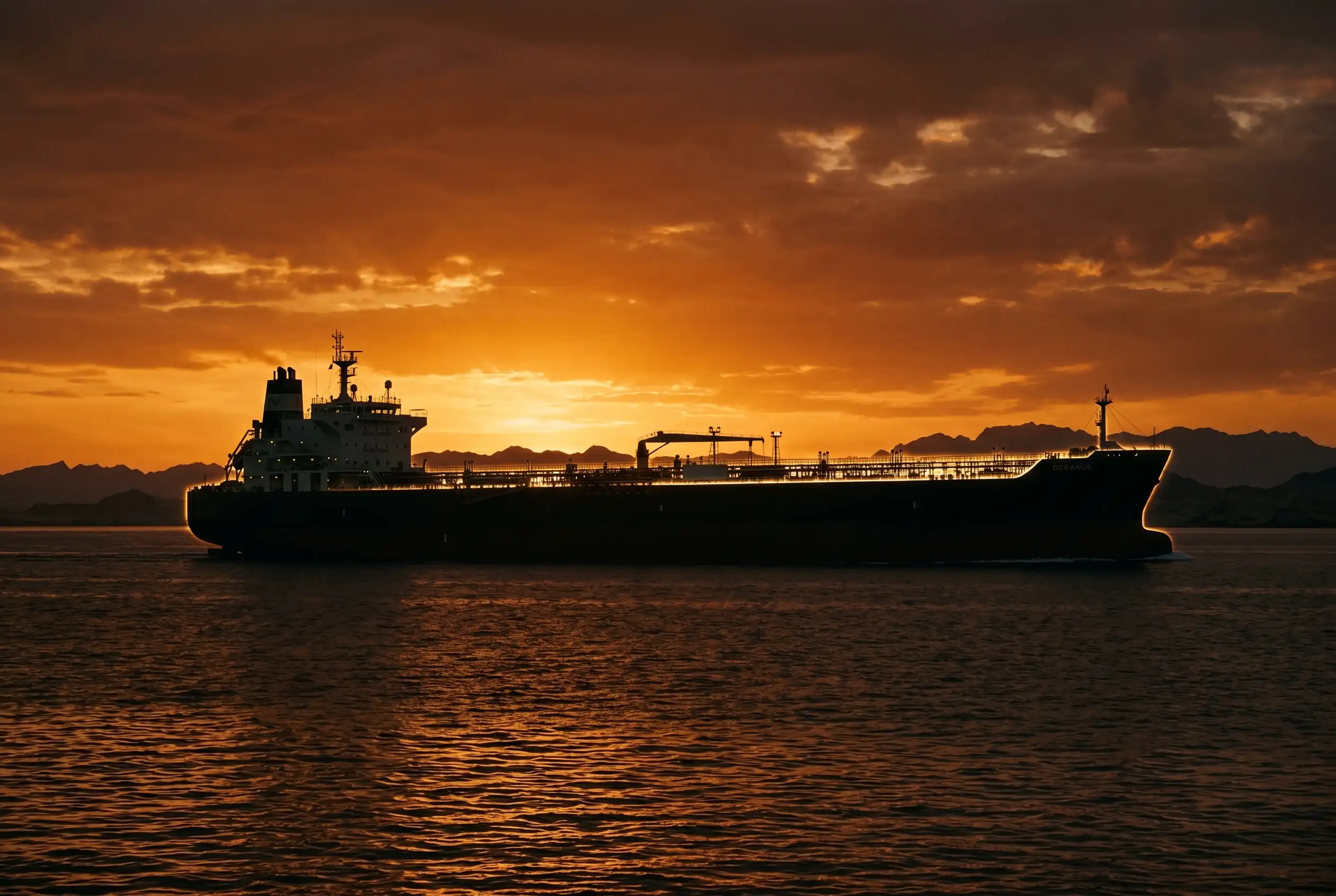
The Iran war triggered by U.S. and Israeli strikes on February 28 closed the Strait of Hormuz within days, and roughly 20% of global seaborne crude and liquefied natural gas stopped moving through the corridor. The conflict severed Iranian exports through a U.S. naval blockade and reduced flows through a corridor that had been carrying more than 100 tankers a day before the war. The same shock rippled across Asian refining balances and forced governments to release emergency reserves. Tanker traffic through Hormuz itself, however, remains well below prewar levels.
Middle East flows have already started to recover as ship-to-ship transfers picked up in the Gulf of Oman in early June. The IEA puts total regional flows at around 12 million bpd in early June, up from a May low of 9.6 million bpd. Kpler projects traffic through Hormuz could rise to nearly 50% of prewar levels within 30 days of the deal.
The first barrels to move after the framework agreement was signed electronically by U.S. President Donald Trump, Vice President JD Vance, Iranian Deputy Foreign Minister Majid Takht-Ravanchi, and Tehran’s top negotiator Mohammad Bagher Ghalibaf crossed the U.S. blockade line on Tuesday. Two National Iranian Tanker Company vessels, the Diona and Hero 2, carried 3.8 million barrels of Iranian crude out of the Gulf, and a third tanker carrying 1 million barrels sailed past the Navy’s blockade line in the Gulf of Oman on Wednesday, according to TankerTrackers data, marking the first Iranian crude exports in two months. A third NITC tanker, the Stream, was heading toward Iranian ports on Wednesday. The shipments came ahead of the formal MoU signing scheduled in Switzerland.
The Inventory Burn That Got Us Here
The IEA’s surplus forecast is the mirror image of a drawdown the agency has spent most of 2026 measuring. Since the war began in late February, oil inventories have fallen at a rate of 3.8 million bpd, according to preliminary IEA data. Stock draws accelerated to roughly 4.6 million bpd in May alone, as governments and refiners tapped strategic and commercial reserves to fill the gap left by Middle East barrels that could not move. The IEA estimates the conflict has blocked more than 14 million bpd of regional production and exports. Cumulative losses since the closure of Hormuz have crossed 1 billion barrels.
Strategic reserves have done the heaviest lifting. As of June 12, IEA member countries had released 252 million barrels under an emergency mandate, with another 79 million barrels scheduled for release by the end of July 2026. That brings total mobilization under the emergency window to 331 million barrels. Russia kept its crude and refined fuel exports stable at around 7.4 million bpd in May despite continued Ukrainian drone attacks on its refineries, though the attacks forced Moscow to prioritize its domestic fuel market and maximize crude exports.
Demand destruction has spread beyond the war zones. The IEA now forecasts global oil demand will fall by 1.1 million bpd in 2026, after a 5 million bpd April-to-June demand collapse and a sharper drop than the 420,000 bpd decline the agency had projected earlier. Deliveries of gasoil, the heating and diesel proxy, have shown signs of strain across almost all regions.
| IEA figure | 2027 outlook |
|---|---|
| Supply surplus | more than 5 million bpd |
| Supply growth | 8 mb/d |
| Demand growth | 2 mb/d |
The Bottlenecks Waiting in the Gulf
Even with the framework agreement signed, the physics of moving 14 million bpd back through a closed strait will not yield to a date on a calendar. More than 300 loaded vessels and 250 empty vessels are stranded in the Persian Gulf, according to vessel tracking data reported by energynews.pro, and another 300 very large crude carriers are waiting in the Gulf of Oman. Complete demining of navigation corridors is expected to take between 40 days and six months. How the Hormuz crisis has moved oil prices shows why the supply math is the binding constraint.
- Demining: full clearance of navigation corridors expected to take 40 days to six months
- Initial capacity: narrow 800-meter corridors along the Omani coast, capping capacity at less than 40% of pre-crisis levels during the first month
- War-risk insurance: premiums surged from below 0.1% to 1% to 4% of hull value per seven-day voyage
The IEA was direct about the downside risks in its report on Wednesday, and the trade press is filling in the operational detail. Political uncertainty, prolonged demining, and unresolved shipping arrangements could each slow the return of Middle East barrels, the agency said. War-risk insurance premiums have surged from below 0.1% of hull value to between 1% and 4% for a seven-day voyage, adding $1.1 to $4.4 million per transit for a VLCC valued at $110 million. Tehran has said it intends to impose navigation service fees of approximately $2 million per transit, equivalent to around $1.00 per barrel. Ship traffic through the strait could rise to nearly 50% of prewar levels within 30 days of the deal, Kpler analysts estimate, with ship-to-ship transfers in the Gulf of Oman already boosting regional flows. Ships sailing through Hormuz could increase to 40 per day, compared with 100 daily transits before the U.S. and Israel attacked Iran on February 28, Kpler said.
What Could Slow the Glut
The IEA’s forecast is conditional on the deal holding, and the agency spent as much of its Wednesday report on what could go wrong as it did on the headline surplus. Two Iranian state-media interpretations of the agreement diverge from the U.S. position: Iranian outlets say ships can transit Hormuz for 60 days without paying a toll, after which Iran and Oman will administer the strait; Vice President JD Vance, in the U.S. position on Hormuz transit after the deal, said the U.S. expectation is Hormuz will remain toll-free over the long term. Secretary of State Marco Rubio told Congress earlier in June that Iran mined large segments of the strait, a claim President Donald Trump has downplayed. The global shipping trade group Bimco said the threat of mines remains a concern and that the security situation remains volatile. The deal itself is a 60-day agreement expected to be signed in Switzerland around June 19, after which more substantive talks will follow.
Even with the deal signed, the IEA noted that inventories could fall further to historic lows before the market rebalances later in the year. Demand in 2027 will recover only because prices fall and the world economy steadies. The agency did not provide a separate scenario for a deal collapse, but it flagged political, operational, and transit-fee risks as the binding constraints on supply.
Rebuilding What the War Emptied
For all the price pain the war inflicted, the IEA frames the 2027 surplus as something the market needs. Governments spent the spring draining the strategic petroleum reserves they had spent decades accumulating. The 331 million barrels mobilized since June 12 are a fraction of what IEA member states will need to buy back when prices are low. The agency, in its monthly oil market report published Wednesday, called the surplus an opening to refill what the war emptied.
Provide a welcome respite to the market and an opportunity to replenish depleted inventories, or to build new strategic reserves, as countries review their energy strategies and policies in response to the crisis.
The IEA, the Paris-based agency that advises industrialized countries on energy security, attached that framing to a market that has spent the war drawing down inventories. Frontline, the tanker company with five ships in the Gulf, expects vessels to start moving quickly once the deal is signed, CEO Lars Barstad told CNBC. Kpler analysts project that ships entering the Persian Gulf could rise to about 12 per day in the first 30 days, half the prewar level.
Brent crude stood at $79.50 on June 17 and WTI at $76.50, well below the $144 peaks recorded at the height of the crisis in April and May 2026, energynews.pro reported. OPEC, in its own monthly report, lowered its forecast for 2026 demand growth to 970,000 bpd. The gap between the IEA’s 1.1 mb/d 2026 demand drop and OPEC’s 970,000 bpd demand growth figure captures how unsettled the post-deal outlook remains. Iran’s first crude exports in two months left the blockade line ahead of the framework agreement scheduled for formalization.
 Hyderabad Gold Dip Freezes Buying as Duty Talk Hits Wedding Season
  India Pushes Japan CEPA Review After 15 Years of One-Way Gains
  HDFC Bank’s US Class Action Turns Deposit Scheme Into Securities Reckoning
  Gold Holds Above $4600 as Treasury Buybacks Fuel Debasement Bid
  Scotland’s Prevention Push Leaves Community Groups Squeezed
  Amazon Locks Three Million Nvidia GPUs Even as Trainium Grows