
 Ishan Crawford
 Children in Scotland’s care system die at twice the rate of other children, and most of their deaths go unreviewed, new freedom of information data shows. Just 40 of the 105 deaths recorded over the past five years have gone through a formal review process, according to The Ferret, a Scottish investigative journalism outlet.
Campaigners called the findings “tragic” and said the lack of transparency around when reviews happen, and what they find, is “unacceptable.” Three separate public bodies cannot even agree on how many children have died.
Two-Thirds of Care Deaths Go Unreviewed
Scottish Government policy says the deaths of everyone under 18, plus care leavers up to 26, should be investigated to help prevent future deaths. That job falls to the National Hub for reviewing and learning from the deaths of children and young people, a joint project between Healthcare Improvement Scotland and the Care Inspectorate.
The figures emerged after The Ferret filed a string of FoI requests around the release of the National Hub’s latest report. The requests found that only 40 of the 105 deaths recorded in the last five years had actually gone through that review process. Almost two thirds were never examined at all.
NHS Inform is NHS Scotland’s public information service. It says a death review helps families understand what happened and lets services learn lessons that might stop another child dying the same way.
The duty to review looked-after children’s deaths sits in older regulations, later extended to young people in continuing care or aftercare through arrangements that took effect in October 2021, the first time reviews were required nationwide.

How Many Children in Care Have Died?
That depends which public body is asked. The most comprehensive count, from the National Hub, puts the toll at 105 children and young people over five years, an average of 21 a year, or roughly one death every 17 days. The Scottish Government’s own figures show 22 deaths in 2025 alone, while the Care Inspectorate logged 37 between 2021 and 2025.
| Source | Reported Total | Time Period |
|---|---|---|
| National Hub (most comprehensive) | 105 deaths | Last five years, about 21 a year |
| Scottish Government | 22 deaths | 2025 alone |
| Care Inspectorate | 37 deaths | 2021 to 2025 |
| Deaths formally reviewed | 40 deaths | Out of 105 recorded since 2021 |
The National Hub’s own published data adds yet another slice. Its most recent release recorded ten deaths of looked after children between April 2023 and March 2024, half linked to underlying health conditions.
Glasgow University’s Professor Sarah Armstrong led the deaths in state care report that prompted the FoI requests. She said she was concerned that Healthcare Improvement Scotland, the Care Inspectorate and the Scottish Government all gave different figures when asked the same question.
She was also critical of the National Hub itself, which said in its most recent report that the number of deaths was too small to provide “robust” learning points. “How many more years are needed until there is a large enough number of deaths so that the data is robust enough to analyse?” Armstrong asked. “How many more lives might have been saved in that time?”
Scotland is not the only place where data on vulnerable children falls short. A similar pattern shows up in child health records, where widening vaccine uptake gaps among ethnic minority children have gone largely unaddressed for years.
Suicide and Overdose Cut Short Young Lives
At least 16 children and young people died by suicide or drug overdose in the care system between 2021 and 2024, the youngest just 11 years old, according to The Ferret’s earlier reporting. Those deaths were among 38 cases reported to the Scottish Government by local authorities, ranging in age from three months to 21 years old.
- Foster care: about a quarter of the 37 deaths detailed by the Care Inspectorate between 2021 and 2025 involved children in foster placements aged six to 17.
- Care supervision orders: other children who died were looked after at home under a supervision order, with social work involvement, rather than living away from their families.
- Residential care or school: some of the young people who died were living in residential care homes or residential schools.
- Under five: six of the children in that dataset had not yet reached their fifth birthday.
Not all of the deaths were preventable. At least three children died in hospital and two in residential care homes in the last five years because of underlying health conditions, not the kind of harm reviews are designed to catch.
One Mother Still Waiting for Answers
Nina is a migrant mother whose son was removed from her care when he was two years old. He later took his own life at 15, while living in permanent foster care. His death has never been reviewed.
“I can’t move on,” Nina told The Ferret. “I am like a zombie. I don’t have a life.”
She said she still has many unanswered questions about her son’s death and wants to see accountability. “It is not fair that this hasn’t happened,” she added.
The Promise Oversight Board Calls It an Accountability Failure
Scotland published The Promise in February 2020, built on the conclusions of its Independent Care Review, committing every child to grow up “loved, safe, respected, and able to realise their full potential.” A bill passed in March 2026 wrote many of its recommendations into law.
David Anderson, chair of the Promise Oversight Board and someone with his own experience of the care system, said the missing data made it impossible to hold anyone to account.
It is completely unacceptable that, on an issue as serious as the deaths of care-experienced children and young people, Scotland cannot clearly show who has died, who was reviewed, what was learned and what changed.
“Families should not need journalists, academics or an oversight board to piece this together from different places,” Anderson added. “If the system cannot explain this clearly, it is not a technical problem. It is an accountability failure.”
Many of the children behind the figures come from Scotland’s poorest communities. Together Scotland, a children’s charity coalition, has reported that over half of looked after children were living in the country’s most deprived areas as of mid-2024, a pattern campaigners link to wider concerns that progress on child poverty still falls short of targets.
Healthcare Improvement Scotland and the Care Inspectorate jointly run the National Hub and both responded to the findings. A Healthcare Improvement Scotland spokesperson said the death of any child is “extremely distressing for all of those involved” and that the hub aims to ensure every child’s death is subject to a thorough review while keeping families informed. A Care Inspectorate spokesperson said all deaths “must be treated with compassion, dignity and respect,” adding that learning should be shared across partners where possible.
Five Years Later, the Same Warning Persists
This is not the first time Scotland’s care data has drawn criticism. In 2022, the Promise Oversight Board, then chaired by Fiona Duncan, warned that the lack of information on deaths of care-experienced young people compounds what is already a heart-breaking position. That report counted 59 deaths between 2019 and the first nine months of 2021 alone.
Four years on, the new FoI figures suggest the same gap remains, and by Armstrong’s account, still not analysed closely enough to draw lessons.
England Now Faces Its Own Reckoning
Westminster’s Department for Education launched a review into care leaver deaths on 16 April 2026, led by social worker Clare Chamberlain and broadcaster Ashley John-Baptiste. Officials called the toll “unacceptably high.”
Government data published in May 2025 recorded 91 notifications of care leaver deaths in England during 2024 to 2025, most aged between 16 and 21. The children’s rights charity Article 39 has since said councils reported at least 105 deaths of care leavers aged 16 to 24 in the year to March 2026, and warned the real number is probably higher still.
The Scottish and English figures are not directly comparable. Different age ranges, different populations, different counting rules. But both countries are now asking the same basic question: who is dying, and why nobody can say for certain.
Siobhian Brown is Scotland’s Minister for The Promise. She said the country was making progress, pointing to an 18 per cent reduction in the number of children in care since 2020. “Every premature death of a care-experienced person is a tragedy,” she told The Ferret, adding that a new law now requires ministers to report annually on the deaths of looked after children.
“We continue to work with our partners to improve processes and clarify responsibilities in the event of the death of a looked after child or young person,” Brown said. “All such cases should be reviewed by the local authority.”
 GTA Online Summer Heist Event Doubles Classic Finales Cash
  Samsung Galaxy F70 Pro Tease Locks Flipkart While M47 Holds Amazon
 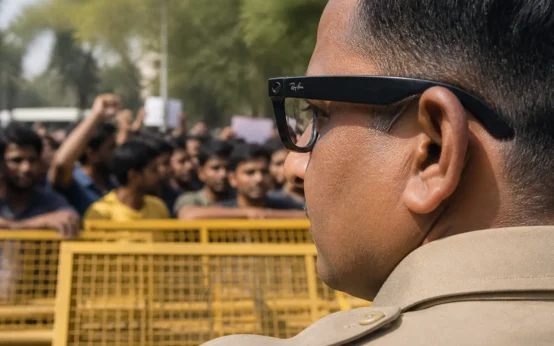 Meta AI Glasses Turn Delhi Protests Into Walking Cameras
  India’s Net Neutrality Review Follows Airtel Slicing Gap
  Galaxy Z Fold 8 Preorders Race Past S26 Benchmarks
  Maruti Hansalpur Plant D Lifts Capacity Toward Four Million