
 Ishan Crawford
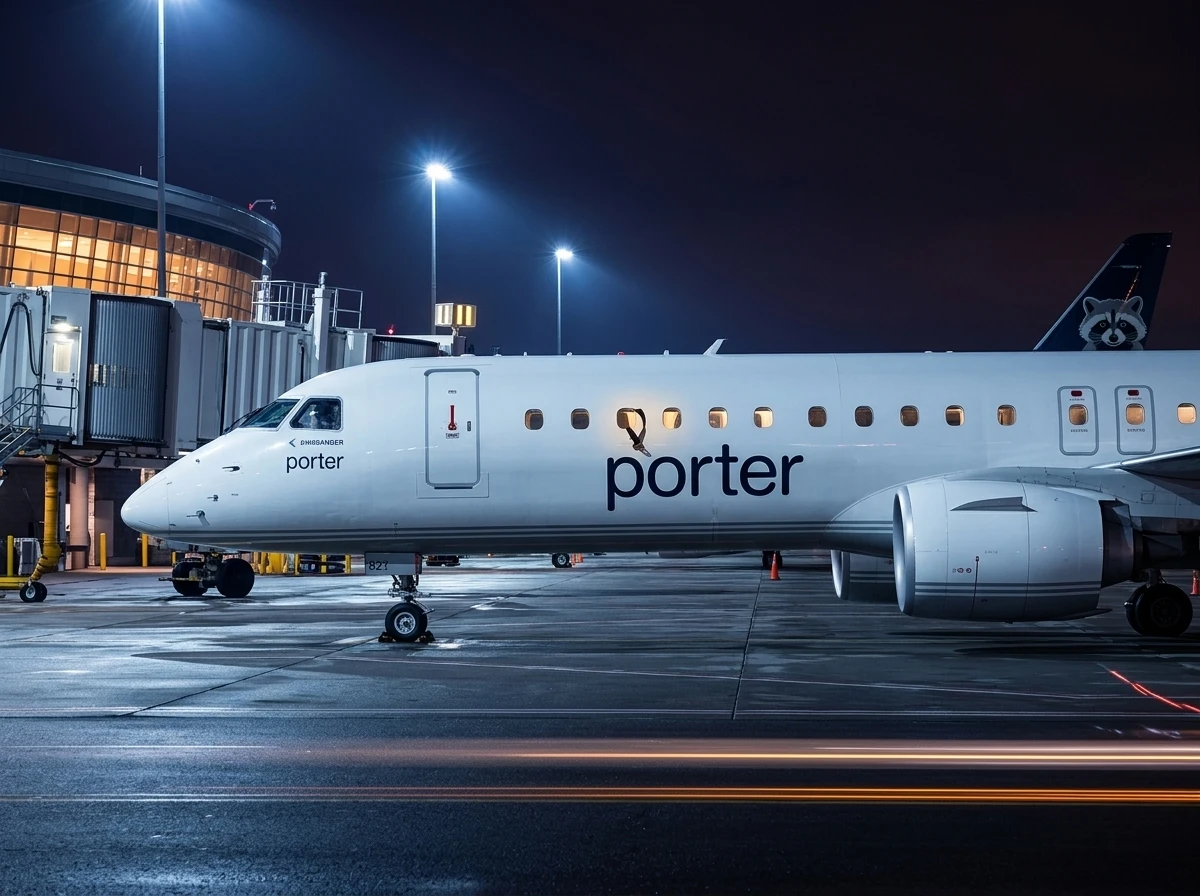
 A Porter Airlines flight from Victoria to Toronto was canceled Thursday after a young child stood in a seat and refused to buckle a seatbelt, forcing the aircraft back to the gate and past the airport’s hard 12:30 a.m. runway close.
Flight PD444 left the terminal at Victoria International Airport and taxied toward departure when crew spotted the problem. Parent and cabin crew tried repeatedly. Nothing worked. The plane returned, the family and bags came off, paperwork dragged on, and the remaining passengers spent the night on the ground.
What Unfolded on PD444
The aircraft had already pushed back and was heading for the runway when the issue became clear. A young child, described by the airline and passengers as a toddler, stood in the seat and would not secure the belt.
Porter spokesperson Brad Cicero said the parent and crew attempted to buckle the child but failed. “A young child was standing in their seat and would not secure their seatbelt,” the airline stated. “The aircraft could not take off in this unsafe condition, so the crew elected to return to the terminal and have the passengers disembark.”
Getting the family off required bridging the aircraft, retrieving checked baggage, and refiling plans. That process ran past 12:30 a.m., when YYJ’s runway closes for the night. Passengers rebooked for Friday. The rescheduled flight left in the afternoon or evening.
- Thursday evening, Aug. 6: PD444 boards and pushes back from Victoria for Toronto, scheduled near 11 p.m.
- After pushback: Crew notices child standing and unsecured; parent and crew attempts fail.
- ~11:30 p.m.: Family removed after roughly an hour of efforts, per one passenger.
- Past 12:30 a.m.: Paperwork and baggage push past runway curfew; flight canceled.
- Friday: Remaining passengers depart on a later Porter flight.
Porter apologized for the effect on other passengers.
Why the Plane Had to Turn Back
Canadian Aviation Regulations require every passenger to be seated and secured with a safety belt before takeoff and whenever the seatbelt sign is on. A standing child creates an immediate unsafe condition. Crews have no discretion to ignore it.
Transport Canada child restraint guidance notes that standard aircraft lap belts fit small children poorly. The strap can ride up into the abdomen in turbulence or impact. Approved child restraint systems are permitted and strongly recommended, though not mandatory for every age. Infants under two may ride on a lap, but anyone in their own seat must stay belted.
- All occupants must use the aircraft safety belt during taxi, takeoff, landing and when the sign is illuminated.
- Approved car seats or devices meeting Canadian or accepted foreign standards can secure infants and young children.
- Booster seats without harnesses and some other devices are not approved for aircraft use.
- Operators must ensure the device is properly installed with the aircraft belt routed correctly.
In this case the child simply would not stay seated long enough for the belt to latch. One passenger, Aryeh Kozuch, told CBC the child appeared scared rather than defiant, repeatedly sliding out and hiding under the seat.
The Curfew That Sealed the Cancellation
Victoria International operates under a strict night curfew. Runway operations stop at 12:30 a.m. Late flights have almost no buffer. PD444’s scheduled departure already sat near 11 p.m. Any return to the gate ate the remaining window.
| Milestone | Approximate Time | Impact |
|---|---|---|
| Scheduled departure | ~11:03 p.m. | Boarding delayed slightly |
| Family removed | ~11:30 p.m. | One hour already lost |
| Runway close | 12:30 a.m. | No further departures allowed |
| Rescheduled departure | Friday afternoon/evening | Overnight stranding |
The combination of a hard safety stop and a hard operational close left zero recovery time. Similar late-night services on constrained airports face the same risk. A five-minute delay becomes an overnight stay once the clock hits the wall.
Passengers Describe Frustration and Fear
Hillary Hertzberg told CBC the process “took forever.” The child left around 11:30 p.m. after nearly an hour on the aircraft. Communication after the cancellation was poor. Some passengers scrambled for hotels; others already had places to stay. Hertzberg said she wants Porter to cover expenses. The airline did not confirm compensation when asked.
They just kept hiding under their seat. If they got forced into being strapped in, they just kind of slid out underneath.
That was passenger Aryeh Kozuch describing the child. Kozuch noted real frustration among travelers yet saw the youngster as frightened rather than spoiled. Online reaction split differently. Many posts focused on parental responsibility, calling for the family to face consequences or lawsuits from stranded passengers. Others asked why removal did not happen faster once the plane left the gate.
What Porter and the Rules Owe Travelers
Under the Canadian air passenger protection rules, a cancellation that forces an overnight wait requires the airline to offer free hotel or comparable lodging, transportation to and from it, reasonable food and drink, and a means of communication. Alternate travel must be arranged at no extra cost. Cash compensation for inconvenience applies only when the disruption is within the airline’s control and notice is short; safety-related events often fall outside that bucket.
Porter confirmed rebooking for the next day and apologized. Whether it supplied hotels and meals on the night remains unclear from public statements. Passengers who paid out of pocket can file claims within one year. Large versus small airline status affects compensation amounts if any apply, but standard care standards cover the overnight piece regardless.
Family Travel Friction on Tight Schedules
Late-night cross-country hops leave little room for the unpredictable. Toddlers melt down. Belts feel strange. Darkness and engine noise amplify fear. Airlines train crews for the scenario, yet once the aircraft is moving the options narrow to return or risk. Government advice on flying with children urges approved restraints and advance practice with car seats. Many families still rely on lap holding for infants or hope a standard belt will do.
Public comment on the incident largely landed on the parent. That reaction is common after any delay blamed on a child. The deeper pressure sits in the system: curfews written for noise and community rest, safety rules written for crash survivability, and commercial schedules that pack the last legal slot. When those three meet one uncooperative small body, the whole load of passengers pays the overnight cost.
Frequently Asked Questions
What are the Canadian rules for child seatbelts on planes?
Every passenger in a seat must wear the aircraft safety belt during taxi, takeoff, landing and when the sign is on. Approved child restraint systems meeting Transport Canada standards are allowed and recommended for young children because adult belts fit poorly; they are not mandatory for every age group, and infants under two may sit on an adult’s lap.
Why does Victoria International Airport close its runway at 12:30 a.m.?
YYJ operates under a night curfew that ends runway operations at 12:30 a.m. to limit noise for surrounding communities. Flights that cannot depart before that time must wait until the airport reopens the next day.
Do passengers get free hotels after an overnight flight cancellation in Canada?
Yes. When a cancellation forces an overnight wait that would not have been needed on the original itinerary, the airline must offer free reasonable accommodation, ground transport to and from it, food and drink, and communication access under the Air Passenger Protection Regulations.
Can airlines remove a family if a child will not buckle?
Crews can and do return to the gate and deplane passengers who create an unsafe condition. Safety takes priority over schedule. Once the family is off, the flight may continue if time and paperwork allow; in this case the curfew closed that window.
The passengers who finally left Victoria on Friday carried one more story of how a single unsecured seat can empty a plane.
 ONGC licence frees Venezuela cash and operatorship talks
  Anthropic Hits $65 Billion Run Rate and Flips the AI Cash Test
  Supreme Court grounds the fare free-for-all with three-week clock
  Gold Nears $4400 as Soft Data Meets Oil Inflation Risk
  Nifty Slips as Zaggle Circuits and Dhoot Debuts Big
  Diesel Crack Tops $100 as Iran Rhetoric Lifts Crude