
 Ishan Crawford
 India’s biggest paint makers just closed an earnings season that, on the surface, looked like a clean turnaround. Asian Paints posted a 69.3% jump in consolidated net profit for the March quarter, Berger Paints and Kansai Nerolac both widened margins, and Indigo Paints, JSW Dulux and the rest of the pack traded higher on results day. Yet on call after call, the same two words kept coming back: crude and forex.
Treat those as the headline risk and you miss the mechanism. Crude derivatives have always pushed paint costs up and down. What has changed is the industry’s room to pass those costs on, and that room has been narrowing ever since Grasim’s Birla Opus arrived with discounts, dealer incentives and a war chest.
The Two Words Every Paint CEO Repeated in Q4
Ask why oil matters this much to a tin of emulsion and the cost sheet answers it. Crude oil derivatives make up roughly 30% to 35% of raw material costs for the paint industry, because solvents, binders and resins are all priced off global oil. Add titanium dioxide, the white pigment that runs on its own cycle, and a paint maker’s gross margin becomes a leveraged bet on commodity chemistry.
The math is unforgiving in the short run. Analysts tracking the sector estimate that a roughly 10% sequential rise in crude has historically shaved about 130 basis points (bps, or hundredths of a percentage point) off aggregate gross margins in a single quarter. Input costs that had stayed benign for months escalated sharply from March, just as tension in West Asia added supply risk and a softer rupee raised the bill on imported inputs.
Rajiv Rajgopal, joint managing director and chief executive of JSW Dulux, set out the watchlist plainly on the company’s earnings call.
Demand is coming back, but the two biggest variables for the paint industry remain crude and forex, which need to be monitored very closely.
By mid-May, his company had pushed through close to 9.7% in price increases, and he reckoned the industry still needed another 3% to 4% to fully recover cost inflation.
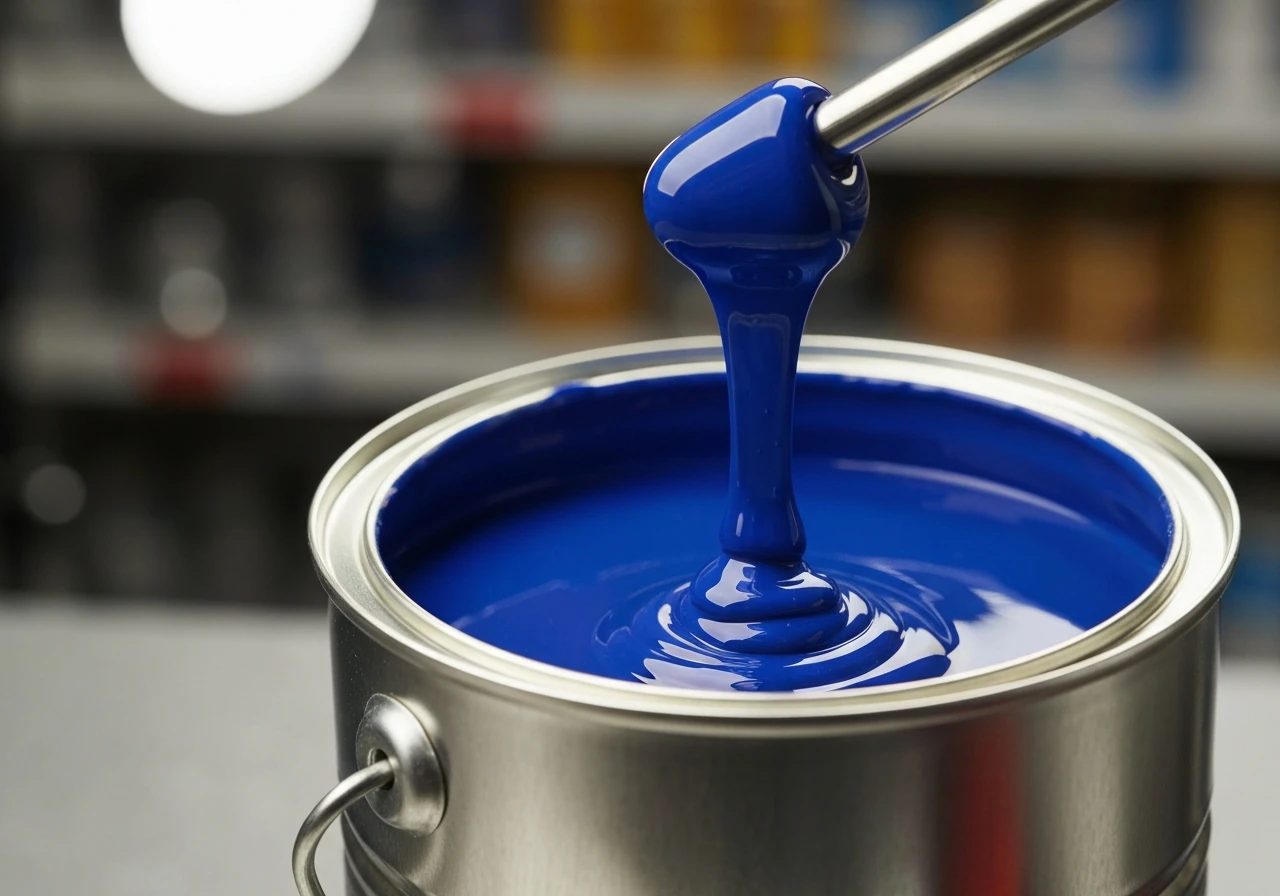
Why Crude Stings More Than It Did Five Years Ago
When crude last spiked hard, the leaders could raise prices almost at will and watch volumes keep climbing. That reflex is what has weakened, and it is the reason a familiar cost shock now reads as a genuine margin threat rather than a passing squeeze.
The Pricing Power That Used to Absorb Shocks
Asian Paints, Berger and Kansai Nerolac together still control more than three-quarters of India’s organised paint market. For two decades that concentration handed the leaders something close to pricing immunity: input costs rose, sticker prices followed, and a thin, fragmented field of rivals had no real answer.
That structure rewarded patience. A maker could absorb a bad crude quarter knowing the next price letter to dealers would stick. The rich valuations the sector carried were built on exactly that confidence.
What the New Entrant Changed
Grasim Industries changed the arithmetic when it launched Birla Opus and spent heavily to buy shelf space. Backed by the Aditya Birla group’s cement-and-putty distribution, the brand reached tens of thousands of towns fast and leaned on extra dealer volume and contractor coupons to win trials.
The scoreboard moved with it. Asian Paints’ decorative share slipped from roughly 59% to about 52% through September 2025, with the challenger capturing close to 6.8% in its early quarters. Pidilite’s Haisha brand and JSW Paints are pushing from other corners. Every rupee of price hike now carries a question that did not exist five years ago: will the painter simply walk to the cheaper tin?
The March-Quarter Scoreboard
For all the caution on the calls, the reported numbers were strong, helped by softer year-earlier bases and a recovery in decorative volumes through the back half of the fiscal year (FY, the April-to-March financial period). Here is how the four listed players that have reported stack up for the March quarter.
| Company | Q4 FY26 net profit | YoY change | Revenue growth (YoY) |
|---|---|---|---|
| Asian Paints | ₹1,172.1 crore | +69.3% | +10.8% |
| Berger Paints | ₹334.8 crore | +27.8% | +6.1% |
| Kansai Nerolac | ₹112.3 crore | +3.5% | +7.5% |
| Indigo Paints | ₹57.7 crore | +1.4% | +9.7% |
The market leader carried the quarter on volume. Its domestic decorative business grew 12.4% by volume and 10.2% by value, with industrial coatings adding double-digit growth on top, according to Asian Paints’ March-quarter financial results. Indigo Paints, smallest of the four, defended an industry-leading gross margin near 48.6% even as profit growth flattened, per its FY26 results disclosures.
The Price-Hike Tightrope
The common thread across the commentaries was restraint. Nobody wants to hand share to a discounting rival by pricing too aggressively, and nobody can eat crude inflation forever. So the increases have arrived in calibrated steps rather than one decisive move.
- Berger Paints took three price increases in the June quarter with a fourth on the way, for a cumulative 11% to 12% rise in decorative paints, according to chief executive Abhijit Roy and the company’s quarterly investor disclosures.
- JSW Dulux implemented close to 9.7% by mid-May and flagged a further 3% to 4% still needed.
- Asian Paints passed limited increases and said more “might happen” as it watches costs, in chief executive Amit Syngle’s words.
- Industry-wide, a further 6% to 8% of hikes were being lined up for June and July.
Each of those numbers is a wager. Push too hard and a contractor switches brands mid-project; move too slowly and the margin damage shows up two quarters later. That is the tightrope, and it is far narrower than it was before a deep-pocketed rival began underpricing the field.
What Brokerages Are Modeling for FY27
The forward picture is where the caution turns numeric. Analysts who cover the sector expect gross margins for Asian Paints and Berger to slip by about 0.5 to 1 percentage point in the first quarter of FY27, simply because price hikes lag cost increases. Should crude stay elevated and further hikes fail to land, some models show margins falling 4 to 4.5 percentage points by the second quarter.
That is the gap between the celebratory March print and the wary tone on the calls. Pravin Chaudhari, managing director of Kansai Nerolac, said inflation may force more increases and flagged the same West Asia, crude and rupee risks his peers named, points echoed in the company’s financial-results filings.
Valuations leave little cushion. Paint stocks have long traded at rich multiples on the assumption of durable pricing power, and that assumption is exactly what the new competitive map is testing.
Where Demand Cushions the Squeeze
The offset is real, and it is the reason the stocks rose rather than fell. Demand has been improving across urban and rural markets since late last year, and managements expect that to hold.
Amit Syngle, managing director and chief executive of Asian Paints, said he sees “early shoots” in April and May and expects at least high single-digit volume growth this fiscal year. A longer festive season and a favourable monsoon forecast feed the optimism, because paint demand tracks home construction, repainting cycles and rural cash flow.
If volumes deliver, operating leverage can offset a chunk of the margin hit, and the price hikes eventually catch up. If crude grinds higher while the challenger keeps discounting, the same volume that flatters today’s revenue line becomes the thing the leaders must defend with margin they would rather keep. The March quarter answered how demand is trending; the next two quarters will answer whether pricing power has genuinely returned.
Frequently Asked Questions
Why do crude oil prices matter so much for paint stocks?
Crude derivatives account for roughly 30% to 35% of the paint industry’s raw material costs, because solvents, binders and resins are priced off global oil. A 10% sequential rise in crude has historically cut about 130 basis points from aggregate gross margins in a single quarter.
How much have Indian paint companies raised prices in 2026?
Increases have been calibrated rather than sharp. Berger Paints has taken a cumulative 11% to 12% in decorative paints, JSW Dulux implemented close to 9.7% by mid-May, and the industry was lining up a further 6% to 8% for June and July to offset cost inflation.
Is Birla Opus taking market share from Asian Paints?
Yes. Asian Paints’ decorative share slipped from roughly 59% to about 52% through September 2025, while Grasim-backed Birla Opus captured close to 6.8% in its early quarters by leaning on dealer incentives and contractor coupons.
What volume growth are paint makers expecting in FY27?
Asian Paints chief executive Amit Syngle expects at least high single-digit volume growth this fiscal year, citing an early demand recovery in April and May, a longer festive season and a favourable monsoon forecast.
Disclaimer: This article is for informational purposes only and does not constitute investment advice. Equity prices and earnings figures carry market risk and can change quickly; readers should consult a qualified financial adviser before making any investment decision. All figures are accurate as of publication.
 Hormuz Stalemate Masks Products Squeeze Toward $120 Oil
  Shiprocket IPO Heat Masks Float Risk and Adjusted Losses
  Oil Relief Meets Drone Tariffs as Nifty Turns Macro
  Scotland’s Drug Deaths Drop Then Rebound as Recovery Lags
  FPIs Exit 60% of IPO Anchors in a Year as Domestic Funds Hold Firmer
  Domestic Winners Outrun Tata PV Drag on Friday Focus List