
 Ishan Crawford
 Oil is on pace for its biggest one-week gain since April. Brent crude climbed above $85 a barrel and WTI topped $79 early Friday, the energy markets news site OilPrice.com reported, as the United States bombed Iran for a sixth consecutive night. A ceasefire that had briefly reopened the Strait of Hormuz is collapsing all over again.
This is at least the third time since the war began in late February that a fragile calm has cracked within days of taking hold, and each round has left the market with a thinner supply cushion to absorb the next shock.
A Sixth Night of Strikes Sends Crude to a Monthly High
Brent traded about 1% higher at $85.06 a barrel in Asian trading Friday, and WTI, the U.S. benchmark, rose 1.2% to $79.88. That puts the week’s gain near 12%, the sharpest since April, and leaves Brent not far from the $86 a barrel it touched earlier in the week, its highest level in more than a month.
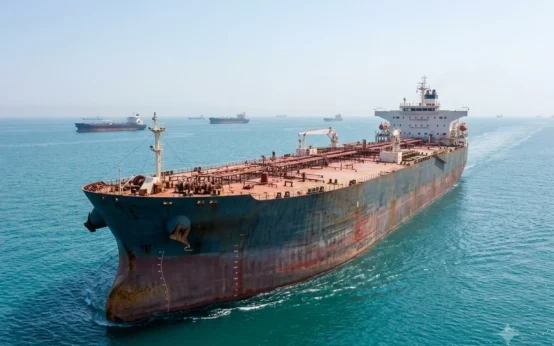
The renewed spike traces to a single stretch of water. Iran struck two UAE-managed supertankers transiting the strait’s southern lane near Oman, the corridor generally understood to sit under U.S. protection. On Thursday, U.S. forces struck and disabled an Iran-linked, sanctioned oil tanker near Kharg Island, Iran’s main export terminal deep in the Persian Gulf.
Early Friday, U.S. forces hit dozens of Iranian targets, among them coastal surveillance sites, air defenses, logistics hubs and maritime assets, U.S. Central Command said.
“CENTCOM is further degrading Iranian military capabilities and holding Iran accountable for recent attacks on commercial shipping,” the U.S. military said in a statement.

The Same Cycle, Breaking for a Third Time Since February
The war opened on February 28, when U.S. and Israeli strikes on Iran killed several senior officials, including longtime Supreme Leader Ayatollah Ali Khamenei. Brent had traded near $72 a barrel the day before. It did not stay there for long.
| Date | Brent Price | What Happened |
|---|---|---|
| Feb. 27, 2026 | About $72 | Last full trading day before US and Israeli strikes opened the war |
| April 30, 2026 | More than $126 | War-era peak as Gulf oil output collapsed and tankers backed up outside Hormuz |
| June 25, 2026 | $72.68 | Brent revisits pre-war levels as Hormuz traffic recovers under a new truce |
| July 1, 2026 | Below $70 | Lowest since January; the war premium is nearly erased, the EIA says |
| July 8, 2026 | $76.48 | Truce cracks again after tanker attacks near Oman |
A ceasefire signed April 7 held less than two weeks before the U.S. Navy seized an Iranian container ship and fresh strikes followed. A more detailed memorandum of understanding, signed June 17, briefly reopened the strait and erased almost the entire war premium. Then Iranian forces reportedly fired on a Panamanian-flagged tanker in late June, and by July 6 and 7, projectiles and drones had struck a Qatari LNG carrier and a Saudi crude tanker near Oman. The U.S. revoked its sanctions waiver on Iranian oil hours later.
Much of that cushion has now been depleted, leaving us more vulnerable to a rerun of March and April.
Rory Johnston, founder of the oil market research firm Commodity Context, told Al Jazeera that the market had leaned hard on stockpiles to blunt each shock, and that buffer is running out.
Why Does the Strait of Hormuz Keep Closing?
The strait has split into two corridors. Gulf producers use a southern route hugging Oman’s coast, protected by the U.S. Navy; Iran wants ships on a northern route it controls, with registration and eventually tolls. Washington calls the waterway international and open to everyone. Neither side has backed down, which is why every lull ends the same way.
Maritime authorities raised the threat level in the strait to “severe” after the string of tanker attacks, and traffic followed the alarm down. Ship-tracking platform MarineTraffic recorded 57 transits over one recent weekend, more than a 50% drop from the previous week and far below the roughly 130 vessels a day that used the strait before the war.
“There is obviously a battle for control, because obviously the only leverage Iran has is control of Hormuz,” said Michelle Wiese Bockmann, a senior maritime intelligence analyst at Windward in London.
Saul Kavonic, head of energy research at MST Financial, expects that leverage to persist. “Iran fully intends to cement its control over the Strait of Hormuz in the coming weeks,” he said, adding that transits could stay below half of pre-war levels for months, with periodic flare-ups.
President Donald Trump dropped a planned 20% fee on cargo transiting Hormuz earlier this month, betting future Gulf investment in the U.S. would outweigh the lost toll revenue. Days later, he reversed course again, saying the U.S. would reinstate its blockade of Iranian ports and start charging vessels transit fees itself, calling Washington the waterway’s “guardian.”
Some of the damage will not heal quickly. Global oil output remains roughly 9.4 million barrels a day below pre-war levels, the International Energy Agency (IEA) says, and the U.S. Energy Information Administration’s (EIA) short-term forecast, published just before this month’s strikes, had projected Brent easing toward $70 a barrel by the fourth quarter. That forecast now looks harder to hit.
Drivers, Shippers and Grocery Bills Absorb the Shock
None of this stays confined to a barrel price. Every escalation moves through gas pumps, container ships and grocery aisles within days, and this one is no different.
- Gasoline – the U.S. average hit $3.88 a gallon on Friday, AAA said, up from $3.84 a week earlier and from $2.98 before the war began.
- Shipping and freight – fuel already makes up 50% to 60% of the cost of moving goods by sea, according to Patrick Penfield, a supply chain practice professor at Syracuse University.
- Jet fuel – airlines buy fuel months ahead, so analysts do not expect airfares to ease this summer even if the fighting stops.
- Food and fertilizer – the U.S. Department of Agriculture projects grocery prices will rise 3.2% this year, above the historical average of 2.6%.
The pain is sharper outside the U.S., where domestic production offers less of a buffer. Since the war began, gasoline prices have jumped more than 50 percent in Malaysia and Pakistan, with diesel climbing even faster, according to data compiled by Statista.
Financial markets have flinched too. Asian benchmarks fell hard this week, with South Korea’s Kospi down as much as 9% and Japan’s Nikkei off nearly 2%. Indian markets have absorbed similar hits before; the Sensex sank 561 points in a single session during an earlier flare-up, and New Delhi has since leaned on its ethanol blending push to cap pump prices rather than absorb the full cost of imported crude.
A Second Chokepoint Waits in the Red Sea
Iran’s leverage is not limited to Hormuz. The Iran-aligned Houthis in Yemen are reportedly waiting for a green light from Iran’s Islamic Revolutionary Guard Corps to close the Bab el-Mandeb Strait, the narrow passage between Yemen and the Horn of Africa that feeds the Red Sea and the Suez Canal.
Closing that route would not touch Gulf crude directly, but it would choke a separate slice of global trade and push more tanker traffic onto the longer, costlier path around southern Africa, the same detour many shippers already took during the Houthis’ earlier campaign against vessels in the Red Sea.
How High Could Oil Prices Climb From Here?
Forecasters agree on one thing: cheap oil is not coming back this year. A Reuters poll of 33 economists puts the average 2026 Brent forecast well above pre-war levels, and major banks have lifted their own numbers since. Where they split is over how much higher this week’s strikes push prices before the next lull.
The Reuters poll, published in May and cited in a mid-year outlook from the advisory firm deVere Group, puts the average 2026 Brent forecast at $90.44 a barrel, roughly 40% above pre-war estimates. HSBC has penciled in $95, JPMorgan expects $97 for much of the rest of the year, and Barclays is holding a $100 forecast with risks skewed higher.
- Fabien Yip (IG, Sydney) – doubts prices will repeat the earlier spike, pointing to OPEC+ supply growth and an oversupplied market that should cap the upside.
- Bart Melek (TD Securities) – expects prices to rise again substantially the longer the strikes and blockade continue.
- Ben McMillan (IDX Advisors) – argues the risk premium is now permanent. “Oil getting back to the $60 level is effectively off the table,” he said.
Mukesh Sahdev, founder and chief oil analyst at XAnalysts in Sydney, splits the difference, expecting Brent to hold in the upper $70s through August and September with occasional spikes on either side of that range.
For now, the U.S. Department of Energy says the Navy is still moving crude through Hormuz under military escort, about 8.5 million barrels on Monday alone, even as Iran’s declaration that the strait is closed “until further notice” remains formally on the books.
 Hormuz Stalemate Masks Products Squeeze Toward $120 Oil
  Shiprocket IPO Heat Masks Float Risk and Adjusted Losses
  Oil Relief Meets Drone Tariffs as Nifty Turns Macro
  Scotland’s Drug Deaths Drop Then Rebound as Recovery Lags
  FPIs Exit 60% of IPO Anchors in a Year as Domestic Funds Hold Firmer
  Domestic Winners Outrun Tata PV Drag on Friday Focus List