
 Ishan Crawford
 Internal emails reviewed by Reuters show Maruti Suzuki, Tata Motors and Mahindra executives privately flagged chloride contamination as high as 570 ppm and moisture spikes in E20 petrol samples weeks before their lobby publicly retreated. The three firms control 67 percent of India’s car market.
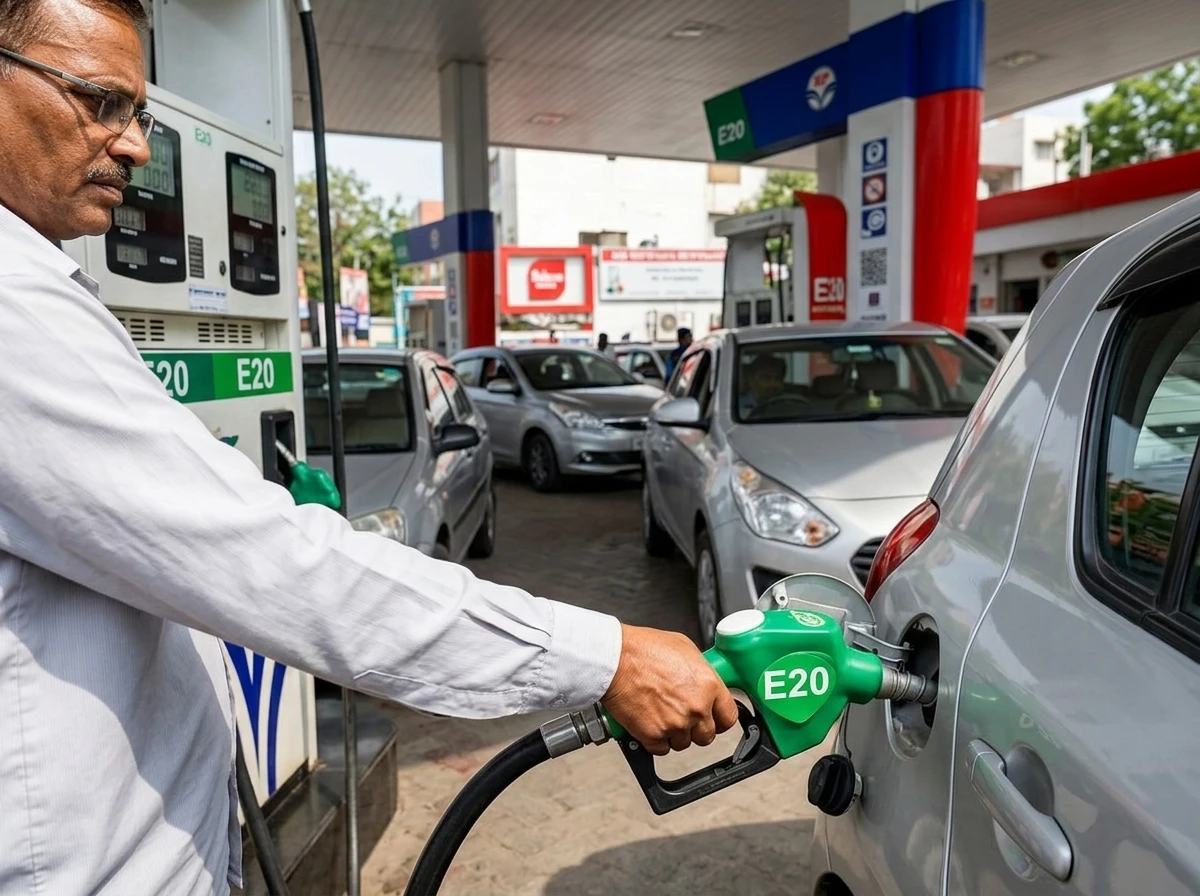
The findings landed after the government rolled out mandatory E20 nationwide and stopped selling unblended petrol from April 1. Public backing of the fuel stayed firm even as the data circulated. The gap between those private tables and the public line is the core of the dispute now facing drivers who no longer have another grade to choose.
What the Private Sample Tables Showed
Multiple automakers collected more than 250 fuel samples from pumps over a year across 21 of India’s 36 states and Union Territories. High chloride turned up in many samples from 18 states, along with elevated moisture.
Maruti senior executive Anoop Bhat raised the chloride numbers in a July 26 group email with Tata, Mahindra and SIAM. He noted the issue had already been discussed privately with the petroleum ministry that same day.
| Location | Chloride range (ppm) | Govt limit | Moisture high (ppm) |
|---|---|---|---|
| Rajasthan | 6-570 | 3 | – |
| New Delhi | 1.4-420 | 3 | – |
| Maharashtra | 10-357 | 3 | – |
| Andhra Pradesh | – | – | 13,000 |
| Uttar Pradesh | – | – | 12,500 |
Government benchmark for moisture sits at 3,000 ppm. Bhat wrote that current fuel injectors “can tolerate” a maximum of 1 ppm chloride and that levels under 1 ppm match international standards and the ministry discussion.
The table makes the margin plain. Rajasthan’s upper reading of 570 ppm is many times the 3 ppm government limit and far above the 1 ppm injector tolerance Bhat cited. New Delhi and Maharashtra show the same pattern: wide ranges whose peaks leave little room for parts designed around single-digit chloride. Moisture readings from Andhra Pradesh and Uttar Pradesh clear the 3,000 ppm benchmark by a wide margin on the samples that recorded them.
Those figures were not a single lab day. They came from a year of pump sampling spread across most of the country, then shared inside the industry group before any public letter went out.
Mahindra Engineer Named Organic Chloride
Mahindra senior principal engineer of fluids technology R. Ramaprabhu pointed to organic chloride as the driver of rapid failures. He said it can spoil engines “within 200 km.”
Majority cases reported immediately after fuelling… is due to organic chloride
Ramaprabhu wrote that Mahindra held “strong evidences” from retail outlet samples. Neither he nor Bhat responded to Reuters queries. Mahindra later told the agency that conclusions drawn from the executive’s emails “are completely baseless and incorrect,” called the industry data limited and preliminary, and said it does not see issues with E20. Maruti and Tata did not comment.
The speed claim matters because it ties the chemistry to the driveway. A fault that can appear inside 200 km, and that the same engineer linked to the period right after a fill-up, is harder for an owner to dismiss as ordinary wear. The company’s later statement rejected that reading of its own internal traffic and stressed the preliminary nature of the shared data set.
SIAM Sent Then Pulled the July 28 Letter
The Society of Indian Automobile Manufacturers sent a letter to the petroleum ministry on July 28 warning of elevated chloride and moisture. High chloride is corrosive to auto parts. High moisture can immobilise a vehicle right after fuelling.
- SIAM said chloride levels had risen since the E20 rollout and asked oil marketing companies to find the root cause.
- It linked moisture problems to inadequate maintenance of underground storage tanks and pipelines at retail outlets.
- It asked the government to include chloride limits in fuel specifications and tighten quality controls.
- The letter noted the contamination risk was creating a wrong impression of E20 among customers.
After government and public uproar, SIAM withdrew the letter. It said “some numbers” needed “authentication” and that the communication had been sent inadvertently. The testing basis and sample size were “insufficient to support definitive conclusions.” SIAM told Reuters the data was for internal circulation, discussion and validation only, collected by “very few” automakers. It plans a proper scientific study. The executives’ internal emails raised no authentication doubts.
The sequence is tight. Bhat’s July 26 group mail flagged the chloride numbers and the same-day ministry discussion. The SIAM letter followed two days later. Withdrawal came once the uproar began. The lobby’s public posture then shifted to a future study, while the private traffic from the member companies had already treated the sample tables as real enough to escalate.
Four Cases Versus 250 Samples
Petroleum Minister Hardeep Singh Puri said oil marketing companies had begun rigorous testing at retail outlets two weeks before the SIAM letter arrived. Only four contamination cases turned up.
- 1.07 lakh retail outlets in the network
- 2,000 samples collected daily in the intensive phase
- 6-7 crore customers served each day
- Four confirmed contamination cases
State-run fuel retailers said extensive random and scientific tests showed “no cause for any alarm on account of fuel contamination.” The Ministry of Petroleum and Natural Gas did not respond to Reuters requests for comment on the private emails. The government sets the chloride limit at 3 ppm.
Set beside the industry work, the two exercises differ in design as much as in result. Automakers logged more than 250 samples over a year and reported high chloride across 18 states plus moisture spikes well above the 3,000 ppm mark. The ministry side points to a short intensive burst, thousands of daily checks, and four confirmed cases across a national outlet network that serves crores of customers each day.
| Measure | Industry sampling | Official intensive phase |
|---|---|---|
| Scale cited | More than 250 samples, 21 states/UTs | 2,000 samples daily; 1.07 lakh outlets |
| Chloride picture | High readings in 18 states; peaks to 570 ppm | Four confirmed contamination cases |
| Moisture picture | Readings to 13,000 ppm and 12,500 ppm | No alarm on contamination, per retailers |
| Public stance after | SIAM letter sent, then withdrawn | Fuel described as safe |
Both sides are using the language of testing. They are not describing the same volume, window, or outcome.
Drivers Sit Between Two Narratives
Hundreds of motorists have alleged lower mileage and higher wear since E20 became the only petrol available. At least one consumer court case reached a ruling. In July a Chhattisgarh district consumer court ordered Maruti to replace a Grand Vitara Strong Hybrid or pay 2 million rupees after a doctor alleged E20 damage. Maruti said it would challenge the order, noting the car was E20-compatible and that fuel samples from the vehicle showed contamination evidence.
Crowd reaction on X has focused on the gap between private technical alarms and official reassurance. Owners point out that with no unblended petrol at the pump they cannot opt out, and they want the full test data rather than a staged retreat. The private emails supply the sharpest detail yet on how quickly organic chloride can stop a car.
Maruti continues large manufacturing investments even as the fuel debate runs. The company’s Maruti capacity expansion at Hansalpur aims higher output while its model range, including recent Brezza facelift pricing shifts, stays tied to the same fuel supply every driver now uses.
That binding is the practical point for owners. Compatibility badges and factory plans still meet a single grade at the pump. When a court file already turns on contamination evidence from a vehicle sample, and when internal mail describes failures inside a few hundred kilometres, the demand for published test detail is a demand for something drivers can weigh against the official four-case count.
How India Reached Mandatory E20 Early
The Ethanol Blended Petrol programme moved from under 1.5 percent blending in 2013-14 to 20 percent in 2025-26, five years ahead of the original 2030 target. Public sector oil marketing companies hit a record average of 19.24 percent in the prior supply year.
- 2013-14: blending under 1.5 percent, procurement around 38 crore litres
- December 2022: OMCs permitted to sell E20
- ESY 2024-25: 19.24 percent average blending achieved
- 2025-26: 20 percent target met; projected procurement over 1,200 crore litres; capacity near 2,000 crore litres
- April 1 2026: unblended petrol withdrawn from pumps
Official tallies credit the programme with foreign exchange savings above 1.90 lakh crore since 2014-15, substitution of more than 310 lakh metric tonnes of crude oil, roughly 930 lakh metric tonnes of CO2 avoided, and additional farmer earnings above 1.60 lakh crore. India still imports about 88.5 percent of its crude. The Roadmap for Ethanol Blending in India set the 20 percent goal for ESY 2025-26 and framed the policy as energy security plus farm income plus lower emissions.
A July 2026 PIB backgrounder quoted Maruti’s Rahul Bharti saying that across 2.84 crore vehicles serviced in FY 2025-26, including more than 1.5 crore older than three years, no E20-related damage appeared. Mileage impact was described as small, roughly 0.6 km per litre on a 20 km/l car. Other makers and experts echoed confidence after SIAM, ARAI and IOCL testing.
The early hit on the 20 percent target is central to the politics of the rollout. Gains on foreign exchange, crude substitution, emissions and farm income are the public case for holding the blend. The same timetable removed the unblended option once the target was met, which is why private sample disputes now land on a market with no retail exit ramp.
Organic Chloride Leaves Engines Little Time
The internal record gives a short chain from chemistry to breakdown. High chloride is corrosive to auto parts. Bhat put injector tolerance at a maximum of 1 ppm and tied sub-1 ppm levels to international practice and the ministry discussion. The government limit is 3 ppm. Sample peaks in the industry tables ran far above both marks.
Ramaprabhu’s note then supplied the failure clock. Organic chloride, on his account, can spoil an engine within 200 km. He wrote that the majority of cases reported immediately after fuelling traced to that form of chloride, and that Mahindra held strong evidence from retail outlet samples.
Moisture sits on a parallel track. The SIAM letter linked elevated water to poor upkeep of underground tanks and pipelines at outlets and warned that high moisture can immobilise a vehicle right after a fill. Industry samples from Andhra Pradesh and Uttar Pradesh showed moisture highs of 13,000 ppm and 12,500 ppm against a 3,000 ppm government benchmark.
- Chloride: corrosive to parts; industry peaks to 570 ppm; injector tolerance cited at 1 ppm; government limit 3 ppm.
- Organic chloride: named as the rapid-failure driver; spoil risk inside 200 km; majority of immediate post-fuel cases.
- Moisture: immobilisation risk after fuelling; tank and pipeline maintenance named as a cause; samples above 12,500 ppm.
Together those points explain why the July traffic moved quickly from lab tables to a ministry letter. They also explain why owners reading the emails focus on the interval between a pump stop and a breakdown rather than on long-run wear alone.
Public Backing Holds As Private Doubts Circulated
Through the same weeks the companies’ executives were exchanging chloride and moisture numbers, public backing of E20 from the industry side stayed firm. Maruti, Tata and Mahindra control 67 percent of the car market. Their lobby’s letter was the brief exception, then it was pulled.
Mahindra’s later reply to Reuters rejected conclusions drawn from its engineer’s emails as baseless and incorrect, called the shared data limited and preliminary, and said the company does not see issues with E20. Maruti and Tata offered no comment on the mail. SIAM recast the July 28 text as inadvertent, unauthenticated and unfit for definitive conclusions, and promised a fuller scientific study built on more than the “very few” automakers that had collected the internal set.
On the government side the line was steadier still. Puri’s four-case count, the retailers’ “no cause for any alarm” phrasing, and the PIB service data quoting Maruti’s Rahul Bharti on 2.84 crore vehicles with no E20-related damage all pointed the same way. Mileage impact in that account was small, about 0.6 km per litre on a 20 km/l car. Other makers and experts echoed confidence after SIAM, ARAI and IOCL testing.
The result is a split record. Private mail from late July carried peak readings, a named chemical route to fast failure, and a formal warning that was withdrawn under pressure. Public statements from the same corporate group and from the ministry continue to treat the fuel as safe enough for a market in which unblended petrol is no longer sold.
What Remains Open After the Retreat
The private data and the public numbers still sit side by side. Automakers documented widespread exceedances of the 3 ppm chloride and 3,000 ppm moisture benchmarks across many states. The government and OMCs report four confirmed cases after intensive sampling and insist the fuel is safe. SIAM has withdrawn its warning and promised a fuller scientific study. Mahindra disputes the reading of its own engineer’s emails. No non-E20 petrol is available at retail.
What we know
- Over 250 industry samples across 21 states/UTs found high chloride in 18 states and moisture well above 3,000 ppm in places.
- SIAM’s July 28 letter flagged corrosion and immobilisation risks then was withdrawn after uproar.
- Puri reported four contamination cases from 1.07 lakh outlets after 2,000 daily samples.
- E20 met its 20 percent target five years early with large claimed FX, oil and farm gains.
What’s unconfirmed
- Root cause of the chloride rise and whether it is systemic or isolated supply-chain failures.
- Whether the industry sample size and methods will hold up under the promised SIAM scientific study.
- Long-term warranty and insurance outcomes if more consumer claims cite contamination.
- How many additional rapid-failure cases will surface now that only E20 is sold.
Maruti, Tata and Mahindra remain publicly supportive of the rollout. Their internal emails from late July show the contamination numbers they were watching before the letter went out and came back. Drivers keep filling tanks with the only petrol on the forecourt.
Until the promised study appears, or until wider test data is published, that is the bind the market is in: a single retail grade, two competing pictures of how clean it is, and a set of private tables that once put chloride and moisture far above the limits the same companies now publicly wave aside.
 ONGC licence frees Venezuela cash and operatorship talks
  Anthropic Hits $65 Billion Run Rate and Flips the AI Cash Test
  Supreme Court grounds the fare free-for-all with three-week clock
  Gold Nears $4400 as Soft Data Meets Oil Inflation Risk
  Nifty Slips as Zaggle Circuits and Dhoot Debuts Big
  Diesel Crack Tops $100 as Iran Rhetoric Lifts Crude