
 Ishan Crawford
 Lok Sabha passed the Taxation and Other Laws (Amendment) Bill, 2026 on 6 August, amending the Payment and Settlement Systems Act, 2007 so the government can notify electronic payment modes that banks and service providers may charge. UPI transactions stay free today; the change only lifts the legal bar that blocked Merchant Discount Rate on notified modes.
Finance Minister Nirmala Sitharaman moved the bill after the House reassembled at 2 pm. It cleared by voice vote with no debate amid opposition slogans. The government’s stated aim is a small charge that keeps digital payments viable for banks, payment service providers and infrastructure firms while protecting consumers and small businesses.
What the Section 10A Swap Does
Section 10A of the PSS Act previously barred banks and system providers from levying any charge on electronic modes prescribed under Section 269SU of the Income-tax Act. That link forced zero MDR on UPI and RuPay debit for large merchants required to accept them.
The bill substitutes the words so the bar applies only to “one or more electronic modes of payment as the central government may, by notification, specify.” The Centre now chooses which modes stay free and which can carry fees. RTGS and NEFT already attract service charges; UPI had remained exempt.
- No immediate fee appears on any UPI transaction.
- Government gains power to notify chargeable modes later.
- P2P transfers are widely expected to stay free.
- High-value P2M to larger merchants is the likely first target if rates arrive.
The same bill also extends tax breaks for electronics contract manufacturing and foreign cloud use of Indian data centres until 2040-41, but the UPI clause drew the sharpest public notice.
The Scale That Made Free Unsustainable
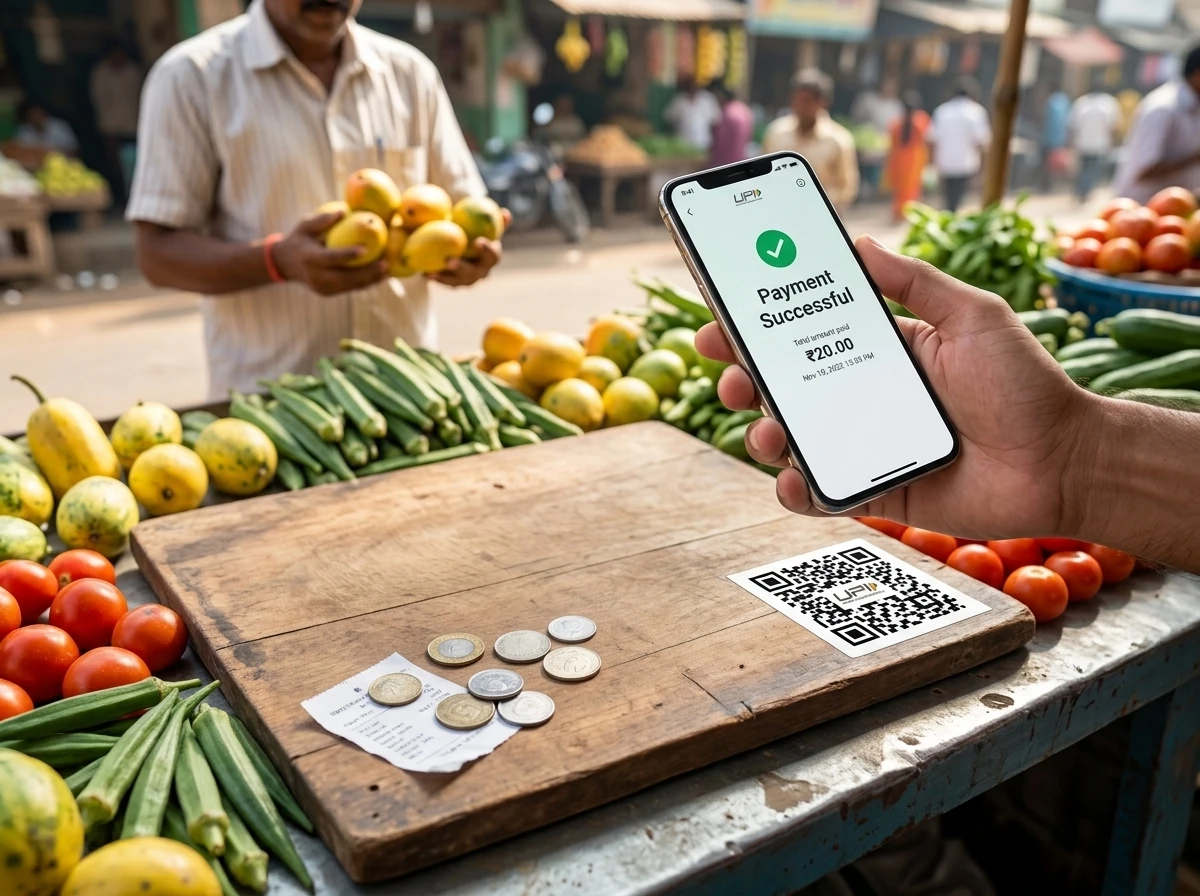
UPI processed July 2026 UPI volume of 23.66 billion transactions worth nearly ₹29.88 lakh crore. Banks live on the system reached 741. Full-year FY 2025-26 figures from the government show 241.62 billion transactions and ₹314 lakh crore in value.
That is a nearly 12,000-fold surge since launch in 2016, when the first month saw a few hundred payments. UPI now accounts for roughly 85 percent of India’s digital payments by volume and nearly half of global real-time payment volume. Daily averages run around 66 crore transactions.
Key FY26 markers
- 241.62 billion annual transactions
- ₹314 lakh crore annual value
- 30 percent year-on-year volume growth
- 703-plus banks live by March 2026
Person-to-merchant flows dominate volume at about 63 percent; person-to-person dominate value. Most tickets stay tiny: 86 percent of P2M under ₹500. The free rail that produced this density also stripped banks of traditional interchange on the largest slice of retail payments.
Banks and Payment Firms Stand to Gain
Banks have long called zero MDR a high-volume, low-yield burden. Infrastructure, fraud controls, compliance and customer support costs rose while fee income on the dominant rail stayed near zero. Card MDR and revolving credit once filled that gap; UPI cannibalised low-value merchant spend.
Industry estimates circulating around the bill put a 0.25 percent MDR on eligible high-value P2M at potential annual revenue of several thousand crore rupees once fully applied. Payment aggregators and NPCI participants would share the pool. The government has already run incentive schemes, with recent budget allocations around ₹2,000 crore, to offset foregone fees. A structured MDR would replace those ad-hoc transfers with market pricing.
Large fintech apps that process tens of billions of transactions monthly would see clearer paths to recover acquisition and technology spend. That stability could support further investment in credit-on-UPI, cross-border rails and merchant tools. For the winners the bill is less a tax on users than a long-delayed balance sheet fix after six years of free scale.
Small Merchants Carry the Open Risk
Any MDR lands first on the merchant. Officials and reports stress customers will not see a direct fee. Yet merchants facing 0.25-0.4 percent on tickets above ₹2,000 have two practical choices: absorb the cut or raise prices. Smaller shops with thin margins often choose the second path, or quietly prefer cash again.
| Merchant type | Likely exposure | Possible response |
|---|---|---|
| Street vendor / kirana under ₹50 lakh turnover | Low if threshold protects them | Keep free UPI or nudge cash for small tickets |
| Mid-size retailer ₹2,000-plus average ticket | Direct MDR on most volume | Pass-through pricing or dual pricing |
| Large e-commerce / organised retail | High absolute cost, better ability to negotiate | Absorb or reprice; pressure on smaller rivals |
Crowd reaction on X quickly zeroed on the pass-through. Users noted that electricity bills or IRCTC tickets paid by UPI today match face value; card payments already embed extra cost. If merchants start adding “convenience” marks or steering customers off UPI, the free experience that drove adoption frays. Opposition voices framed it as bait-and-switch after the government pushed every vendor onto QR codes.
Related policy moves already link UPI deeper into public systems. EPFO withdrawals already moving onto UPI and earlier rule changes show how far the rail has become default infrastructure. Cost shocks at the merchant edge could slow the next wave of formalisation.
How Zero MDR Was Built in 2019-20
- 2019 Finance (No. 2) Act inserts Section 269SU into the Income-tax Act, requiring businesses above ₹50 crore turnover to accept prescribed electronic modes.
- Rule 119AA names UPI, BHIM-UPI QR and RuPay debit as those modes.
- Same 2019 Act inserts Section 10A into the PSS Act, prohibiting charges on the 269SU modes.
- 1 January 2020 zero network MDR goes live for bank-account UPI P2M and RuPay debit P2M. Penalty of ₹5,000 per day under Section 271DB enforces acceptance.
The regime was always narrow. Gateway platform fees (often 1.5-2 percent contracted) stayed commercial. RuPay credit-on-UPI, PPI wallets on UPI and credit lines carried interchange. Only the pure bank-to-bank UPI rail and RuPay debit sat at statutory zero. That distinction explains why merchants still saw deductions on settlement files even while “UPI is free” held as public slogan.
A detailed breakdown of the statutory zero network MDR since January 2020 shows how reconciliation teams must split settlement lines or miss leakage. The new bill simply severs the automatic link to 269SU so the government can redraw the free perimeter by notification.
RBI Voice and the Political Edge
RBI Governor Sanjay Malhotra, asked about MDR after the 5 August monetary policy, called discussion premature.
It is very premature to talk right now. The government is still carrying out the amendment. The costs have to be paid by someone. We all want that this public infrastructure should continue to strengthen. Let’s wait and watch for further developments on this.
Malhotra’s line matches the official caution: the bill enables; it does not set rates or thresholds. Reports of 0.25-0.4 percent on P2M above ₹2,000 remain market speculation until a notification appears. P2P is repeatedly flagged as staying free.
Politically the passage without debate fuelled opposition claims that Digital India was sold as free and is now being monetised. Government counters that sustainability protects the very infrastructure ordinary users rely on. Both sides agree the next step, any actual rate card, will decide whether the free-user promise holds in practice.
Earlier earlier June UPI-linked money rule shifts already showed how quickly payment rails become policy levers. This amendment is larger because it rewrites the cost foundation rather than a single product feature.
Where the Numbers Point Next
| Month 2026 | Volume (Mn) | Value (₹ Cr) | Banks live |
|---|---|---|---|
| April | 22,346.80 | 29,02,988.05 | 713 |
| May | 23,201.93 | 29,90,424.21 | 720 |
| June | 22,716.07 | 28,92,138.67 | 731 |
| July | 23,658.35 | 29,87,880.49 | 741 |
Volume keeps climbing even as the legal door opens. The government can still choose to keep most modes free and target only a thin high-value slice. Or it can move faster if bank balance sheets or incentive budgets tighten. Either path leaves banks with a clearer revenue option they lacked for six years and leaves merchants watching for the first notification that turns the legal power into an actual rate.
The bill itself changes nothing at the QR code tomorrow morning. It only decides who holds the switch.
Frequently Asked Questions
Does the bill impose charges on UPI transactions right now?
No. It only amends Section 10A so the government can later notify which electronic modes may carry charges. Until a notification appears, the existing zero-MDR practice for bank-account UPI and RuPay debit continues unchanged.
When did the zero-MDR rule for UPI begin?
Network MDR on bank-account UPI P2M and RuPay debit P2M became zero by statute on 1 January 2020 after the Finance (No. 2) Act 2019 linked Income-tax Section 269SU with PSS Act Section 10A. Gateway platform fees were never part of that zero rule.
What is Merchant Discount Rate and who pays it?
MDR is the fee a merchant pays the acquiring bank and network for accepting a digital payment. Under current practice the customer sees no extra charge; any future UPI MDR would follow the same merchant-borne model unless a different structure is notified.
Will person-to-person UPI transfers stay free?
Market and official commentary consistently expects P2P transfers to remain exempt. Any initial rates under discussion focus on person-to-merchant payments above a value threshold such as ₹2,000 for larger businesses.
How does UPI differ from RTGS and NEFT on charges?
RTGS and NEFT have long attracted bank service charges set by the RBI or individual banks. UPI’s zero-MDR status was a deliberate policy exception created in 2019-20 to drive mass adoption; the new bill lets the government decide whether that exception continues for all or only some modes.
 SEBI CAS Forces Options Traders to Recalibrate Closing Risk
  Sensex Drops 400 Points as Oil Spike Tests Market Resilience
  Ardee Industries IPO Rides Lead Recycling Boom at Discount
  Gold Nears 4300 but Iran Risks Cap Gains Ahead of NFP
  Scotland Construction Stalls as Skills and Tariffs Blunt Infra Gains
  Tata Chemicals Jumps as RBI Keeps Tata Sons in NBFC Upper Layer