
 Ishan Crawford
 SEBI’s latest annual report calls the Closing Auction Session a “significant step in enhancing the robustness of India’s price discovery mechanism,” days after the system went live on 3 August 2026 and produced sharp final-window moves in the Nifty. The auction replaces the old 30-minute VWAP close for F&O stocks and aims for more transparent, stable closing prices used in index calculation, mutual-fund NAVs and derivatives settlement.
Early sessions have already forced a second look at how that cleaner close transfers risk. Options books settled on the new single equilibrium price have seen unexpected payoffs, while Nifty has swung far harder than Sensex inside the thin auction window.
The Auction Window That Replaced Last-Half-Hour VWAP
Under the prior rule, exchanges set the official close as the volume-weighted average price of trades from 3:00 pm to 3:30 pm. That method could still be nudged by aggressive late prints. CAS gathers buy and sell orders into one pool after continuous trading ends and matches them at the single price that clears the most volume.
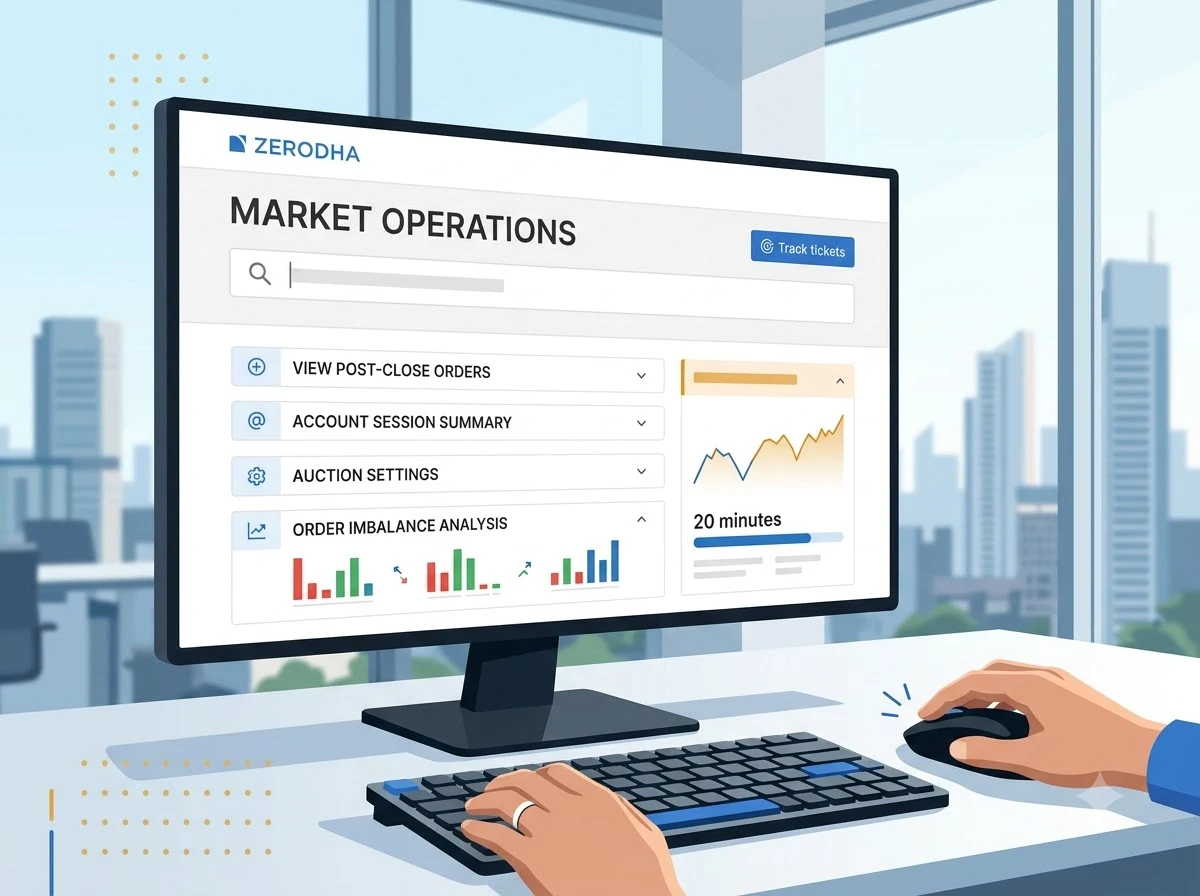
Phase 1 covers only cash-segment stocks that have futures and options contracts. Continuous trading in those names now stops at 3:15 pm. The 20-minute closing auction session timings run as follows:
- 3:15-3:20 pm: reference-price calculation (VWAP of 3:00-3:15 pm trades) and transition; no new orders.
- 3:20-3:25 pm: order entry for both limit and market orders; indicative equilibrium price and imbalance published.
- 3:25-3:30 pm: limit orders only; market orders frozen; random close in the final two minutes.
- 3:30-3:35 pm: matching and trade confirmation at the equilibrium price.
Price bands sit at plus or minus 3 percent around the reference price. Unexecuted limit orders from continuous trading carry forward unless they are stop-loss, iceberg or outside the band. Derivatives on the same underlyings keep trading until 3:40 pm. The SEBI circular introducing the CAS framework set the phased rollout and the alignment goal with developed markets that already run closing auctions.
Brokers have adjusted auto square-off for cash intraday positions in F&O stocks to around 3:10 pm so clients can exit before the continuous session ends.
The staggered cut-offs matter in sequence. Cash intraday books wind down near 3:10 pm, continuous trading ends at 3:15 pm, the auction then builds and matches through 3:35 pm, and derivatives stay live until 3:40 pm. That leaves a short interval when futures can still reprice while the cash close is already locked into the auction process.
Nifty Moved Far More Than Sensex in the First Four Days
Moneycontrol compiled the first four sessions of CAS data. The average gap between the Nifty level at 3:30 pm and its 3:15 pm print stood at +0.42 percent. Sensex averaged roughly +0.10 percent over the same window.
| Session | Nifty CAS move (approx) | Sensex CAS behaviour | Notable turnover |
|---|---|---|---|
| Day 1 (3 Aug) | Jump more than 200 points | Smaller relative move | Combined early auction flow light |
| Day 2 | Move over 150 points | Limited, even on weekly expiry | – |
| Day 3 | Gain around 50 points | Muted | – |
| Day 4 (Thu) | About 9 points | Muted | Nifty CAS ~Rs 1,433 crore; Sensex ~Rs 127 crore |
Reuters reported the second session in detail: Nifty sat at 24,463.45 (down 1.25 percent) when the auction opened and finished the day at 24,614.9 (down 0.6 percent). On the first day the index had closed 1.6 percent higher after a 0.7 percent rise into 3:15 pm. The pattern of larger Nifty auction moves has narrowed on later days, yet the absolute size of the early swings still stands out.
Day-four turnover underlines the same split. Nifty CAS volume near Rs 1,433 crore dwarfed Sensex auction flow near Rs 127 crore. The gap in participation tracks the gap in index moves across the window.
Why Liquidity and Index Makeup Drove the Split
Market participants point to where institutional cash actually sits. Santosh Meena of Swastika Investmart told Reuters that institutional buy orders concentrate on the more liquid NSE during the thin auction window, lifting several heavyweight Nifty constituents and pushing the index. BSE Sensex sees far lower institutional cash-market activity in the same minutes, so its CAS moves stay smaller.
Index composition and derivatives participation amplify the effect. Nifty’s F&O ecosystem is deeper; large cash orders that clear in the auction therefore move the benchmark more. Futures and spot can temporarily disconnect while cash is locked in auction mode and derivatives keep trading. Traders watching Nifty and Sensex opening levels the next morning now start from two slightly different closing stories.
Rajesh Palviya, senior vice president and head of research at Axis Securities, described the 20-minute cash freeze as leaving traders “blind” because they cannot see where the Nifty will ultimately settle while futures still move.
The 20-minute window when cash market trading stops makes traders blind as they cannot ascertain where the Nifty 50 will close. These two days under the new mechanism indicates that something needs to be done to fix the issues.
Palviya’s comment, carried by Reuters, captured the immediate operational complaint. Broker bodies have begun feeding the same feedback to exchanges and the regulator.
The blindness is structural rather than accidental. Cash discovery pauses inside the auction rules while index futures continue to mark. Anyone hedging or rolling in that interval must infer the eventual cash close from indicative prints that many terminals still do not surface cleanly.
How Settlement Risk Shifted for Options Books
Option contracts settle to the final index closing value. Under the old VWAP regime that value was a 30-minute average; small last-minute prints carried limited weight. Under CAS a single equilibrium price decides every near-the-money strike payoff.
Even a 50- or 100-point auction move can flip deep out-of-the-money contracts into money or wipe out a carefully hedged short premium position. Expiry days magnify the effect because open interest is highest and settlement is cash. Early sessions already produced unexpected gains and losses for traders who had positioned around the previous closing convention.
The mechanics of how the equilibrium price is calculated favour the price level that maximises matched volume, then minimum imbalance, then closest to the reference. Large concentrated orders can therefore set the print if opposing liquidity is thin. That is precisely the second-order risk SEBI’s design accepts in exchange for a more robust official close.
Crowd reaction on X has been blunt. Retail traders have floated a full trading shutdown on the 11 August Nifty expiry under the hashtag RollBackCAS, arguing cash-segment liquidity is too thin for a single-price auction that settles massive options books. Others note the pre-CAS versus post-CAS gap has already narrowed and treat the monthly expiry as the true stress test. Ex-SEBI member Ananth Narayan, speaking on CNBC-TV18, flagged thin auction liquidity and potential manipulation vectors while opposing any delink of derivatives settlement from the cash close; he wants better real-time display of indicative prices and imbalances on broker terminals instead.
The settlement change is binary for anyone short premium near the money. A smoothed 30-minute average once diluted a late spike; a single matched print now either clears the strike or does not. That is why expiry open interest and auction depth now interact more tightly than under the old rule.
SEBI Frames the Change as Global Alignment
The SEBI annual report on enhanced price discovery is unambiguous. It lists the closing auction among structural reforms that “ensure enhanced price discovery in closing prices, minimizing volatility and greater execution certainty during market close.” The same report earlier notes the measure was introduced “to align closing price discovery with international standards” and will roll out in phases.
Closing auctions are standard on the NYSE, LSE and many other developed venues. They reduce the ability of a single late print to set the official mark, improve execution for large passive orders, and give index funds and ETFs a cleaner end-of-day price. SEBI’s stated objective is quality of the closing price itself, not short-term volatility management. Early auction swings, in that framing, are the market learning a new equilibrium rather than a design failure.
Media reports of recent broker-regulator discussions suggest SEBI is standing firm on a short list of priorities:
- No rollback of the CAS framework
- Better visibility of indicative prices during the window
- Raised awareness among participants
- Deeper participation so the auction book thickens
That stance keeps the design goal fixed while treating early volatility as a participation problem rather than a rules problem.
How the Auction Differs From the Old VWAP Close
The operational contrast between the two closing methods is sharp once the rules sit side by side. The old close spread influence across half an hour of continuous prints. The new close concentrates it into one matched level inside a banded auction.
| Feature | Prior VWAP close | CAS close |
|---|---|---|
| Price basis | Volume-weighted average, 3:00-3:30 pm | Single equilibrium price that maximises matched volume |
| Cash continuous trading | Ran through 3:30 pm for F&O names | Stops at 3:15 pm in Phase 1 F&O stocks |
| Late-print influence | Aggressive prints could still nudge the average | One matched level; bands at plus or minus 3 percent around reference |
| Derivatives overlap | Cash and derivatives closed on aligned clocks | Derivatives keep trading until 3:40 pm |
| Options settlement input | 30-minute average diluted single spikes | Final equilibrium decides every near-the-money payoff |
Index calculation, mutual-fund NAVs and derivatives settlement all consume the same official close. When that close was an average, a thin late burst had limited weight. When it is one equilibrium print, the same burst can set the mark if it clears the most volume inside the band.
SEBI’s design trades that concentration risk for a cleaner, internationally familiar close. The early Nifty swings show the trade-off in live markets before the auction book has fully deepened.
Closing Prices Still Drive Funds, Indexes and Expiry
The official close is not a cosmetic print. Index providers use it to mark benchmarks. Mutual funds use it for NAVs. Exchanges use it to settle expiring derivatives. CAS changes the path to that number without changing who depends on it.
Passive flows that once worked against a 30-minute average now meet a single auction price. Large cash orders intended to track the close can themselves help set the equilibrium when opposing liquidity is light. That feedback loop is stronger on monthly expiry, when stock-options and index-options open interest peak.
Ananth Narayan’s public stance tracks the same dependency. He flagged thin auction liquidity and manipulation vectors, yet opposed delinking derivatives settlement from the cash close. His preferred fix was better real-time display of indicative prices and imbalances on broker terminals, not a split between the two markets.
Until those feeds improve and participation rises, the close remains both the settlement anchor and the point of maximum uncertainty inside the new window.
Adaptation, Visibility Gaps and the Monthly Expiry Test
Gaps between 3:15 pm and final close have already shrunk from the first day’s 200-plus point Nifty leap to single digits by day four. That trajectory supports the teething-issue view. Yet several practical frictions remain live.
Many broker platforms still fail to show continuous indicative equilibrium prices and order imbalances throughout the auction window. Without that feed, participants really are flying partially blind. Margin validation, carry-forward of open orders, and the random close of the limit-only phase add operational complexity for algos and discretionary desks alike.
The real test arrives on monthly expiry, when stock-options and index-options open interest peak and large players can more easily concentrate cash flow. Constructive feedback already circulating among analysts notes that a single large print of several thousand crore could, in theory, set the equilibrium if opposing interest is light. Whether that materialises or whether deeper participation smooths the book will decide if SEBI’s robustness claim holds in the high-stakes session.
Retail pressure under the RollBackCAS tag has focused on the 11 August Nifty expiry as the moment when thin cash liquidity meets peak options open interest. Other voices counter that the day-one to day-four compression already shows learning, and treat that expiry as data rather than a verdict.
For now the market is rewriting its last half-hour playbook. Continuous trading ends earlier for F&O names, the official close is a single matched price, and options settlement risk sits inside a 20-minute auction whose liquidity is still building. SEBI has drawn its line: the mechanism stays. Traders are adjusting position sizes, hedging earlier, and watching whether the auction book thickens before the next big expiry.
 Sensex Drops 400 Points as Oil Spike Tests Market Resilience
  Ardee Industries IPO Rides Lead Recycling Boom at Discount
  Gold Nears 4300 but Iran Risks Cap Gains Ahead of NFP
  Scotland Construction Stalls as Skills and Tariffs Blunt Infra Gains
  Lok Sabha Bill Opens UPI Charges Path for Banks Over Merchants
  Tata Chemicals Jumps as RBI Keeps Tata Sons in NBFC Upper Layer